Cover Image: 3-D printed house, close-up view of printing head
The construction materials industry is at a turning point, shaped by rising demand, sustainability shifts, and evolving economic forces. As governments push infrastructure projects and businesses innovate with eco-friendly materials, opportunities and challenges emerge for investors and industry leaders alike. This article unveils the latest trends, market drivers, and investment insights to help you navigate the future of construction materials.
Current State of the Construction Materials Industry
The construction materials industry remains a cornerstone of global infrastructure, with cement, steel, wood, and aggregates driving demand across residential, commercial, and industrial projects. In the U.S., the market was valued at $146.8 billion in 2022 and is projected to grow at a CAGR of 3.7% through 2030, fueled by rising infrastructure investments and housing developments. Meanwhile, the global market reached $1,233.66 billion in 2024 and is expected to expand at a CAGR of 4.9%, reflecting steady growth in urbanization and sustainable construction initiatives.
Recent market trends indicate a shift toward sustainable and technologically advanced materials, with demand for eco-friendly solutions increasing by 35% in recent years. The adoption of smart construction technologies, including 3D printing and digital modeling, has surged, improving efficiency and reducing waste. Additionally, government policies promoting green infrastructure and energy-efficient materials are expected to drive further expansion, with demand for such materials rising by 47%. These trends highlight the industry's ongoing transformation toward sustainability and innovation.
Global economic conditions continue to shape the construction materials sector, with inflation, supply chain disruptions, and labor shortages influencing costs and availability. While developed markets focus on infrastructure modernization, emerging economies are experiencing rapid urbanization, fueling demand for cement, steel, and concrete. Despite challenges, the industry's outlook remains positive, supported by technological advancements and increasing investments in sustainable construction practices.
Key Market Drivers Shaping the Industry
The construction materials industry is experiencing strong demand due to growth in residential and commercial construction. In the U.S., housing demand remains high, with single-family home construction projected to rise by 4.2% in 2025. Commercial projects, including office spaces and mixed-use developments, are also expanding as businesses adapt to evolving work environments. This sustained growth fuels demand for essential materials such as cement, steel, and lumber, driving market expansion.
Government-funded infrastructure projects are another key driver of industry growth. Federal investments through the Infrastructure Investment and Jobs Act (IIJA) and the CHIPS Act are expected to boost nonresidential construction, particularly in manufacturing and transportation sectors. These initiatives support large-scale projects such as highways, bridges, and public transit systems, increasing demand for concrete, asphalt, and steel. As funding continues to flow into infrastructure, material suppliers and manufacturers stand to benefit from long-term stability.
Technological advancements and sustainability trends are reshaping the construction materials sector. Innovations such as 3D printing, robotics, and Building Information Modeling (BIM) are improving efficiency and reducing waste. Additionally, the push for sustainable materials, including carbon-neutral concrete and recycled steel, is gaining traction. With environmental regulations tightening, companies are investing in eco-friendly solutions to meet sustainability goals while maintaining profitability.
Challenges Facing the Construction Materials Industry
Despite these growth drivers, the industry faces significant challenges, including inflation and rising material costs. Prices for key materials such as steel and lumber have fluctuated due to supply chain disruptions and global economic uncertainty. Inflationary pressures have increased production costs, forcing companies to adjust pricing strategies and seek alternative sourcing methods. Managing these cost fluctuations remains a critical concern for industry stakeholders.
Supply chain disruptions and global sourcing concerns continue to impact material availability. Geopolitical tensions, transportation bottlenecks, and raw material shortages have led to delays in construction projects. Companies are exploring domestic sourcing and alternative materials to mitigate risks, but long-term solutions require strategic planning and investment in resilient supply chains. These disruptions highlight the need for diversified procurement strategies.
Labor shortages remain a pressing issue, affecting productivity and project timelines. The construction industry is projected to need 340,000 new workers in 2024 due to shortages in skilled trades such as electricians, plumbers, and carpenters. Workforce challenges are exacerbated by an aging labor force and limited training programs. Addressing these shortages requires investment in workforce development, automation, and streamlined project management to maintain efficiency in construction operations.
Sustainability Trends and Green Construction Materials
The construction industry is undergoing a significant shift toward sustainable and eco-friendly materials, driven by environmental concerns and regulatory pressures. Builders are increasingly adopting renewable and recycled materials such as bamboo, fiber-reinforced concrete, and reclaimed wood, which can reduce emissions by up to 40% by 2050. These materials require less energy to produce and contribute to waste reduction, aligning with global sustainability goals. As demand for green construction grows, companies are investing in innovative solutions to meet stricter environmental standards.
Innovations in carbon-neutral and energy-efficient construction are transforming the industry. Low-carbon cementitious materials, such as self-compacting concrete (SSC), are gaining traction for their ability to reduce steel consumption and lower carbon emissions. Additionally, advancements in energy-efficient building designs, including passive cooling systems and smart insulation, are improving sustainability while reducing operational costs. These innovations not only support climate resilience but also enhance long-term efficiency for developers and property owners.
The circular economy is becoming a central focus in construction, with recycling initiatives helping to minimize waste and resource consumption. Governments worldwide are implementing policies that promote sustainable building practices, including tax incentives for green construction and stricter emissions regulations. These efforts encourage companies to adopt environmentally friendly materials and processes, ensuring that the industry moves toward a more sustainable future. As regulations evolve, businesses that prioritize sustainability will gain a competitive edge in the market.
Regional Insights and Market Variations
North America’s construction materials industry is benefiting from increased infrastructure spending and housing growth. The U.S. construction market was projected to reach $2.5 trillion in 2024, with residential construction leading the sector. Government initiatives, such as the Infrastructure Investment and Jobs Act, continue to drive demand for materials like concrete, steel, and asphalt. Additionally, commercial construction is expanding as businesses adapt to evolving workspaces, further supporting industry growth.
Europe’s construction sector is heavily influenced by sustainability regulations and green building initiatives. The European Union has implemented stricter emissions policies, pushing companies to adopt eco-friendly materials and energy-efficient designs. The demand for sustainable construction materials, including recycled steel and carbon-neutral concrete, is rising as governments offer incentives for green projects. These regulatory shifts are reshaping the industry, encouraging innovation and investment in environmentally responsible solutions.
Asia-Pacific is experiencing rapid urbanization and industrial expansion, fueling demand for construction materials. Countries like China and India are investing heavily in infrastructure, with large-scale projects in transportation, energy, and housing. The region’s construction market is expected to grow at a CAGR of 4.3% through 2033, driven by population growth and economic development. Emerging markets in Southeast Asia also present opportunities for material suppliers, as governments prioritize urban development and industrial modernization.
Investment Opportunities in Construction Materials
Investors looking to capitalize on the construction materials sector have several key stocks and ETFs to consider. Leading companies such as Vulcan Materials (VMC), Martin Marietta Materials (MLM), and CRH Plc (CRH) dominate the industry, benefiting from infrastructure investments and housing demand. ETFs like the iShares U.S. Home Construction ETF (ITB) and SPDR S&P Homebuilders ETF (XHB) provide diversified exposure to the sector, allowing investors to mitigate risk while capturing growth opportunities. These investment vehicles are positioned to benefit from ongoing construction activity and government-funded projects.
Read More: The Top Building and Construction ETFs
The Best Home Building Stocks
Future Industry Outlook and Predictions
The construction materials industry is projected to experience steady growth over the next five years, driven by infrastructure investments, urban expansion, and sustainability initiatives. Analysts estimate the global market will grow at a CAGR of 4.9% through 2030, with demand for eco-friendly materials increasing significantly. Government-backed projects, including transportation and energy infrastructure, will continue to fuel material consumption, while residential and commercial construction remains a key contributor to industry expansion.
Technological innovations are reshaping the sector, improving efficiency and sustainability. Advancements in AI-driven project management, 3D printing, and smart materials are reducing waste and optimizing resource use. The adoption of carbon-neutral concrete and automated construction techniques is expected to accelerate, helping companies meet stricter environmental regulations. As digital tools enhance supply chain transparency, businesses can better navigate material shortages and cost fluctuations.
Despite positive growth projections, the industry faces risks such as inflation, geopolitical instability, and regulatory shifts. Rising material costs and supply chain disruptions could impact profitability, while evolving sustainability mandates may require significant investment in compliance. Investors should focus on companies with strong financial fundamentals and adaptability to market changes. Strategic planning and technological adoption will be crucial for stakeholders looking to capitalize on emerging opportunities while mitigating risks.
Sources:
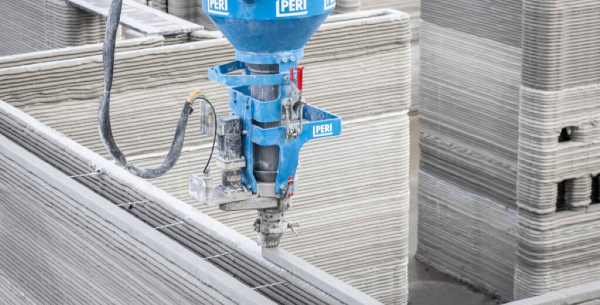



















Cover Image: 3-D printed house, close-up view of printing head
The construction materials industry is at a turning point, shaped by rising demand, sustainability shifts, and evolving economic forces. As governments push infrastructure projects and businesses innovate with eco-friendly materials, opportunities and challenges emerge for investors and industry leaders alike. This article unveils the latest trends, market drivers, and investment insights to help you navigate the future of construction materials.
Current State of the Construction Materials Industry
The construction materials industry remains a cornerstone of global infrastructure, with cement, steel, wood, and aggregates driving demand across residential, commercial, and industrial projects. In the U.S., the market was valued at $146.8 billion in 2022 and is projected to grow at a CAGR of 3.7% through 2030, fueled by rising infrastructure investments and housing developments. Meanwhile, the global market reached $1,233.66 billion in 2024 and is expected to expand at a CAGR of 4.9%, reflecting steady growth in urbanization and sustainable construction initiatives.
Recent market trends indicate a shift toward sustainable and technologically advanced materials, with demand for eco-friendly solutions increasing by 35% in recent years. The adoption of smart construction technologies, including 3D printing and digital modeling, has surged, improving efficiency and reducing waste. Additionally, government policies promoting green infrastructure and energy-efficient materials are expected to drive further expansion, with demand for such materials rising by 47%. These trends highlight the industry's ongoing transformation toward sustainability and innovation.
Global economic conditions continue to shape the construction materials sector, with inflation, supply chain disruptions, and labor shortages influencing costs and availability. While developed markets focus on infrastructure modernization, emerging economies are experiencing rapid urbanization, fueling demand for cement, steel, and concrete. Despite challenges, the industry's outlook remains positive, supported by technological advancements and increasing investments in sustainable construction practices.
Key Market Drivers Shaping the Industry
The construction materials industry is experiencing strong demand due to growth in residential and commercial construction. In the U.S., housing demand remains high, with single-family home construction projected to rise by 4.2% in 2025. Commercial projects, including office spaces and mixed-use developments, are also expanding as businesses adapt to evolving work environments. This sustained growth fuels demand for essential materials such as cement, steel, and lumber, driving market expansion.
Government-funded infrastructure projects are another key driver of industry growth. Federal investments through the Infrastructure Investment and Jobs Act (IIJA) and the CHIPS Act are expected to boost nonresidential construction, particularly in manufacturing and transportation sectors. These initiatives support large-scale projects such as highways, bridges, and public transit systems, increasing demand for concrete, asphalt, and steel. As funding continues to flow into infrastructure, material suppliers and manufacturers stand to benefit from long-term stability.
Technological advancements and sustainability trends are reshaping the construction materials sector. Innovations such as 3D printing, robotics, and Building Information Modeling (BIM) are improving efficiency and reducing waste. Additionally, the push for sustainable materials, including carbon-neutral concrete and recycled steel, is gaining traction. With environmental regulations tightening, companies are investing in eco-friendly solutions to meet sustainability goals while maintaining profitability.
Challenges Facing the Construction Materials Industry
Despite these growth drivers, the industry faces significant challenges, including inflation and rising material costs. Prices for key materials such as steel and lumber have fluctuated due to supply chain disruptions and global economic uncertainty. Inflationary pressures have increased production costs, forcing companies to adjust pricing strategies and seek alternative sourcing methods. Managing these cost fluctuations remains a critical concern for industry stakeholders.
Supply chain disruptions and global sourcing concerns continue to impact material availability. Geopolitical tensions, transportation bottlenecks, and raw material shortages have led to delays in construction projects. Companies are exploring domestic sourcing and alternative materials to mitigate risks, but long-term solutions require strategic planning and investment in resilient supply chains. These disruptions highlight the need for diversified procurement strategies.
Labor shortages remain a pressing issue, affecting productivity and project timelines. The construction industry is projected to need 340,000 new workers in 2024 due to shortages in skilled trades such as electricians, plumbers, and carpenters. Workforce challenges are exacerbated by an aging labor force and limited training programs. Addressing these shortages requires investment in workforce development, automation, and streamlined project management to maintain efficiency in construction operations.
Sustainability Trends and Green Construction Materials
The construction industry is undergoing a significant shift toward sustainable and eco-friendly materials, driven by environmental concerns and regulatory pressures. Builders are increasingly adopting renewable and recycled materials such as bamboo, fiber-reinforced concrete, and reclaimed wood, which can reduce emissions by up to 40% by 2050. These materials require less energy to produce and contribute to waste reduction, aligning with global sustainability goals. As demand for green construction grows, companies are investing in innovative solutions to meet stricter environmental standards.
Innovations in carbon-neutral and energy-efficient construction are transforming the industry. Low-carbon cementitious materials, such as self-compacting concrete (SSC), are gaining traction for their ability to reduce steel consumption and lower carbon emissions. Additionally, advancements in energy-efficient building designs, including passive cooling systems and smart insulation, are improving sustainability while reducing operational costs. These innovations not only support climate resilience but also enhance long-term efficiency for developers and property owners.
The circular economy is becoming a central focus in construction, with recycling initiatives helping to minimize waste and resource consumption. Governments worldwide are implementing policies that promote sustainable building practices, including tax incentives for green construction and stricter emissions regulations. These efforts encourage companies to adopt environmentally friendly materials and processes, ensuring that the industry moves toward a more sustainable future. As regulations evolve, businesses that prioritize sustainability will gain a competitive edge in the market.
Regional Insights and Market Variations
North America’s construction materials industry is benefiting from increased infrastructure spending and housing growth. The U.S. construction market was projected to reach $2.5 trillion in 2024, with residential construction leading the sector. Government initiatives, such as the Infrastructure Investment and Jobs Act, continue to drive demand for materials like concrete, steel, and asphalt. Additionally, commercial construction is expanding as businesses adapt to evolving workspaces, further supporting industry growth.
Europe’s construction sector is heavily influenced by sustainability regulations and green building initiatives. The European Union has implemented stricter emissions policies, pushing companies to adopt eco-friendly materials and energy-efficient designs. The demand for sustainable construction materials, including recycled steel and carbon-neutral concrete, is rising as governments offer incentives for green projects. These regulatory shifts are reshaping the industry, encouraging innovation and investment in environmentally responsible solutions.
Asia-Pacific is experiencing rapid urbanization and industrial expansion, fueling demand for construction materials. Countries like China and India are investing heavily in infrastructure, with large-scale projects in transportation, energy, and housing. The region’s construction market is expected to grow at a CAGR of 4.3% through 2033, driven by population growth and economic development. Emerging markets in Southeast Asia also present opportunities for material suppliers, as governments prioritize urban development and industrial modernization.
Investment Opportunities in Construction Materials
Investors looking to capitalize on the construction materials sector have several key stocks and ETFs to consider. Leading companies such as Vulcan Materials (VMC), Martin Marietta Materials (MLM), and CRH Plc (CRH) dominate the industry, benefiting from infrastructure investments and housing demand. ETFs like the iShares U.S. Home Construction ETF (ITB) and SPDR S&P Homebuilders ETF (XHB) provide diversified exposure to the sector, allowing investors to mitigate risk while capturing growth opportunities. These investment vehicles are positioned to benefit from ongoing construction activity and government-funded projects.
Future Industry Outlook and Predictions
The construction materials industry is projected to experience steady growth over the next five years, driven by infrastructure investments, urban expansion, and sustainability initiatives. Analysts estimate the global market will grow at a CAGR of 4.9% through 2030, with demand for eco-friendly materials increasing significantly. Government-backed projects, including transportation and energy infrastructure, will continue to fuel material consumption, while residential and commercial construction remains a key contributor to industry expansion.
Technological innovations are reshaping the sector, improving efficiency and sustainability. Advancements in AI-driven project management, 3D printing, and smart materials are reducing waste and optimizing resource use. The adoption of carbon-neutral concrete and automated construction techniques is expected to accelerate, helping companies meet stricter environmental regulations. As digital tools enhance supply chain transparency, businesses can better navigate material shortages and cost fluctuations.
Despite positive growth projections, the industry faces risks such as inflation, geopolitical instability, and regulatory shifts. Rising material costs and supply chain disruptions could impact profitability, while evolving sustainability mandates may require significant investment in compliance. Investors should focus on companies with strong financial fundamentals and adaptability to market changes. Strategic planning and technological adoption will be crucial for stakeholders looking to capitalize on emerging opportunities while mitigating risks.
Sources:
Conclusion
The construction materials industry is set for steady growth, driven by infrastructure investments, urbanization, and sustainability initiatives. Technological advancements and eco-friendly materials are reshaping the sector, while inflation and supply chain challenges pose risks. Investors and stakeholders must adapt to innovation and market shifts to capitalize on long-term opportunities.