Consumer discretionary stocks include companies that sell non-essential goods and services. These range from clothing and travel to entertainment and luxury items. Long-term investors often ask whether these stocks can deliver steady returns over time. The answer depends on the company’s brand strength, ability to adapt, and the investor’s risk tolerance.
What Are Consumer Discretionary Stocks?
These stocks represent businesses that rely on consumer spending beyond basic needs. Common sub-sectors include:
- Retail and e-commerce
- Travel and leisure
- Restaurants and entertainment
- Automotive and luxury goods
Examples include Amazon (AMZN), Nike (NKE), and Starbucks (SBUX. These companies thrive when consumers feel confident and spend freely.
Read More: What are Consumer Discretionary Stocks
What Makes a Stock Good for Long-Term Holding?
Long-term investors look for:
- Consistent growth
- Strong brand loyalty
- Resilience during downturns
- Dividend potential
- Ability to compound returns over time
Discretionary stocks can meet these goals, but they also face more ups and downs than staples or utilities.
Historical Performance of Discretionary Stocks
Over the past 10 to 30 years, top discretionary stocks have delivered strong returns. However, they also show higher volatility. During recessions, these stocks often fall faster than others. But they tend to recover quickly when the economy rebounds.
Sector Comparison Over 20 Years
Key Drivers of Long-Term Growth
Several trends support long-term growth in discretionary stocks:
- Rising global middle class
- Growth in online shopping
- Lifestyle shifts toward experiences
- Brand innovation and marketing
- ESG alignment and reputation management
Companies that adapt to these trends often outperform.
Risks for Long-Term Investors
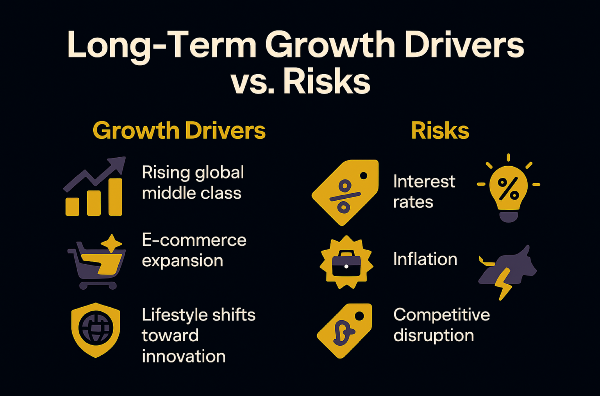
Discretionary stocks are sensitive to:
- Interest rates and inflation
- Unemployment and consumer confidence
- Competitive disruption
- Changing consumer habits
- Overvaluation during bull markets
Investors must monitor these risks and adjust their holdings when needed.
Here’s a clean markdown table that condenses both the growth drivers and risks for long-term investors in consumer discretionary stocks:
Long-Term Growth Drivers vs. Risks in Consumer Discretionary Stocks
| Category |
Key Factors |
| Growth Drivers |
Rising global middle class, e-commerce expansion, lifestyle shifts, brand innovation, ESG alignment |
| Risks |
Interest rates, inflation, unemployment, competitive disruption, changing habits, overvaluation |
Sub-Sector Breakdown
Each sub-sector has different long-term potential:
- Retail and E-Commerce: Winners include omnichannel brands and fast-growing platforms.
- Travel and Leisure: Demand grows over time but is vulnerable to global events.
- Luxury and Automotive: Strong brands can hold pricing power, but cycles matter.
Case Studies: Winners and Losers
Long-Term Compounders
- Amazon (AMZN): Dominated e-commerce and cloud services.
- Nike (NKE: Built global brand loyalty.
- Starbucks (SBUX): Expanded globally with strong margins.
Disrupted Brands
- Gap (GPS): Lost relevance and market share.
- Bed Bath & Beyond (BBBY): Failed to adapt to e-commerce.
Turnarounds
- Target (TGT): Improved logistics and branding.
- Best Buy (BBY): Shifted to service and online sales.
Table: Long-Term Stock Outcomes
| Company |
Ticker |
Outcome |
Key Factor |
| Amazon |
AMZN |
Winner |
Innovation |
| Gap |
GPS |
Loser |
Brand decline |
| Target |
TGT |
Turnaround |
Strategy shift |
Portfolio Strategy and Allocation
Long-term investors often keep consumer discretionary stocks as only a portion of their overall portfolio. A common approach is to limit this sector to about 10–20% of total holdings so that downturns in consumer spending don’t create too much risk. Balancing these stocks with steadier sectors such as consumer staples or healthcare helps smooth out volatility. Many investors also use ETFs to gain broad exposure without having to pick individual companies. Over time, rebalancing based on economic cycles keeps the portfolio aligned with changing market conditions.
Age and risk tolerance also shape how much someone should invest in this sector. Younger investors may feel comfortable taking on more exposure because they have time to recover from market swings. Older investors, or those who prefer stability, often keep discretionary stocks at lower levels. The key is matching the allocation to personal goals and comfort with risk.
Tools for Long-Term Investors
Several tools can help investors evaluate consumer discretionary stocks over time. Stock screeners make it easier to compare fundamentals such as revenue growth, margins, and debt levels. Consumer sentiment data offers insight into how confident shoppers feel, which often predicts spending trends. Earnings reports and brand metrics reveal how well a company is performing and whether it is keeping customer loyalty. Retail sales and broader spending trends also help investors understand the health of the sector.
Using these tools together gives a clearer picture of long-term potential. They help investors track performance, spot early warning signs, and identify companies that may be gaining strength. With consistent monitoring, long-term investors can make more informed decisions about when to buy, hold, or reduce exposure.
Conclusion
Consumer discretionary stocks can be good for long-term investors—if chosen wisely. Strong brands with global reach and innovation tend to outperform. But these stocks also carry more risk during downturns. A balanced approach with regular review helps investors stay on track.
Recommended Reading on Consumer Discretionary Investing
Continue building your expertise with these related analyses and sector guides. Each resource expands on key themes discussed in this article and supports a deeper understanding of consumer discretionary dynamics.












Consumer discretionary stocks include companies that sell non-essential goods and services. These range from clothing and travel to entertainment and luxury items. Long-term investors often ask whether these stocks can deliver steady returns over time. The answer depends on the company’s brand strength, ability to adapt, and the investor’s risk tolerance.
What Are Consumer Discretionary Stocks?
These stocks represent businesses that rely on consumer spending beyond basic needs. Common sub-sectors include:
Examples include Amazon (AMZN), Nike (NKE), and Starbucks (SBUX. These companies thrive when consumers feel confident and spend freely.
Read More: What are Consumer Discretionary Stocks
What Makes a Stock Good for Long-Term Holding?
Long-term investors look for:
Discretionary stocks can meet these goals, but they also face more ups and downs than staples or utilities.
Historical Performance of Discretionary Stocks
Over the past 10 to 30 years, top discretionary stocks have delivered strong returns. However, they also show higher volatility. During recessions, these stocks often fall faster than others. But they tend to recover quickly when the economy rebounds.
Sector Comparison Over 20 Years
Key Drivers of Long-Term Growth
Several trends support long-term growth in discretionary stocks:
Companies that adapt to these trends often outperform.
Risks for Long-Term Investors
Discretionary stocks are sensitive to:
Investors must monitor these risks and adjust their holdings when needed.
Here’s a clean markdown table that condenses both the growth drivers and risks for long-term investors in consumer discretionary stocks:
Long-Term Growth Drivers vs. Risks in Consumer Discretionary Stocks
Sub-Sector Breakdown
Each sub-sector has different long-term potential:
Case Studies: Winners and Losers
Long-Term Compounders
Disrupted Brands
Turnarounds
Table: Long-Term Stock Outcomes
Portfolio Strategy and Allocation
Long-term investors often keep consumer discretionary stocks as only a portion of their overall portfolio. A common approach is to limit this sector to about 10–20% of total holdings so that downturns in consumer spending don’t create too much risk. Balancing these stocks with steadier sectors such as consumer staples or healthcare helps smooth out volatility. Many investors also use ETFs to gain broad exposure without having to pick individual companies. Over time, rebalancing based on economic cycles keeps the portfolio aligned with changing market conditions.
Age and risk tolerance also shape how much someone should invest in this sector. Younger investors may feel comfortable taking on more exposure because they have time to recover from market swings. Older investors, or those who prefer stability, often keep discretionary stocks at lower levels. The key is matching the allocation to personal goals and comfort with risk.
Tools for Long-Term Investors
Several tools can help investors evaluate consumer discretionary stocks over time. Stock screeners make it easier to compare fundamentals such as revenue growth, margins, and debt levels. Consumer sentiment data offers insight into how confident shoppers feel, which often predicts spending trends. Earnings reports and brand metrics reveal how well a company is performing and whether it is keeping customer loyalty. Retail sales and broader spending trends also help investors understand the health of the sector.
Using these tools together gives a clearer picture of long-term potential. They help investors track performance, spot early warning signs, and identify companies that may be gaining strength. With consistent monitoring, long-term investors can make more informed decisions about when to buy, hold, or reduce exposure.
Conclusion
Consumer discretionary stocks can be good for long-term investors—if chosen wisely. Strong brands with global reach and innovation tend to outperform. But these stocks also carry more risk during downturns. A balanced approach with regular review helps investors stay on track.
Recommended Reading on Consumer Discretionary Investing
Continue building your expertise with these related analyses and sector guides. Each resource expands on key themes discussed in this article and supports a deeper understanding of consumer discretionary dynamics.
The Top Consumer Discretionary Stocks
A dynamic list of leading companies within the sector, highlighting notable performers and long‑term growth drivers. A majority of top investors on StockBossUp rated each company on this list a buy.
What Are Consumer Discretionary Stocks?
An introduction to the sector’s core characteristics and market role.
How Consumer Discretionary Stocks Perform in Different Market Cycles
A review of how economic conditions influence sector performance.
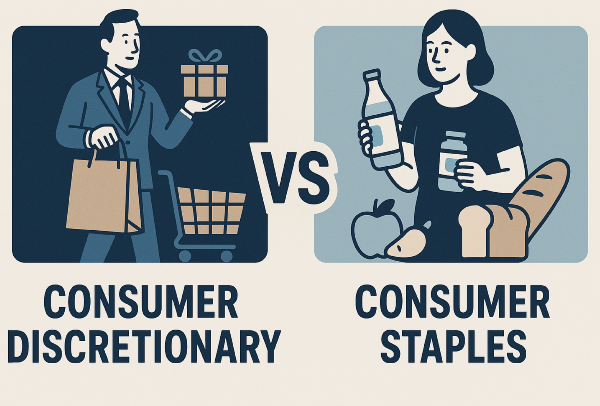
Consumer Discretionary vs Consumer Staples: Key Differences
A comparison of spending patterns, risk profiles, and investment considerations.
How to Analyze Consumer Discretionary Companies
A structured approach to evaluating business models and financial strength.
The Role of Consumer Sentiment in Discretionary Stock Performance
Insight into how consumer confidence and behavioral trends shape demand.
How Interest Rates Impact Consumer Discretionary Stocks
An examination of rate sensitivity and macroeconomic pressures.
Are Consumer Discretionary Stocks Good for Long Term Investors?
A long term perspective on growth potential and sector volatility.
How to Build a Portfolio of Consumer Discretionary Stocks
Practical guidance for constructing and managing sector exposure.
Best ETFs for Consumer Discretionary Exposure
A review of leading ETFs offering diversified access to the sector.
How to Classify a Stock as Consumer Discretionary
A clear explanation of classification standards and sector placement.