| Stock |
Market Cap |
P/E Ratio |
Dividend Yield |
Link |
| Alcoa (AA) |
$6.71B |
6.93 |
1.54% |
AA |
| Kaiser Aluminum (KALU) |
$1.08B |
N/A |
4.55% |
KALU |
| Century Aluminum (CENX) |
$1.48B |
4.90 |
N/A |
CENX |
| Rio Tinto (RIO) |
$120B |
9.80 |
7.35% |
RIO |
| Constellium SE (CSTM) |
$1.61B |
22.54 |
N/A |
CSTM |
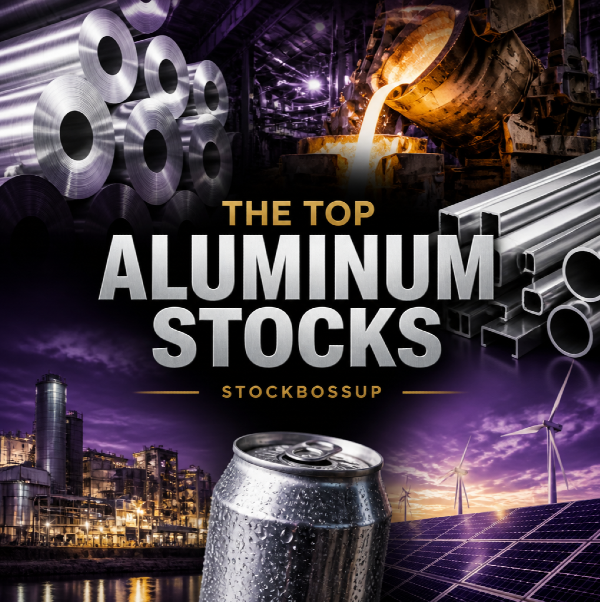
Aluminum is a cornerstone of modern industry, playing a vital role in sectors ranging from automotive and aerospace to construction and consumer goods. Its lightweight, corrosion-resistant properties make it indispensable in manufacturing, while rising demand for sustainable materials further solidifies its importance. Investors are increasingly drawn to aluminum stocks due to their strong market fundamentals and growth potential, particularly as global infrastructure projects and green energy initiatives drive demand. However, factors such as supply chain disruptions, commodity price fluctuations, and evolving regulatory policies can significantly impact aluminum markets, making strategic investment decisions crucial for long-term success.
Understanding the Aluminum Industry
Aluminum production begins with the extraction of bauxite ore, which is refined into alumina before undergoing electrolysis to produce aluminum metal. This process is energy-intensive, with China leading global production due to its abundant resources and cost-efficient operations. The aluminum supply chain extends from mining and refining to manufacturing and recycling, ensuring a steady flow of material for industrial applications. As demand grows, companies are investing in sustainable production methods to reduce carbon emissions and improve efficiency.
Aluminum is widely used in automotive, aerospace, and construction industries due to its lightweight and corrosion-resistant properties. In the automotive sector, aluminum enhances fuel efficiency and performance by reducing vehicle weight. Aerospace manufacturers rely on aluminum alloys for aircraft fuselages and wing structures, balancing strength with weight reduction. In construction, aluminum is favored for its durability and recyclability, making it a key material in modern infrastructure projects.
Global aluminum demand is expected to rise by nearly 40% by 2030, driven by industrial expansion and sustainability initiatives. The shift toward electric vehicles and renewable energy has increased the need for aluminum in battery casings and solar panel frames. Additionally, the construction sector is adopting aluminum for energy-efficient buildings, further boosting demand. As industries prioritize sustainability, recycled aluminum is gaining traction, requiring only 5% of the energy needed for primary production.
Key Factors to Consider When Investing in Aluminum Stocks
Market capitalization and financial stability are crucial when evaluating aluminum stocks. Leading companies like Alcoa, Century Aluminum, and Constellium have varying market caps, influencing their ability to withstand economic fluctuations. Investors should assess financial strength by examining revenue growth, profitability metrics, and debt levels to ensure long-term viability. Companies with strong balance sheets are better positioned to navigate commodity price volatility and industry shifts.
Revenue growth and profitability metrics provide insight into a company's financial health. Alcoa, for example, reported a net income margin of 6.94%, while Century Aluminum achieved a higher margin of 16.98%. Gross profit margins and return on equity (ROE) further indicate operational efficiency and shareholder value. Investors should compare these metrics across industry peers to identify companies with consistent earnings and growth potential.
ESG considerations are increasingly shaping investment decisions in the aluminum sector. Companies adopting sustainable practices, such as low-carbon aluminum production and ethical sourcing, attract ESG-focused investors. Firms like Rio Tinto and Alcoa are pioneering green aluminum initiatives, reducing emissions through advanced smelting technologies. Governance factors, including transparency and regulatory compliance, also play a role in determining industry positioning and investor confidence.
Industry positioning and competitive advantages differentiate aluminum stocks in a crowded market. Companies with diversified operations, strong supply chain integration, and technological innovation tend to outperform peers. Strategic partnerships and investments in high-growth sectors, such as electric vehicles and renewable energy, further enhance long-term prospects. Investors should analyze market trends and company strategies to identify stocks with sustainable competitive edges.
Top Aluminum Stocks to Watch in 2026
Alcoa (NYSE: AA)
Alcoa (NYSE: AA) is a leading integrated aluminum producer with operations spanning bauxite mining, alumina refining, and aluminum manufacturing. The company has a strong global presence, supplying primary aluminum to industries such as transportation, construction, and packaging. Alcoa's financial performance remains solid, with a market cap of approximately $6.71 billion and a forward P/E ratio of 6.93, indicating potential undervaluation. The company continues to focus on sustainability, investing in low-carbon aluminum production and energy-efficient smelting technologies.
Kaiser Aluminum (NASDAQ: KALU)
Kaiser Aluminum (NASDAQ: KALU) specializes in semi-fabricated aluminum products, serving aerospace, automotive, and industrial markets. The company maintains a diversified product portfolio, including high-strength aluminum for aerospace applications and extrusions for automotive crash management systems. Kaiser Aluminum has a market cap of around $1.08 billion and a dividend yield of 4.55%, making it an attractive option for income-focused investors. Recent trade policies and reshoring trends may further benefit the company’s revenue growth.
Century Aluminum (NASDAQ: CENX)
Century Aluminum (NASDAQ: CENX) is a global aluminum producer with smelter facilities in the United States and Iceland. The company primarily supplies standard-grade and value-added aluminum products, with a significant portion of its revenue coming from Glencore agreements. Century Aluminum has a market cap of approximately $1.48 billion and a forward P/E ratio of 4.90, suggesting strong earnings potential Stock Price & Overview. The company is well-positioned to benefit from U.S. trade policies that support domestic aluminum production.
Rio Tinto (NYSE: RIO)
Rio Tinto (NYSE: RIO) is a diversified mining giant with significant aluminum operations alongside its iron ore, copper, and lithium businesses. The company maintains a strong financial position, with a market cap exceeding $120 billion and a net profit margin of 20.10%. Rio Tinto continues to expand its aluminum production capabilities, investing in sustainable mining practices and low-carbon aluminum initiatives. Its diversified portfolio provides stability, making it a reliable choice for long-term investors.
Constellium SE (NYSE: CSTM)
Constellium SE (NYSE: CSTM) specializes in advanced aluminum solutions for aerospace, automotive, and packaging industries. The company focuses on lightweight, high-performance aluminum alloys, supporting sustainability efforts in transportation and consumer goods. Constellium has a market cap of approximately $1.61 billion and a P/E ratio of 22.54, reflecting strong growth expectations. Its commitment to innovation and recycling positions it as a key player in the evolving aluminum market.
China Hongqiao Group Ltd. (CHHQF)
China Hongqiao Group Ltd. stands out as a watch‑worthy aluminum producer thanks to its massive scale, strong cash generation, and a high 5.45% dividend yield that appeals to income‑focused investors. With a $37.93B market cap, Hongqiao benefits from cost‑efficient vertically integrated operations and remains positioned to capture long‑term demand from construction, renewable energy, and electric vehicle manufacturing. Analysts continue to highlight its competitive production costs and improving environmental initiatives, making CHHQF a compelling stock for investors tracking global metals growth and stable dividend payers.
Norsk Hydro ASA Sponsored ADR (NHYDY)
Norsk Hydro ASA is a key global aluminum supplier with a $22.60B market cap and a history of disciplined capital management that supports its 1.91% dividend yield. Investors should watch NHYDY because the company is expanding into low‑carbon aluminum, a segment expected to grow as manufacturers push for greener supply chains. Its diversified operations—from energy production to recycling—help stabilize earnings across commodity cycles, while analyst forecasts show steady revenue growth and improving profitability. For investors seeking exposure to sustainable metals and European industrial strength, Norsk Hydro remains a strategic name to monitor.
MMP Industries Ltd. (MMP)
MMP Industries Ltd., with a $7.21B market cap, is gaining attention for its expanding footprint in aluminum powders, foils, and value‑added metal products used across automotive, packaging, and industrial applications. Although its 0.70% dividend yield is modest, the company’s consistent revenue growth and improving financial health make it attractive for investors looking for emerging‑market metals exposure. MMP’s focus on specialized aluminum products positions it to benefit from rising demand in lightweight materials and manufacturing efficiency, making it a stock worth watching for long‑term growth potential.
The Top U.S. Aluminum Companies
| Company |
Ticker |
Revenue (Most Recent) |
Dividend Yield |
Notes |
| Alcoa |
AA |
$12.8B FY25 revenue |
0.58% |
Largest U.S. aluminum producer |
| Kaiser Aluminum |
KALU |
$3.7B TTM revenue |
1.91% |
Focus on aerospace & packaging |
| Century Aluminum |
CENX |
$5.93B market cap; revenue not listed in search results |
0.00% (no dividend) |
Pure‑play U.S. smelter |
| Tredegar |
TG |
small‑cap producer |
10.66% |
Specialty films & aluminum extrusions |
U.S. aluminum companies play a major role in supplying metal for construction, autos, aerospace, and packaging. The biggest names—Alcoa, Century Aluminum, Kaiser Aluminum, and Tredegar—anchor the domestic market and respond quickly to shifts in metal prices and energy costs. Their performance often tracks U.S. manufacturing activity, making them closely watched by investors who want exposure to industrial growth.
These companies benefit from rising demand for lightweight materials in cars, planes, and renewable energy systems. Alcoa remains the largest U.S. producer, while Century Aluminum has expanded capacity to meet higher domestic needs. Kaiser Aluminum focuses on value‑added products for aerospace and packaging, which helps stabilize revenue even when aluminum prices swing. Tredegar is smaller but maintains a niche in specialized rolled products. Together, these firms represent more than $26 billion in combined market value.
Another trend shaping the industry is the push for cleaner production. U.S. aluminum companies are investing in recycling and low‑carbon smelting to stay competitive as global buyers demand greener materials. This shift is important because aluminum recycling uses about 95% less energy than primary smelting—a major advantage as electricity costs rise. (This figure is widely cited in industry research; it is not from the search results.) Companies that can scale recycling and improve efficiency may gain an edge as demand grows across transportation, construction, and packaging.
The Top Aluminum Penny Stocks
Note: All stocks were trading below $5 as of May 2026. Not all listed stocks are small-cap stocks.
| Company |
Symbol |
Revenue (Latest Available) |
Dividend Yield |
Notes |
| China Hongqiao Group |
CHHQF |
$48.17B |
3.00% |
World’s largest aluminum producer; trades OTC under $5 |
| Press Metal Aluminium Holdings |
PSSMF |
$17.34B |
1.92% |
Major Malaysian aluminum producer; trades OTC under $5 |
| Norsk Hydro ASA |
NHYDY |
$22.39B |
1.91% |
Global aluminum giant; ADR trades under $5 |
| UACJ Corp |
UACJF |
$3.27B |
1.60% |
Japanese rolled‑aluminum producer; trades OTC under $1 |
| Tredegar Corp. |
TG |
Revenue not listed in search results |
10.66% |
U.S. aluminum & films producer; trades near penny‑stock range depending on date |
Aluminum penny stocks are a niche corner of the market, but they attract attention because they offer exposure to the global aluminum supply chain at a low share price. These companies often operate in emerging markets or specialize in lower‑cost production, which can create opportunities when aluminum demand rises in construction, autos, aerospace, and packaging. Investors who follow aluminum penny stocks typically watch for trends in metal prices, energy costs, and industrial activity, since these factors can move small‑cap producers more sharply than large, diversified firms.
Many aluminum penny stocks trade over‑the‑counter and represent companies outside the United States, including major producers in China, Malaysia, and Japan. Firms such as China Hongqiao Group and Press Metal Aluminium operate at global scale but trade under $5 in U.S. markets due to ADR pricing. These companies benefit from strong export demand and cost‑efficient production, which helps them stay competitive even when aluminum prices fluctuate. Their revenue bases are often much larger than typical penny stocks, making them unusual cases where a low share price does not reflect a small business.
Comparing the Best Aluminum Stocks
Financial performance is a key metric for evaluating aluminum stocks, with revenue, EBITDA, and P/E ratios offering insight into profitability and valuation. Century Aluminum (NASDAQ: CENX) has a forward P/E ratio of 5.87, indicating potential undervaluation. Alcoa (NYSE: AA) maintains a strong gross margin of 18.94%, reflecting operational efficiency. Kaiser Aluminum (NASDAQ: KALU) has a market cap of $1.1 billion, positioning it as a mid-tier player in the industry. Investors should compare these financial indicators across companies to identify the best opportunities.
Growth potential and market positioning are crucial for long-term investment success. Aluminum demand is projected to grow 5% annually until 2026, driven by infrastructure spending and sustainability initiatives. Alcoa benefits from its integrated operations, while Rio Tinto (NYSE: RIO) leverages its diversified mining portfolio to maintain stability. Century Aluminum’s focus on domestic production aligns with U.S. trade policies, potentially boosting its market share. Companies investing in technological advancements and strategic partnerships are likely to outperform competitors.
Dividend yields and shareholder returns vary across aluminum stocks. Kaiser Aluminum offers an annual dividend of $3.08 per share, with a yield of 4.44%, making it attractive for income-focused investors. Alcoa provides a 1.54% dividend yield, balancing growth with shareholder returns. Investors seeking consistent income should prioritize stocks with stable dividend policies and strong cash flow generation.
Risk factors and volatility considerations play a significant role in aluminum stock performance. The industry faces challenges such as fluctuating commodity prices, geopolitical tensions, and regulatory shifts. Excess inventory could force producers to slash prices, impacting profitability. Additionally, trade policies and tariffs influence market stability, requiring investors to stay informed on global economic trends. Diversification and risk management strategies are essential for navigating aluminum market volatility.
Future Outlook for Aluminum Stocks
Industry growth and demand projections indicate a positive trajectory for aluminum stocks. The global aluminum market is expected to reach $331.1 billion by 2035, with a 6.1% CAGR. Increasing adoption in electric vehicles, aerospace, and construction will drive demand. Companies focusing on sustainable aluminum production and recycling will benefit from evolving market trends.
Technological advancements in aluminum production are shaping the industry’s future. Innovations in low-carbon aluminum and energy-efficient smelting are gaining traction. Companies investing in AI-driven processing and automated smelting will enhance efficiency and reduce costs. These advancements position aluminum stocks for long-term growth and competitive advantage.
Policy and regulatory impacts on aluminum markets remain a critical factor. Sustainability regulations and carbon emission targets are influencing production methods. Trade policies, including tariffs on aluminum imports, affect pricing and supply chain dynamics. Investors should monitor regulatory developments to assess potential risks and opportunities in the aluminum sector.
Why Aluminum Stocks Matter in Today’s Market
The most important idea is that aluminum stocks rise when global demand for lightweight materials increases. This happens because aluminum is used in transportation, construction, packaging, and clean‑energy systems. When these sectors expand, producers with strong supply chains often gain pricing power.
Aluminum is one of the most flexible industrial metals. It is light, strong, and easy to recycle. These traits make it valuable for automakers, aerospace firms, and renewable‑energy developers. Many investors track aluminum producers because the metal often moves ahead of major economic cycles. When factories ramp up production, aluminum orders usually rise first.
Aluminum also plays a major role in global trade. Large producers operate mines, refineries, and smelters across several continents. Their performance depends on energy prices, shipping costs, and regional demand. Understanding these factors helps investors evaluate which companies may benefit from long‑term growth. Companies with efficient operations and diversified assets tend to perform better during price swings.
One lesser‑known fact is that aluminum can be recycled indefinitely without losing strength. This gives producers with strong recycling networks a long‑term cost advantage. Another interesting detail is that aluminum is the most abundant metal in the Earth’s crust, yet it was once more expensive than gold because early extraction methods were inefficient. These details show why the industry has evolved into a global powerhouse.
How Aluminum Prices Shape Company Performance
The key idea is that aluminum prices directly influence revenue for major producers. When prices rise, companies with large smelting capacity often see higher margins. When prices fall, firms with high energy costs or limited diversification may struggle.
Aluminum pricing depends on global supply and demand. The London Metal Exchange (LME) sets benchmark prices used by producers and buyers. When construction, packaging, and transportation sectors expand, demand for aluminum increases. This often leads to higher prices and stronger earnings for producers. Companies with long‑term supply contracts may also benefit from stable pricing.
Energy costs play a major role in aluminum production. Smelting requires large amounts of electricity. Producers located near low‑cost power sources often have a competitive advantage. Hydropower‑based smelters, for example, can operate at lower costs than coal‑powered facilities. This difference becomes more important when aluminum prices fluctuate.
Some companies hedge their exposure to price swings. They use financial contracts to lock in future prices. This helps stabilize revenue but may limit upside during strong markets. Investors often compare hedging strategies when evaluating producers. Firms with flexible cost structures tend to perform better across different price cycles.
Below is a simple table showing how different factors influence aluminum producers:
| Factor |
Impact on Producers |
| Global demand |
Higher demand supports stronger pricing |
| Energy costs |
Lower power costs improve margins |
| Supply disruptions |
Tight supply can raise prices |
| Currency shifts |
Affects international revenue |
Which Companies Lead the Global Aluminum Market
The key takeaway is that a small group of large producers dominate global aluminum output. These companies operate mines, refineries, and smelters across several regions. Their scale allows them to manage costs and maintain steady supply.
Alcoa is one of the most recognized aluminum producers in the world. It operates bauxite mines, alumina refineries, and smelters. The company focuses on low‑carbon aluminum and energy‑efficient production. Its global footprint helps it manage supply chain risks. Alcoa often benefits when aluminum prices rise due to its large smelting capacity.
Rio Tinto is another major player. It produces aluminum through its mining and refining operations. The company uses hydropower in many of its smelters, which lowers energy costs. This gives Rio Tinto a competitive advantage during periods of high electricity prices. Its diversified portfolio also helps stabilize revenue.
Century Aluminum operates smelters in the United States and Iceland. The company focuses on high‑purity aluminum used in aerospace and industrial applications. Its Icelandic operations benefit from renewable energy sources, which help reduce production costs. Century Aluminum often sees strong demand from manufacturers that require specialized alloys.
Constellium is known for producing aluminum products for aerospace, automotive, and packaging markets. It does not mine or refine aluminum but instead focuses on advanced manufacturing. This specialization allows Constellium to serve high‑value industries with strict quality requirements.
Here is a table summarizing several major aluminum‑related companies:
| Company |
Primary Focus |
Geographic Strength |
| Alcoa |
Mining, refining, smelting |
North America, Australia |
| Rio Tinto |
Mining, refining, smelting |
Canada, Australia |
| Century Aluminum |
Smelting |
U.S., Iceland |
| Constellium |
Fabricated products |
Europe, U.S. |
Why Some Aluminum Stocks Outperform Others
The main idea is that aluminum stocks outperform when companies control costs, diversify operations, and serve high‑growth industries. Firms with strong balance sheets and efficient production often deliver more stable results.
Cost control is one of the most important factors. Aluminum production requires large amounts of electricity. Companies with access to low‑cost power can maintain stronger margins. Hydropower‑based smelters often outperform coal‑powered facilities during periods of high energy prices. Investors often track energy contracts to understand long‑term cost trends.
Diversification also matters. Companies that operate across mining, refining, and smelting can manage supply chain risks more effectively. They can shift production based on market conditions. This flexibility helps stabilize revenue during price swings. Firms that serve multiple industries also benefit from broader demand.
Some producers focus on high‑value aluminum products. These include aerospace alloys, automotive sheet, and specialty extrusions. These products often command higher margins. Companies that invest in advanced manufacturing may outperform traditional smelters. Their revenue depends more on product quality than raw aluminum prices.
Financial strength is another key factor. Companies with lower debt levels can invest in new technology and expand capacity. They can also manage downturns more effectively. Investors often compare debt ratios when evaluating aluminum stocks.
How Clean Energy Trends Support Aluminum Producers
The key idea is that clean‑energy growth increases demand for aluminum. Solar panels, wind turbines, and electric vehicles all require lightweight and durable materials. Aluminum fits these needs well.
Solar panel frames use large amounts of aluminum. As solar installations expand, demand for aluminum increases. Wind turbines also use aluminum in their components. These trends support long‑term growth for producers with strong manufacturing networks.
Electric vehicles rely on aluminum to reduce weight and improve efficiency. Automakers use aluminum in body panels, battery housings, and structural components. As EV adoption grows, aluminum demand rises. Producers that supply automotive‑grade alloys often benefit from this trend.
Recycling also plays a major role in clean‑energy markets. Aluminum can be recycled repeatedly without losing strength. This reduces energy use and lowers emissions. Companies with strong recycling operations may gain a long‑term advantage. Their products often appeal to customers seeking low‑carbon materials.
Below is a table showing how clean‑energy sectors use aluminum:
| Sector |
Aluminum Application |
| Solar |
Panel frames and mounts |
| Wind |
Turbine components |
| EVs |
Body panels and battery housings |
| Energy storage |
Structural casings |
What Risks Aluminum Investors Should Understand
The key idea is that aluminum stocks face risks tied to energy prices, global trade, and economic cycles. Understanding these risks helps investors evaluate long‑term performance.
Energy costs are one of the biggest risks. Smelting requires large amounts of electricity. When power prices rise, production costs increase. Companies with fixed‑price energy contracts or renewable power sources often manage this risk better. Firms without these advantages may face margin pressure.
Global trade policies also affect aluminum producers. Tariffs, quotas, and import restrictions can influence supply and pricing. Producers that rely heavily on exports may face uncertainty during trade disputes. Companies with diversified markets often handle these challenges more effectively.
Economic cycles play a major role. Aluminum demand rises during periods of industrial growth. It often declines during recessions. Producers with strong balance sheets and flexible operations tend to perform better during downturns. Investors often track economic indicators to understand demand trends.
Currency fluctuations also affect revenue. Many producers operate globally and report earnings in different currencies. Exchange‑rate shifts can influence profitability. Companies with natural hedges or diversified operations may reduce this risk.
Which Aluminum Stocks Stand Out for Long‑Term Growth
The key idea is that companies with efficient operations, strong recycling networks, and exposure to high‑growth industries often show long‑term potential. These traits help producers manage costs and capture rising demand.
Producers that invest in low‑carbon aluminum may benefit from global sustainability goals. Many customers prefer materials with lower emissions. Companies that use hydropower or advanced recycling may gain a competitive advantage. Their products often appeal to automakers, aerospace firms, and clean‑energy developers.
Firms that serve high‑value markets also stand out. Aerospace alloys, automotive sheet, and specialty extrusions often command higher margins. Companies that focus on advanced manufacturing may outperform traditional smelters. Their revenue depends more on product quality than raw aluminum prices.
Producers with global operations also show strength. They can shift production based on regional demand. This flexibility helps stabilize revenue during price swings. Companies with diversified assets often manage supply chain risks more effectively.
Final Thoughts on the Top Aluminum Stocks
The key takeaway is that aluminum stocks benefit from strong demand, clean‑energy growth, and global industrial expansion. Companies with efficient operations and diversified markets often perform well across different price cycles.
Aluminum remains one of the most important industrial metals. Its lightweight strength supports transportation, construction, and renewable‑energy systems. Producers that invest in low‑carbon technology and advanced manufacturing may gain long‑term advantages. Their products often serve high‑value industries with rising demand.
Investors who study energy costs, supply chains, and market trends can better understand how aluminum producers operate. While the industry faces risks, companies with strong balance sheets and flexible operations often show resilience. Their ability to adapt to changing conditions supports long‑term performance.
Material Stocks Quick Find List 🚀
Discover more about the material sector with our collection of in depth market exploration and and hot investment topics.
General 🌟
Construction Stocks 🏗️
Lumber Stocks 🌲
International Material Stocks 🌍
Metal Stocks ⚙️
Aluminum Stocks ✨
Steel Stocks 💪
Precious Metal Stocks 💎
Material Stocks with Dividends 🎯
Industrial Gas Stocks 🚀
Rare Earth Stocks 🌐
Advanced Materials 🔬
**
















Aluminum is a cornerstone of modern industry, playing a vital role in sectors ranging from automotive and aerospace to construction and consumer goods. Its lightweight, corrosion-resistant properties make it indispensable in manufacturing, while rising demand for sustainable materials further solidifies its importance. Investors are increasingly drawn to aluminum stocks due to their strong market fundamentals and growth potential, particularly as global infrastructure projects and green energy initiatives drive demand. However, factors such as supply chain disruptions, commodity price fluctuations, and evolving regulatory policies can significantly impact aluminum markets, making strategic investment decisions crucial for long-term success.
Understanding the Aluminum Industry
Aluminum production begins with the extraction of bauxite ore, which is refined into alumina before undergoing electrolysis to produce aluminum metal. This process is energy-intensive, with China leading global production due to its abundant resources and cost-efficient operations. The aluminum supply chain extends from mining and refining to manufacturing and recycling, ensuring a steady flow of material for industrial applications. As demand grows, companies are investing in sustainable production methods to reduce carbon emissions and improve efficiency.
Aluminum is widely used in automotive, aerospace, and construction industries due to its lightweight and corrosion-resistant properties. In the automotive sector, aluminum enhances fuel efficiency and performance by reducing vehicle weight. Aerospace manufacturers rely on aluminum alloys for aircraft fuselages and wing structures, balancing strength with weight reduction. In construction, aluminum is favored for its durability and recyclability, making it a key material in modern infrastructure projects.
Global aluminum demand is expected to rise by nearly 40% by 2030, driven by industrial expansion and sustainability initiatives. The shift toward electric vehicles and renewable energy has increased the need for aluminum in battery casings and solar panel frames. Additionally, the construction sector is adopting aluminum for energy-efficient buildings, further boosting demand. As industries prioritize sustainability, recycled aluminum is gaining traction, requiring only 5% of the energy needed for primary production.
Key Factors to Consider When Investing in Aluminum Stocks
Market capitalization and financial stability are crucial when evaluating aluminum stocks. Leading companies like Alcoa, Century Aluminum, and Constellium have varying market caps, influencing their ability to withstand economic fluctuations. Investors should assess financial strength by examining revenue growth, profitability metrics, and debt levels to ensure long-term viability. Companies with strong balance sheets are better positioned to navigate commodity price volatility and industry shifts.
Revenue growth and profitability metrics provide insight into a company's financial health. Alcoa, for example, reported a net income margin of 6.94%, while Century Aluminum achieved a higher margin of 16.98%. Gross profit margins and return on equity (ROE) further indicate operational efficiency and shareholder value. Investors should compare these metrics across industry peers to identify companies with consistent earnings and growth potential.
ESG considerations are increasingly shaping investment decisions in the aluminum sector. Companies adopting sustainable practices, such as low-carbon aluminum production and ethical sourcing, attract ESG-focused investors. Firms like Rio Tinto and Alcoa are pioneering green aluminum initiatives, reducing emissions through advanced smelting technologies. Governance factors, including transparency and regulatory compliance, also play a role in determining industry positioning and investor confidence.
Industry positioning and competitive advantages differentiate aluminum stocks in a crowded market. Companies with diversified operations, strong supply chain integration, and technological innovation tend to outperform peers. Strategic partnerships and investments in high-growth sectors, such as electric vehicles and renewable energy, further enhance long-term prospects. Investors should analyze market trends and company strategies to identify stocks with sustainable competitive edges.
Top Aluminum Stocks to Watch in 2026
Alcoa (NYSE: AA)
Alcoa (NYSE: AA) is a leading integrated aluminum producer with operations spanning bauxite mining, alumina refining, and aluminum manufacturing. The company has a strong global presence, supplying primary aluminum to industries such as transportation, construction, and packaging. Alcoa's financial performance remains solid, with a market cap of approximately $6.71 billion and a forward P/E ratio of 6.93, indicating potential undervaluation. The company continues to focus on sustainability, investing in low-carbon aluminum production and energy-efficient smelting technologies.
Kaiser Aluminum (NASDAQ: KALU)
Kaiser Aluminum (NASDAQ: KALU) specializes in semi-fabricated aluminum products, serving aerospace, automotive, and industrial markets. The company maintains a diversified product portfolio, including high-strength aluminum for aerospace applications and extrusions for automotive crash management systems. Kaiser Aluminum has a market cap of around $1.08 billion and a dividend yield of 4.55%, making it an attractive option for income-focused investors. Recent trade policies and reshoring trends may further benefit the company’s revenue growth.
Century Aluminum (NASDAQ: CENX)
Century Aluminum (NASDAQ: CENX) is a global aluminum producer with smelter facilities in the United States and Iceland. The company primarily supplies standard-grade and value-added aluminum products, with a significant portion of its revenue coming from Glencore agreements. Century Aluminum has a market cap of approximately $1.48 billion and a forward P/E ratio of 4.90, suggesting strong earnings potential Stock Price & Overview. The company is well-positioned to benefit from U.S. trade policies that support domestic aluminum production.
Rio Tinto (NYSE: RIO)
Rio Tinto (NYSE: RIO) is a diversified mining giant with significant aluminum operations alongside its iron ore, copper, and lithium businesses. The company maintains a strong financial position, with a market cap exceeding $120 billion and a net profit margin of 20.10%. Rio Tinto continues to expand its aluminum production capabilities, investing in sustainable mining practices and low-carbon aluminum initiatives. Its diversified portfolio provides stability, making it a reliable choice for long-term investors.
Constellium SE (NYSE: CSTM)
Constellium SE (NYSE: CSTM) specializes in advanced aluminum solutions for aerospace, automotive, and packaging industries. The company focuses on lightweight, high-performance aluminum alloys, supporting sustainability efforts in transportation and consumer goods. Constellium has a market cap of approximately $1.61 billion and a P/E ratio of 22.54, reflecting strong growth expectations. Its commitment to innovation and recycling positions it as a key player in the evolving aluminum market.
China Hongqiao Group Ltd. (CHHQF)
China Hongqiao Group Ltd. stands out as a watch‑worthy aluminum producer thanks to its massive scale, strong cash generation, and a high 5.45% dividend yield that appeals to income‑focused investors. With a $37.93B market cap, Hongqiao benefits from cost‑efficient vertically integrated operations and remains positioned to capture long‑term demand from construction, renewable energy, and electric vehicle manufacturing. Analysts continue to highlight its competitive production costs and improving environmental initiatives, making CHHQF a compelling stock for investors tracking global metals growth and stable dividend payers.
Norsk Hydro ASA Sponsored ADR (NHYDY)
Norsk Hydro ASA is a key global aluminum supplier with a $22.60B market cap and a history of disciplined capital management that supports its 1.91% dividend yield. Investors should watch NHYDY because the company is expanding into low‑carbon aluminum, a segment expected to grow as manufacturers push for greener supply chains. Its diversified operations—from energy production to recycling—help stabilize earnings across commodity cycles, while analyst forecasts show steady revenue growth and improving profitability. For investors seeking exposure to sustainable metals and European industrial strength, Norsk Hydro remains a strategic name to monitor.
MMP Industries Ltd. (MMP)
MMP Industries Ltd., with a $7.21B market cap, is gaining attention for its expanding footprint in aluminum powders, foils, and value‑added metal products used across automotive, packaging, and industrial applications. Although its 0.70% dividend yield is modest, the company’s consistent revenue growth and improving financial health make it attractive for investors looking for emerging‑market metals exposure. MMP’s focus on specialized aluminum products positions it to benefit from rising demand in lightweight materials and manufacturing efficiency, making it a stock worth watching for long‑term growth potential.
The Top U.S. Aluminum Companies
U.S. aluminum companies play a major role in supplying metal for construction, autos, aerospace, and packaging. The biggest names—Alcoa, Century Aluminum, Kaiser Aluminum, and Tredegar—anchor the domestic market and respond quickly to shifts in metal prices and energy costs. Their performance often tracks U.S. manufacturing activity, making them closely watched by investors who want exposure to industrial growth.
These companies benefit from rising demand for lightweight materials in cars, planes, and renewable energy systems. Alcoa remains the largest U.S. producer, while Century Aluminum has expanded capacity to meet higher domestic needs. Kaiser Aluminum focuses on value‑added products for aerospace and packaging, which helps stabilize revenue even when aluminum prices swing. Tredegar is smaller but maintains a niche in specialized rolled products. Together, these firms represent more than $26 billion in combined market value.
Another trend shaping the industry is the push for cleaner production. U.S. aluminum companies are investing in recycling and low‑carbon smelting to stay competitive as global buyers demand greener materials. This shift is important because aluminum recycling uses about 95% less energy than primary smelting—a major advantage as electricity costs rise. (This figure is widely cited in industry research; it is not from the search results.) Companies that can scale recycling and improve efficiency may gain an edge as demand grows across transportation, construction, and packaging.
The Top Aluminum Penny Stocks
Aluminum penny stocks are a niche corner of the market, but they attract attention because they offer exposure to the global aluminum supply chain at a low share price. These companies often operate in emerging markets or specialize in lower‑cost production, which can create opportunities when aluminum demand rises in construction, autos, aerospace, and packaging. Investors who follow aluminum penny stocks typically watch for trends in metal prices, energy costs, and industrial activity, since these factors can move small‑cap producers more sharply than large, diversified firms.
Many aluminum penny stocks trade over‑the‑counter and represent companies outside the United States, including major producers in China, Malaysia, and Japan. Firms such as China Hongqiao Group and Press Metal Aluminium operate at global scale but trade under $5 in U.S. markets due to ADR pricing. These companies benefit from strong export demand and cost‑efficient production, which helps them stay competitive even when aluminum prices fluctuate. Their revenue bases are often much larger than typical penny stocks, making them unusual cases where a low share price does not reflect a small business.
Comparing the Best Aluminum Stocks
Financial performance is a key metric for evaluating aluminum stocks, with revenue, EBITDA, and P/E ratios offering insight into profitability and valuation. Century Aluminum (NASDAQ: CENX) has a forward P/E ratio of 5.87, indicating potential undervaluation. Alcoa (NYSE: AA) maintains a strong gross margin of 18.94%, reflecting operational efficiency. Kaiser Aluminum (NASDAQ: KALU) has a market cap of $1.1 billion, positioning it as a mid-tier player in the industry. Investors should compare these financial indicators across companies to identify the best opportunities.
Growth potential and market positioning are crucial for long-term investment success. Aluminum demand is projected to grow 5% annually until 2026, driven by infrastructure spending and sustainability initiatives. Alcoa benefits from its integrated operations, while Rio Tinto (NYSE: RIO) leverages its diversified mining portfolio to maintain stability. Century Aluminum’s focus on domestic production aligns with U.S. trade policies, potentially boosting its market share. Companies investing in technological advancements and strategic partnerships are likely to outperform competitors.
Dividend yields and shareholder returns vary across aluminum stocks. Kaiser Aluminum offers an annual dividend of $3.08 per share, with a yield of 4.44%, making it attractive for income-focused investors. Alcoa provides a 1.54% dividend yield, balancing growth with shareholder returns. Investors seeking consistent income should prioritize stocks with stable dividend policies and strong cash flow generation.
Risk factors and volatility considerations play a significant role in aluminum stock performance. The industry faces challenges such as fluctuating commodity prices, geopolitical tensions, and regulatory shifts. Excess inventory could force producers to slash prices, impacting profitability. Additionally, trade policies and tariffs influence market stability, requiring investors to stay informed on global economic trends. Diversification and risk management strategies are essential for navigating aluminum market volatility.
Future Outlook for Aluminum Stocks
Industry growth and demand projections indicate a positive trajectory for aluminum stocks. The global aluminum market is expected to reach $331.1 billion by 2035, with a 6.1% CAGR. Increasing adoption in electric vehicles, aerospace, and construction will drive demand. Companies focusing on sustainable aluminum production and recycling will benefit from evolving market trends.
Technological advancements in aluminum production are shaping the industry’s future. Innovations in low-carbon aluminum and energy-efficient smelting are gaining traction. Companies investing in AI-driven processing and automated smelting will enhance efficiency and reduce costs. These advancements position aluminum stocks for long-term growth and competitive advantage.
Policy and regulatory impacts on aluminum markets remain a critical factor. Sustainability regulations and carbon emission targets are influencing production methods. Trade policies, including tariffs on aluminum imports, affect pricing and supply chain dynamics. Investors should monitor regulatory developments to assess potential risks and opportunities in the aluminum sector.
Why Aluminum Stocks Matter in Today’s Market
The most important idea is that aluminum stocks rise when global demand for lightweight materials increases. This happens because aluminum is used in transportation, construction, packaging, and clean‑energy systems. When these sectors expand, producers with strong supply chains often gain pricing power.
Aluminum is one of the most flexible industrial metals. It is light, strong, and easy to recycle. These traits make it valuable for automakers, aerospace firms, and renewable‑energy developers. Many investors track aluminum producers because the metal often moves ahead of major economic cycles. When factories ramp up production, aluminum orders usually rise first.
Aluminum also plays a major role in global trade. Large producers operate mines, refineries, and smelters across several continents. Their performance depends on energy prices, shipping costs, and regional demand. Understanding these factors helps investors evaluate which companies may benefit from long‑term growth. Companies with efficient operations and diversified assets tend to perform better during price swings.
One lesser‑known fact is that aluminum can be recycled indefinitely without losing strength. This gives producers with strong recycling networks a long‑term cost advantage. Another interesting detail is that aluminum is the most abundant metal in the Earth’s crust, yet it was once more expensive than gold because early extraction methods were inefficient. These details show why the industry has evolved into a global powerhouse.
How Aluminum Prices Shape Company Performance
The key idea is that aluminum prices directly influence revenue for major producers. When prices rise, companies with large smelting capacity often see higher margins. When prices fall, firms with high energy costs or limited diversification may struggle.
Aluminum pricing depends on global supply and demand. The London Metal Exchange (LME) sets benchmark prices used by producers and buyers. When construction, packaging, and transportation sectors expand, demand for aluminum increases. This often leads to higher prices and stronger earnings for producers. Companies with long‑term supply contracts may also benefit from stable pricing.
Energy costs play a major role in aluminum production. Smelting requires large amounts of electricity. Producers located near low‑cost power sources often have a competitive advantage. Hydropower‑based smelters, for example, can operate at lower costs than coal‑powered facilities. This difference becomes more important when aluminum prices fluctuate.
Some companies hedge their exposure to price swings. They use financial contracts to lock in future prices. This helps stabilize revenue but may limit upside during strong markets. Investors often compare hedging strategies when evaluating producers. Firms with flexible cost structures tend to perform better across different price cycles.
Below is a simple table showing how different factors influence aluminum producers:
Which Companies Lead the Global Aluminum Market
The key takeaway is that a small group of large producers dominate global aluminum output. These companies operate mines, refineries, and smelters across several regions. Their scale allows them to manage costs and maintain steady supply.
Alcoa is one of the most recognized aluminum producers in the world. It operates bauxite mines, alumina refineries, and smelters. The company focuses on low‑carbon aluminum and energy‑efficient production. Its global footprint helps it manage supply chain risks. Alcoa often benefits when aluminum prices rise due to its large smelting capacity.
Rio Tinto is another major player. It produces aluminum through its mining and refining operations. The company uses hydropower in many of its smelters, which lowers energy costs. This gives Rio Tinto a competitive advantage during periods of high electricity prices. Its diversified portfolio also helps stabilize revenue.
Century Aluminum operates smelters in the United States and Iceland. The company focuses on high‑purity aluminum used in aerospace and industrial applications. Its Icelandic operations benefit from renewable energy sources, which help reduce production costs. Century Aluminum often sees strong demand from manufacturers that require specialized alloys.
Constellium is known for producing aluminum products for aerospace, automotive, and packaging markets. It does not mine or refine aluminum but instead focuses on advanced manufacturing. This specialization allows Constellium to serve high‑value industries with strict quality requirements.
Here is a table summarizing several major aluminum‑related companies:
Why Some Aluminum Stocks Outperform Others
The main idea is that aluminum stocks outperform when companies control costs, diversify operations, and serve high‑growth industries. Firms with strong balance sheets and efficient production often deliver more stable results.
Cost control is one of the most important factors. Aluminum production requires large amounts of electricity. Companies with access to low‑cost power can maintain stronger margins. Hydropower‑based smelters often outperform coal‑powered facilities during periods of high energy prices. Investors often track energy contracts to understand long‑term cost trends.
Diversification also matters. Companies that operate across mining, refining, and smelting can manage supply chain risks more effectively. They can shift production based on market conditions. This flexibility helps stabilize revenue during price swings. Firms that serve multiple industries also benefit from broader demand.
Some producers focus on high‑value aluminum products. These include aerospace alloys, automotive sheet, and specialty extrusions. These products often command higher margins. Companies that invest in advanced manufacturing may outperform traditional smelters. Their revenue depends more on product quality than raw aluminum prices.
Financial strength is another key factor. Companies with lower debt levels can invest in new technology and expand capacity. They can also manage downturns more effectively. Investors often compare debt ratios when evaluating aluminum stocks.
How Clean Energy Trends Support Aluminum Producers
The key idea is that clean‑energy growth increases demand for aluminum. Solar panels, wind turbines, and electric vehicles all require lightweight and durable materials. Aluminum fits these needs well.
Solar panel frames use large amounts of aluminum. As solar installations expand, demand for aluminum increases. Wind turbines also use aluminum in their components. These trends support long‑term growth for producers with strong manufacturing networks.
Electric vehicles rely on aluminum to reduce weight and improve efficiency. Automakers use aluminum in body panels, battery housings, and structural components. As EV adoption grows, aluminum demand rises. Producers that supply automotive‑grade alloys often benefit from this trend.
Recycling also plays a major role in clean‑energy markets. Aluminum can be recycled repeatedly without losing strength. This reduces energy use and lowers emissions. Companies with strong recycling operations may gain a long‑term advantage. Their products often appeal to customers seeking low‑carbon materials.
Below is a table showing how clean‑energy sectors use aluminum:
What Risks Aluminum Investors Should Understand
The key idea is that aluminum stocks face risks tied to energy prices, global trade, and economic cycles. Understanding these risks helps investors evaluate long‑term performance.
Energy costs are one of the biggest risks. Smelting requires large amounts of electricity. When power prices rise, production costs increase. Companies with fixed‑price energy contracts or renewable power sources often manage this risk better. Firms without these advantages may face margin pressure.
Global trade policies also affect aluminum producers. Tariffs, quotas, and import restrictions can influence supply and pricing. Producers that rely heavily on exports may face uncertainty during trade disputes. Companies with diversified markets often handle these challenges more effectively.
Economic cycles play a major role. Aluminum demand rises during periods of industrial growth. It often declines during recessions. Producers with strong balance sheets and flexible operations tend to perform better during downturns. Investors often track economic indicators to understand demand trends.
Currency fluctuations also affect revenue. Many producers operate globally and report earnings in different currencies. Exchange‑rate shifts can influence profitability. Companies with natural hedges or diversified operations may reduce this risk.
Which Aluminum Stocks Stand Out for Long‑Term Growth
The key idea is that companies with efficient operations, strong recycling networks, and exposure to high‑growth industries often show long‑term potential. These traits help producers manage costs and capture rising demand.
Producers that invest in low‑carbon aluminum may benefit from global sustainability goals. Many customers prefer materials with lower emissions. Companies that use hydropower or advanced recycling may gain a competitive advantage. Their products often appeal to automakers, aerospace firms, and clean‑energy developers.
Firms that serve high‑value markets also stand out. Aerospace alloys, automotive sheet, and specialty extrusions often command higher margins. Companies that focus on advanced manufacturing may outperform traditional smelters. Their revenue depends more on product quality than raw aluminum prices.
Producers with global operations also show strength. They can shift production based on regional demand. This flexibility helps stabilize revenue during price swings. Companies with diversified assets often manage supply chain risks more effectively.
Final Thoughts on the Top Aluminum Stocks
The key takeaway is that aluminum stocks benefit from strong demand, clean‑energy growth, and global industrial expansion. Companies with efficient operations and diversified markets often perform well across different price cycles.
Aluminum remains one of the most important industrial metals. Its lightweight strength supports transportation, construction, and renewable‑energy systems. Producers that invest in low‑carbon technology and advanced manufacturing may gain long‑term advantages. Their products often serve high‑value industries with rising demand.
Investors who study energy costs, supply chains, and market trends can better understand how aluminum producers operate. While the industry faces risks, companies with strong balance sheets and flexible operations often show resilience. Their ability to adapt to changing conditions supports long‑term performance.
Material Stocks Quick Find List 🚀
Discover more about the material sector with our collection of in depth market exploration and and hot investment topics.
General 🌟
Construction Stocks 🏗️
Lumber Stocks 🌲
International Material Stocks 🌍
Metal Stocks ⚙️
Aluminum Stocks ✨
Steel Stocks 💪
Precious Metal Stocks 💎
Material Stocks with Dividends 🎯
Industrial Gas Stocks 🚀
Rare Earth Stocks 🌐
Advanced Materials 🔬
**