Last updated on July 1st 2026 by Noah Brody
🔑 Key Takeaways
🤖 AI is becoming a competitive necessity for internet retailers
Artificial intelligence is helping e-commerce companies improve product recommendations, optimize pricing, manage inventory, and automate customer service. Retailers that deploy AI effectively can improve efficiency and strengthen customer loyalty.
🛒 Personalized shopping experiences are driving higher sales and engagement
Companies like Amazon, Alibaba, Shopify, and MercadoLibre use AI to analyze customer behavior and deliver tailored recommendations, increasing conversion rates and average order values.
📦 AI is reshaping supply chains and inventory management
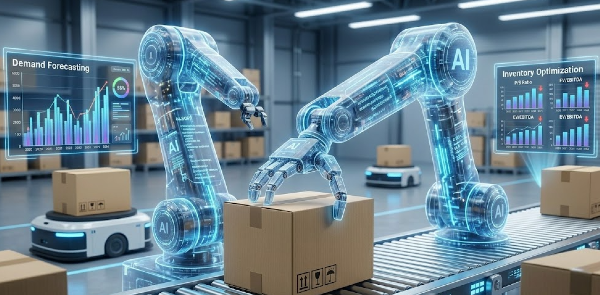
Machine learning systems can forecast demand, reduce stock shortages, and improve warehouse efficiency. These improvements help internet retailers lower costs while improving customer satisfaction.
🚀 AI could become one of the biggest profit drivers in e-commerce over the next decade
Beyond automation, AI is creating new revenue opportunities through advertising optimization, dynamic pricing, predictive analytics, and advanced customer engagement tools.
How AI Is Transforming Internet Retail Companies
The New Store Manager Never Sleeps
Walk into a traditional retail store and you'll find managers making decisions every day.
They decide what products to stock. They adjust pricing. They plan promotions. They help customers find what they need.
Now imagine a manager that can make millions of those decisions every second.
That is essentially what artificial intelligence is becoming for internet retailers.
AI is rapidly changing how online stores operate. It helps companies understand customer behavior, predict demand, optimize pricing, manage inventory, improve logistics, and personalize shopping experiences.
For investors, this shift matters because AI is no longer a futuristic experiment. It is becoming a core business tool that can influence revenue growth, profit margins, and long-term competitive advantages.
The companies that successfully integrate AI may gain meaningful advantages over rivals that move more slowly.
Why Internet Retailers Are Investing Heavily in AI
E-commerce generates enormous amounts of data.
Every click, search, purchase, review, and abandoned shopping cart creates information that can be analyzed.
The challenge is that humans cannot process billions of data points efficiently.
AI can.
Machine learning systems identify patterns that would be impossible for people to recognize at scale. These insights help retailers understand what customers want, when they want it, and how likely they are to make a purchase.
As online competition intensifies, even small improvements can produce significant financial results.
A one-percent increase in conversion rates may generate millions of dollars in additional revenue for large platforms.
That potential explains why AI spending continues rising across the industry.
| AI Application |
Primary Benefit |
| Product Recommendations |
Higher sales |
| Dynamic Pricing |
Revenue optimization |
| Inventory Forecasting |
Lower costs |
| Customer Service Automation |
Improved efficiency |
| Advertising Optimization |
Better marketing returns |
For many retailers, AI has shifted from a competitive advantage to a business necessity.
Amazon Has Turned AI Into a Business Engine
Few companies demonstrate the power of AI better than Amazon.
The company uses artificial intelligence throughout its ecosystem.
When customers receive product recommendations, AI is working behind the scenes. When warehouse robots move inventory, AI helps coordinate operations. When advertisers target shoppers, machine learning algorithms optimize campaigns.
Even Amazon's cloud business benefits.
Through Amazon Web Services, the company provides AI tools to businesses around the world. This means Amazon is both a user of AI and a supplier of AI infrastructure.
The result is a powerful feedback loop.
As more activity flows through Amazon's ecosystem, more data becomes available. More data helps improve AI models. Better AI models create better customer experiences, strengthening its competitive moat.
That cycle can strengthen competitive advantages over time.
Personalized Shopping Is Becoming the New Standard
Customers increasingly expect online stores to understand their preferences.
Generic shopping experiences are losing ground.
AI allows retailers to tailor product recommendations based on browsing history, purchase behavior, demographics, and thousands of other signals.
This personalization benefits both consumers and retailers.
Customers discover products more quickly. Retailers increase sales and engagement.
Companies such as Amazon, Alibaba, MercadoLibre, and Etsy have invested heavily in recommendation systems because they directly influence purchasing behavior.
A customer who sees relevant products is more likely to make a purchase than one who must search through thousands of unrelated options.
The modern digital storefront is becoming less like a catalog and more like a personal shopping assistant.
AI Is Changing Inventory Management
One of the biggest challenges in retail is deciding how much inventory to hold.
Too little inventory leads to stockouts and lost sales.
Too much inventory ties up capital and increases storage costs.
AI helps solve this problem.
Machine learning models analyze historical sales patterns, seasonal trends, economic conditions, promotions, weather data, and consumer behavior to forecast demand more accurately.
| Inventory Challenge |
AI Solution |
| Stock Shortages |
Demand forecasting |
| Excess Inventory |
Purchase optimization |
| Seasonal Demand Swings |
Predictive analytics |
| Regional Demand Differences |
Local forecasting |
| Warehouse Efficiency |
Automated planning |
Improved forecasting can significantly enhance profitability because inventory mistakes become less frequent while supporting internet retail companies generating strong profits.
Customer Service Is Undergoing a Quiet Revolution
Most consumers have interacted with AI-powered customer service without realizing it.
Chatbots have become far more sophisticated than their early versions.
Modern AI systems can answer questions, track orders, process returns, and resolve common issues with increasing accuracy.
This automation reduces costs while improving response times.
For large internet retailers handling millions of customer interactions, the savings can be substantial.
Human support agents remain important, especially for complex situations.
However, AI is increasingly handling routine requests, allowing employees to focus on higher-value tasks.
The result is often a better experience for customers and lower operating expenses for companies.
AI Is Making Advertising More Profitable
Advertising has become one of the most important profit engines in e-commerce.
Companies like Amazon, Alibaba, and MercadoLibre operate advertising businesses that generate high-margin revenue.
AI plays a major role in this success.
Machine learning systems analyze user behavior to determine which advertisements are most likely to produce results.
Advertisers benefit from improved targeting.
Retailers benefit from higher advertising revenue.
Consumers often see more relevant promotions.
This creates a situation where multiple parties benefit simultaneously.
One interesting industry development is that some e-commerce platforms now generate faster profit growth from advertising than from their core retail operations. Investors can see how these high-margin businesses contribute to strong free cash flow generation.
That trend would have been difficult to imagine a decade ago.
Supply Chains Are Becoming Smarter
Supply chains have always been complex.
AI is making them smarter.
Internet retailers operate vast networks involving suppliers, warehouses, transportation providers, and customers. Even minor disruptions can create significant operational challenges.
AI systems help identify bottlenecks before they become major problems.
They can recommend alternative shipping routes, optimize warehouse operations, and predict delivery delays.
Companies that improve supply chain efficiency often gain a competitive advantage because lower costs and faster delivery directly influence customer satisfaction.
| Supply Chain Function |
AI Impact |
| Route Planning |
Improved efficiency |
| Warehouse Operations |
Faster fulfillment |
| Demand Forecasting |
Better inventory levels |
| Delivery Scheduling |
Higher reliability |
| Risk Management |
Fewer disruptions |
As supply chains become more automated, AI's influence is likely to grow.
Smaller Retailers Are Gaining Access to AI
AI is not limited to technology giants.
Platforms such as Shopify are helping smaller merchants access advanced AI tools.
A business with ten employees can now use capabilities that once required large technology budgets.
AI-powered marketing tools, product descriptions, customer support systems, and sales forecasting solutions are becoming increasingly accessible.
This democratization may help smaller retailers compete more effectively.
Instead of replacing entrepreneurs, AI often acts as a force multiplier.
It allows small teams to operate with greater efficiency and sophistication while supporting the best e-commerce stocks for long-term investors that continue investing in innovation.
That trend could reshape competition throughout the e-commerce landscape.
AI Creates New Risks Alongside New Opportunities
AI offers enormous benefits.
It also introduces challenges.
Companies must manage data privacy concerns, cybersecurity risks, regulatory scrutiny, and implementation costs.
Poor AI decisions can create customer frustration.
Biased algorithms can damage brand reputation.
Overreliance on automation can sometimes reduce flexibility.
Investors should recognize that AI adoption is not automatically positive.
The strongest outcomes usually come from thoughtful implementation combined with human oversight.
The goal is not replacing people entirely.
The goal is helping people make better decisions faster.
Another fascinating trend is that some retailers now use AI systems to generate product descriptions, marketing content, and customer communications at a scale that would have required thousands of employees just a few years ago, further expanding the growth opportunities across internet retail.
The Future Checkout Line May Be Invisible
AI is transforming internet retail in ways both obvious and subtle.
Customers see personalized recommendations and smarter search results. Behind the scenes, retailers benefit from better forecasting, more efficient logistics, automated support, and optimized advertising.
Companies such as Amazon, Alibaba, MercadoLibre, Shopify, Etsy, and Walmart are investing heavily because they understand what is at stake.
AI has the potential to improve nearly every aspect of digital commerce.
The winners may not simply be the companies with the most advanced algorithms.
They may be the companies that best integrate AI into their operations while maintaining strong customer experiences and disciplined execution.
For investors, this trend is worth watching closely.
The next generation of e-commerce leaders may not be defined solely by what they sell.
They may be defined by how intelligently they operate behind the screen.
🚀 Expand Your Edge: Elite Internet Retail & E-Commerce Intelligence
Ready to capitalize on the future of digital commerce? Our Internet Retail Investor Intelligence Hub is designed to help investors analyze the companies, technologies, and trends reshaping global shopping. From foundational industry research and stock selection to AI, logistics, valuation, and international growth, explore the curated silos below to uncover your next investment opportunity.
🌐 Industry Fundamentals & Market Leaders
📊 Financial Strength & Shareholder Returns
🤖 Technology, AI & Digital Transformation
🚚 Logistics, Fulfillment & Supply Chain Intelligence
🌍 Global Expansion & Market Opportunities
⚠️ Risk Management & Economic Trends
🔍 Competitive Analysis & Advanced Research












Last updated on July 1st 2026 by Noah Brody
🔑 Key Takeaways
🤖 AI is becoming a competitive necessity for internet retailers
Artificial intelligence is helping e-commerce companies improve product recommendations, optimize pricing, manage inventory, and automate customer service. Retailers that deploy AI effectively can improve efficiency and strengthen customer loyalty.
🛒 Personalized shopping experiences are driving higher sales and engagement
Companies like Amazon, Alibaba, Shopify, and MercadoLibre use AI to analyze customer behavior and deliver tailored recommendations, increasing conversion rates and average order values.
📦 AI is reshaping supply chains and inventory management
Machine learning systems can forecast demand, reduce stock shortages, and improve warehouse efficiency. These improvements help internet retailers lower costs while improving customer satisfaction.
🚀 AI could become one of the biggest profit drivers in e-commerce over the next decade
Beyond automation, AI is creating new revenue opportunities through advertising optimization, dynamic pricing, predictive analytics, and advanced customer engagement tools.
How AI Is Transforming Internet Retail Companies
The New Store Manager Never Sleeps
Walk into a traditional retail store and you'll find managers making decisions every day.
They decide what products to stock. They adjust pricing. They plan promotions. They help customers find what they need.
Now imagine a manager that can make millions of those decisions every second.
That is essentially what artificial intelligence is becoming for internet retailers.
AI is rapidly changing how online stores operate. It helps companies understand customer behavior, predict demand, optimize pricing, manage inventory, improve logistics, and personalize shopping experiences.
For investors, this shift matters because AI is no longer a futuristic experiment. It is becoming a core business tool that can influence revenue growth, profit margins, and long-term competitive advantages.
The companies that successfully integrate AI may gain meaningful advantages over rivals that move more slowly.
Why Internet Retailers Are Investing Heavily in AI
E-commerce generates enormous amounts of data.
Every click, search, purchase, review, and abandoned shopping cart creates information that can be analyzed.
The challenge is that humans cannot process billions of data points efficiently.
AI can.
Machine learning systems identify patterns that would be impossible for people to recognize at scale. These insights help retailers understand what customers want, when they want it, and how likely they are to make a purchase.
As online competition intensifies, even small improvements can produce significant financial results.
A one-percent increase in conversion rates may generate millions of dollars in additional revenue for large platforms.
That potential explains why AI spending continues rising across the industry.
For many retailers, AI has shifted from a competitive advantage to a business necessity.
Amazon Has Turned AI Into a Business Engine
Few companies demonstrate the power of AI better than Amazon.
The company uses artificial intelligence throughout its ecosystem.
When customers receive product recommendations, AI is working behind the scenes. When warehouse robots move inventory, AI helps coordinate operations. When advertisers target shoppers, machine learning algorithms optimize campaigns.
Even Amazon's cloud business benefits.
Through Amazon Web Services, the company provides AI tools to businesses around the world. This means Amazon is both a user of AI and a supplier of AI infrastructure.
The result is a powerful feedback loop.
As more activity flows through Amazon's ecosystem, more data becomes available. More data helps improve AI models. Better AI models create better customer experiences, strengthening its competitive moat.
That cycle can strengthen competitive advantages over time.
Personalized Shopping Is Becoming the New Standard
Customers increasingly expect online stores to understand their preferences.
Generic shopping experiences are losing ground.
AI allows retailers to tailor product recommendations based on browsing history, purchase behavior, demographics, and thousands of other signals.
This personalization benefits both consumers and retailers.
Customers discover products more quickly. Retailers increase sales and engagement.
Companies such as Amazon, Alibaba, MercadoLibre, and Etsy have invested heavily in recommendation systems because they directly influence purchasing behavior.
A customer who sees relevant products is more likely to make a purchase than one who must search through thousands of unrelated options.
The modern digital storefront is becoming less like a catalog and more like a personal shopping assistant.
AI Is Changing Inventory Management
One of the biggest challenges in retail is deciding how much inventory to hold.
Too little inventory leads to stockouts and lost sales.
Too much inventory ties up capital and increases storage costs.
AI helps solve this problem.
Machine learning models analyze historical sales patterns, seasonal trends, economic conditions, promotions, weather data, and consumer behavior to forecast demand more accurately.
Improved forecasting can significantly enhance profitability because inventory mistakes become less frequent while supporting internet retail companies generating strong profits.
Customer Service Is Undergoing a Quiet Revolution
Most consumers have interacted with AI-powered customer service without realizing it.
Chatbots have become far more sophisticated than their early versions.
Modern AI systems can answer questions, track orders, process returns, and resolve common issues with increasing accuracy.
This automation reduces costs while improving response times.
For large internet retailers handling millions of customer interactions, the savings can be substantial.
Human support agents remain important, especially for complex situations.
However, AI is increasingly handling routine requests, allowing employees to focus on higher-value tasks.
The result is often a better experience for customers and lower operating expenses for companies.
AI Is Making Advertising More Profitable
Advertising has become one of the most important profit engines in e-commerce.
Companies like Amazon, Alibaba, and MercadoLibre operate advertising businesses that generate high-margin revenue.
AI plays a major role in this success.
Machine learning systems analyze user behavior to determine which advertisements are most likely to produce results.
Advertisers benefit from improved targeting.
Retailers benefit from higher advertising revenue.
Consumers often see more relevant promotions.
This creates a situation where multiple parties benefit simultaneously.
One interesting industry development is that some e-commerce platforms now generate faster profit growth from advertising than from their core retail operations. Investors can see how these high-margin businesses contribute to strong free cash flow generation.
That trend would have been difficult to imagine a decade ago.
Supply Chains Are Becoming Smarter
Supply chains have always been complex.
AI is making them smarter.
Internet retailers operate vast networks involving suppliers, warehouses, transportation providers, and customers. Even minor disruptions can create significant operational challenges.
AI systems help identify bottlenecks before they become major problems.
They can recommend alternative shipping routes, optimize warehouse operations, and predict delivery delays.
Companies that improve supply chain efficiency often gain a competitive advantage because lower costs and faster delivery directly influence customer satisfaction.
As supply chains become more automated, AI's influence is likely to grow.
Smaller Retailers Are Gaining Access to AI
AI is not limited to technology giants.
Platforms such as Shopify are helping smaller merchants access advanced AI tools.
A business with ten employees can now use capabilities that once required large technology budgets.
AI-powered marketing tools, product descriptions, customer support systems, and sales forecasting solutions are becoming increasingly accessible.
This democratization may help smaller retailers compete more effectively.
Instead of replacing entrepreneurs, AI often acts as a force multiplier.
It allows small teams to operate with greater efficiency and sophistication while supporting the best e-commerce stocks for long-term investors that continue investing in innovation.
That trend could reshape competition throughout the e-commerce landscape.
AI Creates New Risks Alongside New Opportunities
AI offers enormous benefits.
It also introduces challenges.
Companies must manage data privacy concerns, cybersecurity risks, regulatory scrutiny, and implementation costs.
Poor AI decisions can create customer frustration.
Biased algorithms can damage brand reputation.
Overreliance on automation can sometimes reduce flexibility.
Investors should recognize that AI adoption is not automatically positive.
The strongest outcomes usually come from thoughtful implementation combined with human oversight.
The goal is not replacing people entirely.
The goal is helping people make better decisions faster.
Another fascinating trend is that some retailers now use AI systems to generate product descriptions, marketing content, and customer communications at a scale that would have required thousands of employees just a few years ago, further expanding the growth opportunities across internet retail.
The Future Checkout Line May Be Invisible
AI is transforming internet retail in ways both obvious and subtle.
Customers see personalized recommendations and smarter search results. Behind the scenes, retailers benefit from better forecasting, more efficient logistics, automated support, and optimized advertising.
Companies such as Amazon, Alibaba, MercadoLibre, Shopify, Etsy, and Walmart are investing heavily because they understand what is at stake.
AI has the potential to improve nearly every aspect of digital commerce.
The winners may not simply be the companies with the most advanced algorithms.
They may be the companies that best integrate AI into their operations while maintaining strong customer experiences and disciplined execution.
For investors, this trend is worth watching closely.
The next generation of e-commerce leaders may not be defined solely by what they sell.
They may be defined by how intelligently they operate behind the screen.
🚀 Expand Your Edge: Elite Internet Retail & E-Commerce Intelligence
Ready to capitalize on the future of digital commerce? Our Internet Retail Investor Intelligence Hub is designed to help investors analyze the companies, technologies, and trends reshaping global shopping. From foundational industry research and stock selection to AI, logistics, valuation, and international growth, explore the curated silos below to uncover your next investment opportunity.
🌐 Industry Fundamentals & Market Leaders
📊 Financial Strength & Shareholder Returns
🤖 Technology, AI & Digital Transformation
🚚 Logistics, Fulfillment & Supply Chain Intelligence
🌍 Global Expansion & Market Opportunities
⚠️ Risk Management & Economic Trends
🔍 Competitive Analysis & Advanced Research