Introduction
Market capitalization is a key metric used to classify stocks based on their total market value. It is calculated by multiplying a company's share price by the number of outstanding shares, providing insight into its size and financial stability. Investors rely on market capitalization to assess risk levels and investment potential, as different categories—such as giant-cap, large-cap, mid-cap, and small-cap—offer varying degrees of volatility and growth opportunities. Understanding these classifications helps investors make informed decisions, ensuring their portfolios align with their financial goals and risk tolerance.
Defining Giant-Cap and Large-Cap Stocks
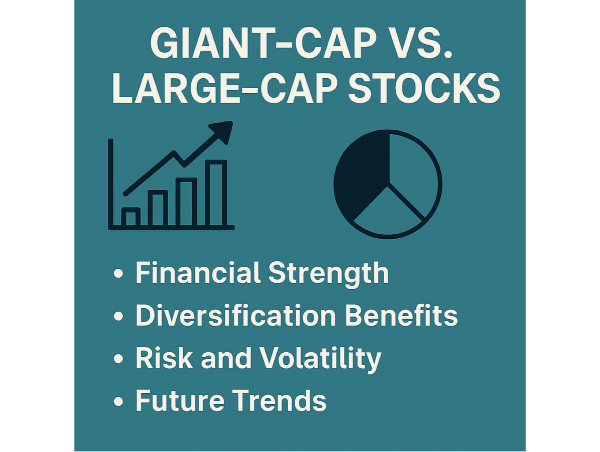
Giant-cap and large-cap stocks are categorized based on their market capitalization, which represents the total value of a company's outstanding shares. Giant-cap stocks typically have a market capitalization exceeding $200 billion, making them the largest and most influential companies in the market. Large-cap stocks, on the other hand, range between $10 billion and $200 billion in market value. These classifications help investors assess risk levels, financial stability, and growth potential when selecting stocks for their portfolios.
Giant-cap companies, such as Apple [AAPL] and Microsoft [MSFT], dominate their industries and often set market trends. They tend to have lower volatility due to their strong financials and global presence. Large-cap stocks, including companies like Starbucks [SBUX] and Pfizer [PFE], offer stability but may experience slightly higher fluctuations compared to giant-cap stocks.
While both categories provide reliable investment opportunities, giant-cap stocks are generally favored for their resilience during economic downturns. Investors often consider giant-cap stocks as safer investments due to their financial strength and ability to withstand market fluctuations. Large-cap stocks, while still stable, may offer more growth potential as they expand their market reach.
Sources
Morningstar
Investopedia
FINRA
Why Market Cap Matters in Investing
Market capitalization plays a crucial role in determining a company's risk profile and return potential. Larger companies, such as Apple [AAPL] and Microsoft [MSFT], tend to have more diversified business structures, making them less sensitive to economic downturns. Smaller companies, on the other hand, often focus on niche markets, which can lead to higher growth potential but increased volatility. Investors use market cap classifications to balance their portfolios, ensuring a mix of stability and growth opportunities.
Market cap also influences stock performance and investor decisions. Large-cap stocks generally experience lower volatility and attract institutional investors, contributing to their stability. Mid-cap and small-cap stocks, while offering higher growth potential, are more susceptible to market fluctuations. Companies like Tesla [TSLA] and Nvidia [NVDA] have transitioned from mid-cap to large-cap status due to sustained growth and market influence. Understanding these shifts helps investors make informed decisions about risk management and long-term investment strategies.
Sources
Fidelity
NerdWallet
Smart Money Habits
Are Giant-Cap Stocks Safer Than Large-Cap Stocks?
Giant-cap stocks are generally considered safer investments due to their financial strength, market influence, and lower volatility. These companies, such as Apple [AAPL] and Microsoft [MSFT], have substantial cash reserves, diversified revenue streams, and global market dominance, making them more resilient during economic downturns.
Large-cap stocks, while still stable, may experience slightly higher volatility due to their broader range of industries and market exposure. Investors seeking lower risk often favor giant-cap stocks for their ability to withstand economic fluctuations and maintain consistent returns. Additionally, these stocks are frequently included in major indices, reinforcing their reliability and investor confidence.
Historically, giant-cap stocks have demonstrated lower volatility compared to large-cap stocks. Their established market positions and strong financials contribute to steady performance, even during periods of economic uncertainty. Large-cap stocks, including companies like Pfizer [PFE] and Nike [NKE], offer stability but may be more sensitive to industry-specific risks. Long-term investors often include both giant-cap and large-cap stocks in their portfolios to balance security with growth potential. Understanding these differences helps investors make informed decisions based on their risk tolerance and financial goals.
Sources
Musaffa Academy
CFA Institute
Investopedia
Examples of Giant-Cap and Large-Cap Stocks
Giant-cap stocks represent the largest publicly traded companies, typically exceeding $200 billion in market capitalization. These companies, such as Apple [AAPL], Microsoft [MSFT], and Amazon [AMZN], dominate their industries and have significant global influence. Their financial strength, diversified revenue streams, and market leadership make them attractive to investors seeking stability. Large-cap stocks, valued between $10 billion and $200 billion, include companies like Starbucks [SBUX], Pfizer [PFE], and Caterpillar [CAT]. While they may not have the same scale as giant-cap stocks, they still play a crucial role in shaping market trends.
Industry leaders within the giant-cap category often set benchmarks for innovation and financial performance. Companies like Nvidia [NVDA] and Alphabet [GOOGL] drive technological advancements, influencing entire sectors. Large-cap stocks, such as The Walt Disney Company [DIS] and PepsiCo [PEP], maintain strong brand recognition and consumer loyalty, contributing to their market stability. Investors monitor these companies closely, as their performance can impact broader economic trends and investment strategies. Both giant-cap and large-cap stocks offer unique advantages depending on investment goals.
Sources
Stock Analysis
MarketBeat
The Motley Fool
Investment Strategies for Giant-Cap and Large-Cap Stocks
Investors can optimize their portfolios by strategically incorporating giant-cap and large-cap stocks. Diversification is key to balancing risk and return, as these stocks provide stability while allowing for growth opportunities. Allocating funds across different sectors and industries helps mitigate market fluctuations. For example, combining technology leaders like Apple [AAPL] and Microsoft [MSFT] with consumer staples such as Procter & Gamble [PG] and Coca-Cola [KO] ensures a well-rounded investment approach. Diversification also extends to geographic markets, where exposure to international large-cap stocks can enhance portfolio resilience.
Investors analyze key indicators such as price-to-earnings ratios, earnings growth, and dividend yields to assess a company's financial health. Companies with strong balance sheets and consistent revenue streams, such as Nvidia [NVDA] and Johnson & Johnson [JNJ], are often preferred for long-term stability. Additionally, reviewing industry trends and competitive positioning helps investors identify stocks with sustained growth potential.
ETFs and mutual funds offer convenient ways to invest in giant-cap and large-cap stocks while maintaining diversification. Funds such as the Vanguard Mega Cap ETF [MGC] and the SPDR S&P 500 ETF Trust [SPY] provide exposure to a broad range of large-cap companies, reducing individual stock risk. Mutual funds like the Fidelity Large Cap Stock Fund [FLCSX] allow investors to benefit from professional management and diversified holdings.
Sources
Morningstar
Investopedia
Money Under 30
Future Trends in Giant-Cap and Large-Cap Stocks
The future of giant-cap and large-cap stocks is shaped by evolving market trends and technological advancements. Companies like Nvidia [NVDA] and Amazon [AMZN] are driving innovation in artificial intelligence and cloud computing, positioning themselves for sustained growth. As industries adapt to digital transformation, cybersecurity and enterprise solutions are expected to see increased investment. Additionally, the financial sector is likely to benefit from lower interest rates, creating opportunities for stable returns among large-cap banking institutions such as JPMorgan Chase [JPM] and Bank of America [BAC].
Market analysts predict that large-cap stocks will continue to play a crucial role in portfolio diversification. While giant-cap stocks offer stability, large-cap companies such as Tesla [TSLA] and Starbucks [SBUX] provide growth potential through strategic expansion and consumer demand. The healthcare sector, led by companies like Pfizer [PFE] and Johnson & Johnson [JNJ], is expected to maintain steady performance due to ongoing medical advancements and increased global healthcare spending.
Looking ahead, sustainability and technological innovation will be key drivers of growth for giant-cap and large-cap stocks. The shift toward green technology is expected to benefit firms like NextEra Energy [NEE] and Tesla [TSLA], while advancements in semiconductor manufacturing will support growth for Intel [INTC] and Taiwan Semiconductor Manufacturing Company [TSM].
Sources
American Century
Morningstar
BlackRock
Conclusion
Giant-cap and large-cap stocks play a vital role in investment strategies, offering stability, financial strength, and growth potential. While giant-cap stocks provide lower volatility and reliable returns, large-cap stocks offer diversification and opportunities for expansion. Understanding their differences, risk factors, and market trends allows investors to make informed decisions aligned with long-term financial goals.
As industries evolve and emerging sectors gain prominence, tracking performance metrics and adapting portfolios accordingly ensures a balanced approach to investment success. By integrating both categories into a diversified portfolio, investors can navigate market fluctuations and optimize their returns over time.


















Introduction
Market capitalization is a key metric used to classify stocks based on their total market value. It is calculated by multiplying a company's share price by the number of outstanding shares, providing insight into its size and financial stability. Investors rely on market capitalization to assess risk levels and investment potential, as different categories—such as giant-cap, large-cap, mid-cap, and small-cap—offer varying degrees of volatility and growth opportunities. Understanding these classifications helps investors make informed decisions, ensuring their portfolios align with their financial goals and risk tolerance.
Defining Giant-Cap and Large-Cap Stocks
Giant-cap and large-cap stocks are categorized based on their market capitalization, which represents the total value of a company's outstanding shares. Giant-cap stocks typically have a market capitalization exceeding $200 billion, making them the largest and most influential companies in the market. Large-cap stocks, on the other hand, range between $10 billion and $200 billion in market value. These classifications help investors assess risk levels, financial stability, and growth potential when selecting stocks for their portfolios.
Giant-cap companies, such as Apple [AAPL] and Microsoft [MSFT], dominate their industries and often set market trends. They tend to have lower volatility due to their strong financials and global presence. Large-cap stocks, including companies like Starbucks [SBUX] and Pfizer [PFE], offer stability but may experience slightly higher fluctuations compared to giant-cap stocks.
While both categories provide reliable investment opportunities, giant-cap stocks are generally favored for their resilience during economic downturns. Investors often consider giant-cap stocks as safer investments due to their financial strength and ability to withstand market fluctuations. Large-cap stocks, while still stable, may offer more growth potential as they expand their market reach.
Sources
Morningstar
Investopedia
FINRA
Why Market Cap Matters in Investing
Market capitalization plays a crucial role in determining a company's risk profile and return potential. Larger companies, such as Apple [AAPL] and Microsoft [MSFT], tend to have more diversified business structures, making them less sensitive to economic downturns. Smaller companies, on the other hand, often focus on niche markets, which can lead to higher growth potential but increased volatility. Investors use market cap classifications to balance their portfolios, ensuring a mix of stability and growth opportunities.
Market cap also influences stock performance and investor decisions. Large-cap stocks generally experience lower volatility and attract institutional investors, contributing to their stability. Mid-cap and small-cap stocks, while offering higher growth potential, are more susceptible to market fluctuations. Companies like Tesla [TSLA] and Nvidia [NVDA] have transitioned from mid-cap to large-cap status due to sustained growth and market influence. Understanding these shifts helps investors make informed decisions about risk management and long-term investment strategies.
Sources
Fidelity
NerdWallet
Smart Money Habits
Are Giant-Cap Stocks Safer Than Large-Cap Stocks?
Giant-cap stocks are generally considered safer investments due to their financial strength, market influence, and lower volatility. These companies, such as Apple [AAPL] and Microsoft [MSFT], have substantial cash reserves, diversified revenue streams, and global market dominance, making them more resilient during economic downturns.
Large-cap stocks, while still stable, may experience slightly higher volatility due to their broader range of industries and market exposure. Investors seeking lower risk often favor giant-cap stocks for their ability to withstand economic fluctuations and maintain consistent returns. Additionally, these stocks are frequently included in major indices, reinforcing their reliability and investor confidence.
Historically, giant-cap stocks have demonstrated lower volatility compared to large-cap stocks. Their established market positions and strong financials contribute to steady performance, even during periods of economic uncertainty. Large-cap stocks, including companies like Pfizer [PFE] and Nike [NKE], offer stability but may be more sensitive to industry-specific risks. Long-term investors often include both giant-cap and large-cap stocks in their portfolios to balance security with growth potential. Understanding these differences helps investors make informed decisions based on their risk tolerance and financial goals.
Sources
Musaffa Academy
CFA Institute
Investopedia
Examples of Giant-Cap and Large-Cap Stocks
Giant-cap stocks represent the largest publicly traded companies, typically exceeding $200 billion in market capitalization. These companies, such as Apple [AAPL], Microsoft [MSFT], and Amazon [AMZN], dominate their industries and have significant global influence. Their financial strength, diversified revenue streams, and market leadership make them attractive to investors seeking stability. Large-cap stocks, valued between $10 billion and $200 billion, include companies like Starbucks [SBUX], Pfizer [PFE], and Caterpillar [CAT]. While they may not have the same scale as giant-cap stocks, they still play a crucial role in shaping market trends.
Industry leaders within the giant-cap category often set benchmarks for innovation and financial performance. Companies like Nvidia [NVDA] and Alphabet [GOOGL] drive technological advancements, influencing entire sectors. Large-cap stocks, such as The Walt Disney Company [DIS] and PepsiCo [PEP], maintain strong brand recognition and consumer loyalty, contributing to their market stability. Investors monitor these companies closely, as their performance can impact broader economic trends and investment strategies. Both giant-cap and large-cap stocks offer unique advantages depending on investment goals.
Sources
Stock Analysis
MarketBeat
The Motley Fool
Investment Strategies for Giant-Cap and Large-Cap Stocks
Investors can optimize their portfolios by strategically incorporating giant-cap and large-cap stocks. Diversification is key to balancing risk and return, as these stocks provide stability while allowing for growth opportunities. Allocating funds across different sectors and industries helps mitigate market fluctuations. For example, combining technology leaders like Apple [AAPL] and Microsoft [MSFT] with consumer staples such as Procter & Gamble [PG] and Coca-Cola [KO] ensures a well-rounded investment approach. Diversification also extends to geographic markets, where exposure to international large-cap stocks can enhance portfolio resilience.
Investors analyze key indicators such as price-to-earnings ratios, earnings growth, and dividend yields to assess a company's financial health. Companies with strong balance sheets and consistent revenue streams, such as Nvidia [NVDA] and Johnson & Johnson [JNJ], are often preferred for long-term stability. Additionally, reviewing industry trends and competitive positioning helps investors identify stocks with sustained growth potential.
ETFs and mutual funds offer convenient ways to invest in giant-cap and large-cap stocks while maintaining diversification. Funds such as the Vanguard Mega Cap ETF [MGC] and the SPDR S&P 500 ETF Trust [SPY] provide exposure to a broad range of large-cap companies, reducing individual stock risk. Mutual funds like the Fidelity Large Cap Stock Fund [FLCSX] allow investors to benefit from professional management and diversified holdings.
Sources
Morningstar
Investopedia
Money Under 30
Future Trends in Giant-Cap and Large-Cap Stocks
The future of giant-cap and large-cap stocks is shaped by evolving market trends and technological advancements. Companies like Nvidia [NVDA] and Amazon [AMZN] are driving innovation in artificial intelligence and cloud computing, positioning themselves for sustained growth. As industries adapt to digital transformation, cybersecurity and enterprise solutions are expected to see increased investment. Additionally, the financial sector is likely to benefit from lower interest rates, creating opportunities for stable returns among large-cap banking institutions such as JPMorgan Chase [JPM] and Bank of America [BAC].
Market analysts predict that large-cap stocks will continue to play a crucial role in portfolio diversification. While giant-cap stocks offer stability, large-cap companies such as Tesla [TSLA] and Starbucks [SBUX] provide growth potential through strategic expansion and consumer demand. The healthcare sector, led by companies like Pfizer [PFE] and Johnson & Johnson [JNJ], is expected to maintain steady performance due to ongoing medical advancements and increased global healthcare spending.
Looking ahead, sustainability and technological innovation will be key drivers of growth for giant-cap and large-cap stocks. The shift toward green technology is expected to benefit firms like NextEra Energy [NEE] and Tesla [TSLA], while advancements in semiconductor manufacturing will support growth for Intel [INTC] and Taiwan Semiconductor Manufacturing Company [TSM].
Sources
American Century
Morningstar
BlackRock
Conclusion
Giant-cap and large-cap stocks play a vital role in investment strategies, offering stability, financial strength, and growth potential. While giant-cap stocks provide lower volatility and reliable returns, large-cap stocks offer diversification and opportunities for expansion. Understanding their differences, risk factors, and market trends allows investors to make informed decisions aligned with long-term financial goals.
As industries evolve and emerging sectors gain prominence, tracking performance metrics and adapting portfolios accordingly ensures a balanced approach to investment success. By integrating both categories into a diversified portfolio, investors can navigate market fluctuations and optimize their returns over time.