Introduction
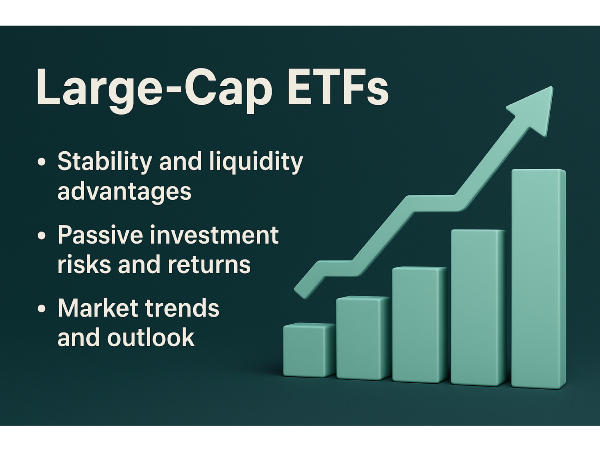
Large-cap ETFs provide investors with exposure to well-established companies that dominate their respective industries. These funds allocate a higher percentage of assets to stocks with larger market capitalizations, ensuring stability and lower volatility compared to mid-cap and small-cap ETFs. Investors often perceive large-cap ETFs as reliable investment options due to their strong financial performance, consistent dividend payouts, and institutional backing. By tracking major indices, these ETFs offer diversified market exposure, making them a preferred choice for long-term portfolio growth and risk management.
Understanding Large-Cap ETFs
Large-cap ETFs invest in companies with substantial market capitalizations, typically exceeding $10 billion. These funds track major indices such as the S&P 500, ensuring exposure to industry leaders like Microsoft and Apple. Large-cap ETFs provide stability and lower volatility compared to mid-cap and small-cap ETFs, making them a preferred choice for conservative investors. Companies such as Amazon and Alphabet receive higher allocations in large-cap ETFs due to their substantial market value. Mid-cap ETFs focus on firms with market capitalizations between $2 billion and $10 billion, balancing growth potential with risk. Small-cap ETFs invest in companies valued below $2 billion, offering higher returns but increased volatility.
The primary difference between large-cap, mid-cap, and small-cap ETFs lies in risk exposure and growth potential. Large-cap ETFs provide stability, benefiting from institutional investment and consistent earnings. Mid-cap ETFs offer a blend of growth and security, featuring companies transitioning into larger market positions. Small-cap ETFs, while riskier, present opportunities for significant appreciation. Investors must assess their financial goals and risk tolerance when selecting between these ETF types to optimize portfolio performance.
Sources
ETF Central
Forbes
ETF Database
Advantages of Large-Cap ETFs
Large-cap ETFs provide stability and lower volatility compared to mid-cap and small-cap ETFs, making them a preferred choice for conservative investors. Companies such as Microsoft and Apple dominate these funds, ensuring consistent performance even during economic downturns. Their financial strength allows them to navigate market fluctuations with minimal disruption, reducing risk for investors.
Strong financial performance and dividend payouts further enhance the appeal of large-cap ETFs. Companies such as Johnson & Johnson and Procter & Gamble maintain robust earnings, allowing them to distribute regular dividends to shareholders. These payouts provide investors with passive income while reinforcing the stability of large-cap investments. Additionally, firms with consistent revenue streams and diversified business models contribute to the long-term reliability of large-cap ETFs. Financial institutions such as JPMorgan Chase and Bank of America receive substantial institutional backing, ensuring liquidity and market stability. Large-cap stocks are frequently traded, allowing investors to enter and exit positions with ease.
Sources
Forbes
Investopedia
ETF Central
Potential Risks of Large-Cap ETFs
Firms such as Microsoft and Apple dominate these funds, meaning their performance heavily influences overall returns. During economic recessions, large-cap stocks may experience declines, impacting ETF stability. Since these funds follow a passive strategy, they cannot adjust holdings to mitigate losses, leaving investors exposed to broader market fluctuations. Sector concentration risks and regulatory challenges also pose threats to large-cap ETFs. Many funds are heavily weighted toward technology companies such as Amazon and Alphabet, increasing vulnerability to sector-specific downturns. Regulatory scrutiny on data privacy and antitrust policies may affect stock valuations, leading to volatility in ETF performance.
Additionally, financial firms like JPMorgan Chase are sensitive to policy changes that influence lending practices and market liquidity, further impacting fund stability. Limited flexibility in stock selection compared to actively managed funds is another drawback of large-cap ETFs. Unlike actively managed funds, which allow portfolio managers to adjust holdings based on market trends, large-cap ETFs strictly follow index compositions. This means investors cannot pivot away from underperforming sectors or capitalize on emerging opportunities.
Sources
Investopedia
Invesco US
The Motley Fool
Are Large-Cap ETFs a Good Investment?
Large-cap ETFs have consistently demonstrated strong historical performance, making them a reliable investment choice for long-term investors. These funds allocate a significant portion of assets to industry leaders such as Microsoft and Apple, ensuring stability and lower volatility. While large-cap ETFs provide steady returns, they are still subject to market downturns and sector-specific risks. Investors seeking predictable growth often favor these funds for their ability to withstand economic fluctuations while maintaining consistent appreciation over time.
Large-cap ETFs cater to various investor profiles, from conservative individuals prioritizing stability to those focused on long-term wealth accumulation. Companies such as Amazon and Alphabet contribute to fund performance, reinforcing their appeal for diversified portfolios. These ETFs are particularly suitable for passive investors looking for low-cost exposure to major indices without the need for active stock selection. By balancing risk and reward, large-cap ETFs remain a strategic investment option for financial security and portfolio diversification.
Sources
Forbes
Morningstar
Bankrate
Comparison Between Large-Cap ETFs and Other Investment Options
Large-cap ETFs, mutual funds, and individual stock investments each offer distinct advantages and risks, making them suitable for different investor profiles. Large-cap ETFs provide diversified exposure to industry leaders such as Microsoft and Apple, reducing the risk associated with investing in individual stocks. Mutual funds, on the other hand, are actively managed and may offer greater flexibility in stock selection but often come with higher fees. Individual stock investments allow investors to directly own shares of companies like Amazon, but they require extensive research and carry higher volatility.
Active and passive management strategies play a crucial role in ETF investing. Large-cap ETFs typically follow a passive approach, tracking indices such as the S&P 500 without frequent stock selection. Companies such as Alphabet and Tesla are commonly included in these funds, ensuring exposure to industry leaders. Actively managed ETFs, however, rely on portfolio managers to select stocks, aiming to outperform the market. While passive ETFs offer lower fees and consistent returns, active ETFs provide flexibility in adjusting holdings based on market trends. Financial institutions such as JPMorgan Chase and Bank of America contribute to index fund stability, reinforcing their appeal for passive investors. Actively managed ETFs may achieve higher returns in specific market conditions, but their success depends on fund managers' ability to make strategic stock selections.
Sources
Vanguard
Edelweiss Mutual Fund
Money Under 30
Market Trends and Future Outlook for Large-Cap ETFs
Large-cap ETFs are expected to see continued growth as investors prioritize stability and cost efficiency. Companies such as Microsoft and Apple remain dominant holdings, reinforcing their appeal for long-term investment strategies. Analysts predict that ETF adoption will accelerate, driven by increased institutional participation and the shift from mutual funds to ETFs. As passive investing gains traction, large-cap ETFs will likely maintain their position as a preferred choice for diversified portfolios](https://www.ssga.com/library-content/assets/pdf/emea/equities/2024/spdr-etf-impact-report-2024-2025.pdf).
Despite their advantages, large-cap ETFs face emerging risks, including market concentration and regulatory changes. Companies such as Amazon and Alphabet are subject to evolving policies that may impact stock valuations. Additionally, inflation concerns and geopolitical tensions could introduce volatility, affecting investor sentiment. However, opportunities remain in sectors poised for long-term growth, such as artificial intelligence and sustainable energy, which may influence future ETF composition](https://www.ssga.com/library-content/assets/pdf/emea/equities/2024/spdr-etf-impact-report-2024-2025.pdf).
Sources
Vanguard
State Street Global Advisors
PwC
Conclusion
Large-cap ETFs provide investors with stability, liquidity, and long-term growth potential, making them a strategic choice for portfolio diversification. While these funds offer reliable exposure to industry leaders such as Microsoft and Apple, they also present risks such as market downturns and sector concentration. Understanding the nuances of large-cap ETFs, including passive and active strategies, historical performance, and emerging trends, empowers investors to make informed decisions. As ETF adoption continues to grow, large-cap funds will remain a cornerstone of modern investment strategies.
📌Read More About:
The Top Large Cap Stocks- https://stockbossup.com/pages/topics/large-cap
What is the Best Large-Cap Value ETF?-https://stockbossup.com/pages/post/38636/what-is-the-best-large-cap-value-etf
Best Large Cap Value ETF- https://stockbossup.com/pages/post/38729/best-large-cap-value-etf
What is the Best ETF for Large Cap Growth?- https://stockbossup.com/pages/post/38747/what-is-the-best-etf-for-large-cap-growth


















Introduction
Large-cap ETFs provide investors with exposure to well-established companies that dominate their respective industries. These funds allocate a higher percentage of assets to stocks with larger market capitalizations, ensuring stability and lower volatility compared to mid-cap and small-cap ETFs. Investors often perceive large-cap ETFs as reliable investment options due to their strong financial performance, consistent dividend payouts, and institutional backing. By tracking major indices, these ETFs offer diversified market exposure, making them a preferred choice for long-term portfolio growth and risk management.
Understanding Large-Cap ETFs
Large-cap ETFs invest in companies with substantial market capitalizations, typically exceeding $10 billion. These funds track major indices such as the S&P 500, ensuring exposure to industry leaders like Microsoft and Apple. Large-cap ETFs provide stability and lower volatility compared to mid-cap and small-cap ETFs, making them a preferred choice for conservative investors. Companies such as Amazon and Alphabet receive higher allocations in large-cap ETFs due to their substantial market value. Mid-cap ETFs focus on firms with market capitalizations between $2 billion and $10 billion, balancing growth potential with risk. Small-cap ETFs invest in companies valued below $2 billion, offering higher returns but increased volatility.
The primary difference between large-cap, mid-cap, and small-cap ETFs lies in risk exposure and growth potential. Large-cap ETFs provide stability, benefiting from institutional investment and consistent earnings. Mid-cap ETFs offer a blend of growth and security, featuring companies transitioning into larger market positions. Small-cap ETFs, while riskier, present opportunities for significant appreciation. Investors must assess their financial goals and risk tolerance when selecting between these ETF types to optimize portfolio performance.
Sources
ETF Central
Forbes
ETF Database
Advantages of Large-Cap ETFs
Large-cap ETFs provide stability and lower volatility compared to mid-cap and small-cap ETFs, making them a preferred choice for conservative investors. Companies such as Microsoft and Apple dominate these funds, ensuring consistent performance even during economic downturns. Their financial strength allows them to navigate market fluctuations with minimal disruption, reducing risk for investors.
Strong financial performance and dividend payouts further enhance the appeal of large-cap ETFs. Companies such as Johnson & Johnson and Procter & Gamble maintain robust earnings, allowing them to distribute regular dividends to shareholders. These payouts provide investors with passive income while reinforcing the stability of large-cap investments. Additionally, firms with consistent revenue streams and diversified business models contribute to the long-term reliability of large-cap ETFs. Financial institutions such as JPMorgan Chase and Bank of America receive substantial institutional backing, ensuring liquidity and market stability. Large-cap stocks are frequently traded, allowing investors to enter and exit positions with ease.
Sources
Forbes
Investopedia
ETF Central
Potential Risks of Large-Cap ETFs
Firms such as Microsoft and Apple dominate these funds, meaning their performance heavily influences overall returns. During economic recessions, large-cap stocks may experience declines, impacting ETF stability. Since these funds follow a passive strategy, they cannot adjust holdings to mitigate losses, leaving investors exposed to broader market fluctuations. Sector concentration risks and regulatory challenges also pose threats to large-cap ETFs. Many funds are heavily weighted toward technology companies such as Amazon and Alphabet, increasing vulnerability to sector-specific downturns. Regulatory scrutiny on data privacy and antitrust policies may affect stock valuations, leading to volatility in ETF performance.
Additionally, financial firms like JPMorgan Chase are sensitive to policy changes that influence lending practices and market liquidity, further impacting fund stability. Limited flexibility in stock selection compared to actively managed funds is another drawback of large-cap ETFs. Unlike actively managed funds, which allow portfolio managers to adjust holdings based on market trends, large-cap ETFs strictly follow index compositions. This means investors cannot pivot away from underperforming sectors or capitalize on emerging opportunities.
Sources
Investopedia
Invesco US
The Motley Fool
Are Large-Cap ETFs a Good Investment?
Large-cap ETFs have consistently demonstrated strong historical performance, making them a reliable investment choice for long-term investors. These funds allocate a significant portion of assets to industry leaders such as Microsoft and Apple, ensuring stability and lower volatility. While large-cap ETFs provide steady returns, they are still subject to market downturns and sector-specific risks. Investors seeking predictable growth often favor these funds for their ability to withstand economic fluctuations while maintaining consistent appreciation over time.
Large-cap ETFs cater to various investor profiles, from conservative individuals prioritizing stability to those focused on long-term wealth accumulation. Companies such as Amazon and Alphabet contribute to fund performance, reinforcing their appeal for diversified portfolios. These ETFs are particularly suitable for passive investors looking for low-cost exposure to major indices without the need for active stock selection. By balancing risk and reward, large-cap ETFs remain a strategic investment option for financial security and portfolio diversification.
Sources
Forbes
Morningstar
Bankrate
Comparison Between Large-Cap ETFs and Other Investment Options
Large-cap ETFs, mutual funds, and individual stock investments each offer distinct advantages and risks, making them suitable for different investor profiles. Large-cap ETFs provide diversified exposure to industry leaders such as Microsoft and Apple, reducing the risk associated with investing in individual stocks. Mutual funds, on the other hand, are actively managed and may offer greater flexibility in stock selection but often come with higher fees. Individual stock investments allow investors to directly own shares of companies like Amazon, but they require extensive research and carry higher volatility.
Active and passive management strategies play a crucial role in ETF investing. Large-cap ETFs typically follow a passive approach, tracking indices such as the S&P 500 without frequent stock selection. Companies such as Alphabet and Tesla are commonly included in these funds, ensuring exposure to industry leaders. Actively managed ETFs, however, rely on portfolio managers to select stocks, aiming to outperform the market. While passive ETFs offer lower fees and consistent returns, active ETFs provide flexibility in adjusting holdings based on market trends. Financial institutions such as JPMorgan Chase and Bank of America contribute to index fund stability, reinforcing their appeal for passive investors. Actively managed ETFs may achieve higher returns in specific market conditions, but their success depends on fund managers' ability to make strategic stock selections.
Sources
Vanguard
Edelweiss Mutual Fund
Money Under 30
Market Trends and Future Outlook for Large-Cap ETFs
Large-cap ETFs are expected to see continued growth as investors prioritize stability and cost efficiency. Companies such as Microsoft and Apple remain dominant holdings, reinforcing their appeal for long-term investment strategies. Analysts predict that ETF adoption will accelerate, driven by increased institutional participation and the shift from mutual funds to ETFs. As passive investing gains traction, large-cap ETFs will likely maintain their position as a preferred choice for diversified portfolios](https://www.ssga.com/library-content/assets/pdf/emea/equities/2024/spdr-etf-impact-report-2024-2025.pdf).
Despite their advantages, large-cap ETFs face emerging risks, including market concentration and regulatory changes. Companies such as Amazon and Alphabet are subject to evolving policies that may impact stock valuations. Additionally, inflation concerns and geopolitical tensions could introduce volatility, affecting investor sentiment. However, opportunities remain in sectors poised for long-term growth, such as artificial intelligence and sustainable energy, which may influence future ETF composition](https://www.ssga.com/library-content/assets/pdf/emea/equities/2024/spdr-etf-impact-report-2024-2025.pdf).
Sources
Vanguard
State Street Global Advisors
PwC
Conclusion
Large-cap ETFs provide investors with stability, liquidity, and long-term growth potential, making them a strategic choice for portfolio diversification. While these funds offer reliable exposure to industry leaders such as Microsoft and Apple, they also present risks such as market downturns and sector concentration. Understanding the nuances of large-cap ETFs, including passive and active strategies, historical performance, and emerging trends, empowers investors to make informed decisions. As ETF adoption continues to grow, large-cap funds will remain a cornerstone of modern investment strategies.
📌Read More About:
The Top Large Cap Stocks- https://stockbossup.com/pages/topics/large-cap
What is the Best Large-Cap Value ETF?-https://stockbossup.com/pages/post/38636/what-is-the-best-large-cap-value-etf
Best Large Cap Value ETF- https://stockbossup.com/pages/post/38729/best-large-cap-value-etf
What is the Best ETF for Large Cap Growth?- https://stockbossup.com/pages/post/38747/what-is-the-best-etf-for-large-cap-growth