Last updated on July 1st 2026 by Noah Brody
🔑 Key Takeaways
📱 Mobile shopping has become the primary growth engine for e-commerce
Consumers increasingly browse, compare, and purchase products directly from smartphones. Internet retailers that deliver seamless mobile experiences often benefit from higher engagement, stronger customer retention, and faster revenue growth.
🛒 Mobile apps create powerful competitive advantages
Companies with popular shopping apps can communicate directly with customers through notifications, personalized offers, and loyalty programs. This often lowers marketing costs and increases repeat purchases.
💳 Mobile payments are reducing friction in the buying process
Digital wallets and one-click checkout systems make purchases faster and easier. Fewer checkout obstacles often translate into higher conversion rates and stronger sales growth for internet retailers.
🚀 Mobile commerce is influencing future stock valuations
Investors increasingly evaluate how well internet retailers capture mobile traffic and mobile spending. Strong mobile ecosystems can support revenue growth, customer loyalty, and long-term competitive advantages.
How Mobile Shopping Trends Affect Internet Retail Stocks
The Store in Your Pocket Keeps Getting Bigger
Not long ago, online shopping mostly happened on desktop computers.
Consumers sat down at a desk, opened a browser, compared products, and completed purchases from a keyboard and mouse.
Today, that experience feels increasingly outdated.
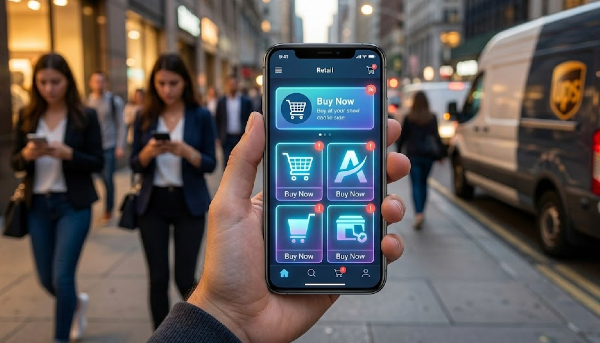
For millions of consumers, the shopping journey begins and ends on a smartphone. Products are discovered while waiting in line, scrolling social media, watching videos, or chatting with friends. Purchases can happen in seconds from virtually anywhere.
This shift has transformed more than consumer behavior.
It has changed how internet retailers compete, how they invest in technology, and how investors evaluate future growth opportunities. Companies that successfully embrace mobile commerce often gain meaningful advantages in customer engagement, retention, and profitability.
As mobile shopping continues expanding worldwide, its influence on internet retail stocks is becoming increasingly difficult to ignore.
Why Mobile Commerce Has Become So Important
Smartphones changed the economics of shopping.
Consumers no longer need to plan a shopping trip or sit in front of a computer. They can browse products whenever inspiration strikes.
That convenience dramatically increases shopping opportunities.
Retailers benefit because more shopping sessions create more chances to generate sales. Even short browsing sessions can lead to purchases when the experience is optimized for mobile devices.
The convenience factor also encourages impulse purchases.
A customer who sees an interesting product on social media can often complete a purchase within minutes without ever leaving their phone.
This constant accessibility has helped mobile commerce become one of the fastest-growing segments of global retail and has become a major driver of internet retail industry growth.
| Mobile Commerce Driver |
Impact on Retailers |
| Smartphone Adoption |
Larger customer base |
| Faster Internet Speeds |
Better shopping experience |
| Mobile Payments |
Higher conversion rates |
| Shopping Apps |
Stronger customer loyalty |
| Social Commerce |
Increased product discovery |
The result is a shopping environment that operates around the clock.
Amazon Helped Set the Mobile Shopping Standard
Few companies have benefited more from mobile commerce than Amazon.
The company's mobile app has become one of the most widely used shopping platforms in the world. Customers can search products, compare prices, read reviews, track deliveries, and complete purchases with remarkable ease.
Convenience has become a competitive weapon.
Features like one-click purchasing, personalized recommendations, and voice-assisted shopping help keep customers inside Amazon's ecosystem.
The company also gains valuable data from mobile interactions.
Each search, click, and purchase provides information that helps improve recommendations and advertising performance. This creates a cycle where better experiences drive more engagement, and more engagement generates more data for future improvements through artificial intelligence.
Mobile Apps Create Powerful Customer Relationships
One of the biggest advantages of mobile commerce is the direct connection between retailers and customers.
Unlike websites, apps live on a consumer's device.
That creates opportunities for ongoing engagement through notifications, personalized promotions, and loyalty rewards.
Companies such as Amazon, MercadoLibre, Alibaba, Etsy, and Shopify merchants increasingly rely on mobile apps to strengthen customer relationships.
Apps often generate higher repeat purchase rates than traditional websites.
Customers tend to return more frequently because access is immediate and convenient.
For investors, this matters because repeat customers are often more profitable than first-time shoppers.
Businesses that encourage recurring engagement frequently enjoy stronger long-term economics and often develop competitive moats.
Mobile Payments Are Removing Checkout Friction
Every extra step in the checkout process creates an opportunity for customers to abandon a purchase.
Mobile payment systems help solve that problem.
Digital wallets such as Apple Pay, Google Pay, PayPal, and various regional payment solutions allow customers to complete transactions quickly and securely.
The buying process becomes smoother.
A faster checkout experience often leads to higher conversion rates.
Retailers benefit because more shoppers complete their purchases rather than leaving items in their carts.
One interesting trend is that some retailers have found that reducing checkout time by just a few seconds can produce measurable increases in completed transactions across millions of customers.
Small improvements can create significant financial impacts when applied at scale.
Social Commerce Is Expanding Mobile Shopping
The line between entertainment and shopping continues to blur.
Consumers increasingly discover products while scrolling social media platforms.
Instead of searching for products directly, shoppers often encounter them through videos, influencer content, livestreams, and targeted advertisements.
Mobile devices sit at the center of this trend.
The entire process can happen without ever leaving a smartphone.
A consumer may discover a product, read reviews, compare alternatives, and make a purchase within a single mobile session.
Internet retailers that integrate effectively with social commerce channels often gain access to valuable customer acquisition opportunities.
This trend is particularly important among younger consumers who spend significant amounts of time on mobile platforms.
Mobile Data Helps Retailers Make Smarter Decisions
Mobile shopping generates enormous amounts of behavioral data.
Retailers can analyze browsing patterns, purchase histories, geographic information, session duration, and countless other signals.
This information helps improve decision-making.
Companies use mobile data to personalize recommendations, optimize pricing strategies, improve marketing campaigns, and forecast demand more accurately.
| Data Insight |
Business Benefit |
| Browsing Behavior |
Better recommendations |
| Purchase History |
Personalized marketing |
| Location Data |
Regional targeting |
| Session Duration |
User experience improvements |
| Search Activity |
Product demand forecasting |
The ability to gather and analyze this information has become a major competitive advantage for large internet retailers and supports the broader shift toward AI-powered retail platforms.
Mobile Commerce Is Fueling International Growth
In many developing markets, smartphones represent the primary gateway to the internet.
Consumers may never own a desktop computer.
Instead, their first digital shopping experiences happen entirely through mobile devices.
This creates significant opportunities for companies operating in emerging markets.
MercadoLibre has benefited from growing smartphone adoption across Latin America. Alibaba has capitalized on mobile commerce growth throughout Asia. Numerous regional e-commerce platforms are experiencing similar trends as internet retail stocks expand into emerging markets.
As smartphone penetration continues increasing globally, mobile commerce may help unlock entirely new customer populations.
Investors often pay close attention to these opportunities because emerging markets can provide long-term growth runways.
Mobile Experiences Influence Competitive Positioning
Not all mobile shopping experiences are equal.
A slow app can frustrate customers.
A confusing checkout process can reduce sales.
Poor navigation can increase abandonment rates.
As competition intensifies, mobile performance becomes increasingly important.
Retailers that deliver fast, intuitive, and reliable mobile experiences often gain an advantage over less sophisticated competitors.
| Mobile Capability |
Competitive Impact |
| Fast Load Times |
Higher engagement |
| Easy Navigation |
Better user experience |
| Personalized Recommendations |
Increased sales |
| Secure Payments |
Higher trust |
| App Reliability |
Stronger retention |
In many cases, consumers will simply move to another retailer if the mobile experience feels frustrating.
Investors Are Paying Attention to Mobile Metrics
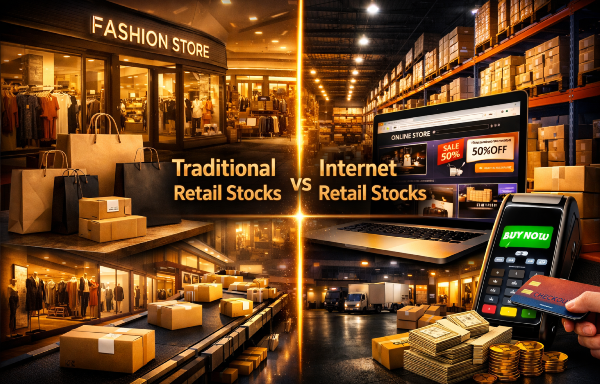
Traditional retail investors focused heavily on store counts and physical expansion.
Internet retail investors increasingly examine digital engagement metrics.
Mobile traffic, app downloads, user retention, purchase frequency, and customer acquisition costs provide valuable insights into business performance.
Strong mobile ecosystems can support future revenue growth.
Companies with highly engaged mobile users often have more opportunities to monetize their customer bases through advertising, subscriptions, financial services, and additional product categories.
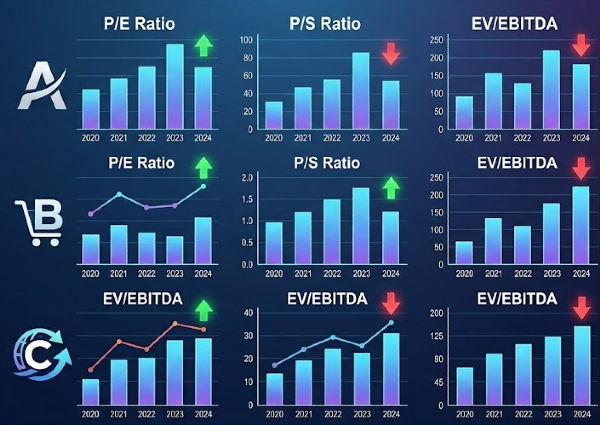
This is one reason investors frequently assign premium valuations to businesses with strong mobile engagement. Those opportunities often contribute to the premium valuations discussed in comparing valuation metrics across leading e-commerce stocks.
The market often views mobile leadership as a sign of future growth potential.
Another fascinating development is that some major internet retailers now generate more than two-thirds of their total traffic from mobile devices, a dramatic shift from just a decade ago when desktop browsing dominated online shopping.
The Future of Shopping Fits in One Hand
Mobile shopping has evolved from a convenience feature into the foundation of modern e-commerce.
Consumers increasingly discover products, compare options, make purchases, and track deliveries through smartphones. Retailers that embrace this shift are often better positioned to capture future growth.
Companies such as Amazon, MercadoLibre, Alibaba, Etsy, Shopify, and Walmart continue investing heavily in mobile experiences because they recognize the opportunity.
Mobile commerce affects revenue growth, customer loyalty, marketing efficiency, and competitive positioning.
For investors, understanding mobile shopping trends is no longer optional.
The companies that win the next phase of e-commerce growth may not necessarily have the most products or the lowest prices.
They may simply provide the best experience on the device consumers use most often.
🚀 Expand Your Edge: Elite Internet Retail & E-Commerce Intelligence
Ready to capitalize on the future of digital commerce? Our Internet Retail Investor Intelligence Hub is designed to help investors analyze the companies, technologies, and trends reshaping global shopping. From foundational industry research and stock selection to AI, logistics, valuation, and international growth, explore the curated silos below to uncover your next investment opportunity.
🌐 Industry Fundamentals & Market Leaders
📊 Financial Strength & Shareholder Returns
🤖 Technology, AI & Digital Transformation
🚚 Logistics, Fulfillment & Supply Chain Intelligence
🌍 Global Expansion & Market Opportunities
⚠️ Risk Management & Economic Trends
🔍 Competitive Analysis & Advanced Research


















Last updated on July 1st 2026 by Noah Brody
🔑 Key Takeaways
📱 Mobile shopping has become the primary growth engine for e-commerce
Consumers increasingly browse, compare, and purchase products directly from smartphones. Internet retailers that deliver seamless mobile experiences often benefit from higher engagement, stronger customer retention, and faster revenue growth.
🛒 Mobile apps create powerful competitive advantages
Companies with popular shopping apps can communicate directly with customers through notifications, personalized offers, and loyalty programs. This often lowers marketing costs and increases repeat purchases.
💳 Mobile payments are reducing friction in the buying process
Digital wallets and one-click checkout systems make purchases faster and easier. Fewer checkout obstacles often translate into higher conversion rates and stronger sales growth for internet retailers.
🚀 Mobile commerce is influencing future stock valuations
Investors increasingly evaluate how well internet retailers capture mobile traffic and mobile spending. Strong mobile ecosystems can support revenue growth, customer loyalty, and long-term competitive advantages.
How Mobile Shopping Trends Affect Internet Retail Stocks
The Store in Your Pocket Keeps Getting Bigger
Not long ago, online shopping mostly happened on desktop computers.
Consumers sat down at a desk, opened a browser, compared products, and completed purchases from a keyboard and mouse.
Today, that experience feels increasingly outdated.
For millions of consumers, the shopping journey begins and ends on a smartphone. Products are discovered while waiting in line, scrolling social media, watching videos, or chatting with friends. Purchases can happen in seconds from virtually anywhere.
This shift has transformed more than consumer behavior.
It has changed how internet retailers compete, how they invest in technology, and how investors evaluate future growth opportunities. Companies that successfully embrace mobile commerce often gain meaningful advantages in customer engagement, retention, and profitability.
As mobile shopping continues expanding worldwide, its influence on internet retail stocks is becoming increasingly difficult to ignore.
Why Mobile Commerce Has Become So Important
Smartphones changed the economics of shopping.
Consumers no longer need to plan a shopping trip or sit in front of a computer. They can browse products whenever inspiration strikes.
That convenience dramatically increases shopping opportunities.
Retailers benefit because more shopping sessions create more chances to generate sales. Even short browsing sessions can lead to purchases when the experience is optimized for mobile devices.
The convenience factor also encourages impulse purchases.
A customer who sees an interesting product on social media can often complete a purchase within minutes without ever leaving their phone.
This constant accessibility has helped mobile commerce become one of the fastest-growing segments of global retail and has become a major driver of internet retail industry growth.
The result is a shopping environment that operates around the clock.
Amazon Helped Set the Mobile Shopping Standard
Few companies have benefited more from mobile commerce than Amazon.
The company's mobile app has become one of the most widely used shopping platforms in the world. Customers can search products, compare prices, read reviews, track deliveries, and complete purchases with remarkable ease.
Convenience has become a competitive weapon.
Features like one-click purchasing, personalized recommendations, and voice-assisted shopping help keep customers inside Amazon's ecosystem.
The company also gains valuable data from mobile interactions.
Each search, click, and purchase provides information that helps improve recommendations and advertising performance. This creates a cycle where better experiences drive more engagement, and more engagement generates more data for future improvements through artificial intelligence.
Mobile Apps Create Powerful Customer Relationships
One of the biggest advantages of mobile commerce is the direct connection between retailers and customers.
Unlike websites, apps live on a consumer's device.
That creates opportunities for ongoing engagement through notifications, personalized promotions, and loyalty rewards.
Companies such as Amazon, MercadoLibre, Alibaba, Etsy, and Shopify merchants increasingly rely on mobile apps to strengthen customer relationships.
Apps often generate higher repeat purchase rates than traditional websites.
Customers tend to return more frequently because access is immediate and convenient.
For investors, this matters because repeat customers are often more profitable than first-time shoppers.
Businesses that encourage recurring engagement frequently enjoy stronger long-term economics and often develop competitive moats.
Mobile Payments Are Removing Checkout Friction
Every extra step in the checkout process creates an opportunity for customers to abandon a purchase.
Mobile payment systems help solve that problem.
Digital wallets such as Apple Pay, Google Pay, PayPal, and various regional payment solutions allow customers to complete transactions quickly and securely.
The buying process becomes smoother.
A faster checkout experience often leads to higher conversion rates.
Retailers benefit because more shoppers complete their purchases rather than leaving items in their carts.
One interesting trend is that some retailers have found that reducing checkout time by just a few seconds can produce measurable increases in completed transactions across millions of customers.
Small improvements can create significant financial impacts when applied at scale.
Social Commerce Is Expanding Mobile Shopping
The line between entertainment and shopping continues to blur.
Consumers increasingly discover products while scrolling social media platforms.
Instead of searching for products directly, shoppers often encounter them through videos, influencer content, livestreams, and targeted advertisements.
Mobile devices sit at the center of this trend.
The entire process can happen without ever leaving a smartphone.
A consumer may discover a product, read reviews, compare alternatives, and make a purchase within a single mobile session.
Internet retailers that integrate effectively with social commerce channels often gain access to valuable customer acquisition opportunities.
This trend is particularly important among younger consumers who spend significant amounts of time on mobile platforms.
Mobile Data Helps Retailers Make Smarter Decisions
Mobile shopping generates enormous amounts of behavioral data.
Retailers can analyze browsing patterns, purchase histories, geographic information, session duration, and countless other signals.
This information helps improve decision-making.
Companies use mobile data to personalize recommendations, optimize pricing strategies, improve marketing campaigns, and forecast demand more accurately.
The ability to gather and analyze this information has become a major competitive advantage for large internet retailers and supports the broader shift toward AI-powered retail platforms.
Mobile Commerce Is Fueling International Growth
In many developing markets, smartphones represent the primary gateway to the internet.
Consumers may never own a desktop computer.
Instead, their first digital shopping experiences happen entirely through mobile devices.
This creates significant opportunities for companies operating in emerging markets.
MercadoLibre has benefited from growing smartphone adoption across Latin America. Alibaba has capitalized on mobile commerce growth throughout Asia. Numerous regional e-commerce platforms are experiencing similar trends as internet retail stocks expand into emerging markets.
As smartphone penetration continues increasing globally, mobile commerce may help unlock entirely new customer populations.
Investors often pay close attention to these opportunities because emerging markets can provide long-term growth runways.
Mobile Experiences Influence Competitive Positioning
Not all mobile shopping experiences are equal.
A slow app can frustrate customers.
A confusing checkout process can reduce sales.
Poor navigation can increase abandonment rates.
As competition intensifies, mobile performance becomes increasingly important.
Retailers that deliver fast, intuitive, and reliable mobile experiences often gain an advantage over less sophisticated competitors.
In many cases, consumers will simply move to another retailer if the mobile experience feels frustrating.
Investors Are Paying Attention to Mobile Metrics
Traditional retail investors focused heavily on store counts and physical expansion.
Internet retail investors increasingly examine digital engagement metrics.
Mobile traffic, app downloads, user retention, purchase frequency, and customer acquisition costs provide valuable insights into business performance.
Strong mobile ecosystems can support future revenue growth.
Companies with highly engaged mobile users often have more opportunities to monetize their customer bases through advertising, subscriptions, financial services, and additional product categories.
This is one reason investors frequently assign premium valuations to businesses with strong mobile engagement. Those opportunities often contribute to the premium valuations discussed in comparing valuation metrics across leading e-commerce stocks.
The market often views mobile leadership as a sign of future growth potential.
Another fascinating development is that some major internet retailers now generate more than two-thirds of their total traffic from mobile devices, a dramatic shift from just a decade ago when desktop browsing dominated online shopping.
The Future of Shopping Fits in One Hand
Mobile shopping has evolved from a convenience feature into the foundation of modern e-commerce.
Consumers increasingly discover products, compare options, make purchases, and track deliveries through smartphones. Retailers that embrace this shift are often better positioned to capture future growth.
Companies such as Amazon, MercadoLibre, Alibaba, Etsy, Shopify, and Walmart continue investing heavily in mobile experiences because they recognize the opportunity.
Mobile commerce affects revenue growth, customer loyalty, marketing efficiency, and competitive positioning.
For investors, understanding mobile shopping trends is no longer optional.
The companies that win the next phase of e-commerce growth may not necessarily have the most products or the lowest prices.
They may simply provide the best experience on the device consumers use most often.
🚀 Expand Your Edge: Elite Internet Retail & E-Commerce Intelligence
Ready to capitalize on the future of digital commerce? Our Internet Retail Investor Intelligence Hub is designed to help investors analyze the companies, technologies, and trends reshaping global shopping. From foundational industry research and stock selection to AI, logistics, valuation, and international growth, explore the curated silos below to uncover your next investment opportunity.
🌐 Industry Fundamentals & Market Leaders
📊 Financial Strength & Shareholder Returns
🤖 Technology, AI & Digital Transformation
🚚 Logistics, Fulfillment & Supply Chain Intelligence
🌍 Global Expansion & Market Opportunities
⚠️ Risk Management & Economic Trends
🔍 Competitive Analysis & Advanced Research