Last updated on July 1st 2026 by Noah Brody
🔑 Key Takeaways
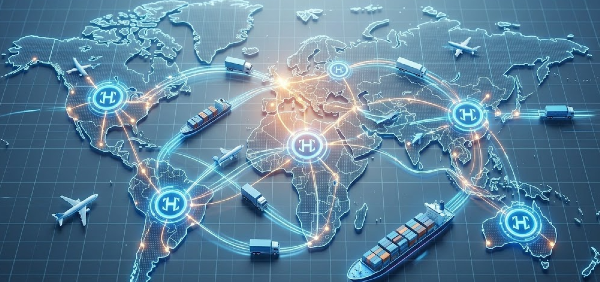
🚚 Logistics networks have become one of the biggest competitive advantages in e-commerce
Fast, reliable delivery improves customer satisfaction and increases repeat purchases. Companies that control large logistics networks often enjoy stronger customer loyalty and higher barriers to entry.
📦 Amazon, Alibaba, JD.com, and MercadoLibre have built some of the strongest logistics ecosystems in internet retail
These companies have invested billions in fulfillment centers, transportation infrastructure, delivery technology, and warehouse automation. Their scale makes it difficult for smaller competitors to match delivery speeds and service levels.
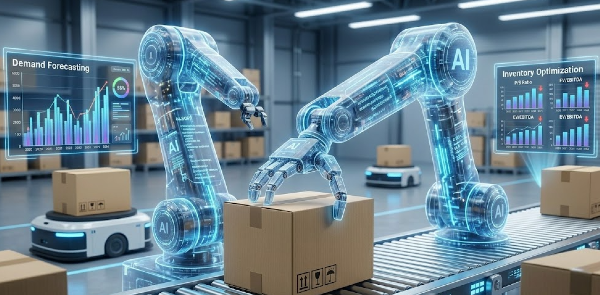
🤖 Automation is becoming the secret weapon behind modern logistics networks
Robotics, artificial intelligence, and predictive analytics are helping retailers move products faster while lowering costs. Efficient automation can improve profit margins and operational performance.
🏆 Strong logistics networks often translate into stronger long-term stock performance
Companies that consistently deliver products quickly and reliably can capture market share, improve customer retention, and create durable competitive moats that support long-term growth.
Internet Retail Stocks With the Best Logistics Networks
The Race Is No Longer About Selling Products
In the early days of e-commerce, success often came down to having the best website or the widest product selection.
Today, the game looks very different.
Most major retailers can offer millions of products. Many can match prices within seconds. Product selection alone rarely creates a lasting advantage.
Instead, the real battle often begins after the customer clicks the "Buy Now" button.
How quickly can the product arrive? How reliably can it be delivered? How efficiently can returns be handled?
The answers to those questions increasingly determine which internet retailers win customers and which ones lose them.
For investors, logistics has become one of the most important factors shaping the future of internet retail stocks.
Why Logistics Has Become a Competitive Moat
Consumers have grown accustomed to convenience.
Fast shipping that once felt remarkable now feels normal.
A delivery promise that seemed impossible ten years ago may now be considered average service.
This shift has forced retailers to invest heavily in logistics infrastructure.
Warehouses, fulfillment centers, transportation fleets, sorting facilities, and delivery technology have become critical assets.
The larger and more efficient the network, the harder it becomes for competitors to replicate.
This creates a powerful moat.
A company with thousands of strategically located facilities can often deliver products faster and more cheaply than smaller rivals. These investments frequently become long-term competitive moats.
That advantage can persist for years.
| Logistics Advantage |
Business Impact |
| Faster Delivery |
Higher customer satisfaction |
| Lower Shipping Costs |
Improved margins |
| Better Inventory Positioning |
Fewer stockouts |
| Efficient Returns |
Stronger loyalty |
| Network Scale |
Competitive moat |
In many cases, logistics infrastructure becomes just as valuable as the products being sold.
Amazon Built the Gold Standard
When investors think about logistics leadership, Amazon is usually the first company that comes to mind.
The company spent decades building one of the most sophisticated logistics systems in the world.
What began as an online bookstore evolved into a massive network of fulfillment centers, delivery stations, cargo aircraft, trucking operations, and last-mile delivery services.
Amazon's strategy has been simple but expensive.
Control more of the supply chain.
By reducing dependence on third parties, Amazon can improve delivery speeds while gaining greater control over costs and customer experiences.
The scale is staggering.
The company's network now rivals those of some traditional transportation giants.
For many competitors, matching Amazon's logistics capabilities would require years of investment and tens of billions of dollars, reinforcing why it remains one of the best e-commerce stocks for long-term investors.
Alibaba Built a Different Kind of Logistics Empire
Alibaba approached logistics differently.
Rather than owning every piece of the network, the company helped create Cainiao, a logistics platform that coordinates delivery providers across China and international markets.
This asset-light approach allowed Alibaba to scale rapidly while maintaining flexibility.
The model focuses heavily on technology, data sharing, and network coordination.
By connecting merchants, warehouses, transportation providers, and consumers through a common platform, Alibaba improved efficiency throughout its ecosystem.
The strategy demonstrates that logistics leadership does not always require owning every truck or warehouse.
Sometimes coordination can be just as powerful as ownership.
Investors should recognize that different logistics models can still produce strong competitive advantages.
JD.com Turned Logistics Into a Selling Point
JD.com took a very different path from many e-commerce competitors.
The company invested heavily in owning and operating its logistics infrastructure.
Rather than relying primarily on third-party providers, JD.com built extensive warehouse and delivery networks across China.
This approach required significant capital.
However, it also gave the company greater control over service quality and delivery reliability.
Customers began associating JD.com with dependable fulfillment and fast shipping.
That reputation became a meaningful competitive asset.
In an industry where customer trust can be difficult to earn, logistics excellence became a key differentiator.
MercadoLibre Is Building a Latin American Powerhouse
MercadoLibre occupies a unique position within Latin America.
The region presents logistics challenges that differ significantly from those in North America or Europe.
Infrastructure quality varies widely. Geographic distances can be substantial. Delivery networks are often fragmented.
To address these challenges, MercadoLibre invested aggressively in logistics and fulfillment capabilities.
The company developed fulfillment centers, shipping partnerships, and delivery solutions tailored to regional conditions.
These investments have helped improve delivery times while supporting broader e-commerce adoption and complement its expansion into emerging markets.
For investors, MercadoLibre's logistics strategy highlights how infrastructure investments can accelerate growth in emerging markets.
| Company |
Logistics Strategy |
| Amazon |
Vertically integrated network |
| Alibaba |
Platform-based coordination |
| JD.com |
Direct ownership model |
| MercadoLibre |
Regional infrastructure expansion |
| Walmart |
Omnichannel fulfillment |
Different approaches can succeed, but all require significant investment and execution.
Warehouses Are Becoming Technology Centers
Modern fulfillment centers look very different from traditional warehouses.
Robots move products.
Artificial intelligence forecasts demand.
Algorithms optimize inventory placement.
Automation is becoming central to logistics performance.
Companies can process orders faster, reduce errors, and improve efficiency through advanced technology.
These improvements directly affect profitability.
Every second saved during fulfillment can produce meaningful gains when multiplied across millions of orders.
One fascinating industry trend is that some automated fulfillment centers can process thousands of orders per hour while operating with significantly fewer manual touches than traditional facilities.
Technology is transforming warehouses into highly sophisticated operational hubs through advances in artificial intelligence.
Last-Mile Delivery Is Where Winners Separate Themselves
The final step in the delivery journey often proves the most difficult.
Known as last-mile delivery, this stage involves moving products from local facilities to customer doorsteps.
It is frequently the most expensive portion of the shipping process.
Traffic congestion, weather conditions, geographic challenges, and customer availability all affect performance.
Companies that optimize last-mile delivery can gain important advantages.
Faster deliveries improve customer satisfaction.
Lower delivery costs improve profitability.
Many internet retailers continue investing heavily in routing software, delivery partnerships, and local distribution networks to strengthen this critical area.
The finish line matters just as much as the race itself.
Returns Management Is an Underrated Advantage
Most investors focus on shipping speed.
Returns often receive less attention.
That can be a mistake.
Efficient returns processing plays a major role in customer satisfaction.
Consumers are more likely to purchase products when they feel confident that returns will be easy.
Retailers with strong reverse logistics capabilities can turn a potential frustration into a positive experience.
| Returns Capability |
Customer Benefit |
| Fast Processing |
Quicker refunds |
| Convenient Drop-Offs |
Greater flexibility |
| Automated Tracking |
Better visibility |
| Local Return Centers |
Reduced delays |
| Efficient Restocking |
Lower operating costs |
The best logistics networks handle both outgoing shipments and incoming returns with equal efficiency.
Logistics Scale Can Improve Profit Margins
Growth investors often focus on revenue.
Logistics can have a major impact on profitability as well.
Larger networks create opportunities for economies of scale.
Transportation costs can be spread across more orders.
Warehouses can operate more efficiently.
Technology investments can generate larger returns.
As order volumes increase, per-unit costs often decline.
This dynamic helps explain why logistics leaders frequently enjoy stronger operating leverage than smaller competitors and why they often rank among the most profitable internet retail stocks.
Once infrastructure is built, incremental growth can become increasingly profitable.
That relationship is one reason investors pay close attention to logistics investments.
The Future May Belong to the Fastest Networks
Internet retail continues evolving.
Customers expect faster deliveries, better visibility, easier returns, and more reliable service than ever before.
Meeting those expectations requires sophisticated logistics capabilities.
Amazon, Alibaba, JD.com, MercadoLibre, and Walmart have each invested heavily because they understand the stakes.
Logistics is no longer a back-office function.
It has become a core competitive weapon.
Another interesting development is that some retailers now use predictive analytics to position inventory closer to customers before orders are even placed, reducing delivery times once purchases occur.
For investors, logistics networks represent more than warehouses and trucks.
They represent infrastructure that can support growth, strengthen customer loyalty, improve margins, and create durable competitive advantages.
In the modern e-commerce landscape, the companies with the strongest logistics networks are often the companies best positioned to win the next decade of online retail growth.
🚀 Expand Your Edge: Elite Internet Retail & E-Commerce Intelligence
Ready to capitalize on the future of digital commerce? Our Internet Retail Investor Intelligence Hub is designed to help investors analyze the companies, technologies, and trends reshaping global shopping. From foundational industry research and stock selection to AI, logistics, valuation, and international growth, explore the curated silos below to uncover your next investment opportunity.
🌐 Industry Fundamentals & Market Leaders
📊 Financial Strength & Shareholder Returns
🤖 Technology, AI & Digital Transformation
🚚 Logistics, Fulfillment & Supply Chain Intelligence
🌍 Global Expansion & Market Opportunities
⚠️ Risk Management & Economic Trends
🔍 Competitive Analysis & Advanced Research











Last updated on July 1st 2026 by Noah Brody
🔑 Key Takeaways
🚚 Logistics networks have become one of the biggest competitive advantages in e-commerce
Fast, reliable delivery improves customer satisfaction and increases repeat purchases. Companies that control large logistics networks often enjoy stronger customer loyalty and higher barriers to entry.
📦 Amazon, Alibaba, JD.com, and MercadoLibre have built some of the strongest logistics ecosystems in internet retail
These companies have invested billions in fulfillment centers, transportation infrastructure, delivery technology, and warehouse automation. Their scale makes it difficult for smaller competitors to match delivery speeds and service levels.
🤖 Automation is becoming the secret weapon behind modern logistics networks
Robotics, artificial intelligence, and predictive analytics are helping retailers move products faster while lowering costs. Efficient automation can improve profit margins and operational performance.
🏆 Strong logistics networks often translate into stronger long-term stock performance
Companies that consistently deliver products quickly and reliably can capture market share, improve customer retention, and create durable competitive moats that support long-term growth.
Internet Retail Stocks With the Best Logistics Networks
The Race Is No Longer About Selling Products
In the early days of e-commerce, success often came down to having the best website or the widest product selection.
Today, the game looks very different.
Most major retailers can offer millions of products. Many can match prices within seconds. Product selection alone rarely creates a lasting advantage.
Instead, the real battle often begins after the customer clicks the "Buy Now" button.
How quickly can the product arrive? How reliably can it be delivered? How efficiently can returns be handled?
The answers to those questions increasingly determine which internet retailers win customers and which ones lose them.
For investors, logistics has become one of the most important factors shaping the future of internet retail stocks.
Why Logistics Has Become a Competitive Moat
Consumers have grown accustomed to convenience.
Fast shipping that once felt remarkable now feels normal.
A delivery promise that seemed impossible ten years ago may now be considered average service.
This shift has forced retailers to invest heavily in logistics infrastructure.
Warehouses, fulfillment centers, transportation fleets, sorting facilities, and delivery technology have become critical assets.
The larger and more efficient the network, the harder it becomes for competitors to replicate.
This creates a powerful moat.
A company with thousands of strategically located facilities can often deliver products faster and more cheaply than smaller rivals. These investments frequently become long-term competitive moats.
That advantage can persist for years.
In many cases, logistics infrastructure becomes just as valuable as the products being sold.
Amazon Built the Gold Standard
When investors think about logistics leadership, Amazon is usually the first company that comes to mind.
The company spent decades building one of the most sophisticated logistics systems in the world.
What began as an online bookstore evolved into a massive network of fulfillment centers, delivery stations, cargo aircraft, trucking operations, and last-mile delivery services.
Amazon's strategy has been simple but expensive.
Control more of the supply chain.
By reducing dependence on third parties, Amazon can improve delivery speeds while gaining greater control over costs and customer experiences.
The scale is staggering.
The company's network now rivals those of some traditional transportation giants.
For many competitors, matching Amazon's logistics capabilities would require years of investment and tens of billions of dollars, reinforcing why it remains one of the best e-commerce stocks for long-term investors.
Alibaba Built a Different Kind of Logistics Empire
Alibaba approached logistics differently.
Rather than owning every piece of the network, the company helped create Cainiao, a logistics platform that coordinates delivery providers across China and international markets.
This asset-light approach allowed Alibaba to scale rapidly while maintaining flexibility.
The model focuses heavily on technology, data sharing, and network coordination.
By connecting merchants, warehouses, transportation providers, and consumers through a common platform, Alibaba improved efficiency throughout its ecosystem.
The strategy demonstrates that logistics leadership does not always require owning every truck or warehouse.
Sometimes coordination can be just as powerful as ownership.
Investors should recognize that different logistics models can still produce strong competitive advantages.
JD.com Turned Logistics Into a Selling Point
JD.com took a very different path from many e-commerce competitors.
The company invested heavily in owning and operating its logistics infrastructure.
Rather than relying primarily on third-party providers, JD.com built extensive warehouse and delivery networks across China.
This approach required significant capital.
However, it also gave the company greater control over service quality and delivery reliability.
Customers began associating JD.com with dependable fulfillment and fast shipping.
That reputation became a meaningful competitive asset.
In an industry where customer trust can be difficult to earn, logistics excellence became a key differentiator.
MercadoLibre Is Building a Latin American Powerhouse
MercadoLibre occupies a unique position within Latin America.
The region presents logistics challenges that differ significantly from those in North America or Europe.
Infrastructure quality varies widely. Geographic distances can be substantial. Delivery networks are often fragmented.
To address these challenges, MercadoLibre invested aggressively in logistics and fulfillment capabilities.
The company developed fulfillment centers, shipping partnerships, and delivery solutions tailored to regional conditions.
These investments have helped improve delivery times while supporting broader e-commerce adoption and complement its expansion into emerging markets.
For investors, MercadoLibre's logistics strategy highlights how infrastructure investments can accelerate growth in emerging markets.
Different approaches can succeed, but all require significant investment and execution.
Warehouses Are Becoming Technology Centers
Modern fulfillment centers look very different from traditional warehouses.
Robots move products.
Artificial intelligence forecasts demand.
Algorithms optimize inventory placement.
Automation is becoming central to logistics performance.
Companies can process orders faster, reduce errors, and improve efficiency through advanced technology.
These improvements directly affect profitability.
Every second saved during fulfillment can produce meaningful gains when multiplied across millions of orders.
One fascinating industry trend is that some automated fulfillment centers can process thousands of orders per hour while operating with significantly fewer manual touches than traditional facilities.
Technology is transforming warehouses into highly sophisticated operational hubs through advances in artificial intelligence.
Last-Mile Delivery Is Where Winners Separate Themselves
The final step in the delivery journey often proves the most difficult.
Known as last-mile delivery, this stage involves moving products from local facilities to customer doorsteps.
It is frequently the most expensive portion of the shipping process.
Traffic congestion, weather conditions, geographic challenges, and customer availability all affect performance.
Companies that optimize last-mile delivery can gain important advantages.
Faster deliveries improve customer satisfaction.
Lower delivery costs improve profitability.
Many internet retailers continue investing heavily in routing software, delivery partnerships, and local distribution networks to strengthen this critical area.
The finish line matters just as much as the race itself.
Returns Management Is an Underrated Advantage
Most investors focus on shipping speed.
Returns often receive less attention.
That can be a mistake.
Efficient returns processing plays a major role in customer satisfaction.
Consumers are more likely to purchase products when they feel confident that returns will be easy.
Retailers with strong reverse logistics capabilities can turn a potential frustration into a positive experience.
The best logistics networks handle both outgoing shipments and incoming returns with equal efficiency.
Logistics Scale Can Improve Profit Margins
Growth investors often focus on revenue.
Logistics can have a major impact on profitability as well.
Larger networks create opportunities for economies of scale.
Transportation costs can be spread across more orders.
Warehouses can operate more efficiently.
Technology investments can generate larger returns.
As order volumes increase, per-unit costs often decline.
This dynamic helps explain why logistics leaders frequently enjoy stronger operating leverage than smaller competitors and why they often rank among the most profitable internet retail stocks.
Once infrastructure is built, incremental growth can become increasingly profitable.
That relationship is one reason investors pay close attention to logistics investments.
The Future May Belong to the Fastest Networks
Internet retail continues evolving.
Customers expect faster deliveries, better visibility, easier returns, and more reliable service than ever before.
Meeting those expectations requires sophisticated logistics capabilities.
Amazon, Alibaba, JD.com, MercadoLibre, and Walmart have each invested heavily because they understand the stakes.
Logistics is no longer a back-office function.
It has become a core competitive weapon.
Another interesting development is that some retailers now use predictive analytics to position inventory closer to customers before orders are even placed, reducing delivery times once purchases occur.
For investors, logistics networks represent more than warehouses and trucks.
They represent infrastructure that can support growth, strengthen customer loyalty, improve margins, and create durable competitive advantages.
In the modern e-commerce landscape, the companies with the strongest logistics networks are often the companies best positioned to win the next decade of online retail growth.
🚀 Expand Your Edge: Elite Internet Retail & E-Commerce Intelligence
Ready to capitalize on the future of digital commerce? Our Internet Retail Investor Intelligence Hub is designed to help investors analyze the companies, technologies, and trends reshaping global shopping. From foundational industry research and stock selection to AI, logistics, valuation, and international growth, explore the curated silos below to uncover your next investment opportunity.
🌐 Industry Fundamentals & Market Leaders
📊 Financial Strength & Shareholder Returns
🤖 Technology, AI & Digital Transformation
🚚 Logistics, Fulfillment & Supply Chain Intelligence
🌍 Global Expansion & Market Opportunities
⚠️ Risk Management & Economic Trends
🔍 Competitive Analysis & Advanced Research