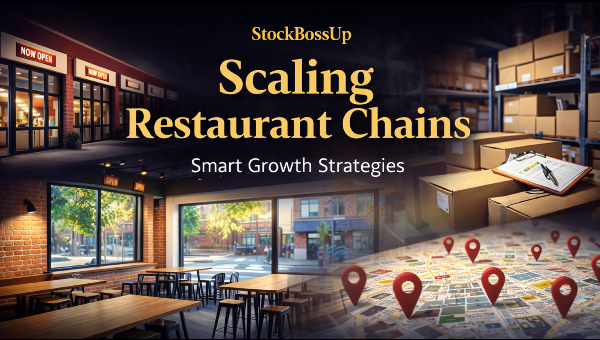
Growing a top restaurant chain is a key way to increase revenue and profits. But expanding too quickly or without strategy can backfire. A smart unit expansion strategy is critical for scaling profitably. This article explores important concepts like new-store return on investment (ROI), cannibalization risk, saturation curves, and why some chains scale better than others. Understanding these factors helps investors and restaurant operators navigate growth with confidence.
New-Store ROI: Measuring Expansion Success
Return on investment (ROI) for new stores is the most direct measure of expansion success. It compares the profits generated by a new location to the costs of opening and operating it. Costs include lease or purchase expenses, equipment, labor, marketing, and initial inventory.
A positive new-store ROI means the location contributes to overall profitability. High ROI stores can fund further expansion or improve corporate returns. Negative ROI stores drain resources and slow growth.
Calculating ROI can be challenging. It requires forecasting revenues based on demographics, competition, and brand strength. Operators also track actual performance over time to adjust plans.
Cannibalization Risk: When New Stores Steal Sales
Cannibalization happens when a new store takes customers away from existing locations instead of attracting new ones. This risk is highest when stores open too close to each other or in saturated markets.
Cannibalization reduces the net benefit of expansion because total sales don’t increase proportionally. It can also hurt store-level profitability if traffic declines.
Successful chains carefully analyze trade areas and customer overlap before adding units. They use data and modeling to optimize store spacing and minimize cannibalization.
Saturation Curves: Recognizing Market Limits
Every market has a saturation point where adding more stores no longer drives growth and may even reduce profitability. Saturation curves illustrate how sales grow with new stores before leveling off or declining.
Growth slows as stores compete for the same customers or exhaust the market’s demand. Understanding this curve helps chains plan realistic expansion targets and avoid overbuilding.
Some markets reach saturation faster due to population density, competition, or consumer preferences. Chains must adapt strategies to local conditions.
Why Some Chains Scale Better Than Others
Not all restaurant chains expand equally well. Several factors influence scaling success:
Brand strength: Well-known brands attract customers more easily in new markets.
Operational efficiency: Scalable systems and supply chains reduce costs as the chain grows.
Market research: Deep understanding of customer needs and competition guides store placement.
Capital resources: Access to funding enables sustained expansion without overleveraging.
Management expertise: Experienced leadership navigates challenges and adjusts strategy.
Chains with strong execution in these areas tend to scale faster and more profitably.
| Factor |
Description |
Impact on Expansion |
| New‑Store ROI |
Profit vs. cost of new locations |
Determines expansion feasibility |
| Cannibalization Risk |
Sales overlap between stores |
Reduces net growth |
| Saturation Curves |
Market capacity limits |
Sets realistic growth ceilings |
| Brand Strength |
Customer recognition and loyalty |
Drives new store traffic |
| Operational Systems |
Supply chain and management tools |
Controls costs and quality |
| Capital Availability |
Funding for growth |
Supports rapid or sustained expansion |
Some fast-food chains use heat maps of customer traffic and competitor locations to pinpoint optimal new store sites, reducing cannibalization and boosting new-store ROI.
Calculating New-Store ROI: Key Metrics and Considerations
To calculate new-store ROI accurately, chains consider:
Initial investment: Leasehold improvements, equipment, licenses, and opening expenses.
Operating costs: Labor, food, utilities, rent, and marketing.
Projected revenues: Based on market research and comparable stores.
Payback period: Time to recoup initial investment.
Tracking these metrics over time allows managers to evaluate performance versus expectations and refine expansion plans.
Managing Cannibalization Risk Through Strategic Location Planning
Chains use geographic information systems (GIS) and customer data to analyze potential overlap. They consider factors such as:
Distance between stores
Population density
Driving time and accessibility
Local competition
By modeling customer behavior, chains select locations that maximize incremental sales rather than redistribute existing customers.
Saturation Curves and Market Segmentation
Understanding saturation involves segmenting markets by demographics, income levels, and preferences. A saturated urban market might contrast with an emerging suburban area offering growth potential.
Some chains slow expansion in saturated markets while accelerating in underpenetrated regions. This balance improves overall portfolio performance.
In certain markets, saturation points can be surprisingly low. For example, some urban areas support only a handful of outlets of a popular chain before sales per store decline sharply.
Why Brand Strength Matters in Scaling
Strong brands create demand even in new markets. They benefit from word-of-mouth, marketing efficiency, and customer trust.
For example, Starbucks (SBUX) leveraged brand loyalty to expand globally with consistent success. New locations attracted immediate traffic, supporting strong ROI.
In contrast, lesser-known brands may require more marketing spend and trial-and-error with locations, increasing risk.
| Chain Type |
Avg. New‑Store ROI |
Typical Cannibalization Risk |
Expansion Speed |
| Global QSR |
15–25% |
Low to moderate |
Fast |
| Regional Fast Casual |
10–20% |
Moderate |
Moderate |
| Local Full Service |
5–15% |
High |
Slow |
Capital Availability and Management Expertise: Fuel and Navigation
Expanding a restaurant chain requires capital for new store builds and working capital to support operations. Companies with strong balance sheets or access to financing can sustain growth even during downturns.
Experienced management understands when to accelerate or pause expansion based on performance data and market conditions. They also standardize operations for consistent quality and cost control.
Overcoming Challenges in Scaling
Scaling carries risks such as quality dilution, supply chain strain, and employee training challenges. Chains that invest in robust systems, vendor relationships, and talent development navigate these pitfalls better.
Technology also plays a role. Advanced analytics and real-time reporting help managers monitor new stores closely, addressing issues before they grow.
Some restaurant chains use “dark kitchens” or delivery-only locations in dense urban areas to test new markets with lower upfront costs, gathering data before opening full-service stores.
Unique Fact: In some cases, slow and steady expansion outperforms rapid growth. Chains that focus on building strong local market presence often enjoy higher lifetime store profitability.
Conclusion
A profitable unit expansion strategy balances growth ambitions with careful analysis of new-store ROI, cannibalization risk, and saturation curves. Brands with strong recognition, operational systems, capital access, and management skill generally scale more successfully.
Investors and operators must watch these factors to avoid costly overexpansion and ensure sustainable growth. By making data-driven location decisions and managing risks, restaurant chains can expand their footprint and improve stock valuation.
Understanding how and why some chains scale better than others provides a roadmap for navigating the complex restaurant growth landscape.
📑 The Restaurant Investor’s Knowledge Vault
Master the Market: Navigate through our specialized research silos to uncover high-growth opportunities in the dining and consumer sectors.
🏛️ Authority Hubs
🛠️ Strategic Analysis & Unit Economics
Deep dives into how restaurant brands scale, survive, and outperform the competition.
⚡ Growth, Innovation & Loyalty
Tracking the next generation of industry leaders and tech-driven profitability.
📉 Macro Trends & Operational Margins
Navigating inflation, supply chains, and the seasonal nature of the hospitality business.
🧠 Consumer Trends & Behavior
Understanding the "Why" behind the "Where" when consumers choose to dine.










Growing a top restaurant chain is a key way to increase revenue and profits. But expanding too quickly or without strategy can backfire. A smart unit expansion strategy is critical for scaling profitably. This article explores important concepts like new-store return on investment (ROI), cannibalization risk, saturation curves, and why some chains scale better than others. Understanding these factors helps investors and restaurant operators navigate growth with confidence.
New-Store ROI: Measuring Expansion Success
Return on investment (ROI) for new stores is the most direct measure of expansion success. It compares the profits generated by a new location to the costs of opening and operating it. Costs include lease or purchase expenses, equipment, labor, marketing, and initial inventory.
A positive new-store ROI means the location contributes to overall profitability. High ROI stores can fund further expansion or improve corporate returns. Negative ROI stores drain resources and slow growth.
Calculating ROI can be challenging. It requires forecasting revenues based on demographics, competition, and brand strength. Operators also track actual performance over time to adjust plans.
Cannibalization Risk: When New Stores Steal Sales
Cannibalization happens when a new store takes customers away from existing locations instead of attracting new ones. This risk is highest when stores open too close to each other or in saturated markets.
Cannibalization reduces the net benefit of expansion because total sales don’t increase proportionally. It can also hurt store-level profitability if traffic declines.
Successful chains carefully analyze trade areas and customer overlap before adding units. They use data and modeling to optimize store spacing and minimize cannibalization.
Saturation Curves: Recognizing Market Limits
Every market has a saturation point where adding more stores no longer drives growth and may even reduce profitability. Saturation curves illustrate how sales grow with new stores before leveling off or declining.
Growth slows as stores compete for the same customers or exhaust the market’s demand. Understanding this curve helps chains plan realistic expansion targets and avoid overbuilding.
Some markets reach saturation faster due to population density, competition, or consumer preferences. Chains must adapt strategies to local conditions.
Why Some Chains Scale Better Than Others
Not all restaurant chains expand equally well. Several factors influence scaling success:
Brand strength: Well-known brands attract customers more easily in new markets. Operational efficiency: Scalable systems and supply chains reduce costs as the chain grows. Market research: Deep understanding of customer needs and competition guides store placement. Capital resources: Access to funding enables sustained expansion without overleveraging. Management expertise: Experienced leadership navigates challenges and adjusts strategy. Chains with strong execution in these areas tend to scale faster and more profitably.
Calculating New-Store ROI: Key Metrics and Considerations
To calculate new-store ROI accurately, chains consider:
Initial investment: Leasehold improvements, equipment, licenses, and opening expenses. Operating costs: Labor, food, utilities, rent, and marketing. Projected revenues: Based on market research and comparable stores. Payback period: Time to recoup initial investment. Tracking these metrics over time allows managers to evaluate performance versus expectations and refine expansion plans.
Managing Cannibalization Risk Through Strategic Location Planning
Chains use geographic information systems (GIS) and customer data to analyze potential overlap. They consider factors such as:
Distance between stores Population density Driving time and accessibility Local competition By modeling customer behavior, chains select locations that maximize incremental sales rather than redistribute existing customers.
Saturation Curves and Market Segmentation
Understanding saturation involves segmenting markets by demographics, income levels, and preferences. A saturated urban market might contrast with an emerging suburban area offering growth potential.
Some chains slow expansion in saturated markets while accelerating in underpenetrated regions. This balance improves overall portfolio performance.
Why Brand Strength Matters in Scaling
Strong brands create demand even in new markets. They benefit from word-of-mouth, marketing efficiency, and customer trust.
For example, Starbucks (SBUX) leveraged brand loyalty to expand globally with consistent success. New locations attracted immediate traffic, supporting strong ROI.
In contrast, lesser-known brands may require more marketing spend and trial-and-error with locations, increasing risk.
Capital Availability and Management Expertise: Fuel and Navigation
Expanding a restaurant chain requires capital for new store builds and working capital to support operations. Companies with strong balance sheets or access to financing can sustain growth even during downturns.
Experienced management understands when to accelerate or pause expansion based on performance data and market conditions. They also standardize operations for consistent quality and cost control.
Overcoming Challenges in Scaling
Scaling carries risks such as quality dilution, supply chain strain, and employee training challenges. Chains that invest in robust systems, vendor relationships, and talent development navigate these pitfalls better.
Technology also plays a role. Advanced analytics and real-time reporting help managers monitor new stores closely, addressing issues before they grow.
Some restaurant chains use “dark kitchens” or delivery-only locations in dense urban areas to test new markets with lower upfront costs, gathering data before opening full-service stores. Unique Fact: In some cases, slow and steady expansion outperforms rapid growth. Chains that focus on building strong local market presence often enjoy higher lifetime store profitability.
Conclusion
A profitable unit expansion strategy balances growth ambitions with careful analysis of new-store ROI, cannibalization risk, and saturation curves. Brands with strong recognition, operational systems, capital access, and management skill generally scale more successfully.
Investors and operators must watch these factors to avoid costly overexpansion and ensure sustainable growth. By making data-driven location decisions and managing risks, restaurant chains can expand their footprint and improve stock valuation.
Understanding how and why some chains scale better than others provides a roadmap for navigating the complex restaurant growth landscape.
📑 The Restaurant Investor’s Knowledge Vault
🏛️ Authority Hubs
🛠️ Strategic Analysis & Unit Economics
Deep dives into how restaurant brands scale, survive, and outperform the competition.
⚡ Growth, Innovation & Loyalty
Tracking the next generation of industry leaders and tech-driven profitability.
📉 Macro Trends & Operational Margins
Navigating inflation, supply chains, and the seasonal nature of the hospitality business.
🧠 Consumer Trends & Behavior
Understanding the "Why" behind the "Where" when consumers choose to dine.