🔑 Key Takeaways: Restaurant Loyalty Programs and Stock Performance
🍔 Loyalty programs reshape customer habits and drive repeat visits
Digital rewards systems subtly influence how often customers visit and how much they spend. By setting reward thresholds just above the average purchase, restaurants encourage one extra visit per customer cycle, increasing monthly revenue without major discounts.
📱 Data-driven personalization boosts margins and brand loyalty
Modern loyalty apps collect detailed purchase data, allowing restaurants to tailor offers to each customer segment. Personalized missions and targeted rewards lift sales while protecting profit margins, turning casual diners into long-term brand advocates.
💰 Loyalty ecosystems can strengthen financial performance
Programs like Starbucks Rewards create closed payment loops that act as short-term, interest-free financing. When loyalty members account for most digital sales, companies gain predictable revenue streams and stronger same-store sales—key factors investors watch closely.
📊 Investor insight: loyalty metrics reveal stock potential
Tracking metrics such as membership growth, digital order mix, and average check size helps investors gauge whether a loyalty program adds real value. Over time, brands with high loyalty penetration often show steadier margins and more resilient stock performance.
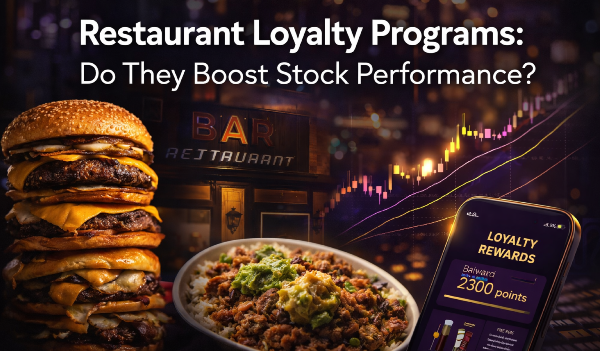
Restaurant Loyalty Programs: Do They Boost Stock Performance?
Restaurant loyalty programs are everywhere now. They shape how people order, how often they return, and how much they spend. But there is a deeper question that investors keep asking: If loyalty programs are so powerful, why do some top restaurant stocks soar while others barely move?
That tension sits at the center of this topic. Many brands pour money into apps, rewards, and digital perks. Yet the results are not always clear from the outside. Some chains see steady gains in same‑store sales. Others struggle to turn loyalty engagement into real financial strength.
This article explores why loyalty programs matter, how they influence customer behavior, and what investors should watch. The answer to the opening question becomes clearer only after looking at how these programs work behind the scenes. The full picture comes together at the end, where the real link between loyalty ecosystems and stock performance becomes visible.
Why Do Loyalty Programs Change Customer Behavior More Than Most People Expect?
Loyalty programs are built to reward repeat visits. But the real power comes from how they shape habits. A simple app can change the rhythm of someone’s week without them noticing.
Most programs follow a similar structure:
- Points for each dollar spent
- Free items after a certain number of visits
- Personalized offers
- Early access to new menu items
- Bonus days that boost point earnings
These features seem small, yet they create a cycle that keeps customers coming back. Many people visit more often because they do not want to “waste” their progress. Others increase their order size to reach a reward threshold.
One detail that many diners never notice is that some chains design their reward levels so the break‑even point sits just above the average visit. That small gap nudges customers to visit one more time than they normally would. It is a subtle design choice, but it can shift millions of dollars in annual revenue.
Digital apps amplify this effect. Progress bars, streaks, and personalized missions turn the experience into a game. A simple message like “Order twice this week for a bonus reward” can fill slow periods without a broad discount.
How Do Digital Rewards Influence Key Customer Metrics?
Digital loyalty programs affect three major behaviors: visit frequency, average ticket size, and brand loyalty. Each one plays a role in long‑term revenue growth.
Visit frequency rises because customers want to keep earning points.
Ticket size increases when apps highlight add‑ons or show how close a customer is to a reward.
Brand loyalty grows as people build a point balance they do not want to abandon.
Many chains now use “personalized missions” to drive behavior. These missions target specific customer segments. A heavy lunch visitor might get a dinner‑focused offer. A weekend customer might get a weekday coupon. This targeted approach reduces discount waste and increases the odds of a return visit.
Below is a simple example showing how loyalty members differ from non‑members:
| Metric |
Non‑Members |
Loyalty Members |
| Average visits per month |
2.0 |
3.0 |
| Average ticket per visit |
$12 |
$15 |
| Monthly revenue per customer |
$24 |
$45 |
| Share of total store traffic |
40% |
60% |
This example shows how loyalty members can nearly double monthly revenue per person. When a chain shifts more customers into the loyalty column, revenue can rise even if total traffic stays flat.
Why Do Loyalty Programs Matter So Much for Revenue Growth?
Loyalty programs help restaurants grow top‑line revenue in several ways:
- More repeat visits
- Higher spending per visit
- Better promotion of new items
- Stronger upselling of premium add‑ons
- More efficient marketing
When a large share of sales comes from loyalty members, the company gains a clearer picture of customer behavior. That data helps them design offers that increase revenue without heavy discounting.
A well‑designed program can generate more incremental revenue than the cost of free items. This is especially true when rewards focus on high‑margin items like drinks or desserts.
Here is something many investors overlook: some restaurant companies treat unused rewards—points that expire or are never redeemed—as a meaningful source of profit. The cost is recorded upfront, but if the customer never redeems the reward, the company keeps the margin.
What Makes Starbucks Rewards So Influential?
Starbucks Rewards is one of the strongest loyalty ecosystems in the restaurant industry. Customers preload money into the app and earn stars for purchases. This creates a closed loop where funds enter the system and can only be spent at Starbucks.
This setup matters because it gives Starbucks access to a large pool of customer cash before the coffee is served. The balance is so large that it appears as a material line item in financial reports. It functions like short‑term, interest‑free financing.
Another effect is psychological. Many customers think in terms of stars and stored value instead of dollars. That makes small price increases easier to pass through. When people pay with preloaded funds, they feel less friction at checkout.
How Does Chipotle Use Digital Loyalty to Boost Margins?
Chipotle Rewards focuses heavily on digital ordering. Digital orders often have higher ticket sizes because:
- The menu is easier to browse
- Add‑ons are more visible
- Upsell prompts can be tested and refined
- Customers spend more time customizing
As more of Chipotle’s sales shift to digital channels, the company gains more control over the customer journey. This agility supports revenue growth and better margins over time.
Below is a comparison of traditional punch‑card programs and modern digital systems:
| Feature |
Traditional Punch Card |
Modern Digital/App‑Based Program |
| Data on customer behavior |
Very limited |
Detailed and real time |
| Personalization |
Not possible |
High, based on patterns |
| Fraud control |
Hard to manage |
Easier with tracking |
| Cost tracking |
Rough estimates |
Clear view of ROI |
| User experience |
Easy to lose |
Always on phone |
For investors, the shift from paper to digital means loyalty programs can be measured and optimized like any other data‑driven system.
Why Do Loyalty Programs Matter During Tough Economic Times?
During economic slowdowns, restaurants often face falling traffic and pressure to discount. Loyalty programs help soften the impact.
They allow targeted discounts instead of broad price cuts. They help fill slow periods with bonus offers. They give customers a sense of value even when budgets tighten.
The built‑in communication channel also helps. Restaurants can push updates about price changes, new bundles, or value menus without expensive advertising.
One detail that rarely gets attention is that some loyalty apps generate more daily logins than many social media platforms for certain customer segments. This gives restaurants a direct line to their most engaged customers.
What Risks Do Loyalty Programs Create?
Loyalty programs are not risk‑free. Some challenges include:
- Margin pressure from over‑discounting
- High technology costs
- Customer fatigue if offers feel weak
- Privacy concerns
- Operational risk if the app goes down
If a company trains customers to only buy with a coupon, the program can hurt profits. The best programs balance generosity with margin protection.
There is also the risk of technical failure. If the app crashes, it can disrupt mobile ordering and rewards, leading to lost sales and customer frustration.
How Can Investors Track the Impact of Loyalty Programs?
Investors can track loyalty program performance using public information. Key items to watch include:
- Total loyalty members
- Membership growth rate
- Percentage of sales from loyalty or digital channels
- Average ticket size for digital vs. in‑store
- App downloads and monthly active users
Many companies share milestones such as “loyalty members now account for over half of all sales.” These signals show that the loyalty ecosystem is becoming central to the business model.
Below is a reference table of key loyalty metrics:
| Metric |
What It Shows |
Why It Matters |
| Loyalty members (total) |
Size of engaged base |
Supports long‑term growth |
| Membership growth rate |
Program momentum |
Signals brand strength |
| Share of sales from members |
Depth of integration |
Predictable revenue |
| Average check: members vs non |
Spending impact |
Boosts margins |
| Digital order mix |
Role of app/web |
Enables upselling |
| Breakage (unused points) |
Rewards not redeemed |
Can add to profit |
Tracking these metrics over time helps investors judge whether a loyalty program adds real value.
How Does Personalization Strengthen Customer Relationships?
Modern loyalty programs collect data on:
- What customers buy
- When they visit
- How they respond to offers
- How sensitive they are to discounts
This data powers personalized offers. A customer who loves new flavors might get early access to limited‑time items. A weekday visitor might get a weekend coupon. A heavy digital user might get free delivery.
Personalization lifts sales without giving away too much margin. It also keeps customers from drifting to competitors.
Some restaurants even test new menu items with loyalty members first. Their behavior becomes a real‑world focus group.
Why Do Loyalty Programs Influence Valuation?
Investors often value restaurant companies based on:
- Revenue growth
- Same‑store sales trends
- Profit margins
- Unit expansion
- Free cash flow
A strong loyalty program supports these drivers. It can justify a higher valuation multiple if the market believes the program creates a durable advantage.
Examples of valuation impacts include:
- Higher confidence in future revenue
- Better unit‑level economics
- Lower marketing costs
- More predictable customer behavior
Some loyalty programs have grown so large that analysts model them almost like separate business units.
How Can Individual Investors Analyze a Loyalty Program?
Investors can take several practical steps:
Join the program
Download the app and track how often you receive offers.
Read company communications
Look for loyalty metrics in earnings calls.
Compare competitors
Check app ratings, downloads, and update frequency.
Watch long‑term trends
Track digital sales mix and loyalty penetration.
By combining personal experience with public data, investors can form a grounded view of a program’s strength.
What Does the Future of Restaurant Loyalty Look Like?
Loyalty programs are evolving into full ecosystems that blend:
- Food
- Payments
- Data
- Marketing
- Partnerships
- In‑car and wearable integrations
As these systems grow more advanced, the gap between leaders and laggards will widen. Companies with strong loyalty ecosystems may find it easier to launch new concepts, enter new markets, and withstand competition.
So Do Loyalty Programs Boost Stock Performance?
Loyalty programs do not guarantee a rising stock price. But they support the drivers that often lead to long‑term gains:
- Higher visit frequency
- Larger average checks
- More predictable revenue
- Stronger customer loyalty
- Better marketing efficiency
- Improved unit economics
When a loyalty program becomes central to a restaurant’s digital strategy, it can create a durable advantage. Over time, the market tends to reward companies that show consistent same‑store sales growth, rising digital penetration, and strong customer engagement.
The real answer to the opening question is this: Loyalty programs boost stock performance when they become part of a larger ecosystem that shapes customer behavior, strengthens margins, and improves long‑term predictability.
When that happens, loyalty is not just a marketing tool. It becomes a strategic asset that supports shareholder value.
📑 The Restaurant Investor’s Knowledge Vault
Master the Market: Navigate through our specialized research silos to uncover high-growth opportunities in the dining and consumer sectors.
🏛️ Authority Hubs
🛠️ Strategic Analysis & Unit Economics
Deep dives into how restaurant brands scale, survive, and outperform the competition.
⚡ Growth, Innovation & Loyalty
Tracking the next generation of industry leaders and tech-driven profitability.
📉 Macro Trends & Operational Margins
Navigating inflation, supply chains, and the seasonal nature of the hospitality business.
🧠 Consumer Trends & Behavior
Understanding the "Why" behind the "Where" when consumers choose to dine.







🔑 Key Takeaways: Restaurant Loyalty Programs and Stock Performance
🍔 Loyalty programs reshape customer habits and drive repeat visits
Digital rewards systems subtly influence how often customers visit and how much they spend. By setting reward thresholds just above the average purchase, restaurants encourage one extra visit per customer cycle, increasing monthly revenue without major discounts.📱 Data-driven personalization boosts margins and brand loyalty
Modern loyalty apps collect detailed purchase data, allowing restaurants to tailor offers to each customer segment. Personalized missions and targeted rewards lift sales while protecting profit margins, turning casual diners into long-term brand advocates.💰 Loyalty ecosystems can strengthen financial performance
Programs like Starbucks Rewards create closed payment loops that act as short-term, interest-free financing. When loyalty members account for most digital sales, companies gain predictable revenue streams and stronger same-store sales—key factors investors watch closely.📊 Investor insight: loyalty metrics reveal stock potential
Tracking metrics such as membership growth, digital order mix, and average check size helps investors gauge whether a loyalty program adds real value. Over time, brands with high loyalty penetration often show steadier margins and more resilient stock performance.Restaurant Loyalty Programs: Do They Boost Stock Performance?
Restaurant loyalty programs are everywhere now. They shape how people order, how often they return, and how much they spend. But there is a deeper question that investors keep asking: If loyalty programs are so powerful, why do some top restaurant stocks soar while others barely move?
That tension sits at the center of this topic. Many brands pour money into apps, rewards, and digital perks. Yet the results are not always clear from the outside. Some chains see steady gains in same‑store sales. Others struggle to turn loyalty engagement into real financial strength.
This article explores why loyalty programs matter, how they influence customer behavior, and what investors should watch. The answer to the opening question becomes clearer only after looking at how these programs work behind the scenes. The full picture comes together at the end, where the real link between loyalty ecosystems and stock performance becomes visible.
Why Do Loyalty Programs Change Customer Behavior More Than Most People Expect?
Loyalty programs are built to reward repeat visits. But the real power comes from how they shape habits. A simple app can change the rhythm of someone’s week without them noticing.
Most programs follow a similar structure:
These features seem small, yet they create a cycle that keeps customers coming back. Many people visit more often because they do not want to “waste” their progress. Others increase their order size to reach a reward threshold.
One detail that many diners never notice is that some chains design their reward levels so the break‑even point sits just above the average visit. That small gap nudges customers to visit one more time than they normally would. It is a subtle design choice, but it can shift millions of dollars in annual revenue.
Digital apps amplify this effect. Progress bars, streaks, and personalized missions turn the experience into a game. A simple message like “Order twice this week for a bonus reward” can fill slow periods without a broad discount.
How Do Digital Rewards Influence Key Customer Metrics?
Digital loyalty programs affect three major behaviors: visit frequency, average ticket size, and brand loyalty. Each one plays a role in long‑term revenue growth.
Visit frequency rises because customers want to keep earning points.
Ticket size increases when apps highlight add‑ons or show how close a customer is to a reward.
Brand loyalty grows as people build a point balance they do not want to abandon.
Many chains now use “personalized missions” to drive behavior. These missions target specific customer segments. A heavy lunch visitor might get a dinner‑focused offer. A weekend customer might get a weekday coupon. This targeted approach reduces discount waste and increases the odds of a return visit.
Below is a simple example showing how loyalty members differ from non‑members:
This example shows how loyalty members can nearly double monthly revenue per person. When a chain shifts more customers into the loyalty column, revenue can rise even if total traffic stays flat.
Why Do Loyalty Programs Matter So Much for Revenue Growth?
Loyalty programs help restaurants grow top‑line revenue in several ways:
When a large share of sales comes from loyalty members, the company gains a clearer picture of customer behavior. That data helps them design offers that increase revenue without heavy discounting.
A well‑designed program can generate more incremental revenue than the cost of free items. This is especially true when rewards focus on high‑margin items like drinks or desserts.
Here is something many investors overlook: some restaurant companies treat unused rewards—points that expire or are never redeemed—as a meaningful source of profit. The cost is recorded upfront, but if the customer never redeems the reward, the company keeps the margin.
What Makes Starbucks Rewards So Influential?
Starbucks Rewards is one of the strongest loyalty ecosystems in the restaurant industry. Customers preload money into the app and earn stars for purchases. This creates a closed loop where funds enter the system and can only be spent at Starbucks.
This setup matters because it gives Starbucks access to a large pool of customer cash before the coffee is served. The balance is so large that it appears as a material line item in financial reports. It functions like short‑term, interest‑free financing.
Another effect is psychological. Many customers think in terms of stars and stored value instead of dollars. That makes small price increases easier to pass through. When people pay with preloaded funds, they feel less friction at checkout.
How Does Chipotle Use Digital Loyalty to Boost Margins?
Chipotle Rewards focuses heavily on digital ordering. Digital orders often have higher ticket sizes because:
As more of Chipotle’s sales shift to digital channels, the company gains more control over the customer journey. This agility supports revenue growth and better margins over time.
Below is a comparison of traditional punch‑card programs and modern digital systems:
For investors, the shift from paper to digital means loyalty programs can be measured and optimized like any other data‑driven system.
Why Do Loyalty Programs Matter During Tough Economic Times?
During economic slowdowns, restaurants often face falling traffic and pressure to discount. Loyalty programs help soften the impact.
They allow targeted discounts instead of broad price cuts. They help fill slow periods with bonus offers. They give customers a sense of value even when budgets tighten.
The built‑in communication channel also helps. Restaurants can push updates about price changes, new bundles, or value menus without expensive advertising.
One detail that rarely gets attention is that some loyalty apps generate more daily logins than many social media platforms for certain customer segments. This gives restaurants a direct line to their most engaged customers.
What Risks Do Loyalty Programs Create?
Loyalty programs are not risk‑free. Some challenges include:
If a company trains customers to only buy with a coupon, the program can hurt profits. The best programs balance generosity with margin protection.
There is also the risk of technical failure. If the app crashes, it can disrupt mobile ordering and rewards, leading to lost sales and customer frustration.
How Can Investors Track the Impact of Loyalty Programs?
Investors can track loyalty program performance using public information. Key items to watch include:
Many companies share milestones such as “loyalty members now account for over half of all sales.” These signals show that the loyalty ecosystem is becoming central to the business model.
Below is a reference table of key loyalty metrics:
Tracking these metrics over time helps investors judge whether a loyalty program adds real value.
How Does Personalization Strengthen Customer Relationships?
Modern loyalty programs collect data on:
This data powers personalized offers. A customer who loves new flavors might get early access to limited‑time items. A weekday visitor might get a weekend coupon. A heavy digital user might get free delivery.
Personalization lifts sales without giving away too much margin. It also keeps customers from drifting to competitors.
Some restaurants even test new menu items with loyalty members first. Their behavior becomes a real‑world focus group.
Why Do Loyalty Programs Influence Valuation?
Investors often value restaurant companies based on:
A strong loyalty program supports these drivers. It can justify a higher valuation multiple if the market believes the program creates a durable advantage.
Examples of valuation impacts include:
Some loyalty programs have grown so large that analysts model them almost like separate business units.
How Can Individual Investors Analyze a Loyalty Program?
Investors can take several practical steps:
Join the program
Download the app and track how often you receive offers.
Read company communications
Look for loyalty metrics in earnings calls.
Compare competitors
Check app ratings, downloads, and update frequency.
Watch long‑term trends
Track digital sales mix and loyalty penetration.
By combining personal experience with public data, investors can form a grounded view of a program’s strength.
What Does the Future of Restaurant Loyalty Look Like?
Loyalty programs are evolving into full ecosystems that blend:
As these systems grow more advanced, the gap between leaders and laggards will widen. Companies with strong loyalty ecosystems may find it easier to launch new concepts, enter new markets, and withstand competition.
So Do Loyalty Programs Boost Stock Performance?
Loyalty programs do not guarantee a rising stock price. But they support the drivers that often lead to long‑term gains:
When a loyalty program becomes central to a restaurant’s digital strategy, it can create a durable advantage. Over time, the market tends to reward companies that show consistent same‑store sales growth, rising digital penetration, and strong customer engagement.
The real answer to the opening question is this: Loyalty programs boost stock performance when they become part of a larger ecosystem that shapes customer behavior, strengthens margins, and improves long‑term predictability.
When that happens, loyalty is not just a marketing tool. It becomes a strategic asset that supports shareholder value.
📑 The Restaurant Investor’s Knowledge Vault
🏛️ Authority Hubs
🛠️ Strategic Analysis & Unit Economics
Deep dives into how restaurant brands scale, survive, and outperform the competition.
⚡ Growth, Innovation & Loyalty
Tracking the next generation of industry leaders and tech-driven profitability.
📉 Macro Trends & Operational Margins
Navigating inflation, supply chains, and the seasonal nature of the hospitality business.
🧠 Consumer Trends & Behavior
Understanding the "Why" behind the "Where" when consumers choose to dine.