🥗 Pure‑Play Healthy Restaurant Stocks
These companies explicitly market themselves around healthy, fresh, natural, or minimally processed foods.
| Ticker |
Company |
Why It Qualifies |
| CAVA |
CAVA Group |
Mediterranean, whole‑food, veggie‑forward bowls; one of the strongest pure healthy concepts. |
| SG |
Sweetgreen |
100% health‑focused salads, bowls, whole ingredients. |
| FWRG |
First Watch |
“Daytime café” with fresh, made‑to‑order, health‑leaning breakfast/lunch. |
| NDLS |
Noodles & Company |
Not fully “healthy,” but offers zucchini noodles, LEANguini, and a strong health‑conscious menu segment. |
| KRUS |
Kura Sushi USA |
Clean‑ingredient, additive‑free sushi; automated, portion‑controlled plates. |
| LOCO |
El Pollo Loco |
Grilled chicken, lighter Mexican‑inspired meals; positioned as a healthier alternative to typical fast food. |
⚖️ Healthy‑Leaning / Better‑for‑You Restaurant Stocks
These are not strictly “health restaurants,” but they have strong health‑oriented menu positioning (fresh, natural, grilled, customizable, etc.).
| Ticker |
Company |
Why It Qualifies |
| CMG |
Chipotle |
Whole ingredients, customizable bowls, no artificial additives. |
| SHAK |
Shake Shack |
Not a health brand, but uses clean ingredients, no antibiotics, and transparency in sourcing. |
| PTLO |
Portillo’s |
Not primarily healthy, but offers lighter bowls/salads and clean‑ingredient initiatives. |
| BJRI |
BJ’s Restaurants |
Broad menu with some health‑leaning options; not a pure‑play but included for completeness. |
| KRUS |
Kura Sushi |
(Also listed above) fits both categories. |
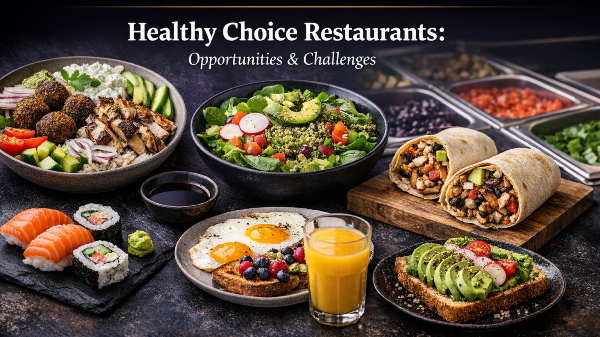
Healthy Choice Restaurants: Opportunities and Challenges
Healthy choice restaurants have become one of the most interesting parts of the food industry. More people want meals that feel fresh, clean, and simple. They want food that fits into busy lives without giving up flavor or nutrition. This shift has opened the door for new brands and has pushed older chains to rethink their menus. Investors are watching this space closely because the demand for healthier eating continues to rise.
Healthy choice restaurants focus on whole ingredients, lighter meals, and clear nutrition. Some chains, like CAVA and Sweetgreen, built their entire identity around health. Others, like Chipotle, offer a mix of comfort and clean ingredients. This mix of concepts gives investors a wide range of options.
The growth of this category is tied to long‑term trends. Younger generations eat out often but want meals that match their health goals. Many families also look for restaurants that offer fresh meals at a fair price. These trends help healthy choice restaurants stand out in a crowded market.
At the same time, the industry faces real challenges. Fresh ingredients cost more. Labor is harder to manage. Competition is rising. Even with these hurdles, the sector continues to expand. Understanding both the opportunities and the risks helps investors make better decisions.
Healthy choice restaurants also benefit from strong digital habits. Customers order online, track calories, and follow brands on social media. This makes it easier for restaurants to build loyal communities. It also helps them test new menu items faster.
Below is a deeper look at the opportunities and challenges shaping this growing part of the restaurant world.
The Rise of Health‑Focused Dining
Healthy eating is no longer a niche trend. It has become a major part of how people choose where to eat. Many customers want meals that feel clean and simple. They want to know what is in their food. This shift has helped brands like First Watch and Kura Sushi grow quickly.
One reason for this rise is the focus on transparency. People want to see real ingredients. They want fewer additives and more natural flavors. Restaurants that offer this tend to build trust faster.
Another reason is convenience. Healthy choice restaurants often use fast‑casual formats. This makes it easy for customers to get a fresh meal without waiting long. It also helps restaurants keep costs under control.
A surprising fact is that some healthy choice chains see stronger lunch traffic than dinner. This is rare in the restaurant world, where dinner usually dominates. The focus on bowls, salads, and lighter meals fits well with daytime eating.
Why Investors Are Paying Attention

Healthy choice restaurants have several strengths that make them appealing to investors. One of the biggest is strong customer loyalty. People who care about health tend to return to the same brands often. They also share their experiences online, which helps brands grow faster.
Another strength is menu flexibility. Healthy choice restaurants can adjust ingredients and flavors without losing their identity. This makes it easier to respond to trends. For example, when plant‑based eating became popular, many chains added new options quickly.
Digital ordering also plays a major role. Many healthy choice brands were early adopters of mobile apps and online menus. This helped them build strong digital sales. It also gave them valuable data about customer habits.
Some chains benefit from simple kitchen setups. Bowls, salads, and grilled items require fewer steps than fried foods. This can reduce labor costs and improve consistency. It also helps restaurants open new locations faster.
A second surprising fact is that some healthy choice chains have some of the lowest food waste levels in the industry. Their menus use flexible ingredients that can be mixed across many dishes.
The Challenge of Higher Ingredient Costs
Fresh ingredients cost more than processed ones. This is one of the biggest challenges for healthy choice restaurants. Items like fresh greens, lean proteins, and seasonal vegetables can change in price quickly. This makes it harder for restaurants to keep margins stable.
Some chains try to manage this by using simple menus. Others build strong relationships with suppliers. A few even use central kitchens to control quality and reduce waste. These strategies help, but they do not remove the challenge completely.
Another issue is supply chain risk. Weather, shipping delays, and global events can affect fresh ingredients. Restaurants that rely heavily on produce feel these changes more than others.
| Cost Area |
Impact Level |
Notes |
| Fresh produce |
High |
Seasonal and price‑sensitive |
| Lean proteins |
Medium‑High |
Chicken and fish costs vary |
| Labor |
Medium |
Prep work can be time‑intensive |
| Packaging |
Medium |
Many brands use eco‑friendly materials |
| Real estate |
Medium |
Fast‑casual formats help reduce space needs |
Read More: How Inflation and Food Costs Impact Restaurant Stocks
Competition Is Growing Fast
The healthy choice category is expanding quickly. New brands enter the market every year. Older chains are also adding healthier items to stay competitive. This creates pressure on pure‑play healthy restaurants.
Fast‑food chains now offer salads, bowls, and grilled items. Grocery stores also compete by selling ready‑to‑eat meals. Meal‑kit companies add even more pressure. Healthy choice restaurants must work harder to stand out.
Brand identity becomes important in this environment. Restaurants that tell a clear story tend to perform better. CAVA focuses on Mediterranean flavors. Sweetgreen focuses on local ingredients. First Watch focuses on fresh daytime meals. These stories help customers connect with the brand.
The Role of Technology and Digital Ordering
Technology is one of the biggest advantages for healthy choice restaurants. Many customers prefer to order online. They want to customize meals and track nutrition. Digital tools make this easy.
Restaurants use apps to offer rewards and track habits. This helps them understand what customers want. It also helps them plan new menu items. Some brands use digital kitchens to speed up online orders.
Technology also helps with operations. Restaurants can track inventory, reduce waste, and manage labor more effectively. These tools help offset the higher cost of fresh ingredients.
| Area |
Benefit |
| Mobile apps |
Strong loyalty and repeat visits |
| Online ordering |
Higher average check sizes |
| Nutrition tracking |
Builds trust with customers |
| Digital kitchens |
Faster order fulfillment |
| Data analytics |
Better menu planning |
Expansion Opportunities
Healthy choice restaurants have room to grow. Many brands are still early in their expansion. CAVA and Sweetgreen have hundreds of locations, but they could reach thousands. First Watch continues to open new daytime cafés across the country.
Urban areas are strong markets for these brands. Suburbs are becoming strong as well. Families want healthier options close to home. This creates new opportunities for expansion.
Some brands may also expand internationally. Mediterranean and Asian flavors have global appeal. Clean‑ingredient menus work well in many countries.
Key Risks Investors Should Watch
Even with strong growth, healthy choice restaurants face risks. High ingredient costs can reduce margins. Labor shortages can slow expansion. Competition can make it harder to stand out.
Another risk is menu fatigue. Customers may want more variety over time. Restaurants must balance new items with simple operations. Too many changes can slow down kitchens.
Real estate is another factor. Good locations cost more. Healthy choice restaurants need areas with strong foot traffic and higher incomes. This limits where they can expand.
Final Thoughts
Healthy choice restaurants offer a mix of growth and stability. They benefit from long‑term trends in health, convenience, and transparency. They also face real challenges, especially with costs and competition. Investors who understand both sides can make better decisions.
This sector will likely continue to grow as more people look for meals that fit their lifestyle. Brands that stay focused on quality, digital tools, and clear identity will have the best chance to lead the market.
🔥 Read More: Explore Restaurant Stock Battles











🥗 Pure‑Play Healthy Restaurant Stocks
These companies explicitly market themselves around healthy, fresh, natural, or minimally processed foods.
⚖️ Healthy‑Leaning / Better‑for‑You Restaurant Stocks
These are not strictly “health restaurants,” but they have strong health‑oriented menu positioning (fresh, natural, grilled, customizable, etc.).
Healthy Choice Restaurants: Opportunities and Challenges
Healthy choice restaurants have become one of the most interesting parts of the food industry. More people want meals that feel fresh, clean, and simple. They want food that fits into busy lives without giving up flavor or nutrition. This shift has opened the door for new brands and has pushed older chains to rethink their menus. Investors are watching this space closely because the demand for healthier eating continues to rise.
Healthy choice restaurants focus on whole ingredients, lighter meals, and clear nutrition. Some chains, like CAVA and Sweetgreen, built their entire identity around health. Others, like Chipotle, offer a mix of comfort and clean ingredients. This mix of concepts gives investors a wide range of options.
The growth of this category is tied to long‑term trends. Younger generations eat out often but want meals that match their health goals. Many families also look for restaurants that offer fresh meals at a fair price. These trends help healthy choice restaurants stand out in a crowded market.
At the same time, the industry faces real challenges. Fresh ingredients cost more. Labor is harder to manage. Competition is rising. Even with these hurdles, the sector continues to expand. Understanding both the opportunities and the risks helps investors make better decisions.
Healthy choice restaurants also benefit from strong digital habits. Customers order online, track calories, and follow brands on social media. This makes it easier for restaurants to build loyal communities. It also helps them test new menu items faster.
Below is a deeper look at the opportunities and challenges shaping this growing part of the restaurant world.
The Rise of Health‑Focused Dining
Healthy eating is no longer a niche trend. It has become a major part of how people choose where to eat. Many customers want meals that feel clean and simple. They want to know what is in their food. This shift has helped brands like First Watch and Kura Sushi grow quickly.
One reason for this rise is the focus on transparency. People want to see real ingredients. They want fewer additives and more natural flavors. Restaurants that offer this tend to build trust faster.
Another reason is convenience. Healthy choice restaurants often use fast‑casual formats. This makes it easy for customers to get a fresh meal without waiting long. It also helps restaurants keep costs under control.
A surprising fact is that some healthy choice chains see stronger lunch traffic than dinner. This is rare in the restaurant world, where dinner usually dominates. The focus on bowls, salads, and lighter meals fits well with daytime eating.
Why Investors Are Paying Attention
Healthy choice restaurants have several strengths that make them appealing to investors. One of the biggest is strong customer loyalty. People who care about health tend to return to the same brands often. They also share their experiences online, which helps brands grow faster.
Another strength is menu flexibility. Healthy choice restaurants can adjust ingredients and flavors without losing their identity. This makes it easier to respond to trends. For example, when plant‑based eating became popular, many chains added new options quickly.
Digital ordering also plays a major role. Many healthy choice brands were early adopters of mobile apps and online menus. This helped them build strong digital sales. It also gave them valuable data about customer habits.
Some chains benefit from simple kitchen setups. Bowls, salads, and grilled items require fewer steps than fried foods. This can reduce labor costs and improve consistency. It also helps restaurants open new locations faster.
A second surprising fact is that some healthy choice chains have some of the lowest food waste levels in the industry. Their menus use flexible ingredients that can be mixed across many dishes.
The Challenge of Higher Ingredient Costs
Fresh ingredients cost more than processed ones. This is one of the biggest challenges for healthy choice restaurants. Items like fresh greens, lean proteins, and seasonal vegetables can change in price quickly. This makes it harder for restaurants to keep margins stable.
Some chains try to manage this by using simple menus. Others build strong relationships with suppliers. A few even use central kitchens to control quality and reduce waste. These strategies help, but they do not remove the challenge completely.
Another issue is supply chain risk. Weather, shipping delays, and global events can affect fresh ingredients. Restaurants that rely heavily on produce feel these changes more than others.
Read More: How Inflation and Food Costs Impact Restaurant Stocks
Competition Is Growing Fast
The healthy choice category is expanding quickly. New brands enter the market every year. Older chains are also adding healthier items to stay competitive. This creates pressure on pure‑play healthy restaurants.
Fast‑food chains now offer salads, bowls, and grilled items. Grocery stores also compete by selling ready‑to‑eat meals. Meal‑kit companies add even more pressure. Healthy choice restaurants must work harder to stand out.
Brand identity becomes important in this environment. Restaurants that tell a clear story tend to perform better. CAVA focuses on Mediterranean flavors. Sweetgreen focuses on local ingredients. First Watch focuses on fresh daytime meals. These stories help customers connect with the brand.
The Role of Technology and Digital Ordering
Technology is one of the biggest advantages for healthy choice restaurants. Many customers prefer to order online. They want to customize meals and track nutrition. Digital tools make this easy.
Restaurants use apps to offer rewards and track habits. This helps them understand what customers want. It also helps them plan new menu items. Some brands use digital kitchens to speed up online orders.
Technology also helps with operations. Restaurants can track inventory, reduce waste, and manage labor more effectively. These tools help offset the higher cost of fresh ingredients.
Expansion Opportunities
Healthy choice restaurants have room to grow. Many brands are still early in their expansion. CAVA and Sweetgreen have hundreds of locations, but they could reach thousands. First Watch continues to open new daytime cafés across the country.
Urban areas are strong markets for these brands. Suburbs are becoming strong as well. Families want healthier options close to home. This creates new opportunities for expansion.
Some brands may also expand internationally. Mediterranean and Asian flavors have global appeal. Clean‑ingredient menus work well in many countries.
Key Risks Investors Should Watch
Even with strong growth, healthy choice restaurants face risks. High ingredient costs can reduce margins. Labor shortages can slow expansion. Competition can make it harder to stand out.
Another risk is menu fatigue. Customers may want more variety over time. Restaurants must balance new items with simple operations. Too many changes can slow down kitchens.
Real estate is another factor. Good locations cost more. Healthy choice restaurants need areas with strong foot traffic and higher incomes. This limits where they can expand.
Final Thoughts
Healthy choice restaurants offer a mix of growth and stability. They benefit from long‑term trends in health, convenience, and transparency. They also face real challenges, especially with costs and competition. Investors who understand both sides can make better decisions.
This sector will likely continue to grow as more people look for meals that fit their lifestyle. Brands that stay focused on quality, digital tools, and clear identity will have the best chance to lead the market.
🔥 Read More: Explore Restaurant Stock Battles