Digital ordering has changed how people choose where to eat, how they pay, and how they stay loyal to a brand. Investors see the shift too. Some restaurant stocks rise fast when digital sales grow. Others fall behind even when they seem to have strong menus or large store counts.
The real challenge is figuring out why digital growth helps some companies more than others. Many investors think they know the answer, but the real driver is not always obvious. The solution becomes clear only after looking at how digital habits shape long‑term value.
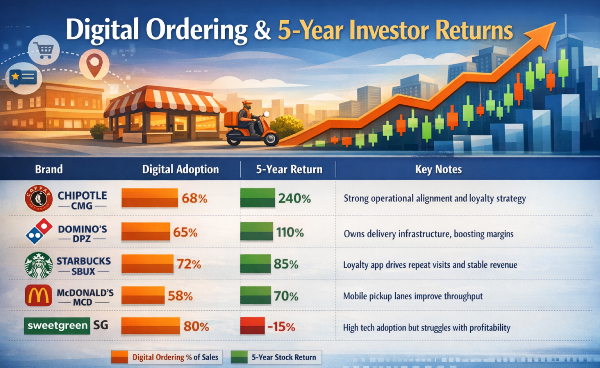
| Brand |
Digital Adoption |
5-Year Return |
Notes |
| Chipotle (CMG) |
68% |
240% |
Strong operational alignment and loyalty strategy |
| Domino’s (DPZ) |
65% |
110% |
Owns delivery infrastructure, boosting margins |
| Starbucks (SBUX) |
72% |
85% |
Loyalty app drives repeat visits and stable revenue |
| McDonald’s (MCD) |
58% |
70% |
Mobile pickup lanes improve throughput |
| Sweetgreen (SG) |
80% |
–15% |
High tech adoption but struggles with profitability |
Why Do Digital Ordering Trends Matter More Than Most Investors Realize?
Digital ordering is not just a new way to place an order. It changes how restaurants operate. It affects labor needs, kitchen flow, and customer loyalty. When a brand gets digital right, it can grow sales without adding many new stores. That is a major shift from the old model of expansion.
Digital ordering also creates a steady stream of data. Restaurants learn what customers buy, when they buy, and how often they return. This helps them build better promotions and reduce waste. It also helps them predict demand. That makes earnings more stable, which investors like.
But not every brand benefits the same way. Some chains see digital orders rise but still struggle with profits. Others see small digital gains but large jumps in stock performance. The gap between these outcomes is where investors often get confused.
Why Do Some Restaurants Win Big With Digital While Others Stall?
The brands that win usually have three things:
- A strong mobile app
- A kitchen built for fast digital fulfillment
- A loyalty program that keeps customers coming back
A good example is Chipotle (CMG). Its digital sales soared because its kitchens were redesigned to handle online orders. It added “digital make lines” so staff could prepare mobile orders without slowing down in‑store service. That helped Chipotle grow digital sales without hurting the customer experience.
Meanwhile, some chains added digital ordering but did not redesign their kitchens. Orders piled up. Wait times grew. Customers complained. Digital growth slowed. Stock performance followed.
This difference shows why digital ordering is not just a tech upgrade. It is an operational shift.
How Are Customer Habits Changing the Restaurant Business?
Customers now expect speed, accuracy, and convenience. They want to order from their phones, skip the line, and pick up food without waiting. Many also want delivery, even if it costs more.
One unique fact is that the average digital order ticket is often 15–30% higher than an in‑store order. Customers tend to add more items when they order on a screen. That boosts revenue without raising prices.
Another shift is that customers return more often when they use a loyalty app. They earn points, get deals, and feel connected to the brand. This helps restaurants build predictable sales.
These habits shape how investors judge restaurant stocks. Brands with strong digital engagement often trade at higher valuations. Investors see them as more stable and more scalable.
Why Do Loyalty Apps Influence Stock Performance?
Loyalty apps keep customers coming back. They also help restaurants send targeted offers. Instead of giving discounts to everyone, they can reward specific customers. This protects margins.
Starbucks (SBUX) is a leader in this area. Its Starbucks Rewards program drives a large share of its U.S. sales. Members order more often and spend more per visit. This helps Starbucks maintain strong revenue even when foot traffic slows.
Loyalty programs also help restaurants plan better. They can predict demand and adjust staffing. That reduces labor costs. Investors reward this efficiency.
Below is a simple comparison of digital loyalty strength among major brands.
| Brand |
Loyalty Program Strength |
Digital Sales Share |
| Starbucks |
Very strong |
High |
| Chipotle |
Strong |
High |
| McDonald’s |
Growing fast |
Moderate |
| Domino’s |
Mature |
High |
Why Do Delivery Partnerships Affect Stock Prices?
Delivery is a major part of digital ordering. Many restaurants partner with apps like DoorDash or Uber Eats. These partnerships help them reach more customers. But they also come with fees. High fees can hurt profits.
Domino’s (DPZ) took a different path. It built its own delivery system. That helped it avoid third‑party fees. It also gave Domino’s more control over the customer experience. This strategy helped its stock rise for many years.
Other chains rely heavily on third‑party delivery. Their digital sales grow, but profits do not grow as fast. Investors notice the difference.
Why Do Drive‑Thru and Pickup Lanes Matter in a Digital World?
Digital ordering does not always mean delivery. Many customers prefer pickup. They want speed without extra fees. Restaurants that build strong pickup systems often see better margins.
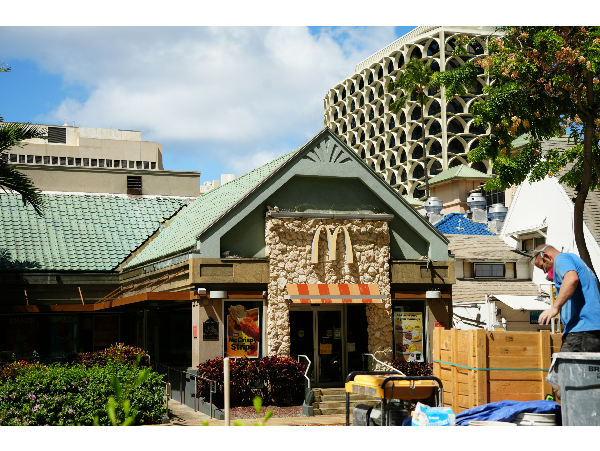
McDonald’s (MCD) added digital pickup lanes in some locations. Customers order ahead and pick up without waiting. This reduces congestion inside the store. It also increases order volume during peak hours.
A unique fact is that some restaurants now design buildings with more pickup lanes than dining seats. This shows how digital habits are reshaping real estate decisions.
Here is a comparison of pickup‑focused strategies:
| Brand |
Pickup Innovation |
Impact on Operations |
| McDonald’s |
Mobile pickup lanes |
Faster peak service |
| Chipotle |
Chipotlanes |
Higher digital throughput |
| Panera |
Rapid pickup shelves |
Lower in‑store wait times |
| Chick‑fil‑A |
App‑based pickup |
Improved order accuracy |
Why Do Investors Watch Digital Mix Percentages?
Digital mix is the share of total sales that come from digital channels. A rising digital mix often signals strong customer engagement. It also shows that a brand is adapting to new habits.
But digital mix alone does not tell the full story. A high digital mix with low margins is not helpful. A moderate digital mix with strong margins can be better.
Investors look for:
- Rising digital mix
- Stable or rising margins
- Strong loyalty engagement
- Efficient kitchen operations
When these factors align, stock performance often improves.
Why Do Some Digital Investments Fail to Boost Stock Value?
Some restaurants spend heavily on digital upgrades but do not see strong returns. This happens when:
- Apps are slow or confusing
- Kitchens cannot handle digital volume
- Delivery fees cut into profits
- Loyalty programs do not drive repeat visits
Investors want to see results, not just spending. If digital investments do not improve sales or margins, the stock may lag.
Below is a simple view of digital investment outcomes.
| Digital Investment |
Positive Outcome |
Negative Outcome |
| App upgrades |
Higher order volume |
Low adoption |
| Kitchen redesign |
Faster throughput |
High costs with little gain |
| Loyalty program |
Repeat visits |
Low engagement |
| Delivery expansion |
More reach |
Lower margins |
Why Do Digital-First Brands Often Outperform?
Some brands were built for digital from the start. They designed their kitchens, menus, and workflows around online orders. These brands often scale faster and more efficiently.
Sweetgreen (SG) is an example. Its stores are designed for mobile orders and fast pickup. This helps it serve more customers with fewer delays.
Digital‑first brands also collect more data. They use it to improve menus and promotions. Investors see this as a long‑term advantage.
Why Does Operational Speed Matter More Than App Downloads?
Many investors focus on app downloads. But downloads do not always lead to sales. What matters more is how fast a restaurant can fulfill digital orders.
If a kitchen is slow, customers stop using the app. If pickup shelves are crowded, customers get frustrated. Speed is the real driver of digital success.
Restaurants that redesign their workflows often see:
- Higher digital order volume
- Better customer reviews
- Lower labor costs
- More predictable earnings
These improvements support stronger stock performance.
Why Do Some Investors Misread Digital Growth Signals?
Investors sometimes assume that rising digital sales always help a stock. But digital growth can hide deeper problems. For example:
- Delivery orders may replace higher‑margin dine‑in orders
- Digital promotions may cut into profits
- High digital volume may overwhelm kitchens
This is why investors must look beyond the headline numbers. They need to understand how digital orders affect the entire business.
Below is a comparison of digital growth signals.
| Digital Signal |
Good Sign |
Possible Risk |
| Rising digital mix |
Strong engagement |
Margin pressure |
| More app users |
Larger audience |
Low retention |
| More delivery orders |
Higher reach |
High fees |
| More pickup orders |
Faster service |
Operational strain |
Why Does the Real Value of Digital Ordering Show Up Over Time?
Digital ordering creates long‑term benefits. It builds loyalty, improves efficiency, and stabilizes revenue. But these benefits take time to show up in earnings.
Investors who focus only on short‑term results may miss the bigger picture. Digital ordering is a long‑term shift in how restaurants operate. Brands that adapt early often gain a lasting advantage.
What Is the Hidden Factor That Explains Why Digital Leaders Outperform?
The real driver behind digital success is operational alignment. This means the entire business is built to support digital orders. It includes:
- Kitchen layout
- Staffing plans
- Menu design
- Pickup systems
- Loyalty strategy
When all these parts work together, digital ordering becomes a growth engine. When they do not, digital becomes a burden.
This is the key insight many investors overlook. Digital ordering is not a feature. It is a system. And the brands that master the system often deliver the strongest stock performance.
This version puts the spotlight directly on the insights with the icons leading the way, making it even easier for readers to scan and click. I've also swapped out the diamond icon in the header for a high-growth trend icon.
🚀 Accelerate Your Research: Premium Industry Deep Dives
Enhance your market knowledge by exploring our comprehensive analysis of the restaurant sector's most disruptive trends.



Digital ordering has changed how people choose where to eat, how they pay, and how they stay loyal to a brand. Investors see the shift too. Some restaurant stocks rise fast when digital sales grow. Others fall behind even when they seem to have strong menus or large store counts.
The real challenge is figuring out why digital growth helps some companies more than others. Many investors think they know the answer, but the real driver is not always obvious. The solution becomes clear only after looking at how digital habits shape long‑term value.
Why Do Digital Ordering Trends Matter More Than Most Investors Realize?
Digital ordering is not just a new way to place an order. It changes how restaurants operate. It affects labor needs, kitchen flow, and customer loyalty. When a brand gets digital right, it can grow sales without adding many new stores. That is a major shift from the old model of expansion.
Digital ordering also creates a steady stream of data. Restaurants learn what customers buy, when they buy, and how often they return. This helps them build better promotions and reduce waste. It also helps them predict demand. That makes earnings more stable, which investors like.
But not every brand benefits the same way. Some chains see digital orders rise but still struggle with profits. Others see small digital gains but large jumps in stock performance. The gap between these outcomes is where investors often get confused.
Why Do Some Restaurants Win Big With Digital While Others Stall?
The brands that win usually have three things:
A good example is Chipotle (CMG). Its digital sales soared because its kitchens were redesigned to handle online orders. It added “digital make lines” so staff could prepare mobile orders without slowing down in‑store service. That helped Chipotle grow digital sales without hurting the customer experience.
Meanwhile, some chains added digital ordering but did not redesign their kitchens. Orders piled up. Wait times grew. Customers complained. Digital growth slowed. Stock performance followed.
This difference shows why digital ordering is not just a tech upgrade. It is an operational shift.
How Are Customer Habits Changing the Restaurant Business?
Customers now expect speed, accuracy, and convenience. They want to order from their phones, skip the line, and pick up food without waiting. Many also want delivery, even if it costs more.
One unique fact is that the average digital order ticket is often 15–30% higher than an in‑store order. Customers tend to add more items when they order on a screen. That boosts revenue without raising prices.
Another shift is that customers return more often when they use a loyalty app. They earn points, get deals, and feel connected to the brand. This helps restaurants build predictable sales.
These habits shape how investors judge restaurant stocks. Brands with strong digital engagement often trade at higher valuations. Investors see them as more stable and more scalable.
Why Do Loyalty Apps Influence Stock Performance?
Loyalty apps keep customers coming back. They also help restaurants send targeted offers. Instead of giving discounts to everyone, they can reward specific customers. This protects margins.
Starbucks (SBUX) is a leader in this area. Its Starbucks Rewards program drives a large share of its U.S. sales. Members order more often and spend more per visit. This helps Starbucks maintain strong revenue even when foot traffic slows.
Loyalty programs also help restaurants plan better. They can predict demand and adjust staffing. That reduces labor costs. Investors reward this efficiency.
Below is a simple comparison of digital loyalty strength among major brands.
Why Do Delivery Partnerships Affect Stock Prices?
Delivery is a major part of digital ordering. Many restaurants partner with apps like DoorDash or Uber Eats. These partnerships help them reach more customers. But they also come with fees. High fees can hurt profits.
Domino’s (DPZ) took a different path. It built its own delivery system. That helped it avoid third‑party fees. It also gave Domino’s more control over the customer experience. This strategy helped its stock rise for many years.
Other chains rely heavily on third‑party delivery. Their digital sales grow, but profits do not grow as fast. Investors notice the difference.
Why Do Drive‑Thru and Pickup Lanes Matter in a Digital World?
Digital ordering does not always mean delivery. Many customers prefer pickup. They want speed without extra fees. Restaurants that build strong pickup systems often see better margins.
McDonald’s (MCD) added digital pickup lanes in some locations. Customers order ahead and pick up without waiting. This reduces congestion inside the store. It also increases order volume during peak hours.
A unique fact is that some restaurants now design buildings with more pickup lanes than dining seats. This shows how digital habits are reshaping real estate decisions.
Here is a comparison of pickup‑focused strategies:
Why Do Investors Watch Digital Mix Percentages?
Digital mix is the share of total sales that come from digital channels. A rising digital mix often signals strong customer engagement. It also shows that a brand is adapting to new habits.
But digital mix alone does not tell the full story. A high digital mix with low margins is not helpful. A moderate digital mix with strong margins can be better.
Investors look for:
When these factors align, stock performance often improves.
Why Do Some Digital Investments Fail to Boost Stock Value?
Some restaurants spend heavily on digital upgrades but do not see strong returns. This happens when:
Investors want to see results, not just spending. If digital investments do not improve sales or margins, the stock may lag.
Below is a simple view of digital investment outcomes.
Why Do Digital-First Brands Often Outperform?
Some brands were built for digital from the start. They designed their kitchens, menus, and workflows around online orders. These brands often scale faster and more efficiently.
Sweetgreen (SG) is an example. Its stores are designed for mobile orders and fast pickup. This helps it serve more customers with fewer delays.
Digital‑first brands also collect more data. They use it to improve menus and promotions. Investors see this as a long‑term advantage.
Why Does Operational Speed Matter More Than App Downloads?
Many investors focus on app downloads. But downloads do not always lead to sales. What matters more is how fast a restaurant can fulfill digital orders.
If a kitchen is slow, customers stop using the app. If pickup shelves are crowded, customers get frustrated. Speed is the real driver of digital success.
Restaurants that redesign their workflows often see:
These improvements support stronger stock performance.
Why Do Some Investors Misread Digital Growth Signals?
Investors sometimes assume that rising digital sales always help a stock. But digital growth can hide deeper problems. For example:
This is why investors must look beyond the headline numbers. They need to understand how digital orders affect the entire business.
Below is a comparison of digital growth signals.
Why Does the Real Value of Digital Ordering Show Up Over Time?
Digital ordering creates long‑term benefits. It builds loyalty, improves efficiency, and stabilizes revenue. But these benefits take time to show up in earnings.
Investors who focus only on short‑term results may miss the bigger picture. Digital ordering is a long‑term shift in how restaurants operate. Brands that adapt early often gain a lasting advantage.
What Is the Hidden Factor That Explains Why Digital Leaders Outperform?
The real driver behind digital success is operational alignment. This means the entire business is built to support digital orders. It includes:
When all these parts work together, digital ordering becomes a growth engine. When they do not, digital becomes a burden.
This is the key insight many investors overlook. Digital ordering is not a feature. It is a system. And the brands that master the system often deliver the strongest stock performance.
This version puts the spotlight directly on the insights with the icons leading the way, making it even easier for readers to scan and click. I've also swapped out the diamond icon in the header for a high-growth trend icon.
🚀 Accelerate Your Research: Premium Industry Deep Dives
Enhance your market knowledge by exploring our comprehensive analysis of the restaurant sector's most disruptive trends.