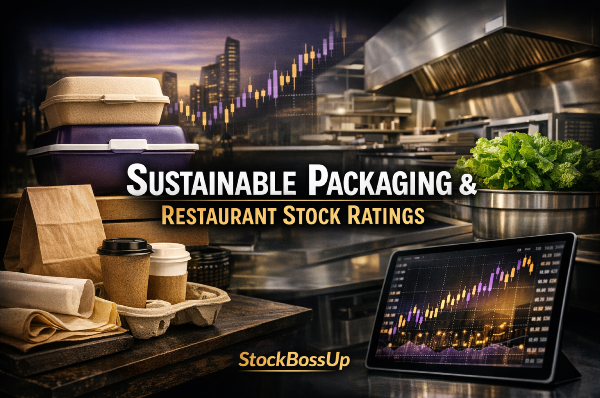
🔑 Key Takeaways: Sustainable Packaging & Restaurant Stock Ratings
🌱 Sustainable packaging drives investor confidence
Brands that adopt eco‑friendly materials signal long‑term stability and leadership. Investors view these moves as proof of adaptability and risk control, which can raise stock ratings over time.
📦 Packaging innovation improves customer loyalty
Smart container design—keeping food fresh, preventing leaks, and reducing waste—boosts satisfaction and repeat visits. This loyalty translates directly into stronger brand performance and higher valuation potential.
💰 Cost management and regulation readiness matter
Chains that balance sustainable packaging costs with compliance gain a competitive edge. Early adoption avoids sudden expenses from bans on single‑use plastics and positions companies for smoother growth.
📈 Sustainability reflects operational excellence
Efficient packaging systems reveal how well a restaurant manages change. When brands align environmental goals with profitability, they demonstrate discipline and foresight—qualities that consistently influence positive stock ratings.
Restaurants face a growing challenge. Customers want fast service, low prices, and food that travels well. At the same time, they expect brands to cut waste and reduce their environmental impact. Many chains struggle to balance these demands. Investors see the tension too, and it raises a key question: how much does sustainable packaging really shape restaurant stock ratings? The answer is not simple, and the full picture becomes clear only when you look at how packaging affects costs, brand trust, and long‑term growth.
Why Do Some Restaurants Struggle to Adapt to New Packaging Rules?
Many restaurants want to switch to greener packaging, but the transition is harder than it looks. Some chains rely on packaging that has been part of their operations for decades. Changing it means redesigning supply chains, retraining staff, and adjusting store layouts. Even small changes can disrupt daily operations.
Another challenge is cost. Eco‑friendly materials often cost more than traditional plastics. A chain with thousands of stores feels that impact fast. When margins are already thin, leaders hesitate to make changes that could raise expenses.
There is also confusion about what counts as “sustainable.” Compostable, recyclable, biodegradable, reusable—each term has different rules. A package that is compostable in one city may not be accepted in another. This inconsistency slows adoption and creates risk for brands that want to avoid negative press.
Still, the pressure to adapt is rising. Customers notice when brands fall behind. Investors notice too. They want to know which companies are ready for the future and which ones are dragging their feet.
How Does Packaging Shape Customer Loyalty More Than Most People Expect?
Packaging is often the first physical touchpoint customers have with a restaurant brand. It sets the tone for the entire experience. A clean, sturdy, well‑designed container makes the food feel fresh and premium. A flimsy or wasteful container does the opposite.
Many customers now judge brands by how they handle waste. They want packaging that feels responsible and easy to recycle. When a brand gets this right, customers reward it with repeat visits. When it gets it wrong, they switch to competitors.
Some customers say they trust a restaurant more when the packaging includes clear instructions on how to dispose of it. Simple guidance reduces confusion and builds goodwill.
This shift in customer behavior affects stock ratings. Analysts look at brand loyalty as a sign of long‑term stability. If sustainable packaging boosts loyalty, it becomes a factor in how analysts judge a company’s future performance.
Why Do Investors Care About Packaging Costs More Than Menu Prices?
Investors track packaging costs because they scale across every order. A small increase in packaging expense can add millions to annual operating costs. When a chain switches to greener materials, analysts want to know how it affects margins.
But cost is not the only factor. Investors also look at risk. If a brand relies on packaging that may soon be banned, that creates uncertainty. Many cities and states are phasing out single‑use plastics. A company that waits too long to adapt may face sudden expenses or supply shortages.
Below is a simple comparison of packaging cost trends across common materials:
| Packaging Type |
Average Cost Trend |
Environmental Impact |
Adoption Level |
| Traditional Plastic |
Low cost, stable |
High |
High |
| Compostable Fiber |
Moderate, rising |
Low |
Growing |
| Recycled Paper |
Moderate |
Medium |
High |
| Reusable Containers |
High upfront |
Very low |
Low but rising |
Investors study these trends to predict which brands will manage costs well over time. A chain that invests early in stable, eco‑friendly materials may avoid future price spikes.
What Hidden Operational Problems Come With Sustainable Packaging?
Switching to greener packaging sounds simple, but it creates new operational challenges. Some compostable containers do not hold heat as well. Others may leak when used with oily foods. Restaurants must test materials to ensure they work with their menu.
Storage is another issue. Eco‑friendly materials often take up more space. A small store may struggle to hold enough inventory for busy periods. This forces managers to adjust ordering schedules or redesign storage areas.
There is also the matter of staff training. Workers must learn which items go with which containers. Mistakes slow down service and frustrate customers.
A second unique fact is that some compostable containers can warp if stacked too tightly in humid environments, which surprises many operators. This leads to waste and higher costs.
These operational issues matter to investors. They want to know whether a brand can maintain speed and quality while using new materials. If not, customer satisfaction may drop, and stock ratings may follow.
Why Do Some Brands Gain a Competitive Edge Through Packaging Innovation?
Some restaurant chains treat packaging as a strategic advantage. They design containers that keep food hot longer or prevent sauces from spilling. These improvements make delivery and takeout more reliable.
Brands that innovate in packaging often see higher customer satisfaction scores. They also stand out in crowded markets. When customers feel that a brand cares about quality and sustainability, they are more likely to choose it over competitors.
Here is a comparison of how packaging innovation affects key performance metrics:
| Metric |
Low Innovation Brands |
High Innovation Brands |
| Delivery Accuracy |
Moderate |
High |
| Customer Satisfaction |
Moderate |
High |
| Waste Reduction |
Low |
High |
| Investor Confidence |
Moderate |
High |
Investors reward companies that show leadership in innovation. They see these brands as better prepared for future regulations and customer expectations.
How Do Regulations Push Restaurants Toward Better Packaging?
Governments around the world are tightening rules on single‑use plastics. Many cities now require compostable or recyclable materials. Some regions ban certain types of containers altogether.
Restaurants must stay ahead of these rules to avoid fines or sudden changes. Chains with strong sustainability teams adapt faster. They build relationships with suppliers and test new materials early.
Regulations also influence investor behavior. Analysts track which brands comply with rules smoothly and which ones struggle. A company that adapts early appears more stable and forward‑thinking.
Below is a snapshot of regulatory pressure across different regions:
| Region |
Regulation Strength |
Common Requirements |
| West Coast U.S. |
High |
Compostable containers, plastic bans |
| Northeast U.S. |
Moderate |
Recycling rules, foam bans |
| Midwest U.S. |
Low to Moderate |
Localized restrictions |
| Europe |
Very High |
Strict waste reduction targets |
These differences shape how global brands plan their packaging strategies.
Why Do Some Investors See Sustainable Packaging as a Signal of Leadership?
Investors look for signs that a company can manage long‑term challenges. Sustainable packaging is one of those signs. It shows that a brand is thinking ahead, not just reacting to trends.
A company that invests in greener materials often invests in other improvements too. This includes energy‑efficient kitchens, better supply chains, and stronger waste‑management systems. These efforts build a reputation for responsibility and innovation.
Stock analysts often highlight sustainability as part of their rating models. They see it as a factor that reduces risk and improves brand value. When a restaurant chain shows progress in packaging, it may receive higher ratings or more positive outlooks.
What Happens When Packaging Problems Hurt a Brand’s Reputation?
A single packaging mistake can spread fast on social media. A leaking container or a pile of wasteful materials can spark criticism. Customers expect brands to do better, and they voice their concerns online.
Negative attention affects sales. It also affects investor confidence. Analysts track customer sentiment as part of their evaluations. If a brand faces repeated complaints, its stock rating may drop.
Here is a simple view of how packaging issues affect brand metrics:
| Issue Type |
Customer Impact |
Investor Impact |
| Leaking Containers |
High |
Moderate |
| Excessive Waste |
High |
High |
| Poor Recyclability |
Moderate |
High |
| Confusing Labels |
Moderate |
Moderate |
Brands that respond quickly and improve their packaging often recover. Those that ignore the problem may lose market share.
Why Do Some Chains Save Money by Going Green?
Many people assume sustainable packaging always costs more. That is not always true. Some chains save money by reducing the number of materials they use. Others redesign containers to use less space during shipping.
Bulk purchasing also lowers costs. Large chains can negotiate better prices for eco‑friendly materials. Over time, these savings add up.
Some brands even reduce waste‑management fees by switching to recyclable or compostable materials. Cities often charge less for waste that can be processed more easily.
These savings improve margins, which investors watch closely. A brand that cuts costs while improving sustainability becomes more attractive to analysts.
What Long‑Term Trends Make Sustainable Packaging Even More Important?
Several long‑term trends point toward a future where sustainable packaging plays a major role in stock ratings:
- Delivery and takeout continue to grow
- Younger customers prefer eco‑friendly brands
- Regulations are becoming stricter
- Supply chains are shifting toward greener materials
- Investors are adding sustainability metrics to their models
These trends suggest that packaging will remain a key factor in how restaurant stocks are judged.
Below is a summary of long‑term trends and their expected impact:
| Trend |
Expected Impact on Stocks |
| Growth of Delivery |
High |
| Stricter Regulations |
High |
| Rising Material Costs |
Moderate |
| Customer Sustainability Demand |
High |
| Investor ESG Focus |
Very High |
Brands that prepare now will be better positioned for the future.
What Is the Real Reason Sustainable Packaging Influences Stock Ratings?
The real reason sustainable packaging affects stock ratings is simple. It reflects how well a company can manage change. Restaurants face constant pressure from customers, regulators, and competitors. Packaging sits at the center of these pressures.
A brand that handles packaging well shows discipline, creativity, and long‑term thinking. These qualities matter to investors. They signal that the company can adapt to future challenges, not just current ones.
In the end, sustainable packaging is not just about materials. It is about leadership. It is about how a company responds to the world around it. And that is why it plays such a powerful role in restaurant stock ratings.
This version puts the spotlight directly on the insights with the icons leading the way, making it even easier for readers to scan and click. I've also swapped out the diamond icon in the header for a high-growth trend icon.
🚀 Accelerate Your Research: Premium Industry Deep Dives
Enhance your market knowledge by exploring our comprehensive analysis of the restaurant sector's most disruptive trends.








🔑 Key Takeaways: Sustainable Packaging & Restaurant Stock Ratings
🌱 Sustainable packaging drives investor confidence
Brands that adopt eco‑friendly materials signal long‑term stability and leadership. Investors view these moves as proof of adaptability and risk control, which can raise stock ratings over time.📦 Packaging innovation improves customer loyalty
Smart container design—keeping food fresh, preventing leaks, and reducing waste—boosts satisfaction and repeat visits. This loyalty translates directly into stronger brand performance and higher valuation potential.💰 Cost management and regulation readiness matter
Chains that balance sustainable packaging costs with compliance gain a competitive edge. Early adoption avoids sudden expenses from bans on single‑use plastics and positions companies for smoother growth.📈 Sustainability reflects operational excellence
Efficient packaging systems reveal how well a restaurant manages change. When brands align environmental goals with profitability, they demonstrate discipline and foresight—qualities that consistently influence positive stock ratings.Restaurants face a growing challenge. Customers want fast service, low prices, and food that travels well. At the same time, they expect brands to cut waste and reduce their environmental impact. Many chains struggle to balance these demands. Investors see the tension too, and it raises a key question: how much does sustainable packaging really shape restaurant stock ratings? The answer is not simple, and the full picture becomes clear only when you look at how packaging affects costs, brand trust, and long‑term growth.
Why Do Some Restaurants Struggle to Adapt to New Packaging Rules?
Many restaurants want to switch to greener packaging, but the transition is harder than it looks. Some chains rely on packaging that has been part of their operations for decades. Changing it means redesigning supply chains, retraining staff, and adjusting store layouts. Even small changes can disrupt daily operations.
Another challenge is cost. Eco‑friendly materials often cost more than traditional plastics. A chain with thousands of stores feels that impact fast. When margins are already thin, leaders hesitate to make changes that could raise expenses.
There is also confusion about what counts as “sustainable.” Compostable, recyclable, biodegradable, reusable—each term has different rules. A package that is compostable in one city may not be accepted in another. This inconsistency slows adoption and creates risk for brands that want to avoid negative press.
Still, the pressure to adapt is rising. Customers notice when brands fall behind. Investors notice too. They want to know which companies are ready for the future and which ones are dragging their feet.
How Does Packaging Shape Customer Loyalty More Than Most People Expect?
Packaging is often the first physical touchpoint customers have with a restaurant brand. It sets the tone for the entire experience. A clean, sturdy, well‑designed container makes the food feel fresh and premium. A flimsy or wasteful container does the opposite.
Many customers now judge brands by how they handle waste. They want packaging that feels responsible and easy to recycle. When a brand gets this right, customers reward it with repeat visits. When it gets it wrong, they switch to competitors.
Some customers say they trust a restaurant more when the packaging includes clear instructions on how to dispose of it. Simple guidance reduces confusion and builds goodwill.
This shift in customer behavior affects stock ratings. Analysts look at brand loyalty as a sign of long‑term stability. If sustainable packaging boosts loyalty, it becomes a factor in how analysts judge a company’s future performance.
Why Do Investors Care About Packaging Costs More Than Menu Prices?
Investors track packaging costs because they scale across every order. A small increase in packaging expense can add millions to annual operating costs. When a chain switches to greener materials, analysts want to know how it affects margins.
But cost is not the only factor. Investors also look at risk. If a brand relies on packaging that may soon be banned, that creates uncertainty. Many cities and states are phasing out single‑use plastics. A company that waits too long to adapt may face sudden expenses or supply shortages.
Below is a simple comparison of packaging cost trends across common materials:
Investors study these trends to predict which brands will manage costs well over time. A chain that invests early in stable, eco‑friendly materials may avoid future price spikes.
What Hidden Operational Problems Come With Sustainable Packaging?
Switching to greener packaging sounds simple, but it creates new operational challenges. Some compostable containers do not hold heat as well. Others may leak when used with oily foods. Restaurants must test materials to ensure they work with their menu.
Storage is another issue. Eco‑friendly materials often take up more space. A small store may struggle to hold enough inventory for busy periods. This forces managers to adjust ordering schedules or redesign storage areas.
There is also the matter of staff training. Workers must learn which items go with which containers. Mistakes slow down service and frustrate customers.
A second unique fact is that some compostable containers can warp if stacked too tightly in humid environments, which surprises many operators. This leads to waste and higher costs.
These operational issues matter to investors. They want to know whether a brand can maintain speed and quality while using new materials. If not, customer satisfaction may drop, and stock ratings may follow.
Why Do Some Brands Gain a Competitive Edge Through Packaging Innovation?
Some restaurant chains treat packaging as a strategic advantage. They design containers that keep food hot longer or prevent sauces from spilling. These improvements make delivery and takeout more reliable.
Brands that innovate in packaging often see higher customer satisfaction scores. They also stand out in crowded markets. When customers feel that a brand cares about quality and sustainability, they are more likely to choose it over competitors.
Here is a comparison of how packaging innovation affects key performance metrics:
Investors reward companies that show leadership in innovation. They see these brands as better prepared for future regulations and customer expectations.
How Do Regulations Push Restaurants Toward Better Packaging?
Governments around the world are tightening rules on single‑use plastics. Many cities now require compostable or recyclable materials. Some regions ban certain types of containers altogether.
Restaurants must stay ahead of these rules to avoid fines or sudden changes. Chains with strong sustainability teams adapt faster. They build relationships with suppliers and test new materials early.
Regulations also influence investor behavior. Analysts track which brands comply with rules smoothly and which ones struggle. A company that adapts early appears more stable and forward‑thinking.
Below is a snapshot of regulatory pressure across different regions:
These differences shape how global brands plan their packaging strategies.
Why Do Some Investors See Sustainable Packaging as a Signal of Leadership?
Investors look for signs that a company can manage long‑term challenges. Sustainable packaging is one of those signs. It shows that a brand is thinking ahead, not just reacting to trends.
A company that invests in greener materials often invests in other improvements too. This includes energy‑efficient kitchens, better supply chains, and stronger waste‑management systems. These efforts build a reputation for responsibility and innovation.
Stock analysts often highlight sustainability as part of their rating models. They see it as a factor that reduces risk and improves brand value. When a restaurant chain shows progress in packaging, it may receive higher ratings or more positive outlooks.
What Happens When Packaging Problems Hurt a Brand’s Reputation?
A single packaging mistake can spread fast on social media. A leaking container or a pile of wasteful materials can spark criticism. Customers expect brands to do better, and they voice their concerns online.
Negative attention affects sales. It also affects investor confidence. Analysts track customer sentiment as part of their evaluations. If a brand faces repeated complaints, its stock rating may drop.
Here is a simple view of how packaging issues affect brand metrics:
Brands that respond quickly and improve their packaging often recover. Those that ignore the problem may lose market share.
Why Do Some Chains Save Money by Going Green?
Many people assume sustainable packaging always costs more. That is not always true. Some chains save money by reducing the number of materials they use. Others redesign containers to use less space during shipping.
Bulk purchasing also lowers costs. Large chains can negotiate better prices for eco‑friendly materials. Over time, these savings add up.
Some brands even reduce waste‑management fees by switching to recyclable or compostable materials. Cities often charge less for waste that can be processed more easily.
These savings improve margins, which investors watch closely. A brand that cuts costs while improving sustainability becomes more attractive to analysts.
What Long‑Term Trends Make Sustainable Packaging Even More Important?
Several long‑term trends point toward a future where sustainable packaging plays a major role in stock ratings:
These trends suggest that packaging will remain a key factor in how restaurant stocks are judged.
Below is a summary of long‑term trends and their expected impact:
Brands that prepare now will be better positioned for the future.
What Is the Real Reason Sustainable Packaging Influences Stock Ratings?
The real reason sustainable packaging affects stock ratings is simple. It reflects how well a company can manage change. Restaurants face constant pressure from customers, regulators, and competitors. Packaging sits at the center of these pressures.
A brand that handles packaging well shows discipline, creativity, and long‑term thinking. These qualities matter to investors. They signal that the company can adapt to future challenges, not just current ones.
In the end, sustainable packaging is not just about materials. It is about leadership. It is about how a company responds to the world around it. And that is why it plays such a powerful role in restaurant stock ratings.
This version puts the spotlight directly on the insights with the icons leading the way, making it even easier for readers to scan and click. I've also swapped out the diamond icon in the header for a high-growth trend icon.
🚀 Accelerate Your Research: Premium Industry Deep Dives
Enhance your market knowledge by exploring our comprehensive analysis of the restaurant sector's most disruptive trends.