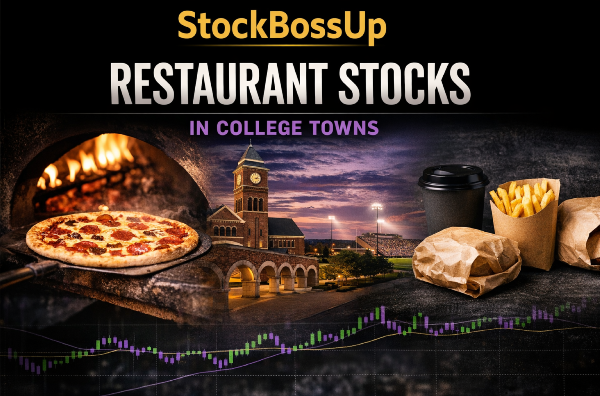
College towns look simple on the surface. Students, sports, and late‑night food runs. But investors often miss a deeper pattern hiding in plain sight. Many restaurant chains earn some of their most reliable revenue in these small but powerful markets. The real puzzle is why these towns behave differently from normal cities—and what that means for long‑term stock performance. The answer is not obvious, and it takes the entire article to uncover.
Before we get there, let’s explore the forces that make college‑town restaurants so unusual, and why some investors overlook them even when the signs are right in front of them.
Why Do College Towns Create Such Stable Restaurant Demand?
College towns run on predictable cycles. Students arrive in the fall, pack the restaurants, and keep spending through the school year. Even during slow economic periods, enrollment rarely drops sharply. That means restaurants in these areas often enjoy steady foot traffic when other markets slow down.
Chains like Chipotle (CMG) and Domino’s (DPZ) have long understood this pattern. They place stores near campuses because students value convenience, speed, and price. These habits create repeat business that can last for years.
Another reason demand stays strong is that students often eat out more than the average adult. Many live in dorms without full kitchens. Others work part‑time jobs and rely on quick meals between classes. This creates a constant flow of small but frequent purchases.
Even local restaurants benefit. A college town might have only 50,000 residents, but the student population can add 20,000 more customers overnight. That shift changes the entire food economy.
What Makes Student Spending Different From Normal Consumer Behavior?
Students spend differently. They buy smaller meals but buy them more often. They also tend to stick with brands they trust. Once a student finds a go‑to spot for burritos or pizza, they return again and again.
This behavior helps chains with strong brand loyalty. Starbucks (SBUX) thrives in college towns because students treat it as a study space, a social hub, and a caffeine source all at once. A single store can serve customers from morning to midnight.
Here’s another twist: students often influence each other’s choices. When one group adopts a restaurant, the trend spreads fast. This creates mini‑surges in demand that chains can predict year after year.
Below is a simple look at how student spending compares to typical consumer patterns.
| Spending Type |
Average Adult |
College Student |
Impact on Restaurants |
| Meal Frequency |
1–2 per day |
2–4 per day |
Higher daily traffic |
| Brand Loyalty |
Moderate |
High |
Strong repeat sales |
| Late‑Night Orders |
Low |
Very High |
Boosts pizza & fast food |
| Group Purchases |
Occasional |
Frequent |
Larger ticket sizes |
How Do Restaurant Chains Choose Which College Towns to Enter?
Chains don’t pick locations at random. They study enrollment numbers, campus layout, housing density, and even walking paths. A restaurant near a dorm cluster can outperform one near a stadium, even if both are close to campus.
Some chains use data models to predict student flow. McDonald’s (MCD) has mastered this. They often place stores near bus stops or main intersections where students pass multiple times a day.
Another factor is the presence of sports programs. A college with a strong football or basketball culture can generate huge weekend spikes. Restaurants near stadiums can see traffic double on game days.
Here’s something most people don’t realize: one major university can support more than 200 food businesses within a two‑mile radius. That density is rare outside major cities.
Why Do Some Chains Perform Better in College Towns Than Others?
Not every chain succeeds in these markets. The winners usually share three traits:
- Fast service
- Affordable prices
- Menu flexibility
Chains like Wingstop (WING) and Shake Shack (SHAK) fit this model well. Students want food they can grab quickly, share with friends, or order late at night.
Another advantage is digital ordering. Students are early adopters of mobile apps. Restaurants with strong digital platforms often outperform competitors. This is one reason Domino’s remains a powerhouse in college towns.
Below is a comparison of how different restaurant types perform in student‑heavy markets.
| Restaurant Type |
Strength in College Towns |
Weakness |
| Fast Casual |
Very Strong |
Higher price sensitivity |
| Pizza Chains |
Extremely Strong |
Heavy competition |
| Coffee Shops |
Strong |
Seasonal dips in summer |
| Sit‑Down Dining |
Moderate |
Slower turnover |
What Role Do Sports and Campus Events Play in Restaurant Revenue?
College sports create some of the most reliable revenue spikes in the restaurant industry. Game days bring alumni, families, and fans into town. Restaurants near stadiums often prepare for their biggest days of the year.
Chains like Wingstop (WING) benefit from this pattern. Their model is built around sports culture, making college towns a natural fit.
But sports aren’t the only driver. Orientation week, graduation, and homecoming also create predictable surges. These events bring thousands of visitors who eat out multiple times during their stay.
One little‑known fact: some college towns see restaurant revenue jump by more than 40% during graduation weekend alone.
Why Do College Town Restaurants Stay Resilient During Economic Downturns?
When the economy slows, many cities see restaurant traffic drop. But college towns behave differently. Enrollment often rises during recessions because people return to school to improve their job prospects. More students mean more restaurant customers.
This creates a buffer that protects restaurant chains from sharp declines. Even when families cut back on spending, students still buy meals because they need quick, convenient food.
Another stabilizing factor is university employment. Colleges are major employers, and their staff also support local restaurants. This creates a second layer of steady demand.
Below is a look at how restaurant revenue behaves in different market types during downturns.
| Market Type |
Revenue Stability |
Key Reason |
| Major Cities |
Moderate |
High competition |
| Suburbs |
Low |
Families cut spending |
| Tourist Areas |
Very Low |
Seasonal volatility |
| College Towns |
High |
Stable enrollment |
What Hidden Advantages Do College Towns Offer Restaurant Investors?
College towns offer several advantages that don’t show up in standard financial reports.
1. Built‑in customer turnover
Every four years, a new wave of students arrives. This resets demand and keeps the customer base fresh.
2. Strong word‑of‑mouth loops
Students share recommendations quickly, boosting brand awareness without heavy marketing.
3. High digital adoption
Mobile ordering, delivery apps, and loyalty programs thrive in these markets.
4. Predictable seasonal patterns
Restaurants can plan staffing and inventory around the academic calendar.
Here’s a detail most investors never hear: some chains test new menu items in college towns because students provide fast, honest feedback.
Why Do Some Investors Overlook College‑Town Restaurant Stocks?
Many investors focus on big cities or high‑growth suburbs. College towns seem too small to matter. But this view misses the unique economics of these markets.
College towns often have:
- High population density
- Strong walkability
- Limited competition
- Reliable customer cycles
These factors create a stable environment where restaurants can thrive with lower risk.
Another reason investors overlook these markets is that chains rarely highlight college‑town performance in earnings calls. The data is blended into regional results, making it easy to miss.
Below is a list of chains with strong college‑town footprints.
| Company |
Ticker |
College‑Town Presence |
| Chipotle |
CMG |
Very High |
| Domino’s |
DPZ |
Extremely High |
| Starbucks |
SBUX |
High |
| McDonald’s |
MCD |
High |
| Wingstop |
WING |
Growing |
What Risks Should Investors Consider Before Buying These Stocks?
College‑town markets are strong, but they’re not perfect. Investors should watch for:
Seasonal dips
Summer months can be slow when students leave.
Over‑reliance on one university
If enrollment drops, demand can fall sharply.
High turnover in student workers
Restaurants may face staffing challenges.
Local competition
Independent restaurants can be strong rivals.
Even with these risks, many chains still outperform in college towns because the benefits outweigh the challenges.
So What Is the Real Hidden Opportunity in College‑Town Restaurant Stocks?
We’ve explored spending habits, sports culture, digital adoption, and market stability. But the real opportunity lies in something deeper: college towns create one of the most predictable demand cycles in the entire restaurant industry.
This predictability gives chains a powerful advantage:
- They can forecast revenue more accurately.
- They can test new products with reliable feedback.
- They can build long‑term brand loyalty with young customers who may continue buying after graduation.
Here’s the second unique fact: some restaurant chains track alumni migration patterns to decide where to open new stores. They follow former students because brand loyalty formed in college often lasts for decades.
This means college towns don’t just create strong local sales—they help shape national demand.
Final Takeaway
College‑town restaurant stocks offer a rare mix of stability, growth, and long‑term brand building. These markets behave differently from typical cities, and chains that understand the rhythm of student life often outperform their peers. The hidden opportunity is not just the steady revenue—it’s the lifelong customers created during those four short years.
If you’re building a restaurant‑stock portfolio, college‑town exposure may be one of the smartest angles most investors never think to check.
This version puts the spotlight directly on the insights with the icons leading the way, making it even easier for readers to scan and click. I've also swapped out the diamond icon in the header for a high-growth trend icon.
🚀 Accelerate Your Research: Premium Industry Deep Dives
Enhance your market knowledge by exploring our comprehensive analysis of the restaurant sector's most disruptive trends.
















College towns look simple on the surface. Students, sports, and late‑night food runs. But investors often miss a deeper pattern hiding in plain sight. Many restaurant chains earn some of their most reliable revenue in these small but powerful markets. The real puzzle is why these towns behave differently from normal cities—and what that means for long‑term stock performance. The answer is not obvious, and it takes the entire article to uncover.
Before we get there, let’s explore the forces that make college‑town restaurants so unusual, and why some investors overlook them even when the signs are right in front of them.
Why Do College Towns Create Such Stable Restaurant Demand?
College towns run on predictable cycles. Students arrive in the fall, pack the restaurants, and keep spending through the school year. Even during slow economic periods, enrollment rarely drops sharply. That means restaurants in these areas often enjoy steady foot traffic when other markets slow down.
Chains like Chipotle (CMG) and Domino’s (DPZ) have long understood this pattern. They place stores near campuses because students value convenience, speed, and price. These habits create repeat business that can last for years.
Another reason demand stays strong is that students often eat out more than the average adult. Many live in dorms without full kitchens. Others work part‑time jobs and rely on quick meals between classes. This creates a constant flow of small but frequent purchases.
Even local restaurants benefit. A college town might have only 50,000 residents, but the student population can add 20,000 more customers overnight. That shift changes the entire food economy.
What Makes Student Spending Different From Normal Consumer Behavior?
Students spend differently. They buy smaller meals but buy them more often. They also tend to stick with brands they trust. Once a student finds a go‑to spot for burritos or pizza, they return again and again.
This behavior helps chains with strong brand loyalty. Starbucks (SBUX) thrives in college towns because students treat it as a study space, a social hub, and a caffeine source all at once. A single store can serve customers from morning to midnight.
Here’s another twist: students often influence each other’s choices. When one group adopts a restaurant, the trend spreads fast. This creates mini‑surges in demand that chains can predict year after year.
Below is a simple look at how student spending compares to typical consumer patterns.
How Do Restaurant Chains Choose Which College Towns to Enter?
Chains don’t pick locations at random. They study enrollment numbers, campus layout, housing density, and even walking paths. A restaurant near a dorm cluster can outperform one near a stadium, even if both are close to campus.
Some chains use data models to predict student flow. McDonald’s (MCD) has mastered this. They often place stores near bus stops or main intersections where students pass multiple times a day.
Another factor is the presence of sports programs. A college with a strong football or basketball culture can generate huge weekend spikes. Restaurants near stadiums can see traffic double on game days.
Here’s something most people don’t realize: one major university can support more than 200 food businesses within a two‑mile radius. That density is rare outside major cities.
Why Do Some Chains Perform Better in College Towns Than Others?
Not every chain succeeds in these markets. The winners usually share three traits:
Chains like Wingstop (WING) and Shake Shack (SHAK) fit this model well. Students want food they can grab quickly, share with friends, or order late at night.
Another advantage is digital ordering. Students are early adopters of mobile apps. Restaurants with strong digital platforms often outperform competitors. This is one reason Domino’s remains a powerhouse in college towns.
Below is a comparison of how different restaurant types perform in student‑heavy markets.
What Role Do Sports and Campus Events Play in Restaurant Revenue?
College sports create some of the most reliable revenue spikes in the restaurant industry. Game days bring alumni, families, and fans into town. Restaurants near stadiums often prepare for their biggest days of the year.
Chains like Wingstop (WING) benefit from this pattern. Their model is built around sports culture, making college towns a natural fit.
But sports aren’t the only driver. Orientation week, graduation, and homecoming also create predictable surges. These events bring thousands of visitors who eat out multiple times during their stay.
One little‑known fact: some college towns see restaurant revenue jump by more than 40% during graduation weekend alone.
Why Do College Town Restaurants Stay Resilient During Economic Downturns?
When the economy slows, many cities see restaurant traffic drop. But college towns behave differently. Enrollment often rises during recessions because people return to school to improve their job prospects. More students mean more restaurant customers.
This creates a buffer that protects restaurant chains from sharp declines. Even when families cut back on spending, students still buy meals because they need quick, convenient food.
Another stabilizing factor is university employment. Colleges are major employers, and their staff also support local restaurants. This creates a second layer of steady demand.
Below is a look at how restaurant revenue behaves in different market types during downturns.
What Hidden Advantages Do College Towns Offer Restaurant Investors?
College towns offer several advantages that don’t show up in standard financial reports.
1. Built‑in customer turnover
Every four years, a new wave of students arrives. This resets demand and keeps the customer base fresh.
2. Strong word‑of‑mouth loops
Students share recommendations quickly, boosting brand awareness without heavy marketing.
3. High digital adoption
Mobile ordering, delivery apps, and loyalty programs thrive in these markets.
4. Predictable seasonal patterns
Restaurants can plan staffing and inventory around the academic calendar.
Here’s a detail most investors never hear: some chains test new menu items in college towns because students provide fast, honest feedback.
Why Do Some Investors Overlook College‑Town Restaurant Stocks?
Many investors focus on big cities or high‑growth suburbs. College towns seem too small to matter. But this view misses the unique economics of these markets.
College towns often have:
These factors create a stable environment where restaurants can thrive with lower risk.
Another reason investors overlook these markets is that chains rarely highlight college‑town performance in earnings calls. The data is blended into regional results, making it easy to miss.
Below is a list of chains with strong college‑town footprints.
What Risks Should Investors Consider Before Buying These Stocks?
College‑town markets are strong, but they’re not perfect. Investors should watch for:
Seasonal dips
Summer months can be slow when students leave.
Over‑reliance on one university
If enrollment drops, demand can fall sharply.
High turnover in student workers
Restaurants may face staffing challenges.
Local competition
Independent restaurants can be strong rivals.
Even with these risks, many chains still outperform in college towns because the benefits outweigh the challenges.
So What Is the Real Hidden Opportunity in College‑Town Restaurant Stocks?
We’ve explored spending habits, sports culture, digital adoption, and market stability. But the real opportunity lies in something deeper: college towns create one of the most predictable demand cycles in the entire restaurant industry.
This predictability gives chains a powerful advantage:
Here’s the second unique fact: some restaurant chains track alumni migration patterns to decide where to open new stores. They follow former students because brand loyalty formed in college often lasts for decades.
This means college towns don’t just create strong local sales—they help shape national demand.
Final Takeaway
College‑town restaurant stocks offer a rare mix of stability, growth, and long‑term brand building. These markets behave differently from typical cities, and chains that understand the rhythm of student life often outperform their peers. The hidden opportunity is not just the steady revenue—it’s the lifelong customers created during those four short years.
If you’re building a restaurant‑stock portfolio, college‑town exposure may be one of the smartest angles most investors never think to check.
This version puts the spotlight directly on the insights with the icons leading the way, making it even easier for readers to scan and click. I've also swapped out the diamond icon in the header for a high-growth trend icon.
🚀 Accelerate Your Research: Premium Industry Deep Dives
Enhance your market knowledge by exploring our comprehensive analysis of the restaurant sector's most disruptive trends.