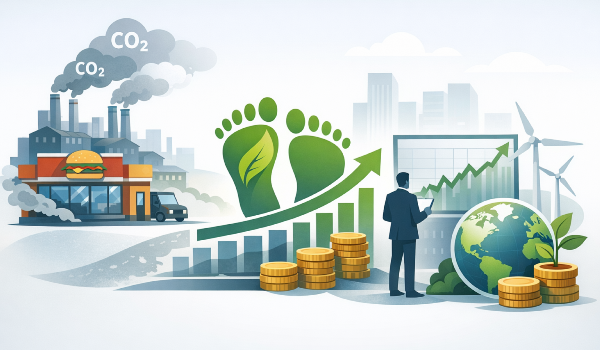
Most investors track revenue, margins, and store growth. But a new problem is rising inside the restaurant industry, and it is changing how analysts judge long‑term value. The issue is not about food quality or menu prices.
It is something far bigger, and it affects nearly every major chain. Yet the real impact of this problem is not obvious until you look at how it shapes future costs, brand trust, and even expansion plans.
We will return to this hidden challenge later, but first we need to understand why investors are suddenly paying attention to carbon footprints.
Why Are Investors Looking at Carbon Footprints Now?
Restaurant chains use huge amounts of energy. They run grills, fryers, coolers, and delivery fleets every day. As energy prices shift and climate rules tighten, these operations become more expensive. Investors want to know which brands are ready for this shift and which ones may fall behind.
Many large chains already report emissions. Some do it because regulators require it. Others do it because customers expect it. Younger diners often choose brands that show real progress on sustainability. This trend is strong enough that it now affects sales and loyalty.
Public companies like McDonald’s (MCD) and Starbucks (SBUX) publish detailed sustainability reports. These documents show how much carbon they produce and how they plan to reduce it. Investors use this data to compare chains and spot long‑term risks.
One detail many people miss is how much emissions come from supply chains. Beef, dairy, and packaging create more carbon than the restaurants themselves. This means a company’s footprint is tied to its menu choices as much as its buildings.
Another reason investors care is that carbon footprints can predict future costs. If a chain relies on high‑emission ingredients, it may face higher taxes or supplier price hikes later. Brands that shift early may avoid these costs.
How Do Restaurant Chains Measure Their Carbon Footprint?
Most companies use three categories called “scopes.”
- Scope 1 covers direct emissions from equipment and vehicles.
- Scope 2 covers electricity and heating purchased from utilities.
- Scope 3 covers everything else, including farms, factories, and transportation.
Scope 3 is the largest part for most restaurant chains. It includes farming, packaging, and distribution. For example, beef production creates far more emissions than cooking equipment. This is why menu design plays a major role in a chain’s footprint.
Some companies hire outside firms to measure emissions. Others build internal teams. The process is complex, but it gives investors a clearer picture of long‑term restaurant risk.
Below is a simple comparison of how different restaurant categories tend to score on carbon intensity.
| Restaurant Type |
Typical Carbon Drivers |
Relative Footprint |
| Burger Chains |
Beef, cheese, packaging |
High |
| Coffee Chains |
Dairy, electricity |
Medium |
| Pizza Chains |
Cheese, ovens |
Medium‑High |
| Fast Casual |
Mixed ingredients |
Medium |
| Plant‑Forward Chains |
Produce, grains |
Low |
This table helps investors understand why some brands face more pressure than others.
Which Chains Are Leading the Push for Lower Emissions?
Some companies have made major progress. Chipotle (CMG) invests in local sourcing and waste reduction. Yum! Brands (YUM) focuses on energy‑efficient equipment across its global stores. Domino’s (DPZ) has tested electric delivery vehicles in select markets.
One interesting fact is that some chains reduce emissions by changing packaging. A small shift in material can cut thousands of tons of carbon each year. Another fact is that certain crops used in plant‑based menus can pull carbon from the air as they grow, which helps offset emissions.
Brands that move early often gain a marketing advantage. Customers like knowing their meal has a smaller footprint. This can boost sales without raising prices.
Investors also watch how companies treat suppliers. Chains that help farmers adopt cleaner methods often see long‑term cost savings. These savings come from better soil health, lower fertilizer use, and more stable supply.
Why Do Some Chains Struggle to Reduce Their Footprint?
Not every company can make fast progress. Some chains rely heavily on beef or dairy. Others operate older buildings that are expensive to upgrade. A few brands have global supply chains that are hard to track.
There are also cost challenges. Energy‑efficient equipment is expensive. Switching to renewable power takes time. Training staff adds more cost. Smaller chains may not have the budget to make big changes.
Another challenge is customer expectations. If a chain changes its menu to reduce emissions, some customers may resist. This makes it harder to shift away from high‑emission ingredients.
Below is a look at common barriers that slow down sustainability efforts.
| Barrier |
Impact on Chain |
Why It Matters |
| High cost of upgrades |
Slower progress |
Limits store improvements |
| Complex supply chains |
Harder tracking |
Reduces accuracy |
| Customer resistance |
Menu limits |
Slows ingredient changes |
| Old buildings |
Higher energy use |
Raises long‑term costs |
These barriers explain why some companies move faster than others.
How Does Carbon Footprint Affect Long‑Term Profitability?
Carbon footprints are not just environmental metrics. They are financial signals. A chain with a high footprint may face higher costs in the future. These costs can come from taxes, supplier changes, or energy price swings.
Investors look at carbon data to predict which companies will stay profitable. Chains that reduce emissions early often save money later. They also avoid sudden regulatory changes.
For example, if a city requires all restaurants to use electric equipment, chains that already upgraded will avoid major expenses. Those that did not may face large one‑time costs.
Carbon footprints also affect brand value. Customers trust companies that show real progress. This trust can lead to higher sales and stronger loyalty.
Some investors now include carbon data in their valuation models. They treat emissions like debt. The higher the footprint, the higher the risk.
Are Carbon‑Efficient Chains Better Positioned for Growth?
Many analysts believe so. Chains with lower emissions often have more flexible menus. They can adjust ingredients without losing customers. They also tend to have stronger supplier relationships.
Plant‑forward chains like Sweetgreen (SG) benefit from this trend. Their menus rely on produce, which has a lower footprint. This gives them a natural advantage as sustainability becomes more important.
Fast‑casual brands also benefit. They often use modern buildings and efficient equipment. This keeps energy use low.
Below is a comparison of how carbon‑efficient chains may gain advantages over time.
| Advantage |
Why It Helps |
Long‑Term Impact |
| Lower energy use |
Cuts operating costs |
Higher margins |
| Flexible menus |
Easier ingredient shifts |
Lower risk |
| Strong supplier ties |
Stable pricing |
Better planning |
| Customer trust |
Higher loyalty |
More repeat visits |
These advantages can shape future growth.
What Role Does Technology Play in Reducing Emissions?
Technology is becoming a major tool for cutting carbon. Smart kitchen equipment uses less energy. Delivery apps optimize routes to reduce fuel use. Some chains use sensors to track waste and adjust orders.
A growing number of companies use software to measure emissions. This helps them find the biggest sources and fix them. It also helps investors see progress.
One detail many people do not know is that some chains now use AI to predict how much food they will sell each day. This reduces waste and lowers emissions from unused ingredients.
Technology also helps with building design. New stores use better insulation, LED lighting, and efficient HVAC systems. These upgrades cut energy use for decades.
Could Carbon Footprint Become a Standard Investor Metric?
Many experts think it will. Investors already use ESG scores. Carbon data may soon become a separate metric. It is easy to compare across companies, and it predicts long‑term risk.
Regulators in Europe already require detailed carbon reporting. The United States is moving in the same direction. As rules expand, more chains will need to track emissions.
This shift could change how analysts rate restaurant stocks. A company with strong carbon performance may receive a higher valuation. One with weak performance may face pressure from shareholders.
Below is a simple view of how carbon metrics may influence stock analysis.
| Investor Focus |
What Changes |
Why It Matters |
| Risk scoring |
Emissions treated like debt |
Predicts future costs |
| Valuation models |
Carbon added to forecasts |
More accurate pricing |
| Growth outlook |
Sustainability tied to expansion |
Affects long‑term plans |
| Brand strength |
Customer trust measured |
Impacts sales |
This trend is still developing, but it is gaining momentum.
What Hidden Problem Did We Start With?
At the start of this article, we mentioned a growing problem that many investors overlook. Here it is:
Most restaurant chains do not control the part of their business that creates the most carbon.
Their biggest emissions come from farms, factories, and suppliers. These are outside the company’s direct control. This means even the most committed brands struggle to reduce their footprint unless suppliers change too.
This is why carbon footprint is becoming a powerful investor metric. It reveals how well a company manages risks it cannot fully control. Chains that build strong supplier partnerships will lead the next decade. Those that ignore this issue may face rising costs and shrinking margins.
Final Thoughts: Is Carbon Footprint the Next Big Signal for Investors?
Carbon footprints are no longer just environmental data. They are financial indicators. They show which chains are ready for the future and which ones may face rising pressure.
Investors who track emissions gain a clearer view of long‑term risk. They can spot brands that manage supply chains well. They can also see which companies may struggle as rules and costs change.
The restaurant industry is entering a new era. Carbon efficiency is becoming a competitive advantage. And for investors, it may become one of the most important metrics to watch.
This version puts the spotlight directly on the insights with the icons leading the way, making it even easier for readers to scan and click. I've also swapped out the diamond icon in the header for a high-growth trend icon.
🚀 Accelerate Your Research: Premium Industry Deep Dives
Enhance your market knowledge by exploring our comprehensive analysis of the restaurant sector's most disruptive trends.








Most investors track revenue, margins, and store growth. But a new problem is rising inside the restaurant industry, and it is changing how analysts judge long‑term value. The issue is not about food quality or menu prices.
It is something far bigger, and it affects nearly every major chain. Yet the real impact of this problem is not obvious until you look at how it shapes future costs, brand trust, and even expansion plans.
We will return to this hidden challenge later, but first we need to understand why investors are suddenly paying attention to carbon footprints.
Why Are Investors Looking at Carbon Footprints Now?
Restaurant chains use huge amounts of energy. They run grills, fryers, coolers, and delivery fleets every day. As energy prices shift and climate rules tighten, these operations become more expensive. Investors want to know which brands are ready for this shift and which ones may fall behind.
Many large chains already report emissions. Some do it because regulators require it. Others do it because customers expect it. Younger diners often choose brands that show real progress on sustainability. This trend is strong enough that it now affects sales and loyalty.
Public companies like McDonald’s (MCD) and Starbucks (SBUX) publish detailed sustainability reports. These documents show how much carbon they produce and how they plan to reduce it. Investors use this data to compare chains and spot long‑term risks.
One detail many people miss is how much emissions come from supply chains. Beef, dairy, and packaging create more carbon than the restaurants themselves. This means a company’s footprint is tied to its menu choices as much as its buildings.
Another reason investors care is that carbon footprints can predict future costs. If a chain relies on high‑emission ingredients, it may face higher taxes or supplier price hikes later. Brands that shift early may avoid these costs.
How Do Restaurant Chains Measure Their Carbon Footprint?
Most companies use three categories called “scopes.”
Scope 3 is the largest part for most restaurant chains. It includes farming, packaging, and distribution. For example, beef production creates far more emissions than cooking equipment. This is why menu design plays a major role in a chain’s footprint.
Some companies hire outside firms to measure emissions. Others build internal teams. The process is complex, but it gives investors a clearer picture of long‑term restaurant risk.
Below is a simple comparison of how different restaurant categories tend to score on carbon intensity.
This table helps investors understand why some brands face more pressure than others.
Which Chains Are Leading the Push for Lower Emissions?
Some companies have made major progress. Chipotle (CMG) invests in local sourcing and waste reduction. Yum! Brands (YUM) focuses on energy‑efficient equipment across its global stores. Domino’s (DPZ) has tested electric delivery vehicles in select markets.
One interesting fact is that some chains reduce emissions by changing packaging. A small shift in material can cut thousands of tons of carbon each year. Another fact is that certain crops used in plant‑based menus can pull carbon from the air as they grow, which helps offset emissions.
Brands that move early often gain a marketing advantage. Customers like knowing their meal has a smaller footprint. This can boost sales without raising prices.
Investors also watch how companies treat suppliers. Chains that help farmers adopt cleaner methods often see long‑term cost savings. These savings come from better soil health, lower fertilizer use, and more stable supply.
Why Do Some Chains Struggle to Reduce Their Footprint?
Not every company can make fast progress. Some chains rely heavily on beef or dairy. Others operate older buildings that are expensive to upgrade. A few brands have global supply chains that are hard to track.
There are also cost challenges. Energy‑efficient equipment is expensive. Switching to renewable power takes time. Training staff adds more cost. Smaller chains may not have the budget to make big changes.
Another challenge is customer expectations. If a chain changes its menu to reduce emissions, some customers may resist. This makes it harder to shift away from high‑emission ingredients.
Below is a look at common barriers that slow down sustainability efforts.
These barriers explain why some companies move faster than others.
How Does Carbon Footprint Affect Long‑Term Profitability?
Carbon footprints are not just environmental metrics. They are financial signals. A chain with a high footprint may face higher costs in the future. These costs can come from taxes, supplier changes, or energy price swings.
Investors look at carbon data to predict which companies will stay profitable. Chains that reduce emissions early often save money later. They also avoid sudden regulatory changes.
For example, if a city requires all restaurants to use electric equipment, chains that already upgraded will avoid major expenses. Those that did not may face large one‑time costs.
Carbon footprints also affect brand value. Customers trust companies that show real progress. This trust can lead to higher sales and stronger loyalty.
Some investors now include carbon data in their valuation models. They treat emissions like debt. The higher the footprint, the higher the risk.
Are Carbon‑Efficient Chains Better Positioned for Growth?
Many analysts believe so. Chains with lower emissions often have more flexible menus. They can adjust ingredients without losing customers. They also tend to have stronger supplier relationships.
Plant‑forward chains like Sweetgreen (SG) benefit from this trend. Their menus rely on produce, which has a lower footprint. This gives them a natural advantage as sustainability becomes more important.
Fast‑casual brands also benefit. They often use modern buildings and efficient equipment. This keeps energy use low.
Below is a comparison of how carbon‑efficient chains may gain advantages over time.
These advantages can shape future growth.
What Role Does Technology Play in Reducing Emissions?
Technology is becoming a major tool for cutting carbon. Smart kitchen equipment uses less energy. Delivery apps optimize routes to reduce fuel use. Some chains use sensors to track waste and adjust orders.
A growing number of companies use software to measure emissions. This helps them find the biggest sources and fix them. It also helps investors see progress.
One detail many people do not know is that some chains now use AI to predict how much food they will sell each day. This reduces waste and lowers emissions from unused ingredients.
Technology also helps with building design. New stores use better insulation, LED lighting, and efficient HVAC systems. These upgrades cut energy use for decades.
Could Carbon Footprint Become a Standard Investor Metric?
Many experts think it will. Investors already use ESG scores. Carbon data may soon become a separate metric. It is easy to compare across companies, and it predicts long‑term risk.
Regulators in Europe already require detailed carbon reporting. The United States is moving in the same direction. As rules expand, more chains will need to track emissions.
This shift could change how analysts rate restaurant stocks. A company with strong carbon performance may receive a higher valuation. One with weak performance may face pressure from shareholders.
Below is a simple view of how carbon metrics may influence stock analysis.
This trend is still developing, but it is gaining momentum.
What Hidden Problem Did We Start With?
At the start of this article, we mentioned a growing problem that many investors overlook. Here it is:
Most restaurant chains do not control the part of their business that creates the most carbon.
Their biggest emissions come from farms, factories, and suppliers. These are outside the company’s direct control. This means even the most committed brands struggle to reduce their footprint unless suppliers change too.
This is why carbon footprint is becoming a powerful investor metric. It reveals how well a company manages risks it cannot fully control. Chains that build strong supplier partnerships will lead the next decade. Those that ignore this issue may face rising costs and shrinking margins.
Final Thoughts: Is Carbon Footprint the Next Big Signal for Investors?
Carbon footprints are no longer just environmental data. They are financial indicators. They show which chains are ready for the future and which ones may face rising pressure.
Investors who track emissions gain a clearer view of long‑term risk. They can spot brands that manage supply chains well. They can also see which companies may struggle as rules and costs change.
The restaurant industry is entering a new era. Carbon efficiency is becoming a competitive advantage. And for investors, it may become one of the most important metrics to watch.
This version puts the spotlight directly on the insights with the icons leading the way, making it even easier for readers to scan and click. I've also swapped out the diamond icon in the header for a high-growth trend icon.
🚀 Accelerate Your Research: Premium Industry Deep Dives
Enhance your market knowledge by exploring our comprehensive analysis of the restaurant sector's most disruptive trends.