🔑 Key Takeaways: Urban vs. Suburban Restaurant Expansion
🏙️ Urban growth boosts visibility but strains profitability
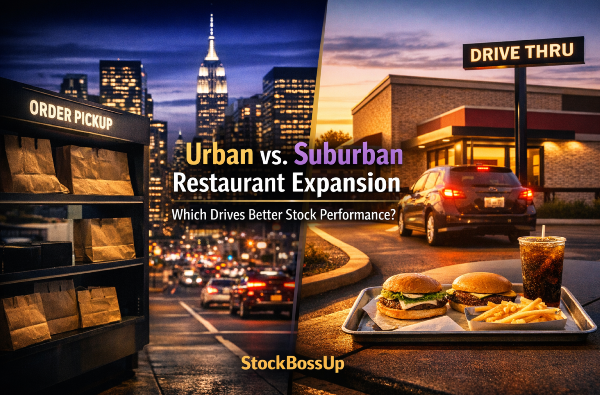
Urban expansion increases brand exposure and cultural relevance, yet high rent and labor costs often erode margins. Chains that rely on dense city traffic must balance visibility with operational efficiency to sustain stock performance.
🚗 Suburban markets deliver stronger long‑term returns
Lower real estate costs, drive‑thru access, and predictable family traffic make suburban units more profitable. These factors help restaurant stocks achieve steadier growth and higher operating margins over time.
📊 Real estate and throughput drive investor outcomes
Rent pressure and service speed directly affect unit economics. Suburban stores benefit from faster expansion and lower overhead, while urban stores depend on technology and layout innovation to stay competitive.
💡 Balanced expansion creates durable stock performance
Brands that blend urban visibility with suburban efficiency—like Starbucks and Chipotle—tend to outperform peers. This dual‑market strategy builds awareness while protecting margins, leading to stronger long‑term investor confidence.
Restaurant investors often assume that opening more locations leads to higher returns. Yet many chains face a deeper problem: the wrong type of expansion can slow growth even when sales look strong. Urban and suburban markets behave very differently, and the gap between them has widened as consumer habits shift. The challenge is simple to describe but harder to solve: why do some brands thrive in dense cities while others outperform in wide‑open suburbs? The answer sits at the center of long‑term stock performance, but the full picture only becomes clear once you look at how each market shapes traffic, costs, and unit economics.
Why Do Investors Misread Urban Restaurant Growth?
Urban markets look attractive on paper. They offer high foot traffic, diverse customer bases, and strong brand visibility. Many chains assume these advantages guarantee strong returns. But investors often miss how much pressure dense markets place on operations. Rent rises faster than sales. Labor costs climb. Delivery demand grows, but delivery fees cut into margins. Even small inefficiencies can erase the benefits of high volume.
Urban units also face more competition. A single block can hold dozens of food options. Customers switch brands quickly, and loyalty is harder to build. Chains that rely on predictable repeat visits may struggle to stabilize revenue.
Some brands do succeed in cities, especially those with strong digital ordering systems or fast throughput. But the path is narrow. Investors who assume “more urban stores equals more growth” often overlook the hidden risks that slow stock performance over time.
Why Do Suburban Restaurants Scale More Predictably?
Suburban markets offer a different kind of advantage. They provide space, lower rent, and easier parking. These factors help chains build drive‑thru lanes, pickup windows, and larger dining rooms. Suburban customers also tend to visit restaurants more often during the week, especially families and commuters.
The economics of suburban expansion often look cleaner. Labor costs are lower. Real estate is cheaper. Competition is spread out. Many chains find that suburban units reach profitability faster than urban ones, even if traffic is lower.
One unique fact about suburban restaurant growth is that some chains design their entire menu around car‑friendly eating. This shapes packaging, portion sizes, and even cooking times. These small design choices can create a long‑term advantage that urban‑focused brands cannot easily copy.
How Does Real Estate Pressure Change Stock Outcomes?
Real estate costs shape restaurant profitability more than most investors realize. Urban leases can be two to five times higher than suburban leases. When rent rises faster than sales, margins shrink. This affects stock performance because investors track unit‑level profitability as a key signal of future growth.
Suburban leases, by contrast, tend to rise slowly. Chains can lock in long‑term agreements that stabilize costs for years. This predictability helps management plan expansion without fear of sudden cost spikes.
Below is a natural data comparison showing how real estate pressure affects unit economics:
| Market Type |
Avg. Rent as % of Sales |
Labor Cost Pressure |
Typical Unit Size |
Drive‑Thru Access |
| Urban |
12%–18% |
High |
Small |
Rare |
| Suburban |
6%–10% |
Moderate |
Large |
Common |
These differences explain why many chains shift their expansion plans toward suburban areas even when urban traffic looks stronger.
Why Do Urban Restaurants Struggle With Throughput?
Throughput—the number of customers served per hour—matters more in cities than anywhere else. Urban customers expect speed. They often buy food during short breaks or while commuting. If a line moves slowly, they leave.
Urban kitchens are usually smaller, which limits equipment and staff. Delivery drivers crowd pickup areas. Foot traffic surges at unpredictable times. These factors create bottlenecks that suburban stores rarely face.
Some chains solve this with technology. Digital pickup shelves, automated makelines, and predictive ordering systems help reduce wait times. But these upgrades require investment, and not all brands can afford them.
A second unique fact is that some urban restaurants now design their layouts around delivery drivers rather than walk‑in customers. This shift shows how much delivery demand has reshaped city operations.
Why Do Suburban Restaurants Win on Drive‑Thru Efficiency?
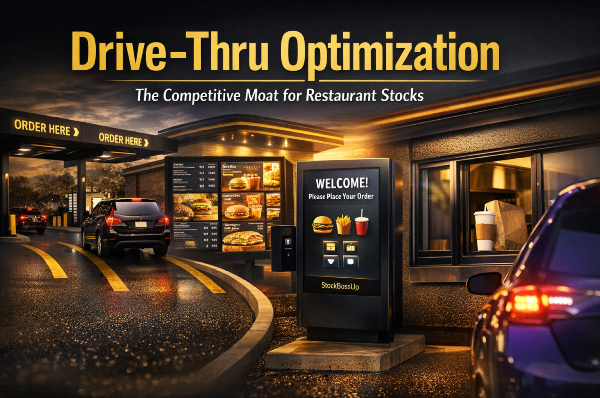
Drive‑thru lanes have become one of the strongest predictors of restaurant stock performance. Suburban markets dominate this category. They offer the space needed for multi‑lane designs, digital menu boards, and outdoor order‑ahead pickup lanes.
Chains like McDonald’s (MCD) and Chipotle (CMG) have invested heavily in drive‑thru optimization. These upgrades increase throughput, reduce labor needs, and boost average check sizes. Suburban units often outperform urban units because drive‑thru sales are more profitable than dine‑in or delivery.
Urban markets rarely allow drive‑thru construction. Even when they do, traffic patterns make it difficult to operate efficiently. This limits the upside for chains that rely on drive‑thru revenue.
How Does Customer Behavior Differ Between Urban and Suburban Markets?
Urban customers tend to buy smaller meals more often. They snack throughout the day and rely on restaurants for convenience. Suburban customers buy fewer meals but spend more per visit, especially during dinner.
These patterns shape menu strategy. Urban menus often highlight portable items like bowls, wraps, and handhelds. Suburban menus lean toward family bundles, shareable items, and larger entrées.
Below is a comparison of typical customer behavior:
| Market Type |
Avg. Check Size |
Visit Frequency |
Popular Dayparts |
Delivery Dependence |
| Urban |
Low–Medium |
High |
Lunch, Late Night |
High |
| Suburban |
Medium–High |
Moderate |
Dinner, Weekends |
Moderate |
These differences influence stock performance because they shape revenue stability. Suburban units often generate higher average checks, which boosts margins even when traffic is lower.
Why Do Some Chains Fail When Expanding Into Cities?
Many chains underestimate the operational complexity of urban markets. They assume their suburban playbook will work everywhere. But urban stores require different staffing models, different equipment layouts, and different marketing strategies.
Common mistakes include:
- Underestimating delivery demand
- Overestimating foot traffic consistency
- Choosing locations with poor visibility
- Ignoring local competition density
- Using suburban pricing in high‑cost markets
When these mistakes pile up, urban units underperform. This drags down same‑store sales, which investors watch closely. Even a few weak urban stores can create negative sentiment around a stock.
Why Do Suburban Markets Support Faster Unit Expansion?
Suburban areas offer more available land, more flexible zoning, and lower construction costs. Chains can open new units faster and cheaper. This speed matters because expansion drives revenue growth, which influences stock valuation.
Suburban markets also support new formats like:
- Pickup‑only kitchens
- Multi‑lane drive‑thrus
- Hybrid dine‑in and digital hubs
- Large patio seating
These formats help chains test new ideas without the constraints of dense urban real estate.
Below is a comparison of expansion speed:
| Market Type |
Avg. Time to Open New Unit |
Construction Cost |
Zoning Flexibility |
Format Options |
| Urban |
12–24 months |
High |
Low |
Limited |
| Suburban |
6–12 months |
Moderate |
High |
Wide Range |
Faster expansion often leads to stronger stock performance because investors reward predictable growth.
Why Do Delivery Economics Favor Suburban Chains?
Delivery demand is strong in both markets, but the economics differ. Urban delivery is fast but expensive. Suburban delivery is slower but more profitable.
Urban delivery challenges include:
- High courier fees
- Congested streets
- Short delivery windows
- High customer churn
Suburban delivery benefits include:
- Larger average orders
- Lower courier competition
- More predictable routes
Some chains design suburban kitchens with dedicated delivery stations to improve efficiency. This helps them maintain margins even as delivery grows.
Why Do Urban Restaurants Benefit More From Brand Visibility?
Urban markets offer unmatched visibility. A single storefront can expose a brand to thousands of people per day. This helps chains build awareness quickly. It also supports premium pricing because customers associate urban locations with trendiness and convenience.
Brands like Shake Shack (SHAK) and Sweetgreen (SG) built their reputations in cities before expanding outward. Their urban presence helped them attract investors and build cultural relevance.
However, visibility does not always translate into profitability. Many urban units operate at thin margins despite strong traffic.
Why Do Suburban Restaurants Deliver Higher Long‑Term Margins?
Suburban units often achieve higher long‑term margins because they combine lower costs with stable demand. Families, commuters, and local workers create predictable traffic patterns. Drive‑thru sales boost efficiency. Real estate costs remain manageable.
These factors help suburban units maintain strong margins even during economic downturns. Urban units, by contrast, are more sensitive to rent spikes, labor shortages, and shifting commuter patterns.
Below is a margin comparison:
| Market Type |
Avg. Operating Margin |
Sensitivity to Cost Spikes |
Long‑Term Stability |
| Urban |
Low–Medium |
High |
Moderate |
| Suburban |
Medium–High |
Low–Moderate |
High |
This stability often leads to stronger stock performance for chains with suburban‑heavy footprints.
Why Does the Best Strategy Blend Both Markets?
The strongest restaurant stocks often blend urban and suburban expansion. Urban stores build brand awareness and cultural relevance. Suburban stores deliver stable profits and predictable growth. Together, they create a balanced portfolio of unit types.
Chains like Starbucks (SBUX) and Chipotle (CMG) use this strategy well. They open flagship urban stores to showcase new ideas, then scale suburban stores to drive long‑term returns.
The key is knowing which market to prioritize at each stage of growth. Early‑stage brands often start in cities. Mature brands shift toward suburbs. Investors who understand this pattern can better predict stock performance.
So Which Drives Better Stock Performance?
The answer depends on the chain’s business model, but suburban expansion generally produces stronger long‑term stock performance. Suburban units offer lower costs, higher margins, and more predictable growth. Urban units help build brand strength but often struggle with profitability.
The most successful restaurant stocks use both markets strategically. They leverage urban visibility to attract customers and suburban efficiency to generate returns. When a chain balances these forces well, its stock tends to outperform competitors that rely too heavily on one market.
🏗️ Master the Terrain: Prime Restaurant Real Estate Insights
Unlock the hidden value in your portfolio by mastering the "where" and "how" of restaurant expansion. From high-traffic non-traditional sites to the algorithmic precision of modern site selection, explore how physical footprints dictate fiscal futures.
📍 Strategic Growth & Real Estate in Restaurant Businesses
Market Intel: In an era of shifting demographics, the transition from urban centers to optimized suburban drive-thrus is redefining long-term equity. Use the links above to deep dive into the data driving these shifts.










🔑 Key Takeaways: Urban vs. Suburban Restaurant Expansion
🏙️ Urban growth boosts visibility but strains profitability
Urban expansion increases brand exposure and cultural relevance, yet high rent and labor costs often erode margins. Chains that rely on dense city traffic must balance visibility with operational efficiency to sustain stock performance.🚗 Suburban markets deliver stronger long‑term returns
Lower real estate costs, drive‑thru access, and predictable family traffic make suburban units more profitable. These factors help restaurant stocks achieve steadier growth and higher operating margins over time.📊 Real estate and throughput drive investor outcomes
Rent pressure and service speed directly affect unit economics. Suburban stores benefit from faster expansion and lower overhead, while urban stores depend on technology and layout innovation to stay competitive.💡 Balanced expansion creates durable stock performance
Brands that blend urban visibility with suburban efficiency—like Starbucks and Chipotle—tend to outperform peers. This dual‑market strategy builds awareness while protecting margins, leading to stronger long‑term investor confidence.Restaurant investors often assume that opening more locations leads to higher returns. Yet many chains face a deeper problem: the wrong type of expansion can slow growth even when sales look strong. Urban and suburban markets behave very differently, and the gap between them has widened as consumer habits shift. The challenge is simple to describe but harder to solve: why do some brands thrive in dense cities while others outperform in wide‑open suburbs? The answer sits at the center of long‑term stock performance, but the full picture only becomes clear once you look at how each market shapes traffic, costs, and unit economics.
Why Do Investors Misread Urban Restaurant Growth?
Urban markets look attractive on paper. They offer high foot traffic, diverse customer bases, and strong brand visibility. Many chains assume these advantages guarantee strong returns. But investors often miss how much pressure dense markets place on operations. Rent rises faster than sales. Labor costs climb. Delivery demand grows, but delivery fees cut into margins. Even small inefficiencies can erase the benefits of high volume.
Urban units also face more competition. A single block can hold dozens of food options. Customers switch brands quickly, and loyalty is harder to build. Chains that rely on predictable repeat visits may struggle to stabilize revenue.
Some brands do succeed in cities, especially those with strong digital ordering systems or fast throughput. But the path is narrow. Investors who assume “more urban stores equals more growth” often overlook the hidden risks that slow stock performance over time.
Why Do Suburban Restaurants Scale More Predictably?
Suburban markets offer a different kind of advantage. They provide space, lower rent, and easier parking. These factors help chains build drive‑thru lanes, pickup windows, and larger dining rooms. Suburban customers also tend to visit restaurants more often during the week, especially families and commuters.
The economics of suburban expansion often look cleaner. Labor costs are lower. Real estate is cheaper. Competition is spread out. Many chains find that suburban units reach profitability faster than urban ones, even if traffic is lower.
One unique fact about suburban restaurant growth is that some chains design their entire menu around car‑friendly eating. This shapes packaging, portion sizes, and even cooking times. These small design choices can create a long‑term advantage that urban‑focused brands cannot easily copy.
How Does Real Estate Pressure Change Stock Outcomes?
Real estate costs shape restaurant profitability more than most investors realize. Urban leases can be two to five times higher than suburban leases. When rent rises faster than sales, margins shrink. This affects stock performance because investors track unit‑level profitability as a key signal of future growth.
Suburban leases, by contrast, tend to rise slowly. Chains can lock in long‑term agreements that stabilize costs for years. This predictability helps management plan expansion without fear of sudden cost spikes.
Below is a natural data comparison showing how real estate pressure affects unit economics:
These differences explain why many chains shift their expansion plans toward suburban areas even when urban traffic looks stronger.
Why Do Urban Restaurants Struggle With Throughput?
Throughput—the number of customers served per hour—matters more in cities than anywhere else. Urban customers expect speed. They often buy food during short breaks or while commuting. If a line moves slowly, they leave.
Urban kitchens are usually smaller, which limits equipment and staff. Delivery drivers crowd pickup areas. Foot traffic surges at unpredictable times. These factors create bottlenecks that suburban stores rarely face.
Some chains solve this with technology. Digital pickup shelves, automated makelines, and predictive ordering systems help reduce wait times. But these upgrades require investment, and not all brands can afford them.
A second unique fact is that some urban restaurants now design their layouts around delivery drivers rather than walk‑in customers. This shift shows how much delivery demand has reshaped city operations.
Why Do Suburban Restaurants Win on Drive‑Thru Efficiency?
Drive‑thru lanes have become one of the strongest predictors of restaurant stock performance. Suburban markets dominate this category. They offer the space needed for multi‑lane designs, digital menu boards, and outdoor order‑ahead pickup lanes.
Chains like McDonald’s (MCD) and Chipotle (CMG) have invested heavily in drive‑thru optimization. These upgrades increase throughput, reduce labor needs, and boost average check sizes. Suburban units often outperform urban units because drive‑thru sales are more profitable than dine‑in or delivery.
Urban markets rarely allow drive‑thru construction. Even when they do, traffic patterns make it difficult to operate efficiently. This limits the upside for chains that rely on drive‑thru revenue.
How Does Customer Behavior Differ Between Urban and Suburban Markets?
Urban customers tend to buy smaller meals more often. They snack throughout the day and rely on restaurants for convenience. Suburban customers buy fewer meals but spend more per visit, especially during dinner.
These patterns shape menu strategy. Urban menus often highlight portable items like bowls, wraps, and handhelds. Suburban menus lean toward family bundles, shareable items, and larger entrées.
Below is a comparison of typical customer behavior:
These differences influence stock performance because they shape revenue stability. Suburban units often generate higher average checks, which boosts margins even when traffic is lower.
Why Do Some Chains Fail When Expanding Into Cities?
Many chains underestimate the operational complexity of urban markets. They assume their suburban playbook will work everywhere. But urban stores require different staffing models, different equipment layouts, and different marketing strategies.
Common mistakes include:
When these mistakes pile up, urban units underperform. This drags down same‑store sales, which investors watch closely. Even a few weak urban stores can create negative sentiment around a stock.
Why Do Suburban Markets Support Faster Unit Expansion?
Suburban areas offer more available land, more flexible zoning, and lower construction costs. Chains can open new units faster and cheaper. This speed matters because expansion drives revenue growth, which influences stock valuation.
Suburban markets also support new formats like:
These formats help chains test new ideas without the constraints of dense urban real estate.
Below is a comparison of expansion speed:
Faster expansion often leads to stronger stock performance because investors reward predictable growth.
Why Do Delivery Economics Favor Suburban Chains?
Delivery demand is strong in both markets, but the economics differ. Urban delivery is fast but expensive. Suburban delivery is slower but more profitable.
Urban delivery challenges include:
Suburban delivery benefits include:
Some chains design suburban kitchens with dedicated delivery stations to improve efficiency. This helps them maintain margins even as delivery grows.
Why Do Urban Restaurants Benefit More From Brand Visibility?
Urban markets offer unmatched visibility. A single storefront can expose a brand to thousands of people per day. This helps chains build awareness quickly. It also supports premium pricing because customers associate urban locations with trendiness and convenience.
Brands like Shake Shack (SHAK) and Sweetgreen (SG) built their reputations in cities before expanding outward. Their urban presence helped them attract investors and build cultural relevance.
However, visibility does not always translate into profitability. Many urban units operate at thin margins despite strong traffic.
Why Do Suburban Restaurants Deliver Higher Long‑Term Margins?
Suburban units often achieve higher long‑term margins because they combine lower costs with stable demand. Families, commuters, and local workers create predictable traffic patterns. Drive‑thru sales boost efficiency. Real estate costs remain manageable.
These factors help suburban units maintain strong margins even during economic downturns. Urban units, by contrast, are more sensitive to rent spikes, labor shortages, and shifting commuter patterns.
Below is a margin comparison:
This stability often leads to stronger stock performance for chains with suburban‑heavy footprints.
Why Does the Best Strategy Blend Both Markets?
The strongest restaurant stocks often blend urban and suburban expansion. Urban stores build brand awareness and cultural relevance. Suburban stores deliver stable profits and predictable growth. Together, they create a balanced portfolio of unit types.
Chains like Starbucks (SBUX) and Chipotle (CMG) use this strategy well. They open flagship urban stores to showcase new ideas, then scale suburban stores to drive long‑term returns.
The key is knowing which market to prioritize at each stage of growth. Early‑stage brands often start in cities. Mature brands shift toward suburbs. Investors who understand this pattern can better predict stock performance.
So Which Drives Better Stock Performance?
The answer depends on the chain’s business model, but suburban expansion generally produces stronger long‑term stock performance. Suburban units offer lower costs, higher margins, and more predictable growth. Urban units help build brand strength but often struggle with profitability.
The most successful restaurant stocks use both markets strategically. They leverage urban visibility to attract customers and suburban efficiency to generate returns. When a chain balances these forces well, its stock tends to outperform competitors that rely too heavily on one market.
🏗️ Master the Terrain: Prime Restaurant Real Estate Insights
Unlock the hidden value in your portfolio by mastering the "where" and "how" of restaurant expansion. From high-traffic non-traditional sites to the algorithmic precision of modern site selection, explore how physical footprints dictate fiscal futures.
📍 Strategic Growth & Real Estate in Restaurant Businesses