🔑 Key Takeaways
🍔 Commodity volatility drives restaurant stock margins
Food commodities like beef, wheat, and coffee fluctuate rapidly due to global supply and demand. These swings directly affect restaurant margins, forcing brands to balance menu pricing and customer retention. Investors who track commodity trends can anticipate margin pressure before quarterly earnings reveal it.
📈 Scale and supplier strategy determine resilience
Large chains with long‑term supplier contracts and diversified sourcing handle cost spikes better than smaller competitors. Their ability to lock in prices and adjust menus quickly helps maintain profitability and steadier stock performance during inflationary cycles.
💰 Pricing power separates winners from laggards
Brands with strong loyalty and clear identity can raise menu prices without losing traffic. This pricing flexibility protects margins when food costs rise, making these companies more attractive to investors seeking stability in volatile markets.
🌾 Long‑term success depends on managing uncertainty
The most successful restaurant stocks aren’t those avoiding commodity swings—they’re the ones that plan for them. By investing in supply chain resilience, menu engineering, and digital efficiency, these companies turn unpredictable food costs into manageable variables that support sustainable growth.
Food costs move faster than most people expect, and restaurant stocks often feel the impact before the public even notices. Investors see menu prices rise, but they rarely see the deeper issue: many restaurants struggle to protect margins when ingredients swing in price. The real challenge is that these swings do not hit every restaurant the same way. Some chains stay stable even when food costs spike, while others fall behind. The reason for this difference is not obvious at first, and the answer becomes clear only after looking at how food commodities shape the entire business model for these top consumer discretionary stocks.
Why Do Food Commodities Matter More Than Most Investors Realize?
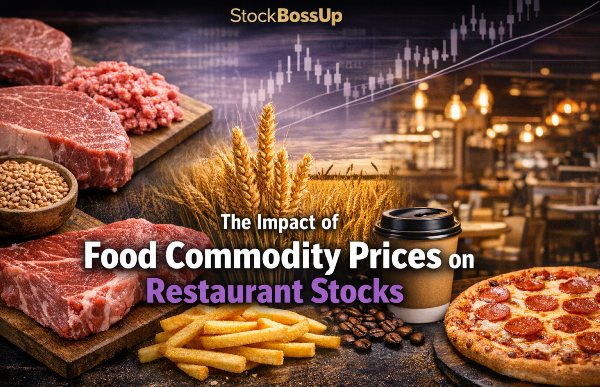
Food commodities are the building blocks of every menu. Beef, chicken, wheat, corn, dairy, coffee, and produce all move in price based on global supply and demand. When these prices rise, restaurants must decide whether to raise menu prices, shrink portions, or absorb the cost. Each choice affects customer behavior and stock performance.
Most investors assume restaurants can simply raise prices. But price increases work only when customers accept them. If a chain pushes too far, traffic drops. If it holds prices steady, margins shrink. This tension creates a constant balancing act that shapes long‑term stock performance.
Commodity pressure also hits different restaurant types in different ways. A burger chain feels beef inflation more than a pizza chain. A bakery café feels wheat inflation more than a steakhouse. Understanding these differences helps investors see which companies are built to handle cost swings and which ones are more exposed.
Why Do Some Restaurants Struggle More Than Others During Cost Spikes?
Not all restaurants buy ingredients the same way. Large chains often lock in prices through long‑term contracts. Smaller brands buy on the open market, where prices change daily. This creates a major gap in cost stability.
A large chain with strong supplier relationships can secure predictable pricing for months. A smaller chain may face sudden jumps that hit margins overnight. This difference explains why some restaurant stocks stay steady during inflation while others fall sharply.
Another factor is menu flexibility. Some brands can shift customers toward higher‑margin items when costs rise. Others rely heavily on one or two core ingredients and cannot adjust quickly. When a chain depends on a single commodity, even a small price increase can create major financial pressure.
How Do Commodity Swings Affect Margins Over Time?
Margins shrink when food costs rise faster than menu prices. Restaurants track a metric called “food cost percentage,” which measures how much of each dollar earned goes toward ingredients. When commodity prices rise, this percentage increases unless the restaurant adjusts.
Below is a simple example showing how rising commodity prices can change food cost percentage:
| Ingredient Cost Change |
Menu Price |
Food Cost % |
| +0% |
$10 |
30% |
| +10% |
$10 |
33% |
| +20% |
$10 |
36% |
| +20% |
$11 |
33% |
This table shows how even a small cost increase can push margins down unless menu prices rise. But raising prices too often risks losing customers. This tension is one of the biggest drivers of restaurant stock volatility.
Why Do Global Events Hit Restaurant Stocks So Quickly?
Food commodities react to global events faster than most industries. Weather, trade policies, fuel prices, and crop yields can all shift ingredient costs within weeks. Restaurants cannot adjust their menus that quickly, so stocks often move before earnings reports reveal the impact.
For example, droughts can raise beef prices. Hurricanes can disrupt produce supply. Changes in global corn production can affect everything from bread to chicken feed. Even small disruptions can ripple through the supply chain.
One lesser‑known fact is that coffee prices can rise even when global supply is stable, because traders often react to future climate risks rather than current crop levels. This means restaurant stocks tied to coffee sales can move before any real shortage occurs.
Why Do Some Chains Stay Stable Even When Costs Rise?
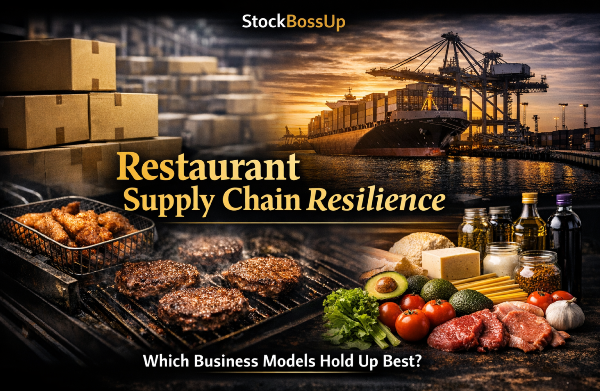
Some restaurant companies build resilience into their business model. They diversify suppliers, use long‑term contracts, and design menus that can shift with market conditions. These chains often show stronger stock performance during inflation.
A few key strategies include:
- Using multiple suppliers for the same ingredient
- Designing menus with interchangeable components
- Locking in prices for months or years
- Reducing waste through better forecasting
- Increasing digital ordering to improve efficiency
These strategies help companies maintain margins even when commodity prices rise. Investors often reward this stability with higher valuations.
How Do Menu Prices Respond to Commodity Inflation?
Menu prices do not move as fast as ingredient costs. Restaurants raise prices slowly to avoid losing customers. This delay creates short‑term margin pressure that can affect quarterly earnings.
Below is a simplified example showing how menu prices lag behind commodity inflation:
| Month |
Commodity Inflation |
Menu Price Change |
| 1 |
+8% |
0% |
| 2 |
+10% |
0% |
| 3 |
+12% |
+3% |
| 4 |
+12% |
+3% |
This lag explains why restaurant stocks sometimes fall even when long‑term demand remains strong. Investors react to short‑term margin pressure before the company has time to adjust prices.
Why Do Investors Often Misread Commodity‑Driven Stock Moves?
Many investors focus on revenue growth, but revenue alone does not show the full picture. A restaurant can grow sales while losing profit if food costs rise too fast. This disconnect leads to confusion when stocks fall despite strong customer traffic.
Another issue is that commodity inflation does not hit all restaurants at the same time. Some chains feel the impact immediately. Others feel it months later due to long‑term contracts. This delay creates uneven stock performance across the industry.
A second unique fact is that some restaurants use commodity futures markets to hedge ingredient costs, a practice more common in airlines than in food service. This financial strategy can protect margins but also introduces risk if prices move in unexpected ways.
Why Do Certain Commodities Matter More Than Others?
Not all ingredients carry the same weight. Some commodities have a bigger impact on restaurant margins because they appear in many menu items or have volatile pricing.
High‑impact commodities include:
- Beef
- Chicken
- Wheat
- Corn
- Dairy
- Coffee
- Cooking oil
These ingredients shape the cost structure of most restaurant chains. When they rise in price, the entire industry feels it.
Below is a simple comparison of how different commodities affect different restaurant types:
| Restaurant Type |
Most Sensitive Commodity |
| Burger chains |
Beef |
| Pizza chains |
Wheat & cheese |
| Coffee shops |
Coffee & dairy |
| Chicken chains |
Chicken & cooking oil |
| Bakeries |
Wheat |
Understanding these relationships helps investors predict which stocks may face pressure during specific commodity cycles.
Why Do Some Restaurants Raise Prices Faster Than Others?
Pricing power is one of the strongest predictors of stock performance during inflation. Restaurants with loyal customers can raise prices without losing traffic. Others must keep prices low to stay competitive.
Brands with strong pricing power often share these traits:
- Clear brand identity
- High customer loyalty
- Unique menu items
- Strong digital ordering systems
- Efficient operations
When commodity prices rise, these chains adjust faster and protect margins better. Their stocks often outperform during inflationary periods.
What Happens When Commodity Prices Fall?
Falling commodity prices can boost margins quickly. Restaurants that held prices steady during inflation may see profits rise as ingredient costs drop. This creates a positive cycle that can lift stock performance.
However, not all chains benefit equally. Those with long‑term contracts may not see lower costs right away. Others may face pressure to lower menu prices if competitors move first.
Below is a simple example showing how falling commodity prices can improve margins:
| Ingredient Cost Change |
Menu Price |
Food Cost % |
| -10% |
$10 |
27% |
| -15% |
$10 |
25% |
| -20% |
$10 |
24% |
This improvement can lead to stronger earnings and higher stock valuations.
What Is the Real Reason Commodity Prices Shape Long‑Term Stock Performance?
The deeper issue is not the price of ingredients. It is how well a restaurant manages uncertainty. Commodity prices rise and fall every year. The strongest restaurant stocks belong to companies that plan for these swings, not react to them.
The real solution to the problem introduced at the start of this article is that the top restaurant stocks are the ones that build systems to stay stable even when food costs move sharply. They invest in supply chain resilience, pricing strategy, menu engineering, and digital efficiency. These systems protect margins, support growth, and create long‑term value for investors.
Final Thoughts
Food commodity prices shape restaurant stock performance more than most investors realize. The chains that thrive are the ones that manage cost swings with strong supplier relationships, flexible menus, and smart pricing strategies. By understanding how commodities influence margins, investors can better identify which restaurant stocks are built for long‑term success.
📈 Elevate Your Edge: Essential Restaurant Stock Intelligence
Looking to sharpen your investment strategy? Dive deeper into the mechanics of the hospitality market with our curated deep dives. From labor economics to the frontier of AI automation, these insights are engineered to help you navigate the complexities of restaurant stock performance.
🔍 Explore More Insights
Investor Note: Understanding the interplay between commodity volatility and menu engineering is often the difference between a "Hold" and a "Strong Buy." Stay ahead of the curve by exploring the links above.










🔑 Key Takeaways
🍔 Commodity volatility drives restaurant stock margins
Food commodities like beef, wheat, and coffee fluctuate rapidly due to global supply and demand. These swings directly affect restaurant margins, forcing brands to balance menu pricing and customer retention. Investors who track commodity trends can anticipate margin pressure before quarterly earnings reveal it.📈 Scale and supplier strategy determine resilience
Large chains with long‑term supplier contracts and diversified sourcing handle cost spikes better than smaller competitors. Their ability to lock in prices and adjust menus quickly helps maintain profitability and steadier stock performance during inflationary cycles.💰 Pricing power separates winners from laggards
Brands with strong loyalty and clear identity can raise menu prices without losing traffic. This pricing flexibility protects margins when food costs rise, making these companies more attractive to investors seeking stability in volatile markets.🌾 Long‑term success depends on managing uncertainty
The most successful restaurant stocks aren’t those avoiding commodity swings—they’re the ones that plan for them. By investing in supply chain resilience, menu engineering, and digital efficiency, these companies turn unpredictable food costs into manageable variables that support sustainable growth.Food costs move faster than most people expect, and restaurant stocks often feel the impact before the public even notices. Investors see menu prices rise, but they rarely see the deeper issue: many restaurants struggle to protect margins when ingredients swing in price. The real challenge is that these swings do not hit every restaurant the same way. Some chains stay stable even when food costs spike, while others fall behind. The reason for this difference is not obvious at first, and the answer becomes clear only after looking at how food commodities shape the entire business model for these top consumer discretionary stocks.
Why Do Food Commodities Matter More Than Most Investors Realize?
Food commodities are the building blocks of every menu. Beef, chicken, wheat, corn, dairy, coffee, and produce all move in price based on global supply and demand. When these prices rise, restaurants must decide whether to raise menu prices, shrink portions, or absorb the cost. Each choice affects customer behavior and stock performance.
Most investors assume restaurants can simply raise prices. But price increases work only when customers accept them. If a chain pushes too far, traffic drops. If it holds prices steady, margins shrink. This tension creates a constant balancing act that shapes long‑term stock performance.
Commodity pressure also hits different restaurant types in different ways. A burger chain feels beef inflation more than a pizza chain. A bakery café feels wheat inflation more than a steakhouse. Understanding these differences helps investors see which companies are built to handle cost swings and which ones are more exposed.
Why Do Some Restaurants Struggle More Than Others During Cost Spikes?
Not all restaurants buy ingredients the same way. Large chains often lock in prices through long‑term contracts. Smaller brands buy on the open market, where prices change daily. This creates a major gap in cost stability.
A large chain with strong supplier relationships can secure predictable pricing for months. A smaller chain may face sudden jumps that hit margins overnight. This difference explains why some restaurant stocks stay steady during inflation while others fall sharply.
Another factor is menu flexibility. Some brands can shift customers toward higher‑margin items when costs rise. Others rely heavily on one or two core ingredients and cannot adjust quickly. When a chain depends on a single commodity, even a small price increase can create major financial pressure.
How Do Commodity Swings Affect Margins Over Time?
Margins shrink when food costs rise faster than menu prices. Restaurants track a metric called “food cost percentage,” which measures how much of each dollar earned goes toward ingredients. When commodity prices rise, this percentage increases unless the restaurant adjusts.
Below is a simple example showing how rising commodity prices can change food cost percentage:
This table shows how even a small cost increase can push margins down unless menu prices rise. But raising prices too often risks losing customers. This tension is one of the biggest drivers of restaurant stock volatility.
Why Do Global Events Hit Restaurant Stocks So Quickly?
Food commodities react to global events faster than most industries. Weather, trade policies, fuel prices, and crop yields can all shift ingredient costs within weeks. Restaurants cannot adjust their menus that quickly, so stocks often move before earnings reports reveal the impact.
For example, droughts can raise beef prices. Hurricanes can disrupt produce supply. Changes in global corn production can affect everything from bread to chicken feed. Even small disruptions can ripple through the supply chain.
One lesser‑known fact is that coffee prices can rise even when global supply is stable, because traders often react to future climate risks rather than current crop levels. This means restaurant stocks tied to coffee sales can move before any real shortage occurs.
Why Do Some Chains Stay Stable Even When Costs Rise?
Some restaurant companies build resilience into their business model. They diversify suppliers, use long‑term contracts, and design menus that can shift with market conditions. These chains often show stronger stock performance during inflation.
A few key strategies include:
These strategies help companies maintain margins even when commodity prices rise. Investors often reward this stability with higher valuations.
How Do Menu Prices Respond to Commodity Inflation?
Menu prices do not move as fast as ingredient costs. Restaurants raise prices slowly to avoid losing customers. This delay creates short‑term margin pressure that can affect quarterly earnings.
Below is a simplified example showing how menu prices lag behind commodity inflation:
This lag explains why restaurant stocks sometimes fall even when long‑term demand remains strong. Investors react to short‑term margin pressure before the company has time to adjust prices.
Why Do Investors Often Misread Commodity‑Driven Stock Moves?
Many investors focus on revenue growth, but revenue alone does not show the full picture. A restaurant can grow sales while losing profit if food costs rise too fast. This disconnect leads to confusion when stocks fall despite strong customer traffic.
Another issue is that commodity inflation does not hit all restaurants at the same time. Some chains feel the impact immediately. Others feel it months later due to long‑term contracts. This delay creates uneven stock performance across the industry.
A second unique fact is that some restaurants use commodity futures markets to hedge ingredient costs, a practice more common in airlines than in food service. This financial strategy can protect margins but also introduces risk if prices move in unexpected ways.
Why Do Certain Commodities Matter More Than Others?
Not all ingredients carry the same weight. Some commodities have a bigger impact on restaurant margins because they appear in many menu items or have volatile pricing.
High‑impact commodities include:
These ingredients shape the cost structure of most restaurant chains. When they rise in price, the entire industry feels it.
Below is a simple comparison of how different commodities affect different restaurant types:
Understanding these relationships helps investors predict which stocks may face pressure during specific commodity cycles.
Why Do Some Restaurants Raise Prices Faster Than Others?
Pricing power is one of the strongest predictors of stock performance during inflation. Restaurants with loyal customers can raise prices without losing traffic. Others must keep prices low to stay competitive.
Brands with strong pricing power often share these traits:
When commodity prices rise, these chains adjust faster and protect margins better. Their stocks often outperform during inflationary periods.
What Happens When Commodity Prices Fall?
Falling commodity prices can boost margins quickly. Restaurants that held prices steady during inflation may see profits rise as ingredient costs drop. This creates a positive cycle that can lift stock performance.
However, not all chains benefit equally. Those with long‑term contracts may not see lower costs right away. Others may face pressure to lower menu prices if competitors move first.
Below is a simple example showing how falling commodity prices can improve margins:
This improvement can lead to stronger earnings and higher stock valuations.
What Is the Real Reason Commodity Prices Shape Long‑Term Stock Performance?
The deeper issue is not the price of ingredients. It is how well a restaurant manages uncertainty. Commodity prices rise and fall every year. The strongest restaurant stocks belong to companies that plan for these swings, not react to them.
The real solution to the problem introduced at the start of this article is that the top restaurant stocks are the ones that build systems to stay stable even when food costs move sharply. They invest in supply chain resilience, pricing strategy, menu engineering, and digital efficiency. These systems protect margins, support growth, and create long‑term value for investors.
Final Thoughts
Food commodity prices shape restaurant stock performance more than most investors realize. The chains that thrive are the ones that manage cost swings with strong supplier relationships, flexible menus, and smart pricing strategies. By understanding how commodities influence margins, investors can better identify which restaurant stocks are built for long‑term success.
📈 Elevate Your Edge: Essential Restaurant Stock Intelligence
Looking to sharpen your investment strategy? Dive deeper into the mechanics of the hospitality market with our curated deep dives. From labor economics to the frontier of AI automation, these insights are engineered to help you navigate the complexities of restaurant stock performance.
🔍 Explore More Insights