Subscription Models in Restaurants: Loyalty or Lock-In?
Subscription models are changing how restaurants make money. Instead of relying only on one-time purchases, many chains now offer monthly plans. These plans promise savings, convenience, and rewards.
At first, this seems like a win for both sides. Customers get deals. Restaurants get steady income. But there is a deeper issue that many investors miss.
Here’s the problem: it is not always clear if these subscriptions build true loyalty or quietly trap customers into spending more over time. This matters because the answer can shape long-term revenue, brand trust, and stock performance.
Some subscription programs boost growth. Others fade quickly or even hurt the brand. The difference is not obvious in the early stages.
Understanding what separates success from failure can help investors make better decisions.
Why Are Restaurants Turning to Subscription Models Now?
Restaurants face rising costs. Labor, food, and rent are all increasing. At the same time, competition is fierce.
Subscription models offer a way to stabilize income. Monthly fees create predictable cash flow. This helps companies plan better and manage costs.
Panera Bread, owned by privately held Panera Brands, has been a leader in this space. Its drink subscription program gained millions of users.
Public companies are also testing similar ideas. Starbucks (NASDAQ: SBUX) has explored subscription-style benefits through its rewards program.
Recurring revenue is attractive to investors. It reduces uncertainty and can support higher valuations.
Do Customers Really Benefit From Subscriptions?
Subscriptions often promise value. Free drinks, discounts, or exclusive deals can sound appealing.
For frequent customers, these programs can save money. They also make ordering faster and easier.
However, not all customers use the benefits fully. Some pay monthly fees but rarely redeem rewards.
This creates a gap between perceived value and actual value. Restaurants can profit from this difference.
In fact, many subscription users underestimate how often they use a service. This leads to higher spending over time.
How Do Subscription Models Change Customer Behavior?
Subscriptions can shift how people make decisions.
Instead of asking, “Do I want this today?” customers may think, “I already paid for it.” This can increase visit frequency.
Higher visit frequency leads to more add-on purchases. A free drink may come with a paid meal.
This behavior can boost average ticket size. It also increases customer lifetime value.
Interestingly, customers in subscription programs tend to visit up to twice as often as non-members in some cases.
What Makes a Subscription Model Successful?
Not all subscription programs work. Success depends on several factors.
First, the offer must be simple. Customers should understand the value quickly.
Second, the pricing must feel fair. If the cost is too high, adoption will be low.
Third, the experience must be smooth. Mobile apps and digital ordering play a big role.
Companies like Chipotle (NYSE: CMG) focus heavily on digital convenience. This supports subscription-style engagement.
Consistency also matters. Customers expect the same value every time they visit.
Why Do Some Subscription Programs Fail?
Failure often comes from poor design.
If the benefits are hard to use, customers lose interest. Confusing rules can frustrate users.
Some programs also cost too much to maintain. If too many customers redeem rewards, margins shrink.
This can force companies to cut benefits. When that happens, customers may leave.
Another issue is lack of differentiation. If the program does not stand out, it will not attract users.
How Do Subscriptions Impact Restaurant Margins?
Subscriptions can improve margins in several ways.
They increase customer retention. Keeping existing customers is often cheaper than acquiring new ones.
They also encourage repeat visits. More visits can lead to higher total spending.
However, there are risks. If rewards are too generous, costs can rise quickly.
Balancing value and profitability is key.
McDonald's (NYSE: MCD) has focused more on digital loyalty than full subscriptions. This helps control costs while still driving engagement.
What Role Does Data Play in Subscription Models?
Data is one of the biggest advantages of subscriptions.
Restaurants can track customer behavior in detail. They can see what people order, when they visit, and how often they return.
This data helps companies improve marketing and menu design.
Personalized offers can increase spending. They also improve customer satisfaction.
Over time, data-driven decisions can lead to better performance.
Are Subscription Models Creating Real Loyalty?
This is a key question.
True loyalty comes from positive experiences. Customers return because they enjoy the brand.
Subscriptions can support loyalty, but they cannot replace it.
If the food or service is poor, customers will leave even if they are subscribed.
Some customers stay only because they feel they need to use the service to justify the cost.
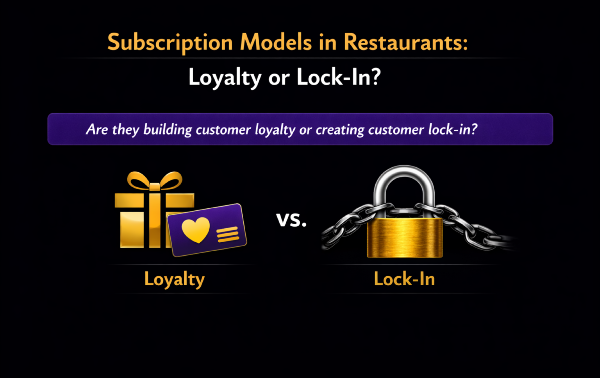
This is where the line between loyalty and lock-in becomes unclear.
Key Metrics for Subscription-Based Restaurant Models
| Metric |
Why It Matters |
Investor Insight |
| Subscriber growth |
Shows adoption rate |
High growth signals demand |
| Redemption rate |
Tracks usage |
Too high can hurt margins |
| Churn rate |
Measures cancellations |
High churn signals weak value |
| Average ticket size |
Shows spending behavior |
Growth indicates success |
How Do Investors Evaluate Subscription Success?
Investors look at both growth and sustainability.
Rapid subscriber growth can be a positive sign. But it must be supported by strong unit economics.
High churn rates can signal problems. If customers cancel quickly, the model may not be working.
Profitability is also critical. A program that loses money is not sustainable.
Starbucks (NASDAQ: SBUX) has shown how digital ecosystems can drive long-term value.
Why Does Pricing Strategy Matter So Much?
Pricing can make or break a subscription program.
If the price is too low, the company may lose money. If it is too high, customers may not join.
Some companies use tiered pricing. This allows customers to choose different levels of benefits.
Others offer limited-time promotions to attract new users.
The goal is to find a balance that works for both sides.
Can Subscriptions Replace Traditional Loyalty Programs?
Subscriptions and loyalty programs serve similar goals, but they are not the same.
Loyalty programs reward customers over time. Subscriptions require upfront payment.
Some companies combine both models. This can create a stronger ecosystem.
For example, Domino’s Pizza (NYSE: DPZ) uses rewards to drive repeat visits.
Subscriptions may become more common, but loyalty programs will likely remain important.
How Do Economic Conditions Affect Subscription Models?
Economic conditions play a big role.
During tough times, customers may cut back on subscriptions. They may focus on essential spending.
However, some subscriptions can feel like a good deal. This can attract budget-conscious customers.
Restaurants must adjust their strategies based on economic trends.
Flexibility is important in uncertain times.
What Risks Should Investors Watch Closely?
Subscription models come with risks.
- High churn rates
- Rising reward costs
- Customer fatigue
- Increased competition
These factors can reduce profitability.
Investors should also watch for changes in customer behavior. A drop in usage may signal trouble.
Financial Trade-Offs in Subscription Models
| Factor |
Positive Impact |
Negative Impact |
| Recurring revenue |
Stable income |
Risk of cancellations |
| Higher visits |
Increased sales |
Higher operating costs |
| Customer data |
Better targeting |
Privacy concerns |
| Promotions |
Faster growth |
Margin pressure |
Why Do Some Customers Feel Locked In?
Some subscription users feel pressure to use the service.
They may visit more often than they normally would. This can lead to overspending.
Over time, this feeling can create frustration.
If customers believe they are not getting value, they may cancel.
This can lead to negative reviews and brand damage.
What Does the Future Look Like for Restaurant Subscriptions?
Subscription models will likely continue to grow.
Technology will make them easier to manage. Mobile apps and AI will improve personalization.
More companies will test new ideas. Some will succeed, while others will fail.
The market will evolve as companies learn what works.
So Is It Loyalty or Lock-In?
The answer to the problem introduced earlier is not simple.
Subscription models can create real loyalty when they add value and improve the customer experience.
But they can also create a sense of lock-in when customers feel pressured to use them.
The difference comes down to execution.
Investors should focus on customer satisfaction, usage patterns, and profitability. These signals reveal whether a program is building lasting relationships or just short-term gains.
In the end, the best subscription models do not trap customers. They give them a reason to come back.
🚀 Expand Your Edge: Elite Restaurant & Consumer Insights
Ready to dominate the sector? Our Investor Intelligence Hub is designed to help you navigate the complex world of restaurant equities with precision. From deep-dive fundamental analysis to macroeconomic strategy, explore our curated silos below to find your next big winner.
🍽️ Sector Fundamentals & Top Picks
📊 Deep-Dive Financial Analysis
🧠 Strategic Operations & Economics
🌍 Macro, Risk & Global Trends
💡 Investor Psychology & Behavioral Trends
🔍 Advanced Intelligence



Subscription Models in Restaurants: Loyalty or Lock-In?
Subscription models are changing how restaurants make money. Instead of relying only on one-time purchases, many chains now offer monthly plans. These plans promise savings, convenience, and rewards.
At first, this seems like a win for both sides. Customers get deals. Restaurants get steady income. But there is a deeper issue that many investors miss.
Here’s the problem: it is not always clear if these subscriptions build true loyalty or quietly trap customers into spending more over time. This matters because the answer can shape long-term revenue, brand trust, and stock performance.
Some subscription programs boost growth. Others fade quickly or even hurt the brand. The difference is not obvious in the early stages.
Understanding what separates success from failure can help investors make better decisions.
Why Are Restaurants Turning to Subscription Models Now?
Restaurants face rising costs. Labor, food, and rent are all increasing. At the same time, competition is fierce.
Subscription models offer a way to stabilize income. Monthly fees create predictable cash flow. This helps companies plan better and manage costs.
Panera Bread, owned by privately held Panera Brands, has been a leader in this space. Its drink subscription program gained millions of users.
Public companies are also testing similar ideas. Starbucks (NASDAQ: SBUX) has explored subscription-style benefits through its rewards program.
Recurring revenue is attractive to investors. It reduces uncertainty and can support higher valuations.
Do Customers Really Benefit From Subscriptions?
Subscriptions often promise value. Free drinks, discounts, or exclusive deals can sound appealing.
For frequent customers, these programs can save money. They also make ordering faster and easier.
However, not all customers use the benefits fully. Some pay monthly fees but rarely redeem rewards.
This creates a gap between perceived value and actual value. Restaurants can profit from this difference.
In fact, many subscription users underestimate how often they use a service. This leads to higher spending over time.
How Do Subscription Models Change Customer Behavior?
Subscriptions can shift how people make decisions.
Instead of asking, “Do I want this today?” customers may think, “I already paid for it.” This can increase visit frequency.
Higher visit frequency leads to more add-on purchases. A free drink may come with a paid meal.
This behavior can boost average ticket size. It also increases customer lifetime value.
Interestingly, customers in subscription programs tend to visit up to twice as often as non-members in some cases.
What Makes a Subscription Model Successful?
Not all subscription programs work. Success depends on several factors.
First, the offer must be simple. Customers should understand the value quickly.
Second, the pricing must feel fair. If the cost is too high, adoption will be low.
Third, the experience must be smooth. Mobile apps and digital ordering play a big role.
Companies like Chipotle (NYSE: CMG) focus heavily on digital convenience. This supports subscription-style engagement.
Consistency also matters. Customers expect the same value every time they visit.
Why Do Some Subscription Programs Fail?
Failure often comes from poor design.
If the benefits are hard to use, customers lose interest. Confusing rules can frustrate users.
Some programs also cost too much to maintain. If too many customers redeem rewards, margins shrink.
This can force companies to cut benefits. When that happens, customers may leave.
Another issue is lack of differentiation. If the program does not stand out, it will not attract users.
How Do Subscriptions Impact Restaurant Margins?
Subscriptions can improve margins in several ways.
They increase customer retention. Keeping existing customers is often cheaper than acquiring new ones.
They also encourage repeat visits. More visits can lead to higher total spending.
However, there are risks. If rewards are too generous, costs can rise quickly.
Balancing value and profitability is key.
McDonald's (NYSE: MCD) has focused more on digital loyalty than full subscriptions. This helps control costs while still driving engagement.
What Role Does Data Play in Subscription Models?
Data is one of the biggest advantages of subscriptions.
Restaurants can track customer behavior in detail. They can see what people order, when they visit, and how often they return.
This data helps companies improve marketing and menu design.
Personalized offers can increase spending. They also improve customer satisfaction.
Over time, data-driven decisions can lead to better performance.
Are Subscription Models Creating Real Loyalty?
This is a key question.
True loyalty comes from positive experiences. Customers return because they enjoy the brand.
Subscriptions can support loyalty, but they cannot replace it.
If the food or service is poor, customers will leave even if they are subscribed.
Some customers stay only because they feel they need to use the service to justify the cost.
This is where the line between loyalty and lock-in becomes unclear.
Key Metrics for Subscription-Based Restaurant Models
How Do Investors Evaluate Subscription Success?
Investors look at both growth and sustainability.
Rapid subscriber growth can be a positive sign. But it must be supported by strong unit economics.
High churn rates can signal problems. If customers cancel quickly, the model may not be working.
Profitability is also critical. A program that loses money is not sustainable.
Starbucks (NASDAQ: SBUX) has shown how digital ecosystems can drive long-term value.
Why Does Pricing Strategy Matter So Much?
Pricing can make or break a subscription program.
If the price is too low, the company may lose money. If it is too high, customers may not join.
Some companies use tiered pricing. This allows customers to choose different levels of benefits.
Others offer limited-time promotions to attract new users.
The goal is to find a balance that works for both sides.
Can Subscriptions Replace Traditional Loyalty Programs?
Subscriptions and loyalty programs serve similar goals, but they are not the same.
Loyalty programs reward customers over time. Subscriptions require upfront payment.
Some companies combine both models. This can create a stronger ecosystem.
For example, Domino’s Pizza (NYSE: DPZ) uses rewards to drive repeat visits.
Subscriptions may become more common, but loyalty programs will likely remain important.
How Do Economic Conditions Affect Subscription Models?
Economic conditions play a big role.
During tough times, customers may cut back on subscriptions. They may focus on essential spending.
However, some subscriptions can feel like a good deal. This can attract budget-conscious customers.
Restaurants must adjust their strategies based on economic trends.
Flexibility is important in uncertain times.
What Risks Should Investors Watch Closely?
Subscription models come with risks.
These factors can reduce profitability.
Investors should also watch for changes in customer behavior. A drop in usage may signal trouble.
Financial Trade-Offs in Subscription Models
Why Do Some Customers Feel Locked In?
Some subscription users feel pressure to use the service.
They may visit more often than they normally would. This can lead to overspending.
Over time, this feeling can create frustration.
If customers believe they are not getting value, they may cancel.
This can lead to negative reviews and brand damage.
What Does the Future Look Like for Restaurant Subscriptions?
Subscription models will likely continue to grow.
Technology will make them easier to manage. Mobile apps and AI will improve personalization.
More companies will test new ideas. Some will succeed, while others will fail.
The market will evolve as companies learn what works.
So Is It Loyalty or Lock-In?
The answer to the problem introduced earlier is not simple.
Subscription models can create real loyalty when they add value and improve the customer experience.
But they can also create a sense of lock-in when customers feel pressured to use them.
The difference comes down to execution.
Investors should focus on customer satisfaction, usage patterns, and profitability. These signals reveal whether a program is building lasting relationships or just short-term gains.
In the end, the best subscription models do not trap customers. They give them a reason to come back.
🚀 Expand Your Edge: Elite Restaurant & Consumer Insights
Ready to dominate the sector? Our Investor Intelligence Hub is designed to help you navigate the complex world of restaurant equities with precision. From deep-dive fundamental analysis to macroeconomic strategy, explore our curated silos below to find your next big winner.
🍽️ Sector Fundamentals & Top Picks
📊 Deep-Dive Financial Analysis
🧠 Strategic Operations & Economics
🌍 Macro, Risk & Global Trends
💡 Investor Psychology & Behavioral Trends
🔍 Advanced Intelligence