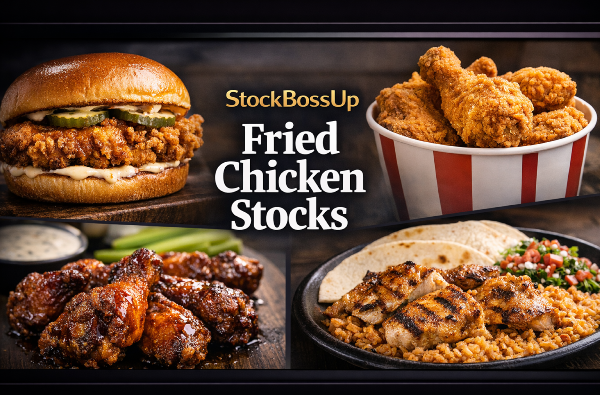
So you just went to your favorite fried chicken restaurant, and you thought, "why am I not investing in this food group?" Billions of people eat fried chicken, and hundreds of millions eat fried chicken in the U.S.
But would it surprise you to know that there are only four pure-play fried chicken restaurants you can invest in on a U.S. stock exchange? That means we've got to make sure you're investing in the best one! We've put every single publicly traded fried chicken restaurant against each other to see what our community and top investors think are the best fried chicken investments to you can invest in.
While every rating matters, our top investors get a 10x say in which investment is the best. So get your multiplier by improving your investment acumen on StockBossUp.
🍗 Every Fried Chicken Stock You Can Buy on a U.S. Exchange
Below is the full universe of publicly traded fried‑chicken–focused restaurant companies available to U.S. investors
| Company |
Ticker |
Exchange |
Why It Qualifies |
| Restaurant Brands International (Popeyes) |
QSR |
NYSE |
Owns Popeyes Louisiana Kitchen, one of the largest fried‑chicken chains in the world. |
| Yum! Brands (KFC) |
YUM |
NYSE |
Owns KFC, the largest global fried‑chicken chain by unit count. |
| Wingstop |
WING |
NASDAQ |
100% chicken‑focused: wings, tenders, and fries. |
| El Pollo Loco |
LOCO |
NASDAQ |
Primarily grilled chicken, but still a chicken‑centric QSR brand. |
| Bojangles (via private ownership) |
— |
— |
Not publicly traded. Included here only for clarity. |
| Zaxby’s |
— |
— |
Not publicly traded. |
| Raising Cane’s |
— |
— |
Not publicly traded. |
| Chick‑fil‑A |
— |
— |
Not publicly traded. |
The Complete Guide to Fried Chicken Stocks: What Investors Should Know
Fried chicken has become one of the strongest forces in fast food. It is simple, crave‑worthy, and easy to scale. That combination has helped chicken chains grow faster than many burger and sandwich brands. Investors have noticed the trend. A handful of companies now dominate the fried chicken space on U.S. stock exchanges, and each one brings a different strategy to the table..
Fried chicken is not just a comfort food. It has become a global business model. Chains like KFC and Popeyes have built international footprints that reach across dozens of countries. Wingstop has turned chicken wings into a high‑margin digital business. Even El Pollo Loco, which focuses on grilled chicken, benefits from the same demand for simple, protein‑centered meals.
Before diving into each company, it helps to understand why chicken has become such a powerful growth engine. Chicken is cheaper than beef. It cooks faster. It works well with many flavors. It also fits into a wide range of diets. These advantages help chicken chains stay competitive even when food costs rise.
Another reason for the sector’s strength is the rise of delivery and digital ordering. Chicken travels well. A fried chicken sandwich or a box of wings stays crisp longer than many other foods. This makes chicken chains natural winners in the delivery era.
The Major Fried Chicken Stocks You Can Buy Today
Only four true fried chicken restaurant stocks trade on U.S. exchanges. Each one has a different business model, growth strategy, and risk profile. Together, they form the core of the fried chicken investment universe.
1. Restaurant Brands International — Popeyes
Ticker: QSR
Restaurant Brands International owns Popeyes, along with Burger King, Tim Hortons, and Firehouse Subs. Popeyes is the company’s fastest‑growing brand. The chain became a cultural phenomenon after launching its chicken sandwich in 2019. That single menu item helped Popeyes reach new customers and expand into new markets.
Popeyes has a strong international runway. Many countries have only a small number of locations. The brand also benefits from a franchise‑heavy model. Franchisees pay for store development, while RBI collects royalties. This structure helps the company grow without taking on heavy capital costs.
One interesting detail about Popeyes is that its Louisiana‑style flavor profile has global appeal. Spicy chicken has become a major trend in Asia, Europe, and the Middle East. Popeyes is positioned to benefit from that shift.
2. Yum! Brands — KFC
Ticker: YUM
KFC is the largest fried chicken chain in the world. It operates in more than 150 countries. That global reach gives Yum! Brands a level of diversification that few restaurant companies can match. KFC’s menu is simple, and its supply chain is efficient. These strengths help the brand maintain strong margins even in challenging markets.
KFC’s growth strategy focuses on international expansion. Many of its new stores open in emerging markets. These regions have rising middle‑class populations and strong demand for affordable meals. KFC also benefits from a franchise‑first model. More than 98% of its stores are franchised.
A unique fact about KFC is that it was one of the first American fast‑food chains to enter China. That early move helped it become one of the most recognized Western brands in the country.
3. Wingstop
Ticker: WING
Wingstop is one of the fastest‑growing restaurant stocks in the U.S. The company focuses on chicken wings, tenders, and fries. Its menu is simple, and its stores are small. This helps keep costs low. Wingstop also has one of the highest digital order rates in the industry. More than half of its sales come through online channels.
The company’s asset‑light model has helped it scale quickly. Most locations are franchised. Wingstop collects royalties and advertising fees from franchisees. This structure supports strong margins and steady cash flow.
One surprising detail about Wingstop is that it has experimented with virtual brands and delivery‑only kitchens. These tests help the company reach new customers without building full stores.
4. El Pollo Loco
Ticker: LOCO
El Pollo Loco is not a pure fried chicken chain. It focuses on citrus‑marinated grilled chicken. Still, it belongs in the chicken‑centric category. The company has a loyal customer base in the western United States. Its menu appeals to people who want lighter meals without giving up flavor.
El Pollo Loco has been working to modernize its stores and improve digital ordering. The company has also tested new restaurant formats, including drive‑thru‑only locations. These changes help reduce labor costs and improve speed.
The brand’s growth is slower than the others on this list. But it still benefits from the long‑term shift toward chicken‑based meals.
Table 1: Overview of Public Fried Chicken Stocks
| Company |
Ticker |
Primary Brand |
Business Model |
Global Reach |
| Restaurant Brands International |
QSR |
Popeyes |
Franchise‑heavy |
Large |
| Yum! Brands |
YUM |
KFC |
Franchise‑heavy |
Very large |
| Wingstop |
WING |
Wingstop |
Franchise‑heavy |
Moderate |
| El Pollo Loco |
LOCO |
El Pollo Loco |
Mixed |
Small |
Why Fried Chicken Chains Keep Growing
Chicken has become the protein of choice for many consumers. It is affordable, versatile, and easy to prepare. These qualities help chicken chains stay competitive even when food inflation rises. Many customers also see chicken as a healthier option than beef.
Another reason for the sector’s growth is the rise of chicken sandwiches. The “chicken sandwich wars” created a wave of demand that lifted the entire category. Popeyes, Chick‑fil‑A, KFC, and many smaller chains benefited from the trend.
Digital ordering has also played a major role. Chicken travels well, which makes it ideal for delivery. Chains like Wingstop have built entire systems around digital sales. This shift has helped them grow without needing large dining rooms.
Franchising is another key factor. Most fried chicken chains rely on franchisees to build and operate stores. This model reduces risk for the parent company. It also allows for faster expansion.
Fried chicken chains often perform well during economic downturns. Customers tend to trade down from full‑service restaurants to fast food. Chicken chains benefit from that shift because they offer filling meals at lower prices.
Table 2: Key Growth Drivers in the Fried Chicken Sector
| Growth Driver |
Impact on Chains |
| Lower cost of chicken vs. beef |
Supports margins |
| Strong digital ordering |
Boosts efficiency |
| Global demand for spicy flavors |
Helps Popeyes and KFC |
| Franchise‑heavy models |
Reduces capital needs |
| Delivery‑friendly menu items |
Expands reach |
How Each Company Makes Money
Each fried chicken stock has a different revenue model. Understanding these models helps investors compare risk and reward.
Restaurant Brands International earns most of its revenue from franchise royalties. Popeyes contributes a growing share of those royalties. The brand’s international expansion is a major driver of future growth.
Yum! Brands uses a similar model. KFC is its largest brand by store count. The company collects royalties from franchisees around the world. This structure gives Yum! steady cash flow and strong margins.
Wingstop earns royalties and advertising fees from franchisees. Its digital‑first approach helps keep costs low. The company also benefits from small store footprints. These stores are cheaper to build and operate.
El Pollo Loco uses a mix of company‑owned and franchised stores. This gives it more control over operations. But it also increases capital needs. The company has been shifting toward more franchised locations to improve efficiency.
Table 3: Revenue Models of Fried Chicken Stocks
| Company |
Revenue Model |
Capital Needs |
Margin Profile |
| Restaurant Brands International |
Royalties |
Low |
High |
| Yum! Brands |
Royalties |
Low |
High |
| Wingstop |
Royalties + fees |
Low |
High |
| El Pollo Loco |
Mixed |
Moderate |
Moderate |
Risks to Consider Before Investing
Fried chicken stocks offer strong growth potential. But they also come with risks. Food inflation can hurt margins. Labor shortages can slow store development. Competition is intense, especially in the chicken sandwich category.
Another risk is supply chain pressure. Chicken prices can swing sharply. This affects chains that rely heavily on wings or tenders. Wingstop has faced this challenge in the past. The company has worked to reduce its dependence on bone‑in wings by promoting tenders and other items.
International exposure can also create risk. Currency swings and political changes can affect companies like Yum! Brands. These risks are part of operating in global markets.
Still, the long‑term outlook for chicken chains remains strong. Demand continues to grow. Many brands have room to expand into new regions. Digital ordering and delivery also support long‑term growth.
Final Thoughts
Fried chicken stocks offer a mix of stability and growth. They benefit from strong consumer demand, efficient business models, and global expansion opportunities. Restaurant Brands International, Yum! Brands, Wingstop, and El Pollo Loco form the core of the investable fried chicken universe.
Each company has its own strengths. Popeyes brings bold flavors and international potential. KFC offers unmatched global scale. Wingstop delivers digital‑driven growth. El Pollo Loco appeals to customers who want lighter meals.
Investors who understand these differences can build a stronger strategy. Fried chicken may seem simple. But behind the scenes, it is a powerful business model with global reach.
🔥 Read More: Explore Restaurant Stock Battles









So you just went to your favorite fried chicken restaurant, and you thought, "why am I not investing in this food group?" Billions of people eat fried chicken, and hundreds of millions eat fried chicken in the U.S.
But would it surprise you to know that there are only four pure-play fried chicken restaurants you can invest in on a U.S. stock exchange? That means we've got to make sure you're investing in the best one! We've put every single publicly traded fried chicken restaurant against each other to see what our community and top investors think are the best fried chicken investments to you can invest in.
While every rating matters, our top investors get a 10x say in which investment is the best. So get your multiplier by improving your investment acumen on StockBossUp.
🍗 Every Fried Chicken Stock You Can Buy on a U.S. Exchange
Below is the full universe of publicly traded fried‑chicken–focused restaurant companies available to U.S. investors
The Complete Guide to Fried Chicken Stocks: What Investors Should Know
Fried chicken has become one of the strongest forces in fast food. It is simple, crave‑worthy, and easy to scale. That combination has helped chicken chains grow faster than many burger and sandwich brands. Investors have noticed the trend. A handful of companies now dominate the fried chicken space on U.S. stock exchanges, and each one brings a different strategy to the table..
Fried chicken is not just a comfort food. It has become a global business model. Chains like KFC and Popeyes have built international footprints that reach across dozens of countries. Wingstop has turned chicken wings into a high‑margin digital business. Even El Pollo Loco, which focuses on grilled chicken, benefits from the same demand for simple, protein‑centered meals.
Before diving into each company, it helps to understand why chicken has become such a powerful growth engine. Chicken is cheaper than beef. It cooks faster. It works well with many flavors. It also fits into a wide range of diets. These advantages help chicken chains stay competitive even when food costs rise.
Another reason for the sector’s strength is the rise of delivery and digital ordering. Chicken travels well. A fried chicken sandwich or a box of wings stays crisp longer than many other foods. This makes chicken chains natural winners in the delivery era.
The Major Fried Chicken Stocks You Can Buy Today
Only four true fried chicken restaurant stocks trade on U.S. exchanges. Each one has a different business model, growth strategy, and risk profile. Together, they form the core of the fried chicken investment universe.
1. Restaurant Brands International — Popeyes
Ticker: QSR
Restaurant Brands International owns Popeyes, along with Burger King, Tim Hortons, and Firehouse Subs. Popeyes is the company’s fastest‑growing brand. The chain became a cultural phenomenon after launching its chicken sandwich in 2019. That single menu item helped Popeyes reach new customers and expand into new markets.
Popeyes has a strong international runway. Many countries have only a small number of locations. The brand also benefits from a franchise‑heavy model. Franchisees pay for store development, while RBI collects royalties. This structure helps the company grow without taking on heavy capital costs.
One interesting detail about Popeyes is that its Louisiana‑style flavor profile has global appeal. Spicy chicken has become a major trend in Asia, Europe, and the Middle East. Popeyes is positioned to benefit from that shift.
2. Yum! Brands — KFC
Ticker: YUM
KFC is the largest fried chicken chain in the world. It operates in more than 150 countries. That global reach gives Yum! Brands a level of diversification that few restaurant companies can match. KFC’s menu is simple, and its supply chain is efficient. These strengths help the brand maintain strong margins even in challenging markets.
KFC’s growth strategy focuses on international expansion. Many of its new stores open in emerging markets. These regions have rising middle‑class populations and strong demand for affordable meals. KFC also benefits from a franchise‑first model. More than 98% of its stores are franchised.
A unique fact about KFC is that it was one of the first American fast‑food chains to enter China. That early move helped it become one of the most recognized Western brands in the country.
3. Wingstop
Ticker: WING
Wingstop is one of the fastest‑growing restaurant stocks in the U.S. The company focuses on chicken wings, tenders, and fries. Its menu is simple, and its stores are small. This helps keep costs low. Wingstop also has one of the highest digital order rates in the industry. More than half of its sales come through online channels.
The company’s asset‑light model has helped it scale quickly. Most locations are franchised. Wingstop collects royalties and advertising fees from franchisees. This structure supports strong margins and steady cash flow.
One surprising detail about Wingstop is that it has experimented with virtual brands and delivery‑only kitchens. These tests help the company reach new customers without building full stores.
4. El Pollo Loco
Ticker: LOCO
El Pollo Loco is not a pure fried chicken chain. It focuses on citrus‑marinated grilled chicken. Still, it belongs in the chicken‑centric category. The company has a loyal customer base in the western United States. Its menu appeals to people who want lighter meals without giving up flavor.
El Pollo Loco has been working to modernize its stores and improve digital ordering. The company has also tested new restaurant formats, including drive‑thru‑only locations. These changes help reduce labor costs and improve speed.
The brand’s growth is slower than the others on this list. But it still benefits from the long‑term shift toward chicken‑based meals.
Table 1: Overview of Public Fried Chicken Stocks
Why Fried Chicken Chains Keep Growing
Chicken has become the protein of choice for many consumers. It is affordable, versatile, and easy to prepare. These qualities help chicken chains stay competitive even when food inflation rises. Many customers also see chicken as a healthier option than beef.
Another reason for the sector’s growth is the rise of chicken sandwiches. The “chicken sandwich wars” created a wave of demand that lifted the entire category. Popeyes, Chick‑fil‑A, KFC, and many smaller chains benefited from the trend.
Digital ordering has also played a major role. Chicken travels well, which makes it ideal for delivery. Chains like Wingstop have built entire systems around digital sales. This shift has helped them grow without needing large dining rooms.
Franchising is another key factor. Most fried chicken chains rely on franchisees to build and operate stores. This model reduces risk for the parent company. It also allows for faster expansion.
Fried chicken chains often perform well during economic downturns. Customers tend to trade down from full‑service restaurants to fast food. Chicken chains benefit from that shift because they offer filling meals at lower prices.
Table 2: Key Growth Drivers in the Fried Chicken Sector
How Each Company Makes Money
Each fried chicken stock has a different revenue model. Understanding these models helps investors compare risk and reward.
Restaurant Brands International earns most of its revenue from franchise royalties. Popeyes contributes a growing share of those royalties. The brand’s international expansion is a major driver of future growth.
Yum! Brands uses a similar model. KFC is its largest brand by store count. The company collects royalties from franchisees around the world. This structure gives Yum! steady cash flow and strong margins.
Wingstop earns royalties and advertising fees from franchisees. Its digital‑first approach helps keep costs low. The company also benefits from small store footprints. These stores are cheaper to build and operate.
El Pollo Loco uses a mix of company‑owned and franchised stores. This gives it more control over operations. But it also increases capital needs. The company has been shifting toward more franchised locations to improve efficiency.
Table 3: Revenue Models of Fried Chicken Stocks
Risks to Consider Before Investing
Fried chicken stocks offer strong growth potential. But they also come with risks. Food inflation can hurt margins. Labor shortages can slow store development. Competition is intense, especially in the chicken sandwich category.
Another risk is supply chain pressure. Chicken prices can swing sharply. This affects chains that rely heavily on wings or tenders. Wingstop has faced this challenge in the past. The company has worked to reduce its dependence on bone‑in wings by promoting tenders and other items.
International exposure can also create risk. Currency swings and political changes can affect companies like Yum! Brands. These risks are part of operating in global markets.
Still, the long‑term outlook for chicken chains remains strong. Demand continues to grow. Many brands have room to expand into new regions. Digital ordering and delivery also support long‑term growth.
Final Thoughts
Fried chicken stocks offer a mix of stability and growth. They benefit from strong consumer demand, efficient business models, and global expansion opportunities. Restaurant Brands International, Yum! Brands, Wingstop, and El Pollo Loco form the core of the investable fried chicken universe.
Each company has its own strengths. Popeyes brings bold flavors and international potential. KFC offers unmatched global scale. Wingstop delivers digital‑driven growth. El Pollo Loco appeals to customers who want lighter meals.
Investors who understand these differences can build a stronger strategy. Fried chicken may seem simple. But behind the scenes, it is a powerful business model with global reach.
🔥 Read More: Explore Restaurant Stock Battles