Why Do Most Automakers Fail to Scale EV Production Efficiently?
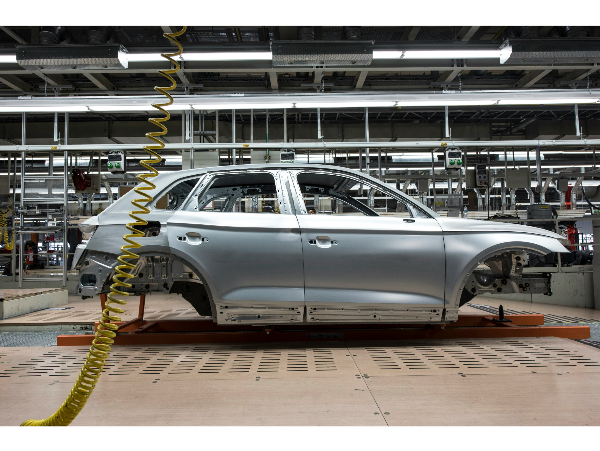
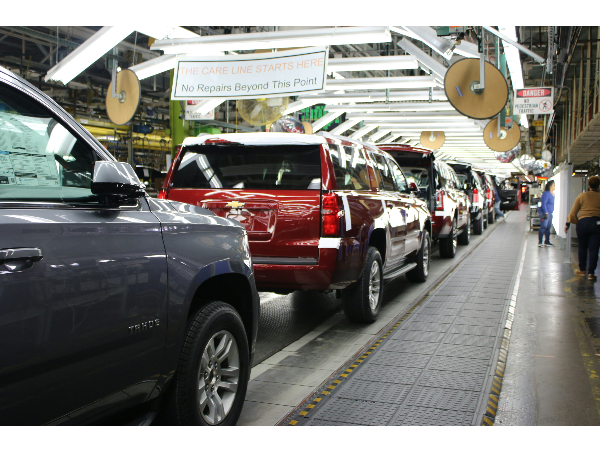
Building EVs requires more than assembly lines. Battery supply, software integration, and logistics all limit growth. Legacy automakers often retrofit old plants, while new entrants design vertically integrated systems from scratch.
Chinese manufacturers have mastered this model. They produce batteries, semiconductors, and drivetrains in‑house, cutting costs and speeding up output. Western brands still depend on external suppliers, slowing their ramp‑up.
Limiting Factor Legacy Automakers Emerging EV Leaders
Battery sourcing Outsourced In‑house production
Software Third‑party Proprietary systems
Plant design Retrofitted Purpose‑built EV factories
Why Does BYD Lead Global Production Growth?
BYD’s rise has been extraordinary. It produced 3.8 million EVs in 2025, up 28% year‑over‑year, and now outsells Tesla globally.
Its vertically integrated supply chain — from Blade Battery cells to semiconductors — enables rapid scaling. BYD manufactures 75% of its Seal model components in‑house, compared with Tesla’s 46%.
BYD also expanded into Europe, Southeast Asia, and Latin America, adding a new plant in Mexico to serve North America.
One unique detail: BYD’s entry‑level EVs start near $12,000, making them accessible in emerging markets where competitors cannot match the price.
Why Is Geely Quietly Becoming a Global Export Powerhouse?
Geely posted record Q1 2026 deliveries of 709,358 vehicles, including 369,059 new‑energy units.
Its electrification rate hit 55% in March, and exports surged 126% year‑over‑year — the fastest growth among major automakers.
Geely’s strategy focuses on exporting EVs under multiple brands (Zeekr, Lynk & Co, and Geometry) while maintaining domestic dominance.
Metric Q1 2026 Year‑over‑Year Growth
Total deliveries 709,358 +52%
NEV deliveries 369,059 +68%
Exports 203,024 +126%
Geely’s triple‑digit export growth signals a pivot from domestic saturation to global expansion.
Why Are XPeng and NIO Scaling Faster Than Expected?
XPeng delivered 62,682 vehicles in Q1 2026, up sharply from February’s totals, while NIO delivered 83,465 vehicles, a 98% year‑over‑year increase.
NIO’s multi‑brand strategy — premium NIO, family‑focused ONVO, and compact FIREFLY — diversifies its customer base.
XPeng’s Latin‑America expansion plan aims to enter Mexico by 2027, targeting regional leadership by 2028.
One unique fact: NIO’s flagship ES8 reached 80,000 deliveries in just 181 days, the fastest ramp‑up for any large SUV in China’s history.
Why Does Tesla Still Matter Despite Slower Growth?
Tesla produced 408,386 vehicles and delivered 358,023 in Q1 2026, a 6.3% year‑over‑year increase.
While modest compared with Chinese rivals, Tesla remains the global benchmark for efficiency.
Its diversification into energy storage — 8.8 GWh deployed in Q1 — shows how production growth extends beyond vehicles.
However, Tesla’s European sales fell 40% through most of 2025, and it dropped out of China’s NEV top 10 in early 2026.
Region Trend Notes
North America Stable Model Y dominates
Europe −40% Market share loss
China −Top 10 Local competition rising
Tesla’s slower growth reflects regional headwinds rather than technological weakness.
Why Are Legacy Automakers Catching Up Slowly?
Volkswagen delivered 983,100 battery‑electric vehicles in 2025, up 32% from 2024 — its highest annual total ever.
Europe drove most of the increase, with EV deliveries up 66%.
Toyota and Lexus also posted strong U.S. growth in Q1 2026, with Lexus up 206.7% year‑over‑year.
These gains show that legacy automakers can grow quickly when they commit fully to electrification.
Automaker Growth Rate Key Driver
Volkswagen +32% European demand
Toyota +79% bZ series rollout
Lexus +206% Luxury EV adoption
Rivian +21% U.S. pickup segment
Why Does the Real Answer to “Who Has the Fastest Production Growth?” Depend on Scale and Integration?
Production growth is not just about numbers — it’s about sustainability.
BYD leads in vertical integration. Geely leads in exports. NIO and XPeng lead in innovation. Tesla remains efficient but regionally constrained.
Legacy automakers are catching up, but their growth depends on new plants and battery partnerships.
Rank Automaker 2025–2026 Growth Core Advantage
1 BYD +28% Vertical integration
2 Geely +52% deliveries / +126% exports Global expansion
3 NIO +98% Multi‑brand scaling
4 XPeng +80% monthly Emerging‑market entry
5 Tesla +6.3% Efficiency, diversification
6 Volkswagen +32% European momentum
The solution to the problem introduced at the start is not to chase headline sales. It is to understand which automakers combine speed, integration, and global reach. Those companies — BYD, Geely, NIO, XPeng, and Tesla — define the future of EV production growth.
| Automaker |
2025–2026 Growth |
Key Metrics |
Core Advantage |
| BYD |
+28% production |
3.8M EVs produced; 75% in‑house components |
Vertical integration |
| Geely |
+52% deliveries / +126% exports |
709,358 Q1 deliveries; 369,059 NEVs |
Global export expansion |
| NIO |
+98% deliveries |
83,465 Q1 deliveries; ES8 record ramp |
Multi‑brand scaling |
| XPeng |
+80% monthly growth |
62,682 Q1 deliveries |
Emerging‑market entry |
| Tesla |
+6.3% deliveries |
408,386 produced; 358,023 delivered |
Efficiency + energy storage |
| Volkswagen |
+32% BEV growth |
983,100 BEVs delivered |
European demand |
| Toyota |
+79% EV growth |
Strong U.S. EV momentum |
bZ series rollout |
| Lexus |
+206% EV growth |
Luxury EV surge |
Premium adoption |
| Rivian |
+21% growth |
U.S. pickup EV segment |
Niche leadership |










Why Do Most Automakers Fail to Scale EV Production Efficiently? Building EVs requires more than assembly lines. Battery supply, software integration, and logistics all limit growth. Legacy automakers often retrofit old plants, while new entrants design vertically integrated systems from scratch. Chinese manufacturers have mastered this model. They produce batteries, semiconductors, and drivetrains in‑house, cutting costs and speeding up output. Western brands still depend on external suppliers, slowing their ramp‑up.
Limiting Factor Legacy Automakers Emerging EV Leaders Battery sourcing Outsourced In‑house production Software Third‑party Proprietary systems Plant design Retrofitted Purpose‑built EV factories
Why Does BYD Lead Global Production Growth? BYD’s rise has been extraordinary. It produced 3.8 million EVs in 2025, up 28% year‑over‑year, and now outsells Tesla globally.
Its vertically integrated supply chain — from Blade Battery cells to semiconductors — enables rapid scaling. BYD manufactures 75% of its Seal model components in‑house, compared with Tesla’s 46%.
BYD also expanded into Europe, Southeast Asia, and Latin America, adding a new plant in Mexico to serve North America.
One unique detail: BYD’s entry‑level EVs start near $12,000, making them accessible in emerging markets where competitors cannot match the price.
Why Is Geely Quietly Becoming a Global Export Powerhouse? Geely posted record Q1 2026 deliveries of 709,358 vehicles, including 369,059 new‑energy units.
Its electrification rate hit 55% in March, and exports surged 126% year‑over‑year — the fastest growth among major automakers. Geely’s strategy focuses on exporting EVs under multiple brands (Zeekr, Lynk & Co, and Geometry) while maintaining domestic dominance.
Metric Q1 2026 Year‑over‑Year Growth Total deliveries 709,358 +52% NEV deliveries 369,059 +68% Exports 203,024 +126%
Geely’s triple‑digit export growth signals a pivot from domestic saturation to global expansion.
Why Are XPeng and NIO Scaling Faster Than Expected? XPeng delivered 62,682 vehicles in Q1 2026, up sharply from February’s totals, while NIO delivered 83,465 vehicles, a 98% year‑over‑year increase.
NIO’s multi‑brand strategy — premium NIO, family‑focused ONVO, and compact FIREFLY — diversifies its customer base. XPeng’s Latin‑America expansion plan aims to enter Mexico by 2027, targeting regional leadership by 2028.
One unique fact: NIO’s flagship ES8 reached 80,000 deliveries in just 181 days, the fastest ramp‑up for any large SUV in China’s history.
Why Does Tesla Still Matter Despite Slower Growth? Tesla produced 408,386 vehicles and delivered 358,023 in Q1 2026, a 6.3% year‑over‑year increase.
While modest compared with Chinese rivals, Tesla remains the global benchmark for efficiency. Its diversification into energy storage — 8.8 GWh deployed in Q1 — shows how production growth extends beyond vehicles. However, Tesla’s European sales fell 40% through most of 2025, and it dropped out of China’s NEV top 10 in early 2026.
Region Trend Notes North America Stable Model Y dominates Europe −40% Market share loss China −Top 10 Local competition rising
Tesla’s slower growth reflects regional headwinds rather than technological weakness.
Why Are Legacy Automakers Catching Up Slowly? Volkswagen delivered 983,100 battery‑electric vehicles in 2025, up 32% from 2024 — its highest annual total ever.
Europe drove most of the increase, with EV deliveries up 66%. Toyota and Lexus also posted strong U.S. growth in Q1 2026, with Lexus up 206.7% year‑over‑year.
These gains show that legacy automakers can grow quickly when they commit fully to electrification.
Automaker Growth Rate Key Driver Volkswagen +32% European demand Toyota +79% bZ series rollout Lexus +206% Luxury EV adoption Rivian +21% U.S. pickup segment
Why Does the Real Answer to “Who Has the Fastest Production Growth?” Depend on Scale and Integration? Production growth is not just about numbers — it’s about sustainability. BYD leads in vertical integration. Geely leads in exports. NIO and XPeng lead in innovation. Tesla remains efficient but regionally constrained. Legacy automakers are catching up, but their growth depends on new plants and battery partnerships.
Rank Automaker 2025–2026 Growth Core Advantage 1 BYD +28% Vertical integration 2 Geely +52% deliveries / +126% exports Global expansion 3 NIO +98% Multi‑brand scaling 4 XPeng +80% monthly Emerging‑market entry 5 Tesla +6.3% Efficiency, diversification 6 Volkswagen +32% European momentum
The solution to the problem introduced at the start is not to chase headline sales. It is to understand which automakers combine speed, integration, and global reach. Those companies — BYD, Geely, NIO, XPeng, and Tesla — define the future of EV production growth.