Last updated on July 1st 2026 by Noah Brody
🔑 Key Takeaways
🤖 Warehouse automation is becoming a major competitive advantage in e-commerce
Automated warehouses help internet retailers process orders faster, reduce labor costs, and improve fulfillment accuracy. Companies that invest successfully in automation often gain operational advantages over competitors.
📦 Faster fulfillment can improve both customer satisfaction and profitability
Automation allows retailers to move products through warehouses more efficiently. Faster delivery times often lead to stronger customer loyalty and higher repeat purchase rates.
💰 Automation requires significant upfront investment but can generate long-term savings
Building automated fulfillment centers is expensive, but the long-term benefits can include lower operating costs, better scalability, and stronger profit margins.
🚀 Investors increasingly view automation as a driver of future earnings growth
Companies with advanced warehouse automation systems may be better positioned to handle rising order volumes while controlling costs, supporting long-term stock performance.
How Warehouse Automation Impacts E-Commerce Stock Performance
## The Warehouse Is Becoming the New Battleground

For years, investors focused on website traffic, product selection, and revenue growth when evaluating internet retail companies.

Those factors still matter.

But behind the scenes, another competition has quietly emerged.

The race to build smarter warehouses.

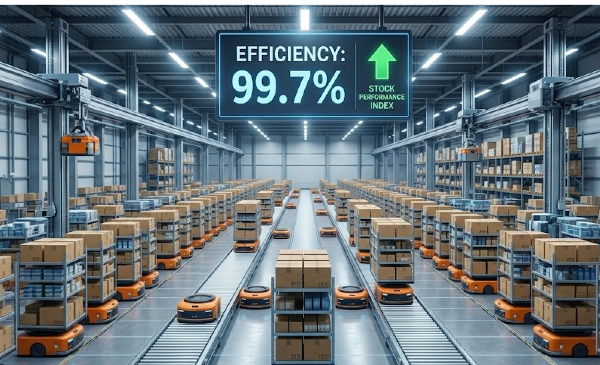
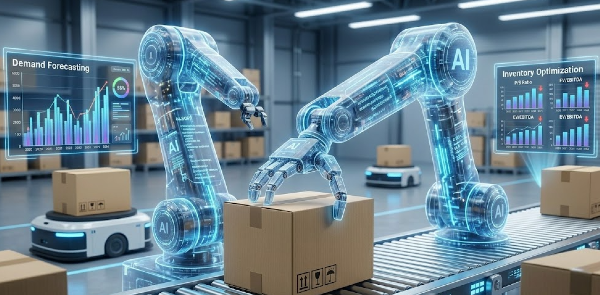
Today's leading e-commerce companies are investing billions of dollars into warehouse automation. Robots move inventory. [Artificial intelligence predicts demand](https://stockbossup.com/pages/post/how-ai-is-transforming-internet-retail-companies). Automated systems sort packages with incredible speed and accuracy.

What used to be a simple storage facility is becoming a high-tech operating center.

For investors, this shift matters because [warehouse efficiency increasingly influences profitability](https://stockbossup.com/pages/post/how-warehouse-automation-impacts-e-commerce-stock-performance), customer satisfaction, and long-term competitive strength.

The future of e-commerce may depend as much on what happens inside warehouses as what happens on websites.

---

## Why Warehouse Automation Matters More Than Ever

E-commerce companies face constant pressure.

Customers want faster delivery. Labor costs continue rising. Competition remains intense.

Meeting all three challenges simultaneously is difficult.

Warehouse automation offers a potential solution.

Automated systems can process orders around the clock, reduce human error, and increase throughput without requiring proportional increases in staffing.

This allows retailers to scale operations more efficiently.

As online shopping volumes continue growing, automation becomes increasingly attractive because manual processes often struggle to keep pace with demand.

The companies that automate effectively may gain a significant advantage over those that rely heavily on traditional fulfillment methods.

---

## Amazon Helped Start the Automation Arms Race

Few companies have embraced warehouse automation more aggressively than Amazon.

The company began investing heavily in robotics after acquiring Kiva Systems in 2012.

That acquisition fundamentally changed how Amazon approached fulfillment.

Instead of employees walking long distances through warehouses, robots could bring inventory directly to workers.

The result was faster processing, improved efficiency, and better utilization of warehouse space.

Over time, Amazon expanded automation throughout [Amazon's logistics capabilities](https://stockbossup.com/pages/post/internet-retail-stocks-with-the-best-logistics-networks).

Robotic systems now assist with sorting, transporting, packaging, and inventory management.

These investments have helped Amazon handle enormous order volumes while maintaining increasingly fast delivery expectations.

For competitors, Amazon's success raised the stakes dramatically.

---

## Automation Can Improve Profit Margins

Revenue growth often captures investor attention.

Profitability ultimately determines long-term value creation.

Warehouse automation can directly influence margins by reducing operating costs.

Automated systems help lower labor requirements for repetitive tasks. They can also reduce errors that lead to costly returns, reshipments, and inventory discrepancies.

Over time, these efficiencies compound.

A company processing millions of orders annually can generate substantial savings through even small operational improvements.

| Automation Benefit | Potential Financial Impact |
|-------------------|---------------------------|
| Reduced Labor Costs | Higher margins |
| Faster Order Processing | Increased capacity |
| Fewer Fulfillment Errors | Lower expenses |
| Better Inventory Accuracy | Improved efficiency |
| Higher Throughput | Revenue scalability |

For large retailers, warehouse efficiency can significantly [improve profitability](https://stockbossup.com/pages/post/internet-retail-companies-generating-strong-free-cash-flow).

---

## Faster Fulfillment Creates Happier Customers

Consumers have become accustomed to rapid delivery.

What once seemed remarkably fast now feels routine.

Warehouse automation helps retailers meet these rising expectations.

Products can be located, picked, packed, and shipped more quickly than in traditional facilities.

Shorter processing times often translate directly into faster delivery windows.

Customers benefit from quicker service.

Retailers benefit from stronger loyalty and repeat purchases.

This relationship highlights an important reality of modern e-commerce: operational efficiency and customer experience are increasingly connected.

A faster warehouse often creates a better shopping experience.

---

## Artificial Intelligence Is Becoming a Warehouse Manager

Robots receive much of the attention.

Artificial intelligence may ultimately have an even greater impact.

AI systems help determine where products should be stored, which inventory should be replenished, and how labor resources should be allocated.

These decisions affect efficiency throughout the fulfillment process.

Machine learning models can analyze historical sales data, seasonal patterns, weather conditions, and promotional activity to forecast future demand.

Better forecasts lead to smarter inventory placement.

Smarter inventory placement reduces fulfillment times.

The result is a more efficient operation from end to end.

One fascinating industry development is that some fulfillment systems can now predict which products will likely be ordered soon and move them closer to shipping areas before customers even place orders.

---

## Warehouse Automation Creates Scale Advantages

Scale has always been important in retail.

Automation amplifies that advantage.

Large companies can spread automation investments across massive order volumes.

A robotic system that might seem expensive initially can become highly economical when processing millions of transactions.

Smaller retailers often face a more difficult challenge.

The upfront investment may represent a larger percentage of revenue.

This dynamic can widen the gap between industry leaders and smaller competitors.

Companies with significant financial resources can often invest earlier, improve faster, and build operational advantages that become increasingly difficult to match.

| Company Characteristic | Automation Advantage |
|-----------------------|---------------------|
| Large Order Volume | Strong |
| National Fulfillment Network | Strong |
| Significant Capital Resources | Strong |
| Small Regional Retailer | Moderate |
| Early-Stage E-Commerce Company | Limited |

Scale often makes automation investments more attractive.

---

## Not Every Automation Project Succeeds

Automation sounds impressive.

Implementation can be complicated.

Large technology projects sometimes experience delays, cost overruns, or operational disruptions.

Integrating robotics, software systems, inventory management tools, and existing workflows requires careful execution.

Poor implementation can temporarily reduce productivity rather than improve it.

Investors should remember that automation is not automatically beneficial.

Execution matters.

The strongest returns often come from companies that combine technological innovation with operational discipline.

Buying robots is relatively easy.

Successfully integrating them into a complex fulfillment network is much harder.

---

## Automation Helps During Labor Shortages

Labor availability has become a growing concern for many retailers.

Warehouses often experience seasonal hiring challenges, especially during peak shopping periods.

Automation can help reduce dependence on labor-intensive processes.

This does not necessarily eliminate the need for workers.

Instead, it often shifts employees toward higher-value activities that require judgment, oversight, and problem-solving.

Retailers benefit from greater operational flexibility.

They become less vulnerable to labor shortages and wage inflation.

This resilience can be particularly valuable during periods of economic uncertainty.

For investors, operational stability often supports more predictable financial performance.

---

## The Ripple Effect Extends Beyond the Warehouse

Warehouse automation affects more than fulfillment centers.

It influences transportation planning, inventory management, customer service, and financial performance.

Faster processing improves delivery reliability.

Better inventory visibility reduces stockouts.

Greater efficiency can improve profitability.

These improvements ripple throughout the organization.

As a result, warehouse automation often becomes a strategic initiative rather than a simple operational upgrade.

Companies increasingly view fulfillment capabilities as a core competitive asset rather than a support function.

Another interesting trend is that some highly automated facilities can operate continuously with minimal interruptions, allowing retailers to process orders around the clock even during peak shopping seasons. [Last-mile delivery services](https://stockbossup.com/pages/post/companies-leading-last-mile-delivery-innovation) continue to become increasingly important as fulfillment speed expectations rise.
The Smartest Warehouse May Win
Warehouse automation is transforming the economics of e-commerce.
Companies such as Amazon, Alibaba, JD.com, Walmart, and MercadoLibre continue investing heavily because they understand the potential rewards.
Automation can improve efficiency, reduce costs, increase fulfillment speed, and strengthen customer satisfaction.
Those benefits often translate into stronger financial performance over time.
For investors, warehouse automation represents more than robots moving boxes.
It represents a long-term effort to build faster, smarter, and more scalable retail operations.
As e-commerce continues growing, the companies with the most efficient fulfillment systems may gain an increasingly important advantage.
In the race for online retail leadership, the smartest warehouse may become just as valuable as the most popular website.
🚀 Expand Your Edge: Elite Internet Retail & E-Commerce Intelligence
Ready to capitalize on the future of digital commerce? Our Internet Retail Investor Intelligence Hub is designed to help investors analyze the companies, technologies, and trends reshaping global shopping. From foundational industry research and stock selection to AI, logistics, valuation, and international growth, explore the curated silos below to uncover your next investment opportunity.
🌐 Industry Fundamentals & Market Leaders
📊 Financial Strength & Shareholder Returns
🤖 Technology, AI & Digital Transformation
🚚 Logistics, Fulfillment & Supply Chain Intelligence
🌍 Global Expansion & Market Opportunities
⚠️ Risk Management & Economic Trends
🔍 Competitive Analysis & Advanced Research















Last updated on July 1st 2026 by Noah Brody
🔑 Key Takeaways
🤖 Warehouse automation is becoming a major competitive advantage in e-commerce
Automated warehouses help internet retailers process orders faster, reduce labor costs, and improve fulfillment accuracy. Companies that invest successfully in automation often gain operational advantages over competitors.
📦 Faster fulfillment can improve both customer satisfaction and profitability
Automation allows retailers to move products through warehouses more efficiently. Faster delivery times often lead to stronger customer loyalty and higher repeat purchase rates.
💰 Automation requires significant upfront investment but can generate long-term savings
Building automated fulfillment centers is expensive, but the long-term benefits can include lower operating costs, better scalability, and stronger profit margins.
🚀 Investors increasingly view automation as a driver of future earnings growth
Companies with advanced warehouse automation systems may be better positioned to handle rising order volumes while controlling costs, supporting long-term stock performance.
How Warehouse Automation Impacts E-Commerce Stock Performance
The Smartest Warehouse May Win
Warehouse automation is transforming the economics of e-commerce.
Companies such as Amazon, Alibaba, JD.com, Walmart, and MercadoLibre continue investing heavily because they understand the potential rewards.
Automation can improve efficiency, reduce costs, increase fulfillment speed, and strengthen customer satisfaction.
Those benefits often translate into stronger financial performance over time.
For investors, warehouse automation represents more than robots moving boxes.
It represents a long-term effort to build faster, smarter, and more scalable retail operations.
As e-commerce continues growing, the companies with the most efficient fulfillment systems may gain an increasingly important advantage.
In the race for online retail leadership, the smartest warehouse may become just as valuable as the most popular website.
🚀 Expand Your Edge: Elite Internet Retail & E-Commerce Intelligence
Ready to capitalize on the future of digital commerce? Our Internet Retail Investor Intelligence Hub is designed to help investors analyze the companies, technologies, and trends reshaping global shopping. From foundational industry research and stock selection to AI, logistics, valuation, and international growth, explore the curated silos below to uncover your next investment opportunity.
🌐 Industry Fundamentals & Market Leaders
📊 Financial Strength & Shareholder Returns
🤖 Technology, AI & Digital Transformation
🚚 Logistics, Fulfillment & Supply Chain Intelligence
🌍 Global Expansion & Market Opportunities
⚠️ Risk Management & Economic Trends
🔍 Competitive Analysis & Advanced Research