Key Takeaways: Best Aftermarket Auto Parts Companies for Long-Term Investors
🚗 Aging Vehicles Continue To Drive Long-Term Demand for Aftermarket Auto Parts
One of the biggest growth drivers for aftermarket auto parts companies is the rising age of vehicles on U.S. roads. As consumers keep cars longer, demand increases for replacement parts like brakes, batteries, suspension systems, and filters. This trend supports steady revenue for companies such as AutoZone, O’Reilly Automotive, and Genuine Parts Company. Long-term investors often favor industries with recurring demand, and vehicle maintenance remains difficult for consumers to delay.
📦 Distribution Networks Create Powerful Competitive Advantages
The strongest aftermarket auto parts companies usually dominate logistics and delivery speed. Repair shops need replacement parts quickly, which gives companies with large warehouse systems and regional distribution hubs a major advantage. Businesses that can deliver the right part within hours often build stronger relationships with mechanics and commercial customers. Fast inventory management and efficient supply chains may matter more than brand recognition alone in this industry.
🔋 Electric Vehicles May Change the Industry, but They Are Unlikely To Eliminate It
Many investors worry that electric vehicles could reduce demand for traditional aftermarket repairs. EVs require less maintenance than gas-powered vehicles, but they still need tires, suspension work, electronics, sensors, brakes, and software support. Some aftermarket companies are already adapting by investing in EV-compatible components and advanced vehicle technology. Businesses that evolve alongside the automotive market may remain strong long-term investment opportunities.
💰 The Best Auto Parts Stocks Often Combine Stability, Cash Flow, and Shareholder Returns
Top aftermarket auto parts companies tend to generate reliable free cash flow and strong profit margins. Many also reward investors through dividends or aggressive share buybacks. Genuine Parts Company is known for dividend consistency, while AutoZone and O’Reilly Automotive focus heavily on reducing share counts through repurchases. Investors looking for long-term compound growth often prioritize companies with durable demand, disciplined management, and strong financial performance.
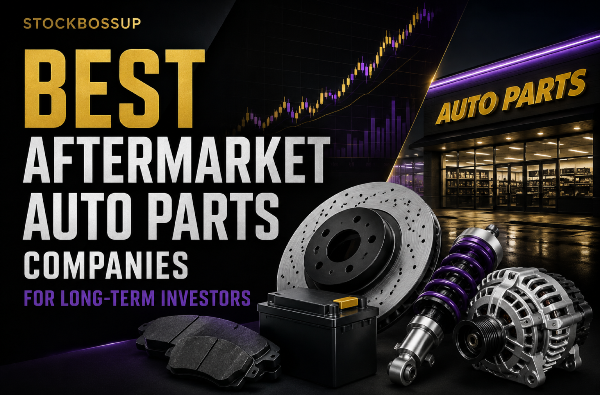
Best Aftermarket Auto Parts Companies for Long-Term Investors
The aftermarket auto parts industry looks simple at first. Cars break. Drivers replace parts. Companies make money. Yet many investors still struggle to pick winning stocks in this space.
Some businesses grow fast during economic slowdowns but lose momentum later. Others have strong brands but weak margins. A few look stable for years before supply chain costs crush profits. The hardest part is knowing which companies can survive both changing vehicle technology and changing consumer habits.
That challenge becomes even bigger as electric vehicles gain market share. EVs have fewer moving parts than gas-powered cars. Many investors now wonder if traditional aftermarket companies can still grow over the next decade.
The answer is not as obvious as it seems.
Why Do Aftermarket Auto Parts Stocks Often Perform Well During Weak Economies?
Aftermarket auto parts companies benefit from a simple trend. When money gets tight, people hold onto vehicles longer. Instead of buying a new car, drivers repair the one they already own.
That creates steady demand for replacement parts like brakes, batteries, filters, and suspension components.
The average age of vehicles on U.S. roads has continued to rise in recent years. Older vehicles usually need more repairs. That trend has become a major growth driver for parts retailers and manufacturers.
Another advantage is recurring demand. Drivers cannot avoid replacing worn-out components forever. Even during recessions, repairs still happen.
Many aftermarket companies also benefit from two customer groups:
- Do-it-yourself consumers
- Professional repair shops
This mix creates multiple revenue streams. It also helps companies remain stable when consumer spending slows.
Some businesses even gain pricing power because certain replacement parts are difficult to delay. A worn brake pad or dead battery becomes an urgent purchase.
More than 70 million vehicles in the United States are now over 16 years old. That creates a massive long-term repair market.
Which Types of Aftermarket Companies Tend to Last the Longest?
Not all auto parts businesses operate the same way. Some focus on retail stores. Others manufacture parts. A few specialize in distribution networks that support repair shops nationwide.
The strongest long-term companies usually share several traits:
- Large distribution systems
- Strong inventory management
- Reliable free cash flow
- Well-known brands
- Consistent demand across economic cycles
Companies with huge logistics networks often have an edge because repair shops need parts quickly. Speed matters in this industry.
A mechanic cannot leave a customer’s car on a lift for three days waiting for a replacement sensor or alternator. Fast delivery becomes a competitive advantage.
The best companies also adapt to new technology. Hybrid vehicles, EVs, and advanced driver systems are changing repair patterns. Businesses that invest early may gain market share later.
| Key Factor |
Why It Matters |
| Distribution Speed |
Repair shops need fast delivery |
| Brand Reputation |
Mechanics trust proven suppliers |
| Product Breadth |
Wide inventory attracts repeat buyers |
| Cash Flow |
Supports expansion and dividends |
| Technology Investment |
Helps prepare for EV growth |
Why Does Genuine Parts Company Keep Appearing on Investor Watchlists?
Genuine Parts Company is one of the oldest and most respected businesses in the aftermarket industry.
The company operates the well-known NAPA Auto Parts network. NAPA stores serve both individual consumers and professional repair businesses.
One reason long-term investors like Genuine Parts Company is stability. The business has produced decades of dividend growth and steady cash generation.
Its distribution network is enormous. Thousands of locations help the company deliver parts quickly across North America and other regions.
Another advantage is diversification. Genuine Parts Company also sells industrial replacement parts beyond the automotive sector. That reduces dependence on one market.
The company may not deliver explosive growth, but many investors value its consistency.
Some NAPA distribution centers can process tens of thousands of parts orders in a single day. Speed has become one of its strongest competitive tools.
Could O’Reilly Automotive Still Have Room to Grow?
O’Reilly Automotive has built one of the strongest retail models in the industry.
The company focuses heavily on serving professional repair shops while also supporting retail customers. That balance has helped it grow revenue consistently for years.
O’Reilly stores are known for deep inventory levels and efficient operations. Many locations can source hard-to-find parts quickly through nearby hubs.
The company also benefits from disciplined management. Investors often point to strong profit margins and steady same-store sales growth.
Another reason investors watch O’Reilly closely is share repurchases. The company has aggressively bought back stock over time, helping boost earnings per share.
Its expansion strategy has also remained careful instead of reckless. That matters in retail businesses where overexpansion can hurt profitability.
| Strength |
Impact on Investors |
| Strong Professional Sales |
Creates recurring demand |
| High Inventory Availability |
Improves customer loyalty |
| Share Buybacks |
Supports earnings growth |
| Efficient Operations |
Helps maintain margins |
| Large Store Network |
Expands market reach |
What Makes AutoZone Different From Other Parts Retailers?
AutoZone is another major player that long-term investors often consider.
The company built its reputation through strong customer service and massive inventory availability.
AutoZone has leaned heavily into the do-it-yourself market for decades. However, it has also expanded its commercial business with repair shops.
One major strength is operational efficiency. AutoZone closely tracks inventory movement and store performance.
That focus has helped the company produce strong returns on capital.
AutoZone has also used share buybacks aggressively. Over time, this reduced the number of shares outstanding and increased earnings per share growth.
The business model benefits from aging vehicles. As cars stay on the road longer, repair demand tends to rise.
Some investors worry about EV adoption reducing future maintenance needs. Yet even EVs still require tires, suspension work, filters, wiper blades, and brake components.
That does not eliminate risk, but it may soften the long-term impact.
Why Are Parts Manufacturers Sometimes Better Investments Than Retailers?
Retailers often get most of the attention, but manufacturers can also provide strong long-term opportunities.
Companies that produce replacement parts may benefit from brand loyalty among mechanics and repair shops.
BorgWarner is one example investors frequently study. The company supplies components for both traditional and electric vehicles.
This matters because EV adoption could reshape the industry over time.
Manufacturers with exposure to EV systems may have better long-term positioning than companies tied entirely to gas-powered engines.
Another major name is Dorman Products.
Dorman focuses on replacement parts that are difficult to find through dealerships. Its catalog includes thousands of specialized products.
That strategy gives the company a niche advantage.
Instead of competing only on price, Dorman often solves hard-to-source repair problems.
Investors sometimes overlook how valuable that can become for aging vehicles.
| Manufacturer |
Key Focus |
| BorgWarner |
EV and powertrain technology |
| Dorman Products |
Specialized replacement parts |
| LKQ Corporation |
Salvage and recycled parts |
| Aptiv |
Advanced vehicle systems |
| Standard Motor Products |
Engine management components |
Can LKQ Corporation Benefit From the Shift Toward Affordable Repairs?
LKQ Corporation operates differently from many traditional aftermarket companies.
The business specializes heavily in recycled and alternative replacement parts.
That approach can reduce repair costs for insurance companies and consumers.
As vehicle prices rise, affordable repairs become more important. That could support LKQ’s long-term demand.
The company also benefits from large salvage operations. Damaged vehicles provide reusable components that can enter the aftermarket supply chain.
This business model creates both opportunity and risk.
Commodity price swings and accident trends can affect results. Still, LKQ has built a large global footprint over time.
Recycled auto parts can lower repair costs by hundreds or even thousands of dollars on certain repairs. That value becomes even more important during inflationary periods.
Why Do Some Investors Avoid Smaller Aftermarket Companies?
Smaller businesses can deliver faster growth, but they usually carry higher risk.
Large companies benefit from scale. They often negotiate better shipping costs, supplier pricing, and inventory access.
Smaller firms may struggle during supply chain disruptions or economic slowdowns.
Another issue is customer concentration. Some small manufacturers depend heavily on a few buyers.
If one major customer leaves, revenue can fall quickly.
That does not mean small companies are bad investments. Some become future industry leaders.
But long-term investors often prefer businesses with stable cash flow and proven market positions.
Consistency matters in cyclical industries.
Could Electric Vehicles Hurt the Entire Aftermarket Industry?
This question sits at the center of many investor debates.
EVs generally require less maintenance than gas-powered vehicles. They have fewer moving engine parts and no oil changes.
At first glance, that sounds terrible for aftermarket businesses.
But the full picture is more complex.
The transition to EVs will likely take many years. Millions of gas-powered vehicles will remain on roads for a long time.
Many aftermarket companies are also adapting.
Some are expanding into EV-compatible components, battery systems, electronics, and software-related services.
Tires may also become a hidden growth area. EVs are heavier than traditional vehicles, which can increase tire wear rates.
That could support long-term replacement demand.
| EV Challenge |
Possible Industry Response |
| Fewer oil changes |
Expand into electronics and software |
| Lower engine maintenance |
Focus on suspension and tire demand |
| New repair systems |
Invest in technician training |
| Battery technology shifts |
Develop EV replacement components |
| Advanced sensors |
Grow diagnostic product offerings |
Why Does Distribution Matter More Than Most Investors Think?
In many industries, brand strength drives success.
In aftermarket auto parts, logistics can matter just as much.
Repair shops often need parts immediately. Fast delivery helps mechanics complete repairs quickly and move to the next vehicle.
That creates a major advantage for companies with strong warehouse systems and regional hubs.
Businesses like Genuine Parts Company, AutoZone, and O’Reilly Automotive invested heavily in distribution networks for years.
New competitors may struggle to match that infrastructure.
The speed advantage also becomes stronger in dense urban markets where repair demand stays high.
Some companies now use predictive inventory systems powered by software tools. These systems help stores stock the right parts before demand spikes.
That may sound minor, but reducing out-of-stock items can significantly improve revenue.
Which Financial Metrics Matter Most for These Stocks?
Long-term investors should look beyond simple revenue growth.
Several financial metrics are especially important in the aftermarket sector.
Free Cash Flow
Strong cash flow supports expansion, dividends, and share buybacks.
Operating Margin
Healthy margins can show pricing power and operational efficiency.
Inventory Turnover
Efficient inventory management matters because companies carry thousands of part types.
Debt Levels
Too much debt can become dangerous during economic downturns.
Return on Invested Capital
This helps measure how effectively management uses company resources.
| Metric |
Why Investors Watch It |
| Free Cash Flow |
Supports long-term growth |
| Operating Margin |
Reflects efficiency |
| Inventory Turnover |
Shows supply chain strength |
| Debt-to-Equity Ratio |
Measures financial risk |
| Return on Invested Capital |
Indicates management quality |
Why Do Repair Shops Create Strong Competitive Advantages?
Professional repair businesses are critical customers for major aftermarket companies.
Commercial accounts often generate repeat sales throughout the year.
Once a repair shop trusts a supplier, switching becomes less attractive. Reliability matters more than saving a few dollars on one part.
This creates sticky customer relationships.
Companies that deliver accurate orders quickly can build long-term loyalty.
That loyalty becomes even more important as vehicles grow more complex.
Modern cars use advanced electronics, sensors, cameras, and software systems. Mechanics need dependable suppliers that can provide both parts and technical support.
Some aftermarket companies now offer training programs for repair technicians. That deepens business relationships beyond simple transactions.
Are Dividends Important in This Industry?
Many investors like aftermarket companies because several pay reliable dividends.
Dividend-paying stocks can provide steady income while investors wait for long-term growth.
Genuine Parts Company is especially well known for dividend consistency.
However, not every strong aftermarket company pays a large dividend.
Businesses like O’Reilly Automotive and AutoZone often focus more on share buybacks.
Neither approach is automatically better.
Dividends provide income. Buybacks may increase earnings per share growth.
Investors must decide which strategy fits their goals.
Why Do Some Investors Still Miss the Best Opportunities?
Many investors focus only on flashy industries like artificial intelligence or electric vehicles.
Meanwhile, steady businesses quietly compound for decades.
The aftermarket auto parts sector rarely gets exciting headlines. Yet some companies in this space have delivered impressive long-term shareholder returns.
Patience often matters more than hype.
The strongest businesses usually combine several traits:
- Durable demand
- Efficient logistics
- Strong balance sheets
- Adaptability
- Consistent management
That combination is harder to find than many people expect.
The real challenge introduced at the start of this article was figuring out which companies can survive changing vehicle technology while still growing profits.
The answer is not simply choosing the biggest retailer or the cheapest stock.
The companies most likely to succeed long term are the ones building strong distribution systems, adapting to EV technology, maintaining healthy cash flow, and protecting customer relationships with repair shops.
Those advantages may matter far more than short-term market trends over the next decade.

















Key Takeaways: Best Aftermarket Auto Parts Companies for Long-Term Investors
🚗 Aging Vehicles Continue To Drive Long-Term Demand for Aftermarket Auto Parts
One of the biggest growth drivers for aftermarket auto parts companies is the rising age of vehicles on U.S. roads. As consumers keep cars longer, demand increases for replacement parts like brakes, batteries, suspension systems, and filters. This trend supports steady revenue for companies such as AutoZone, O’Reilly Automotive, and Genuine Parts Company. Long-term investors often favor industries with recurring demand, and vehicle maintenance remains difficult for consumers to delay.
📦 Distribution Networks Create Powerful Competitive Advantages
The strongest aftermarket auto parts companies usually dominate logistics and delivery speed. Repair shops need replacement parts quickly, which gives companies with large warehouse systems and regional distribution hubs a major advantage. Businesses that can deliver the right part within hours often build stronger relationships with mechanics and commercial customers. Fast inventory management and efficient supply chains may matter more than brand recognition alone in this industry.
🔋 Electric Vehicles May Change the Industry, but They Are Unlikely To Eliminate It
Many investors worry that electric vehicles could reduce demand for traditional aftermarket repairs. EVs require less maintenance than gas-powered vehicles, but they still need tires, suspension work, electronics, sensors, brakes, and software support. Some aftermarket companies are already adapting by investing in EV-compatible components and advanced vehicle technology. Businesses that evolve alongside the automotive market may remain strong long-term investment opportunities.
💰 The Best Auto Parts Stocks Often Combine Stability, Cash Flow, and Shareholder Returns
Top aftermarket auto parts companies tend to generate reliable free cash flow and strong profit margins. Many also reward investors through dividends or aggressive share buybacks. Genuine Parts Company is known for dividend consistency, while AutoZone and O’Reilly Automotive focus heavily on reducing share counts through repurchases. Investors looking for long-term compound growth often prioritize companies with durable demand, disciplined management, and strong financial performance.
Best Aftermarket Auto Parts Companies for Long-Term Investors
The aftermarket auto parts industry looks simple at first. Cars break. Drivers replace parts. Companies make money. Yet many investors still struggle to pick winning stocks in this space.
Some businesses grow fast during economic slowdowns but lose momentum later. Others have strong brands but weak margins. A few look stable for years before supply chain costs crush profits. The hardest part is knowing which companies can survive both changing vehicle technology and changing consumer habits.
That challenge becomes even bigger as electric vehicles gain market share. EVs have fewer moving parts than gas-powered cars. Many investors now wonder if traditional aftermarket companies can still grow over the next decade.
The answer is not as obvious as it seems.
Why Do Aftermarket Auto Parts Stocks Often Perform Well During Weak Economies?
Aftermarket auto parts companies benefit from a simple trend. When money gets tight, people hold onto vehicles longer. Instead of buying a new car, drivers repair the one they already own.
That creates steady demand for replacement parts like brakes, batteries, filters, and suspension components.
The average age of vehicles on U.S. roads has continued to rise in recent years. Older vehicles usually need more repairs. That trend has become a major growth driver for parts retailers and manufacturers.
Another advantage is recurring demand. Drivers cannot avoid replacing worn-out components forever. Even during recessions, repairs still happen.
Many aftermarket companies also benefit from two customer groups:
This mix creates multiple revenue streams. It also helps companies remain stable when consumer spending slows.
Some businesses even gain pricing power because certain replacement parts are difficult to delay. A worn brake pad or dead battery becomes an urgent purchase.
More than 70 million vehicles in the United States are now over 16 years old. That creates a massive long-term repair market.
Which Types of Aftermarket Companies Tend to Last the Longest?
Not all auto parts businesses operate the same way. Some focus on retail stores. Others manufacture parts. A few specialize in distribution networks that support repair shops nationwide.
The strongest long-term companies usually share several traits:
Companies with huge logistics networks often have an edge because repair shops need parts quickly. Speed matters in this industry.
A mechanic cannot leave a customer’s car on a lift for three days waiting for a replacement sensor or alternator. Fast delivery becomes a competitive advantage.
The best companies also adapt to new technology. Hybrid vehicles, EVs, and advanced driver systems are changing repair patterns. Businesses that invest early may gain market share later.
Why Does Genuine Parts Company Keep Appearing on Investor Watchlists?
Genuine Parts Company is one of the oldest and most respected businesses in the aftermarket industry.
The company operates the well-known NAPA Auto Parts network. NAPA stores serve both individual consumers and professional repair businesses.
One reason long-term investors like Genuine Parts Company is stability. The business has produced decades of dividend growth and steady cash generation.
Its distribution network is enormous. Thousands of locations help the company deliver parts quickly across North America and other regions.
Another advantage is diversification. Genuine Parts Company also sells industrial replacement parts beyond the automotive sector. That reduces dependence on one market.
The company may not deliver explosive growth, but many investors value its consistency.
Some NAPA distribution centers can process tens of thousands of parts orders in a single day. Speed has become one of its strongest competitive tools.
Could O’Reilly Automotive Still Have Room to Grow?
O’Reilly Automotive has built one of the strongest retail models in the industry.
The company focuses heavily on serving professional repair shops while also supporting retail customers. That balance has helped it grow revenue consistently for years.
O’Reilly stores are known for deep inventory levels and efficient operations. Many locations can source hard-to-find parts quickly through nearby hubs.
The company also benefits from disciplined management. Investors often point to strong profit margins and steady same-store sales growth.
Another reason investors watch O’Reilly closely is share repurchases. The company has aggressively bought back stock over time, helping boost earnings per share.
Its expansion strategy has also remained careful instead of reckless. That matters in retail businesses where overexpansion can hurt profitability.
What Makes AutoZone Different From Other Parts Retailers?
AutoZone is another major player that long-term investors often consider.
The company built its reputation through strong customer service and massive inventory availability.
AutoZone has leaned heavily into the do-it-yourself market for decades. However, it has also expanded its commercial business with repair shops.
One major strength is operational efficiency. AutoZone closely tracks inventory movement and store performance.
That focus has helped the company produce strong returns on capital.
AutoZone has also used share buybacks aggressively. Over time, this reduced the number of shares outstanding and increased earnings per share growth.
The business model benefits from aging vehicles. As cars stay on the road longer, repair demand tends to rise.
Some investors worry about EV adoption reducing future maintenance needs. Yet even EVs still require tires, suspension work, filters, wiper blades, and brake components.
That does not eliminate risk, but it may soften the long-term impact.
Why Are Parts Manufacturers Sometimes Better Investments Than Retailers?
Retailers often get most of the attention, but manufacturers can also provide strong long-term opportunities.
Companies that produce replacement parts may benefit from brand loyalty among mechanics and repair shops.
BorgWarner is one example investors frequently study. The company supplies components for both traditional and electric vehicles.
This matters because EV adoption could reshape the industry over time.
Manufacturers with exposure to EV systems may have better long-term positioning than companies tied entirely to gas-powered engines.
Another major name is Dorman Products.
Dorman focuses on replacement parts that are difficult to find through dealerships. Its catalog includes thousands of specialized products.
That strategy gives the company a niche advantage.
Instead of competing only on price, Dorman often solves hard-to-source repair problems.
Investors sometimes overlook how valuable that can become for aging vehicles.
Can LKQ Corporation Benefit From the Shift Toward Affordable Repairs?
LKQ Corporation operates differently from many traditional aftermarket companies.
The business specializes heavily in recycled and alternative replacement parts.
That approach can reduce repair costs for insurance companies and consumers.
As vehicle prices rise, affordable repairs become more important. That could support LKQ’s long-term demand.
The company also benefits from large salvage operations. Damaged vehicles provide reusable components that can enter the aftermarket supply chain.
This business model creates both opportunity and risk.
Commodity price swings and accident trends can affect results. Still, LKQ has built a large global footprint over time.
Recycled auto parts can lower repair costs by hundreds or even thousands of dollars on certain repairs. That value becomes even more important during inflationary periods.
Why Do Some Investors Avoid Smaller Aftermarket Companies?
Smaller businesses can deliver faster growth, but they usually carry higher risk.
Large companies benefit from scale. They often negotiate better shipping costs, supplier pricing, and inventory access.
Smaller firms may struggle during supply chain disruptions or economic slowdowns.
Another issue is customer concentration. Some small manufacturers depend heavily on a few buyers.
If one major customer leaves, revenue can fall quickly.
That does not mean small companies are bad investments. Some become future industry leaders.
But long-term investors often prefer businesses with stable cash flow and proven market positions.
Consistency matters in cyclical industries.
Could Electric Vehicles Hurt the Entire Aftermarket Industry?
This question sits at the center of many investor debates.
EVs generally require less maintenance than gas-powered vehicles. They have fewer moving engine parts and no oil changes.
At first glance, that sounds terrible for aftermarket businesses.
But the full picture is more complex.
The transition to EVs will likely take many years. Millions of gas-powered vehicles will remain on roads for a long time.
Many aftermarket companies are also adapting.
Some are expanding into EV-compatible components, battery systems, electronics, and software-related services.
Tires may also become a hidden growth area. EVs are heavier than traditional vehicles, which can increase tire wear rates.
That could support long-term replacement demand.
Why Does Distribution Matter More Than Most Investors Think?
In many industries, brand strength drives success.
In aftermarket auto parts, logistics can matter just as much.
Repair shops often need parts immediately. Fast delivery helps mechanics complete repairs quickly and move to the next vehicle.
That creates a major advantage for companies with strong warehouse systems and regional hubs.
Businesses like Genuine Parts Company, AutoZone, and O’Reilly Automotive invested heavily in distribution networks for years.
New competitors may struggle to match that infrastructure.
The speed advantage also becomes stronger in dense urban markets where repair demand stays high.
Some companies now use predictive inventory systems powered by software tools. These systems help stores stock the right parts before demand spikes.
That may sound minor, but reducing out-of-stock items can significantly improve revenue.
Which Financial Metrics Matter Most for These Stocks?
Long-term investors should look beyond simple revenue growth.
Several financial metrics are especially important in the aftermarket sector.
Free Cash Flow
Strong cash flow supports expansion, dividends, and share buybacks.
Operating Margin
Healthy margins can show pricing power and operational efficiency.
Inventory Turnover
Efficient inventory management matters because companies carry thousands of part types.
Debt Levels
Too much debt can become dangerous during economic downturns.
Return on Invested Capital
This helps measure how effectively management uses company resources.
Why Do Repair Shops Create Strong Competitive Advantages?
Professional repair businesses are critical customers for major aftermarket companies.
Commercial accounts often generate repeat sales throughout the year.
Once a repair shop trusts a supplier, switching becomes less attractive. Reliability matters more than saving a few dollars on one part.
This creates sticky customer relationships.
Companies that deliver accurate orders quickly can build long-term loyalty.
That loyalty becomes even more important as vehicles grow more complex.
Modern cars use advanced electronics, sensors, cameras, and software systems. Mechanics need dependable suppliers that can provide both parts and technical support.
Some aftermarket companies now offer training programs for repair technicians. That deepens business relationships beyond simple transactions.
Are Dividends Important in This Industry?
Many investors like aftermarket companies because several pay reliable dividends.
Dividend-paying stocks can provide steady income while investors wait for long-term growth.
Genuine Parts Company is especially well known for dividend consistency.
However, not every strong aftermarket company pays a large dividend.
Businesses like O’Reilly Automotive and AutoZone often focus more on share buybacks.
Neither approach is automatically better.
Dividends provide income. Buybacks may increase earnings per share growth.
Investors must decide which strategy fits their goals.
Why Do Some Investors Still Miss the Best Opportunities?
Many investors focus only on flashy industries like artificial intelligence or electric vehicles.
Meanwhile, steady businesses quietly compound for decades.
The aftermarket auto parts sector rarely gets exciting headlines. Yet some companies in this space have delivered impressive long-term shareholder returns.
Patience often matters more than hype.
The strongest businesses usually combine several traits:
That combination is harder to find than many people expect.
The real challenge introduced at the start of this article was figuring out which companies can survive changing vehicle technology while still growing profits.
The answer is not simply choosing the biggest retailer or the cheapest stock.
The companies most likely to succeed long term are the ones building strong distribution systems, adapting to EV technology, maintaining healthy cash flow, and protecting customer relationships with repair shops.
Those advantages may matter far more than short-term market trends over the next decade.