Last updated on July 1st 2026 by Noah Brody
🔑 Key Takeaways
🚚 Last-mile delivery has become one of the most important competitive battlegrounds in e-commerce
The final step between a distribution center and a customer's doorstep is often the most expensive and complex part of the delivery process. Companies that improve last-mile efficiency can lower costs, increase customer satisfaction, and strengthen competitive advantages.
📦 Amazon, JD.com, MercadoLibre, Alibaba, and Walmart are investing heavily in delivery innovation
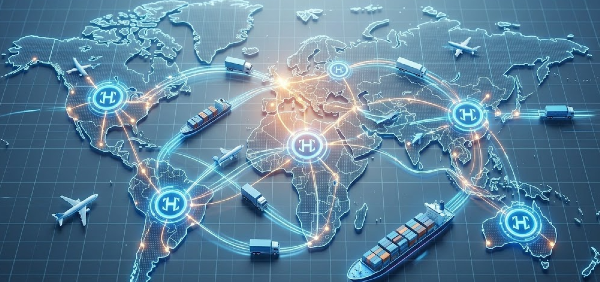
These companies are building advanced logistics networks that use automation, route optimization, local fulfillment centers, and technology-driven delivery solutions to improve speed and reliability.
🤖 Artificial intelligence and automation are transforming delivery operations
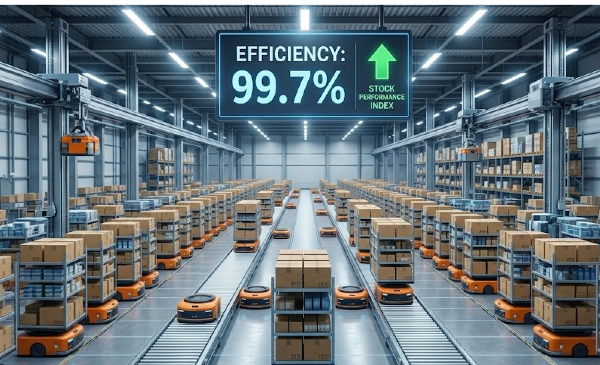
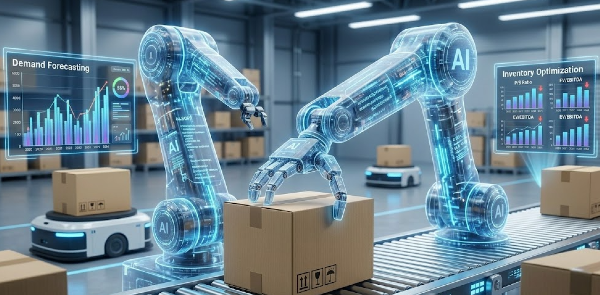
AI-powered routing, predictive inventory placement, and automated fulfillment systems help retailers reduce delivery times while improving operational efficiency.
🏆 Strong last-mile capabilities can support long-term stock performance
Retailers that consistently deliver products faster and more efficiently often enjoy stronger customer loyalty, higher repeat purchase rates, and more durable competitive moats.
Companies Leading Last-Mile Delivery Innovation
The Final Mile Is Often the Hardest One
Selling a product online sounds simple.
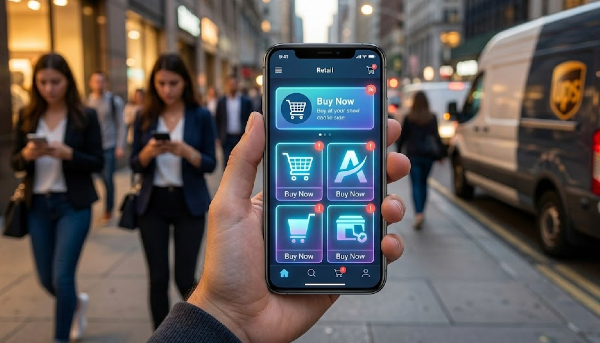
A customer clicks a button. A warehouse ships an item. A package arrives at the front door.
The reality is much more complicated.
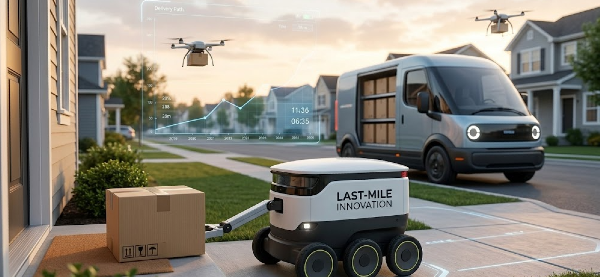
The final leg of the journey, known as last-mile delivery, is often the most expensive, time-consuming, and operationally challenging part of the entire e-commerce process.
A package may travel hundreds of miles efficiently through large transportation networks. Yet the final few miles to the customer can create the biggest logistical headaches.
Traffic, weather, delivery density, customer availability, and geographic obstacles all affect performance.
Because of this, last-mile delivery has become one of the most important areas of innovation in modern retail.
For investors, the companies leading these innovations may be building competitive advantages that extend well beyond faster shipping.
Why Last-Mile Delivery Matters So Much
Consumers have become increasingly impatient.
Two-day shipping once felt revolutionary.
Today, same-day delivery is becoming common in many markets.
Meeting these expectations requires retailers to rethink how products move through their networks.
The challenge is significant because last-mile delivery typically represents a large percentage of total shipping costs.
Improving efficiency in this stage can create meaningful financial benefits.
Faster deliveries also improve customer satisfaction.
Happy customers tend to return more often, spend more money, and recommend services to others.
This makes last-mile innovation both an operational priority and a growth strategy.
Amazon Continues Raising the Bar
No company has done more to reshape delivery expectations than Amazon.
Over the past two decades, the company has invested billions of dollars into fulfillment centers, delivery stations, transportation assets, and technology systems.
Its goal has been straightforward.
Reduce the distance between products and customers.
Amazon now operates an enormous network of local facilities designed to position inventory closer to consumers before orders are placed.
This strategy shortens delivery times and improves reliability.
The company also uses sophisticated algorithms to optimize routes, forecast demand, and manage capacity.
Every improvement helps strengthen the customer experience.
For competitors, matching Amazon's delivery capabilities remains a major challenge.
JD.com Built Delivery Into Its Brand
JD.com took a unique approach in China.
While many competitors relied heavily on third-party logistics providers, JD.com invested directly in its own delivery infrastructure.
The company built warehouses, sorting facilities, and delivery operations across the country.
This gave JD.com greater control over service quality.
Customers began associating the brand with reliability and fast delivery.
That reputation became a valuable competitive asset.
Owning more of the logistics process also allowed JD.com to experiment with advanced delivery technologies and operational improvements.
The company's commitment to logistics transformed delivery from a cost center into a strategic advantage.
MercadoLibre Is Solving Unique Regional Challenges
Latin America presents logistical obstacles that differ from many developed markets.
Infrastructure quality varies significantly.
Population centers can be spread across large geographic areas.
Traditional delivery networks are often less mature.
MercadoLibre responded by investing aggressively in logistics.
The company expanded fulfillment operations, improved shipping capabilities, and developed delivery partnerships tailored to local conditions.
These investments helped reduce delivery times and improve customer confidence in online shopping.
As e-commerce adoption continues growing throughout the region, logistics excellence may become one of MercadoLibre's strongest competitive advantages.
| Company |
Last-Mile Strategy |
| Amazon |
Local fulfillment network |
| JD.com |
Vertically integrated logistics |
| MercadoLibre |
Regional infrastructure expansion |
| Alibaba |
Technology-enabled partnerships |
| Walmart |
Omnichannel delivery model |
Each company follows a different path, but all recognize the importance of delivery innovation.
Alibaba Uses Technology to Coordinate Massive Networks
Alibaba's approach differs from companies that directly own large delivery fleets.
Through Cainiao, Alibaba created a logistics platform that connects merchants, warehouses, and delivery providers.
Rather than controlling every asset, the company focuses on coordination.
Technology sits at the center of the strategy.
Data sharing improves visibility across the network.
Algorithms optimize routing and inventory positioning.
This model allows Alibaba to scale efficiently while maintaining flexibility.
The company's success demonstrates that logistics leadership can come from orchestration as well as ownership.
Sometimes connecting networks effectively can be just as powerful as building them.
Walmart Is Turning Stores Into Delivery Assets
Walmart entered the e-commerce race with a unique advantage.
Unlike many internet retailers, the company already operated thousands of physical locations.
Instead of viewing stores as separate from e-commerce operations, Walmart increasingly uses them as fulfillment hubs.
Products can be shipped directly from nearby stores.
Customers can choose curbside pickup.
Inventory can be positioned closer to local demand.
This approach helps shorten delivery distances and improve speed.
The strategy highlights how physical retail infrastructure can support digital commerce when integrated effectively.
For investors, Walmart's model shows that traditional retail assets can become valuable logistics tools.
Artificial Intelligence Is Optimizing Every Mile
Modern delivery networks generate enormous amounts of data.
Traffic patterns, weather forecasts, delivery volumes, and customer locations all influence performance.
Artificial intelligence helps make sense of this information.
AI-powered systems optimize routes, predict delivery demand, and improve resource allocation.
Drivers spend less time on the road.
Fuel consumption declines.
Packages arrive more efficiently.
These benefits add up quickly when applied across millions of deliveries.
One fascinating development is that some routing systems can recalculate delivery schedules in real time as traffic conditions change, helping drivers avoid delays before they occur.
Micro-Fulfillment Centers Are Moving Closer to Customers
One of the biggest trends in logistics is the rise of micro-fulfillment centers.
These smaller facilities are located near population centers rather than in distant industrial areas.
The goal is simple.
Store products closer to customers.
Shorter distances often mean faster deliveries.
They can also reduce transportation costs and support same-day service offerings.
Retailers increasingly view local inventory placement as a competitive weapon.
The closer products are to consumers, the faster they can arrive after an order is placed.
This trend is reshaping how logistics networks are designed.
| Innovation Area |
Potential Benefit |
| AI Route Optimization |
Lower delivery costs |
| Micro-Fulfillment Centers |
Faster delivery times |
| Automated Sorting |
Higher throughput |
| Predictive Inventory Placement |
Improved efficiency |
| Real-Time Tracking |
Better customer experience |
Many delivery innovations focus on eliminating wasted time and distance.
Delivery Innovation Is Becoming a Margin Story
Most discussions about delivery focus on speed.
Profitability is equally important.
Every minute saved during a delivery route can reduce operating costs.
Every improvement in efficiency can support stronger margins.
Retailers that master last-mile delivery often gain advantages on multiple fronts.
They can improve customer satisfaction while simultaneously lowering costs.
That combination is particularly attractive to investors.
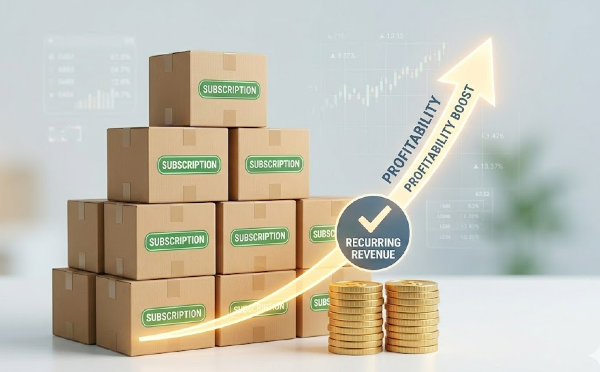
Strong delivery performance can support revenue growth and profitability at the same time.
Few operational improvements offer such a powerful combination.
The Future Might Arrive Faster Than Expected
Last-mile delivery continues evolving rapidly.
Artificial intelligence, automation, predictive analytics, and local fulfillment strategies are transforming how products reach customers.
Companies such as Amazon, JD.com, MercadoLibre, Alibaba, and Walmart are investing heavily because they recognize the stakes.
The final few miles between a warehouse and a customer's doorstep may seem small on a map.
In reality, they represent one of the most important competitive battlegrounds in modern retail.
Another interesting industry trend is that some retailers now position inventory based on purchasing patterns before orders occur, allowing products to begin moving toward customers before a purchase is officially completed.
For investors, last-mile innovation is about much more than shipping.
It is about efficiency, customer loyalty, competitive positioning, and long-term growth.
The companies that solve the final mile most effectively may ultimately travel the farthest in the stock market.
🚀 Expand Your Edge: Elite Internet Retail & E-Commerce Intelligence
Ready to capitalize on the future of digital commerce? Our Internet Retail Investor Intelligence Hub is designed to help investors analyze the companies, technologies, and trends reshaping global shopping. From foundational industry research and stock selection to AI, logistics, valuation, and international growth, explore the curated silos below to uncover your next investment opportunity.
🌐 Industry Fundamentals & Market Leaders
📊 Financial Strength & Shareholder Returns
🤖 Technology, AI & Digital Transformation
🚚 Logistics, Fulfillment & Supply Chain Intelligence
🌍 Global Expansion & Market Opportunities
⚠️ Risk Management & Economic Trends
🔍 Competitive Analysis & Advanced Research








Last updated on July 1st 2026 by Noah Brody
🔑 Key Takeaways
🚚 Last-mile delivery has become one of the most important competitive battlegrounds in e-commerce
The final step between a distribution center and a customer's doorstep is often the most expensive and complex part of the delivery process. Companies that improve last-mile efficiency can lower costs, increase customer satisfaction, and strengthen competitive advantages.
📦 Amazon, JD.com, MercadoLibre, Alibaba, and Walmart are investing heavily in delivery innovation
These companies are building advanced logistics networks that use automation, route optimization, local fulfillment centers, and technology-driven delivery solutions to improve speed and reliability.
🤖 Artificial intelligence and automation are transforming delivery operations
AI-powered routing, predictive inventory placement, and automated fulfillment systems help retailers reduce delivery times while improving operational efficiency.
🏆 Strong last-mile capabilities can support long-term stock performance
Retailers that consistently deliver products faster and more efficiently often enjoy stronger customer loyalty, higher repeat purchase rates, and more durable competitive moats.
Companies Leading Last-Mile Delivery Innovation
The Final Mile Is Often the Hardest One
Selling a product online sounds simple.
A customer clicks a button. A warehouse ships an item. A package arrives at the front door.
The reality is much more complicated.
The final leg of the journey, known as last-mile delivery, is often the most expensive, time-consuming, and operationally challenging part of the entire e-commerce process.
A package may travel hundreds of miles efficiently through large transportation networks. Yet the final few miles to the customer can create the biggest logistical headaches.
Traffic, weather, delivery density, customer availability, and geographic obstacles all affect performance.
Because of this, last-mile delivery has become one of the most important areas of innovation in modern retail.
For investors, the companies leading these innovations may be building competitive advantages that extend well beyond faster shipping.
Why Last-Mile Delivery Matters So Much
Consumers have become increasingly impatient.
Two-day shipping once felt revolutionary.
Today, same-day delivery is becoming common in many markets.
Meeting these expectations requires retailers to rethink how products move through their networks.
The challenge is significant because last-mile delivery typically represents a large percentage of total shipping costs.
Improving efficiency in this stage can create meaningful financial benefits.
Faster deliveries also improve customer satisfaction.
Happy customers tend to return more often, spend more money, and recommend services to others.
This makes last-mile innovation both an operational priority and a growth strategy.
Amazon Continues Raising the Bar
No company has done more to reshape delivery expectations than Amazon.
Over the past two decades, the company has invested billions of dollars into fulfillment centers, delivery stations, transportation assets, and technology systems.
Its goal has been straightforward.
Reduce the distance between products and customers.
Amazon now operates an enormous network of local facilities designed to position inventory closer to consumers before orders are placed.
This strategy shortens delivery times and improves reliability.
The company also uses sophisticated algorithms to optimize routes, forecast demand, and manage capacity.
Every improvement helps strengthen the customer experience.
For competitors, matching Amazon's delivery capabilities remains a major challenge.
JD.com Built Delivery Into Its Brand
JD.com took a unique approach in China.
While many competitors relied heavily on third-party logistics providers, JD.com invested directly in its own delivery infrastructure.
The company built warehouses, sorting facilities, and delivery operations across the country.
This gave JD.com greater control over service quality.
Customers began associating the brand with reliability and fast delivery.
That reputation became a valuable competitive asset.
Owning more of the logistics process also allowed JD.com to experiment with advanced delivery technologies and operational improvements.
The company's commitment to logistics transformed delivery from a cost center into a strategic advantage.
MercadoLibre Is Solving Unique Regional Challenges
Latin America presents logistical obstacles that differ from many developed markets.
Infrastructure quality varies significantly.
Population centers can be spread across large geographic areas.
Traditional delivery networks are often less mature.
MercadoLibre responded by investing aggressively in logistics.
The company expanded fulfillment operations, improved shipping capabilities, and developed delivery partnerships tailored to local conditions.
These investments helped reduce delivery times and improve customer confidence in online shopping.
As e-commerce adoption continues growing throughout the region, logistics excellence may become one of MercadoLibre's strongest competitive advantages.
Each company follows a different path, but all recognize the importance of delivery innovation.
Alibaba Uses Technology to Coordinate Massive Networks
Alibaba's approach differs from companies that directly own large delivery fleets.
Through Cainiao, Alibaba created a logistics platform that connects merchants, warehouses, and delivery providers.
Rather than controlling every asset, the company focuses on coordination.
Technology sits at the center of the strategy.
Data sharing improves visibility across the network.
Algorithms optimize routing and inventory positioning.
This model allows Alibaba to scale efficiently while maintaining flexibility.
The company's success demonstrates that logistics leadership can come from orchestration as well as ownership.
Sometimes connecting networks effectively can be just as powerful as building them.
Walmart Is Turning Stores Into Delivery Assets
Walmart entered the e-commerce race with a unique advantage.
Unlike many internet retailers, the company already operated thousands of physical locations.
Instead of viewing stores as separate from e-commerce operations, Walmart increasingly uses them as fulfillment hubs.
Products can be shipped directly from nearby stores.
Customers can choose curbside pickup.
Inventory can be positioned closer to local demand.
This approach helps shorten delivery distances and improve speed.
The strategy highlights how physical retail infrastructure can support digital commerce when integrated effectively.
For investors, Walmart's model shows that traditional retail assets can become valuable logistics tools.
Artificial Intelligence Is Optimizing Every Mile
Modern delivery networks generate enormous amounts of data.
Traffic patterns, weather forecasts, delivery volumes, and customer locations all influence performance.
Artificial intelligence helps make sense of this information.
AI-powered systems optimize routes, predict delivery demand, and improve resource allocation.
Drivers spend less time on the road.
Fuel consumption declines.
Packages arrive more efficiently.
These benefits add up quickly when applied across millions of deliveries.
One fascinating development is that some routing systems can recalculate delivery schedules in real time as traffic conditions change, helping drivers avoid delays before they occur.
Micro-Fulfillment Centers Are Moving Closer to Customers
One of the biggest trends in logistics is the rise of micro-fulfillment centers.
These smaller facilities are located near population centers rather than in distant industrial areas.
The goal is simple.
Store products closer to customers.
Shorter distances often mean faster deliveries.
They can also reduce transportation costs and support same-day service offerings.
Retailers increasingly view local inventory placement as a competitive weapon.
The closer products are to consumers, the faster they can arrive after an order is placed.
This trend is reshaping how logistics networks are designed.
Many delivery innovations focus on eliminating wasted time and distance.
Delivery Innovation Is Becoming a Margin Story
Most discussions about delivery focus on speed.
Profitability is equally important.
Every minute saved during a delivery route can reduce operating costs.
Every improvement in efficiency can support stronger margins.
Retailers that master last-mile delivery often gain advantages on multiple fronts.
They can improve customer satisfaction while simultaneously lowering costs.
That combination is particularly attractive to investors.
Strong delivery performance can support revenue growth and profitability at the same time.
Few operational improvements offer such a powerful combination.
The Future Might Arrive Faster Than Expected
Last-mile delivery continues evolving rapidly.
Artificial intelligence, automation, predictive analytics, and local fulfillment strategies are transforming how products reach customers.
Companies such as Amazon, JD.com, MercadoLibre, Alibaba, and Walmart are investing heavily because they recognize the stakes.
The final few miles between a warehouse and a customer's doorstep may seem small on a map.
In reality, they represent one of the most important competitive battlegrounds in modern retail.
Another interesting industry trend is that some retailers now position inventory based on purchasing patterns before orders occur, allowing products to begin moving toward customers before a purchase is officially completed.
For investors, last-mile innovation is about much more than shipping.
It is about efficiency, customer loyalty, competitive positioning, and long-term growth.
The companies that solve the final mile most effectively may ultimately travel the farthest in the stock market.
🚀 Expand Your Edge: Elite Internet Retail & E-Commerce Intelligence
Ready to capitalize on the future of digital commerce? Our Internet Retail Investor Intelligence Hub is designed to help investors analyze the companies, technologies, and trends reshaping global shopping. From foundational industry research and stock selection to AI, logistics, valuation, and international growth, explore the curated silos below to uncover your next investment opportunity.
🌐 Industry Fundamentals & Market Leaders
📊 Financial Strength & Shareholder Returns
🤖 Technology, AI & Digital Transformation
🚚 Logistics, Fulfillment & Supply Chain Intelligence
🌍 Global Expansion & Market Opportunities
⚠️ Risk Management & Economic Trends
🔍 Competitive Analysis & Advanced Research