Last updated on July 28th 2026 by Noah Brody
💳 Consumer spending is the main driver of leisure stock performance
Leisure companies depend on discretionary spending, making consumer income, confidence, and financial health key factors for investors to monitor.
📈 Consumer confidence and employment trends influence leisure demand
Strong job markets and positive consumer sentiment encourage spending on travel, entertainment, hospitality, and recreational experiences.
🌎 Global wealth growth creates long-term leisure opportunities
Expanding middle classes in emerging markets are increasing demand for hotels, travel platforms, cruises, and other leisure experiences.
🔍 Investors can use spending trends to identify market opportunities
Tracking wages, credit conditions, seasonal patterns, and economic cycles can help investors better evaluate leisure stocks and timing decisions.
How Consumer Spending Affects Leisure Stocks
Why Is Consumer Spending So Important to Leisure Stocks?
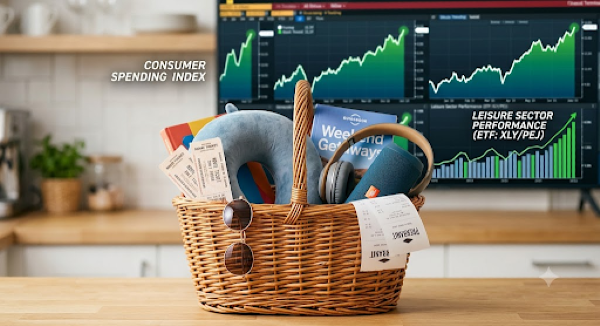
Consumer spending is the engine that drives the entire leisure industry. Because leisure activities are by definition discretionary, the health of leisure companies is intimately linked to how much money consumers have available to spend and how confident they feel about spending it. For investors in leisure stocks, tracking consumer spending trends is not just useful context but an essential input to investment decision-making.
How Does Consumer Spending Drive Leisure Industry Growth?
Consumer spending in developed economies accounts for roughly two-thirds of gross domestic product. When this spending is strong and growing, leisure companies benefit disproportionately because consumers tend to spend their marginal dollars on experiences rather than necessities. This phenomenon, often described as the experiential economy shift, has been well documented by economists and consumer researchers. People increasingly derive more satisfaction from travel, dining, live entertainment, and recreational activities than from purchasing additional material goods.
What Role Does Consumer Confidence Play?
The relationship between consumer confidence and leisure spending is direct and powerful. Consumer confidence indices, such as the Conference Board Consumer Confidence Index in the United States, measure how optimistic or pessimistic households feel about their financial situation and the broader economy. When confidence is high, consumers are more willing to book expensive vacations, upgrade their hotel choices, visit theme parks, and attend concerts. When confidence falls, these same consumers postpone or downgrade their leisure plans, directly impacting company revenues.
Why Does Employment Matter for Leisure Companies?
Employment data is another critical driver. Low unemployment creates dual tailwinds for leisure: more people have income to spend, and those with jobs feel more financially secure. Full employment environments tend to correlate strongly with rising leisure spending. Conversely, rising unemployment is typically a leading indicator of declining leisure demand, often showing up in hotel booking data, airline load factors, and casino revenue months before the broader economic slowdown becomes apparent.
How Does Wage Growth Influence Leisure Spending?
Wage growth matters enormously for the mass-market segment of leisure. Budget hotels, mid-market theme parks, and value-oriented dining chains depend on a broad consumer base with rising real wages. When wage growth outpaces inflation, working-class and middle-class consumers have more purchasing power for leisure activities. When inflation erodes real wages, this broad consumer base pulls back, disproportionately affecting mid-market leisure operators.
How Do Wealth Effects Shape Premium Leisure Demand?
Wealth effects from asset markets also influence leisure spending, particularly for luxury and premium segments. When stock markets and housing prices rise, wealthier consumers feel richer and tend to increase spending on high-end travel, fine dining, and premium experiences. This is why luxury hotel brands, private yacht charter companies, and ultra-premium cruise lines often see strong demand even during mild economic slowdowns, as their wealthy customer base is largely insulated from job market pressures.
How Does Credit Availability Affect Leisure Spending?
Credit availability plays a role in consumer leisure spending as well. Easy access to credit allows consumers to finance vacations and experiences they might not otherwise afford in cash. When credit conditions tighten and interest rates on consumer loans rise, discretionary spending can slow even if headline income numbers remain stable. Investors should monitor consumer credit data, including credit card delinquency rates and revolving credit balances, as leading indicators of leisure spending health.
Why Are Seasonal Spending Patterns Important?
Seasonal patterns in consumer spending create predictable rhythms for leisure businesses. Summer holidays, school breaks, and major cultural events drive predictable surges in demand that leisure companies plan around. Savvy investors use these patterns to anticipate earnings beats or misses and position accordingly. For example, an unusually warm spring can pull forward theme park attendance while a cold, wet summer can depress it.
How Do Global Spending Trends Influence Leisure Stocks?
Global consumer spending trends are increasingly important as leisure companies expand internationally. The rise of the Chinese, Indian, and Southeast Asian middle classes has created hundreds of millions of new potential leisure consumers. Companies that position themselves to capture this spending, through international hotel brands, cruise itineraries in Asian waters, or online travel platforms serving emerging markets, have access to structural growth that transcends the cycles of any single economy.
How Can Investors Use Consumer Spending Trends?
For investors, the practical implication is to monitor consumer spending indicators closely and align leisure stock exposure with the economic cycle. Increasing exposure during downturns when stocks are cheap and consumer spending is recovering, and trimming during peaks when valuations reflect excessive optimism, is a time-tested approach to generating superior returns from leisure investments.
🚀 Expand Your Edge: Elite Leisure Industry Investment Intelligence
The leisure industry spans travel, entertainment, hospitality, gaming, sports, recreation, and experiential businesses that benefit from rising consumer spending and long-term demographic trends. Our Leisure Industry Investor Intelligence Hub brings together comprehensive research covering industry fundamentals, market-leading companies, macroeconomic drivers, financial analysis, emerging technologies, and future growth opportunities. Explore the curated resources below to build a deeper understanding of one of the market's most dynamic sectors.
🌎 Industry Fundamentals & Market Leaders
🎯 Leisure Industry Sectors & Investment Opportunities
📊 Financial Analysis & Portfolio Strategy
🤖 Technology, AI & Industry Innovation
🌍 Economic Trends & Market Drivers
⚠️ Risk Management & Smart Investing















Last updated on July 28th 2026 by Noah Brody
💳 Consumer spending is the main driver of leisure stock performance
Leisure companies depend on discretionary spending, making consumer income, confidence, and financial health key factors for investors to monitor.
📈 Consumer confidence and employment trends influence leisure demand
Strong job markets and positive consumer sentiment encourage spending on travel, entertainment, hospitality, and recreational experiences.
🌎 Global wealth growth creates long-term leisure opportunities
Expanding middle classes in emerging markets are increasing demand for hotels, travel platforms, cruises, and other leisure experiences.
🔍 Investors can use spending trends to identify market opportunities
Tracking wages, credit conditions, seasonal patterns, and economic cycles can help investors better evaluate leisure stocks and timing decisions.
How Consumer Spending Affects Leisure Stocks
Why Is Consumer Spending So Important to Leisure Stocks?
Consumer spending is the engine that drives the entire leisure industry. Because leisure activities are by definition discretionary, the health of leisure companies is intimately linked to how much money consumers have available to spend and how confident they feel about spending it. For investors in leisure stocks, tracking consumer spending trends is not just useful context but an essential input to investment decision-making.
How Does Consumer Spending Drive Leisure Industry Growth?
Consumer spending in developed economies accounts for roughly two-thirds of gross domestic product. When this spending is strong and growing, leisure companies benefit disproportionately because consumers tend to spend their marginal dollars on experiences rather than necessities. This phenomenon, often described as the experiential economy shift, has been well documented by economists and consumer researchers. People increasingly derive more satisfaction from travel, dining, live entertainment, and recreational activities than from purchasing additional material goods.
What Role Does Consumer Confidence Play?
The relationship between consumer confidence and leisure spending is direct and powerful. Consumer confidence indices, such as the Conference Board Consumer Confidence Index in the United States, measure how optimistic or pessimistic households feel about their financial situation and the broader economy. When confidence is high, consumers are more willing to book expensive vacations, upgrade their hotel choices, visit theme parks, and attend concerts. When confidence falls, these same consumers postpone or downgrade their leisure plans, directly impacting company revenues.
Why Does Employment Matter for Leisure Companies?
Employment data is another critical driver. Low unemployment creates dual tailwinds for leisure: more people have income to spend, and those with jobs feel more financially secure. Full employment environments tend to correlate strongly with rising leisure spending. Conversely, rising unemployment is typically a leading indicator of declining leisure demand, often showing up in hotel booking data, airline load factors, and casino revenue months before the broader economic slowdown becomes apparent.
How Does Wage Growth Influence Leisure Spending?
Wage growth matters enormously for the mass-market segment of leisure. Budget hotels, mid-market theme parks, and value-oriented dining chains depend on a broad consumer base with rising real wages. When wage growth outpaces inflation, working-class and middle-class consumers have more purchasing power for leisure activities. When inflation erodes real wages, this broad consumer base pulls back, disproportionately affecting mid-market leisure operators.
How Do Wealth Effects Shape Premium Leisure Demand?
Wealth effects from asset markets also influence leisure spending, particularly for luxury and premium segments. When stock markets and housing prices rise, wealthier consumers feel richer and tend to increase spending on high-end travel, fine dining, and premium experiences. This is why luxury hotel brands, private yacht charter companies, and ultra-premium cruise lines often see strong demand even during mild economic slowdowns, as their wealthy customer base is largely insulated from job market pressures.
How Does Credit Availability Affect Leisure Spending?
Credit availability plays a role in consumer leisure spending as well. Easy access to credit allows consumers to finance vacations and experiences they might not otherwise afford in cash. When credit conditions tighten and interest rates on consumer loans rise, discretionary spending can slow even if headline income numbers remain stable. Investors should monitor consumer credit data, including credit card delinquency rates and revolving credit balances, as leading indicators of leisure spending health.
Why Are Seasonal Spending Patterns Important?
Seasonal patterns in consumer spending create predictable rhythms for leisure businesses. Summer holidays, school breaks, and major cultural events drive predictable surges in demand that leisure companies plan around. Savvy investors use these patterns to anticipate earnings beats or misses and position accordingly. For example, an unusually warm spring can pull forward theme park attendance while a cold, wet summer can depress it.
How Do Global Spending Trends Influence Leisure Stocks?
Global consumer spending trends are increasingly important as leisure companies expand internationally. The rise of the Chinese, Indian, and Southeast Asian middle classes has created hundreds of millions of new potential leisure consumers. Companies that position themselves to capture this spending, through international hotel brands, cruise itineraries in Asian waters, or online travel platforms serving emerging markets, have access to structural growth that transcends the cycles of any single economy.
How Can Investors Use Consumer Spending Trends?
For investors, the practical implication is to monitor consumer spending indicators closely and align leisure stock exposure with the economic cycle. Increasing exposure during downturns when stocks are cheap and consumer spending is recovering, and trimming during peaks when valuations reflect excessive optimism, is a time-tested approach to generating superior returns from leisure investments.
🚀 Expand Your Edge: Elite Leisure Industry Investment Intelligence
The leisure industry spans travel, entertainment, hospitality, gaming, sports, recreation, and experiential businesses that benefit from rising consumer spending and long-term demographic trends. Our Leisure Industry Investor Intelligence Hub brings together comprehensive research covering industry fundamentals, market-leading companies, macroeconomic drivers, financial analysis, emerging technologies, and future growth opportunities. Explore the curated resources below to build a deeper understanding of one of the market's most dynamic sectors.
🌎 Industry Fundamentals & Market Leaders
🎯 Leisure Industry Sectors & Investment Opportunities
📊 Financial Analysis & Portfolio Strategy
🤖 Technology, AI & Industry Innovation
🌍 Economic Trends & Market Drivers
⚠️ Risk Management & Smart Investing