The Digital Shift in Home Products Retail
E-commerce has fundamentally reshaped how consumers discover, evaluate, and purchase furnishings, fixtures, and appliances. Historically, these high-consideration purchases were made exclusively in physical showrooms where consumers could experience products firsthand. The rise of digital retail platforms, augmented reality visualization tools, and direct-to-consumer brands has disrupted traditional retail models, creating both opportunities and threats for established industry players.
Growth of Online Sales in the Sector
Online penetration of furniture and home goods retail has grown from under 10% pre-pandemic to over 25% in major markets. Companies like Wayfair built their entire business model around e-commerce for home goods, demonstrating the viability of selling large, complex products online. Traditional retailers like IKEA have made massive investments in their digital platforms, while incumbent brands like Williams-Sonoma have successfully transitioned to omnichannel models with digital revenue now exceeding physical store revenue.
Technology Enabling Digital Sales
Augmented Reality and 3D Visualization
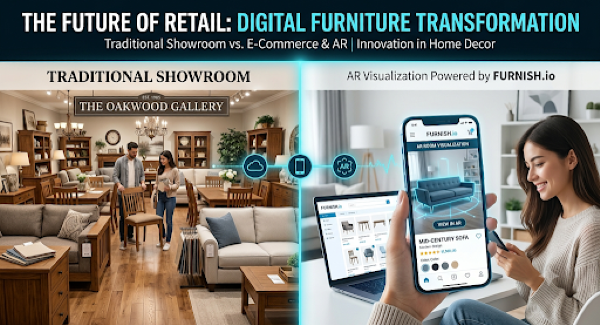
AR tools allow consumers to visualize furniture and fixtures in their own homes before purchasing. IKEA Place app and similar tools from Wayfair have reduced return rates and increased purchase confidence. As smartphone capabilities improve, AR adoption in furniture retail is accelerating, removing a key barrier to online purchases.
Direct-to-Consumer Brands
Digital-native brands like Saatva, Purple, Burrow, and Havenly have disrupted the mattress, furniture, and home design categories by eliminating middlemen and reaching consumers directly. These brands leverage social media, content marketing, and personalized digital experiences to build loyal customer bases at lower customer acquisition costs than traditional retailers.
Threats to Traditional Retailers
Brick-and-mortar retailers face structural headwinds from digital disruption. High fixed costs of physical stores, limited product variety compared to online assortments, and changing consumer preferences toward convenience put traditional retailers at a competitive disadvantage. Companies that have been slow to invest in digital capabilities risk losing significant market share to more agile digital competitors.
Investor Perspective
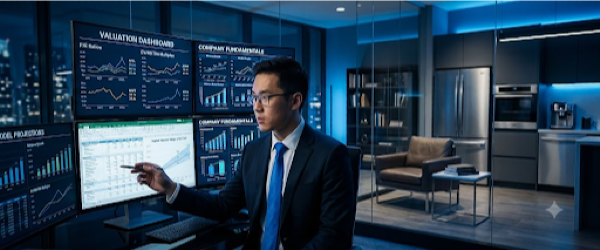
Investors should evaluate companies based on their digital revenue mix, e-commerce growth rates, and technology investment levels. Companies with strong digital platforms, growing direct-to-consumer channels, and innovative use of technology to enhance the buying experience are best positioned to thrive in the evolving retail landscape. E-commerce capability has shifted from a competitive advantage to a competitive necessity.
Conclusion
E-commerce disruption is permanently reshaping the furnishings, fixtures, and appliances sector. Companies that embrace digital transformation and invest in seamless omnichannel experiences will capture disproportionate market share, while those clinging to purely physical models risk irrelevance in an increasingly digital consumer economy.


















The Digital Shift in Home Products Retail
E-commerce has fundamentally reshaped how consumers discover, evaluate, and purchase furnishings, fixtures, and appliances. Historically, these high-consideration purchases were made exclusively in physical showrooms where consumers could experience products firsthand. The rise of digital retail platforms, augmented reality visualization tools, and direct-to-consumer brands has disrupted traditional retail models, creating both opportunities and threats for established industry players.
Growth of Online Sales in the Sector
Online penetration of furniture and home goods retail has grown from under 10% pre-pandemic to over 25% in major markets. Companies like Wayfair built their entire business model around e-commerce for home goods, demonstrating the viability of selling large, complex products online. Traditional retailers like IKEA have made massive investments in their digital platforms, while incumbent brands like Williams-Sonoma have successfully transitioned to omnichannel models with digital revenue now exceeding physical store revenue.
Technology Enabling Digital Sales
Augmented Reality and 3D Visualization
AR tools allow consumers to visualize furniture and fixtures in their own homes before purchasing. IKEA Place app and similar tools from Wayfair have reduced return rates and increased purchase confidence. As smartphone capabilities improve, AR adoption in furniture retail is accelerating, removing a key barrier to online purchases.
Direct-to-Consumer Brands
Digital-native brands like Saatva, Purple, Burrow, and Havenly have disrupted the mattress, furniture, and home design categories by eliminating middlemen and reaching consumers directly. These brands leverage social media, content marketing, and personalized digital experiences to build loyal customer bases at lower customer acquisition costs than traditional retailers.
Threats to Traditional Retailers
Brick-and-mortar retailers face structural headwinds from digital disruption. High fixed costs of physical stores, limited product variety compared to online assortments, and changing consumer preferences toward convenience put traditional retailers at a competitive disadvantage. Companies that have been slow to invest in digital capabilities risk losing significant market share to more agile digital competitors.
Investor Perspective
Investors should evaluate companies based on their digital revenue mix, e-commerce growth rates, and technology investment levels. Companies with strong digital platforms, growing direct-to-consumer channels, and innovative use of technology to enhance the buying experience are best positioned to thrive in the evolving retail landscape. E-commerce capability has shifted from a competitive advantage to a competitive necessity.
Conclusion
E-commerce disruption is permanently reshaping the furnishings, fixtures, and appliances sector. Companies that embrace digital transformation and invest in seamless omnichannel experiences will capture disproportionate market share, while those clinging to purely physical models risk irrelevance in an increasingly digital consumer economy.