Consumer Spending as a Core Driver
Consumer spending trends are among the most powerful forces shaping furnishings, fixtures, and appliances stock performance. Since these products are largely discretionary or semi-discretionary, demand fluctuates significantly based on income levels, economic confidence, and lifestyle preferences. When consumer confidence is high and disposable incomes are rising, spending on home upgrades accelerates. When economic anxiety rises, consumers delay big-ticket purchases, creating earnings headwinds. Shifts toward premium products, sustainable materials, and smart appliances also create long-term secular trends that outperform cyclical swings and reward early investors.
Key Consumer Trends Driving Sector Growth
Premiumization
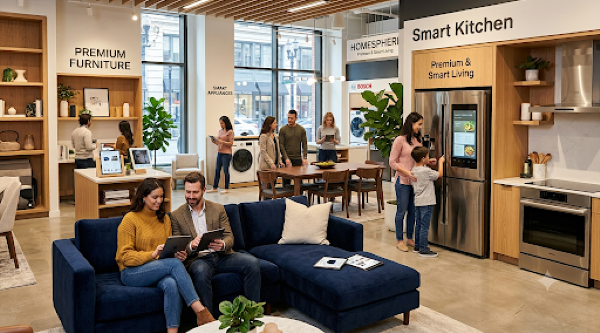
Rising incomes globally are driving a sustained shift toward premium home products. Consumers are increasingly willing to pay more for higher-quality furniture, designer fixtures, and feature-rich appliances. This premiumization trend supports margin expansion and benefits established brands with aspirational positioning.
Home as a Lifestyle Investment
The pandemic-era shift toward spending more time at home accelerated investment in home improvement and interior upgrades. This structural change in how consumers view their living space has created durable demand tailwinds, particularly for premium furniture, smart appliances, and designer fixtures.
Sustainability Preferences
Younger consumers increasingly prefer eco-friendly, sustainably sourced products. Companies that invest in sustainable manufacturing, recycled materials, and energy-efficient technologies are gaining market share with this growing consumer segment, which is willing to pay a premium for responsible products.
Tracking Consumer Indicators
Investors should monitor consumer confidence indices, retail sales data, and credit card spending patterns to gauge demand trends. University of Michigan consumer sentiment and the Conference Board consumer confidence survey are among the best leading indicators. E-commerce platform order data and search trend analysis can also provide early signals of consumer demand shifts.
Conclusion
Consumer spending trends are a key driver of furnishings, fixtures, and appliances stocks. Companies aligned with evolving consumer preferences for premium, sustainable, and technology-integrated home products are best positioned to outperform in this competitive sector.



















Consumer Spending as a Core Driver
Consumer spending trends are among the most powerful forces shaping furnishings, fixtures, and appliances stock performance. Since these products are largely discretionary or semi-discretionary, demand fluctuates significantly based on income levels, economic confidence, and lifestyle preferences. When consumer confidence is high and disposable incomes are rising, spending on home upgrades accelerates. When economic anxiety rises, consumers delay big-ticket purchases, creating earnings headwinds. Shifts toward premium products, sustainable materials, and smart appliances also create long-term secular trends that outperform cyclical swings and reward early investors.
Key Consumer Trends Driving Sector Growth
Premiumization
Rising incomes globally are driving a sustained shift toward premium home products. Consumers are increasingly willing to pay more for higher-quality furniture, designer fixtures, and feature-rich appliances. This premiumization trend supports margin expansion and benefits established brands with aspirational positioning.
Home as a Lifestyle Investment
The pandemic-era shift toward spending more time at home accelerated investment in home improvement and interior upgrades. This structural change in how consumers view their living space has created durable demand tailwinds, particularly for premium furniture, smart appliances, and designer fixtures.
Sustainability Preferences
Younger consumers increasingly prefer eco-friendly, sustainably sourced products. Companies that invest in sustainable manufacturing, recycled materials, and energy-efficient technologies are gaining market share with this growing consumer segment, which is willing to pay a premium for responsible products.
Tracking Consumer Indicators
Investors should monitor consumer confidence indices, retail sales data, and credit card spending patterns to gauge demand trends. University of Michigan consumer sentiment and the Conference Board consumer confidence survey are among the best leading indicators. E-commerce platform order data and search trend analysis can also provide early signals of consumer demand shifts.
Conclusion
Consumer spending trends are a key driver of furnishings, fixtures, and appliances stocks. Companies aligned with evolving consumer preferences for premium, sustainable, and technology-integrated home products are best positioned to outperform in this competitive sector.