Last updated on July 1st 2026 by Noah Brody
🔑 Key Takeaways
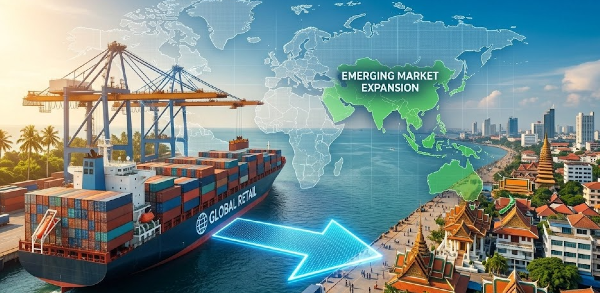
🌎 Emerging markets represent one of the largest growth opportunities for internet retail stocks
Many developing economies still have lower e-commerce penetration than North America and Western Europe. As internet access, smartphone adoption, and digital payments expand, internet retailers gain access to millions of new consumers.
📱 Mobile commerce is accelerating online shopping adoption across developing regions
In many emerging markets, consumers skipped the desktop era entirely and moved directly to smartphones. This mobile-first trend is helping e-commerce platforms scale rapidly.
🚚 Logistics and payment infrastructure remain major competitive advantages
Companies that successfully build delivery networks and digital payment systems often establish strong market positions. Infrastructure investments can create barriers that are difficult for competitors to overcome.
🚀 MercadoLibre, Sea Limited, Alibaba, Amazon, and Jumia are among the key players targeting emerging market growth
These companies are investing heavily in regional logistics, payment ecosystems, and localized services to capture long-term e-commerce growth opportunities.
Internet Retail Stocks Expanding Into Emerging Markets
The Next Billion Online Shoppers
For years, investors focused primarily on e-commerce growth in the United States, Europe, and China.
Those markets remain important.
However, many of the fastest-growing opportunities may now be found elsewhere.
Across Latin America, Southeast Asia, Africa, India, and parts of Eastern Europe, millions of consumers are joining the digital economy for the first time. Smartphones are becoming more affordable. Internet access continues improving. Digital payment systems are gaining adoption.
The result is a powerful shift in consumer behavior.
People who once relied entirely on physical stores are increasingly embracing online shopping.
For internet retail companies, these regions represent more than new customers.
They represent some of the largest remaining growth opportunities in global commerce.
Why Emerging Markets Matter to Investors
Many developed markets already have mature e-commerce industries.
Growth still exists, but it often comes from gaining market share or increasing spending among existing customers.
Emerging markets present a different opportunity.
In many regions, online retail penetration remains significantly lower than in developed economies.
This creates room for expansion.
As digital infrastructure improves, millions of consumers can enter the e-commerce ecosystem over relatively short periods.
For investors, this matters because expanding customer bases often support faster revenue growth.
Companies that establish strong positions early may benefit from years of future expansion.
The opportunity is not just about selling more products.
It is about participating in the digital transformation of entire economies.
Smartphones Are Driving the Growth Story
One of the biggest reasons emerging markets have become attractive is smartphone adoption.
Many consumers in developing regions never owned desktop computers.
Their first internet experience came through a mobile device.
As smartphone prices declined, internet access expanded dramatically.
This created a mobile-first environment where shopping, banking, communication, and entertainment all occur through the same device.
E-commerce platforms adapted accordingly.
Mobile apps became central to growth strategies.
Companies optimized checkout processes, payment systems, and customer experiences specifically for smartphone users. This shift closely mirrors the trends discussed in How Mobile Shopping Trends Affect Internet Retail Stocks.
The result has been rapid adoption across many regions.
| Growth Driver |
Impact on E-Commerce |
| Smartphone Adoption |
Larger customer base |
| Mobile Payments |
Easier transactions |
| Better Internet Access |
Increased engagement |
| Digital Banking |
Financial inclusion |
| Logistics Investment |
Improved delivery reliability |
Together, these trends create fertile ground for internet retail expansion.
MercadoLibre Dominates Latin America's Opportunity
MercadoLibre has become one of the most successful examples of emerging market e-commerce growth.
Operating across Latin America, the company has built a broad ecosystem that includes online marketplaces, digital payments, logistics services, and financial products.
Its strategy goes beyond retail.
MercadoLibre recognized that many regions lacked the infrastructure necessary to support large-scale e-commerce.
Instead of waiting for improvements, the company invested directly in logistics and payment systems.
These investments strengthened customer trust and improved convenience.
As internet adoption and digital commerce continue growing throughout Latin America, MercadoLibre remains well positioned to benefit from the trend.
For many investors, it represents one of the clearest ways to gain exposure to the region's expanding digital economy.
Sea Limited Is Targeting Southeast Asia's Growth
Southeast Asia has become one of the fastest-growing e-commerce markets in the world.
Rising incomes, expanding internet access, and growing smartphone usage are creating favorable conditions for online retail.
Sea Limited's Shopee platform has emerged as a major player throughout the region.
The company focuses heavily on mobile commerce and localized user experiences.
This approach helps address the unique needs of diverse markets across Southeast Asia.
Shopee's growth demonstrates how regional expertise can be a competitive advantage.
Understanding local consumer behavior often proves just as important as technological capability.
As the region's middle class continues expanding, e-commerce activity may have significant room to grow.
Alibaba Continues Looking Beyond China
Alibaba built its reputation in China, but its ambitions extend far beyond its home market.
The company has invested in international marketplaces, logistics capabilities, and cross-border commerce initiatives.
Emerging markets play an important role in this strategy.
Many developing economies are experiencing trends similar to those that fueled China's earlier e-commerce boom.
Rising internet penetration, improving infrastructure, and increasing consumer spending all support growth.
Alibaba's experience scaling massive e-commerce operations provides valuable expertise as it expands internationally.
The company also benefits from a strong logistics network and technology ecosystem that can support cross-border transactions.
Amazon Sees Long-Term Global Potential
Amazon remains heavily focused on developed markets, but the company also recognizes the potential of emerging economies.
India is perhaps the most notable example.
With a large population, growing internet access, and rising digital adoption, India represents one of the most attractive long-term opportunities in global e-commerce.
Amazon has invested heavily in infrastructure, seller networks, and localized services within the country.
Building scale takes time.
However, successful execution could provide access to a vast and growing consumer base.
The company continues evaluating opportunities across other emerging regions as well.
Its financial resources allow it to make long-term investments that smaller competitors may struggle to match.
| Company |
Primary Emerging Market Exposure |
| MercadoLibre |
Latin America |
| Sea Limited |
Southeast Asia |
| Alibaba |
Asia and International Markets |
| Amazon |
India and Global Expansion |
| Jumia |
Africa |
Each company offers investors a different path into emerging market growth.
Jumia Is Building Africa's E-Commerce Future
Africa remains one of the least penetrated e-commerce markets globally.
At the same time, it may represent one of the largest long-term opportunities.
Population growth remains strong.
Internet adoption continues increasing.
Digital payment systems are becoming more common.
Jumia has positioned itself as one of the leading e-commerce platforms across several African markets.
The company faces challenges that differ from those encountered in more developed regions.
Infrastructure limitations, logistics complexity, and payment adoption remain ongoing hurdles.
Yet those same challenges create opportunities.
Companies that solve these problems can establish meaningful competitive advantages.
For patient investors, Africa's long-term digital transformation remains a compelling story.
Logistics Often Determines Success
Selling products online is only part of the equation.
Getting those products to customers efficiently is equally important.
Many emerging markets face logistical challenges that are more complex than those found in developed economies.
Road infrastructure may be inconsistent.
Address systems can be less standardized.
Delivery networks may be fragmented.
Successful retailers often invest heavily in logistics to overcome these barriers.
Warehouses, local fulfillment centers, delivery partnerships, and route optimization systems all play important roles, making last-mile delivery a critical competitive advantage.
Companies that build strong logistics networks frequently gain advantages that competitors struggle to replicate.
One interesting trend is that some e-commerce companies have created entirely new delivery networks because existing infrastructure could not support their growth ambitions.
Digital Payments Are Unlocking New Customers
Many consumers in emerging markets historically lacked access to traditional banking services.
This created challenges for online shopping.
Digital payment solutions are helping change that reality.
Mobile wallets, digital banking platforms, and alternative payment methods are expanding financial inclusion.
As more consumers gain access to digital payments, e-commerce participation becomes easier.
Many internet retailers now operate integrated payment ecosystems alongside their shopping platforms.
These systems help reduce friction while creating additional revenue opportunities.
The combination of retail and financial services can become a powerful growth engine.
Growth Comes With Risks
Emerging markets offer exciting opportunities, but they also present unique risks.
Currency fluctuations can affect financial results.
Regulatory environments may change.
Economic conditions can be volatile.
Competition often remains intense.
Investors should recognize that rapid growth does not guarantee smooth execution.
Companies must navigate infrastructure challenges, cultural differences, and evolving market conditions. Investors should also understand the Biggest Risks Facing Internet Retail Stocks Today when evaluating international expansion opportunities.
The strongest businesses are often those that adapt effectively while maintaining financial discipline.
Balancing opportunity and risk remains an essential part of investing in emerging market e-commerce.
The Biggest E-Commerce Opportunity May Still Be Ahead
The first wave of internet retail growth transformed shopping in developed economies.
The next wave may come from emerging markets.
Millions of consumers are gaining internet access, adopting smartphones, and participating in digital commerce for the first time. Companies that establish strong positions today may benefit from years of future growth.
MercadoLibre, Sea Limited, Alibaba, Amazon, and Jumia each represent different approaches to capturing these opportunities.
Some focus on logistics.
Others emphasize payments.
Many are building complete digital ecosystems.
A fascinating trend is that in several emerging markets, mobile shopping adoption is growing faster than traditional retail infrastructure, allowing e-commerce platforms to reach consumers before large physical store networks are established.
For investors, emerging market expansion is about more than geographic diversification.
It is about participating in one of the largest ongoing shifts in global consumer behavior.
The next billion online shoppers may not come from the markets that powered e-commerce's first chapter.
They may come from the markets writing its next one.
🚀 Expand Your Edge: Elite Internet Retail & E-Commerce Intelligence
Ready to capitalize on the future of digital commerce? Our Internet Retail Investor Intelligence Hub is designed to help investors analyze the companies, technologies, and trends reshaping global shopping. From foundational industry research and stock selection to AI, logistics, valuation, and international growth, explore the curated silos below to uncover your next investment opportunity.
🌐 Industry Fundamentals & Market Leaders
📊 Financial Strength & Shareholder Returns
🤖 Technology, AI & Digital Transformation
🚚 Logistics, Fulfillment & Supply Chain Intelligence
🌍 Global Expansion & Market Opportunities
⚠️ Risk Management & Economic Trends
🔍 Competitive Analysis & Advanced Research


















Last updated on July 1st 2026 by Noah Brody
🔑 Key Takeaways
🌎 Emerging markets represent one of the largest growth opportunities for internet retail stocks
Many developing economies still have lower e-commerce penetration than North America and Western Europe. As internet access, smartphone adoption, and digital payments expand, internet retailers gain access to millions of new consumers.
📱 Mobile commerce is accelerating online shopping adoption across developing regions
In many emerging markets, consumers skipped the desktop era entirely and moved directly to smartphones. This mobile-first trend is helping e-commerce platforms scale rapidly.
🚚 Logistics and payment infrastructure remain major competitive advantages
Companies that successfully build delivery networks and digital payment systems often establish strong market positions. Infrastructure investments can create barriers that are difficult for competitors to overcome.
🚀 MercadoLibre, Sea Limited, Alibaba, Amazon, and Jumia are among the key players targeting emerging market growth
These companies are investing heavily in regional logistics, payment ecosystems, and localized services to capture long-term e-commerce growth opportunities.
Internet Retail Stocks Expanding Into Emerging Markets
The Next Billion Online Shoppers
For years, investors focused primarily on e-commerce growth in the United States, Europe, and China.
Those markets remain important.
However, many of the fastest-growing opportunities may now be found elsewhere.
Across Latin America, Southeast Asia, Africa, India, and parts of Eastern Europe, millions of consumers are joining the digital economy for the first time. Smartphones are becoming more affordable. Internet access continues improving. Digital payment systems are gaining adoption.
The result is a powerful shift in consumer behavior.
People who once relied entirely on physical stores are increasingly embracing online shopping.
For internet retail companies, these regions represent more than new customers.
They represent some of the largest remaining growth opportunities in global commerce.
Why Emerging Markets Matter to Investors
Many developed markets already have mature e-commerce industries.
Growth still exists, but it often comes from gaining market share or increasing spending among existing customers.
Emerging markets present a different opportunity.
In many regions, online retail penetration remains significantly lower than in developed economies.
This creates room for expansion.
As digital infrastructure improves, millions of consumers can enter the e-commerce ecosystem over relatively short periods.
For investors, this matters because expanding customer bases often support faster revenue growth.
Companies that establish strong positions early may benefit from years of future expansion.
The opportunity is not just about selling more products.
It is about participating in the digital transformation of entire economies.
Smartphones Are Driving the Growth Story
One of the biggest reasons emerging markets have become attractive is smartphone adoption.
Many consumers in developing regions never owned desktop computers.
Their first internet experience came through a mobile device.
As smartphone prices declined, internet access expanded dramatically.
This created a mobile-first environment where shopping, banking, communication, and entertainment all occur through the same device.
E-commerce platforms adapted accordingly.
Mobile apps became central to growth strategies.
Companies optimized checkout processes, payment systems, and customer experiences specifically for smartphone users. This shift closely mirrors the trends discussed in How Mobile Shopping Trends Affect Internet Retail Stocks.
The result has been rapid adoption across many regions.
Together, these trends create fertile ground for internet retail expansion.
MercadoLibre Dominates Latin America's Opportunity
MercadoLibre has become one of the most successful examples of emerging market e-commerce growth.
Operating across Latin America, the company has built a broad ecosystem that includes online marketplaces, digital payments, logistics services, and financial products.
Its strategy goes beyond retail.
MercadoLibre recognized that many regions lacked the infrastructure necessary to support large-scale e-commerce.
Instead of waiting for improvements, the company invested directly in logistics and payment systems.
These investments strengthened customer trust and improved convenience.
As internet adoption and digital commerce continue growing throughout Latin America, MercadoLibre remains well positioned to benefit from the trend.
For many investors, it represents one of the clearest ways to gain exposure to the region's expanding digital economy.
Sea Limited Is Targeting Southeast Asia's Growth
Southeast Asia has become one of the fastest-growing e-commerce markets in the world.
Rising incomes, expanding internet access, and growing smartphone usage are creating favorable conditions for online retail.
Sea Limited's Shopee platform has emerged as a major player throughout the region.
The company focuses heavily on mobile commerce and localized user experiences.
This approach helps address the unique needs of diverse markets across Southeast Asia.
Shopee's growth demonstrates how regional expertise can be a competitive advantage.
Understanding local consumer behavior often proves just as important as technological capability.
As the region's middle class continues expanding, e-commerce activity may have significant room to grow.
Alibaba Continues Looking Beyond China
Alibaba built its reputation in China, but its ambitions extend far beyond its home market.
The company has invested in international marketplaces, logistics capabilities, and cross-border commerce initiatives.
Emerging markets play an important role in this strategy.
Many developing economies are experiencing trends similar to those that fueled China's earlier e-commerce boom.
Rising internet penetration, improving infrastructure, and increasing consumer spending all support growth.
Alibaba's experience scaling massive e-commerce operations provides valuable expertise as it expands internationally.
The company also benefits from a strong logistics network and technology ecosystem that can support cross-border transactions.
Amazon Sees Long-Term Global Potential
Amazon remains heavily focused on developed markets, but the company also recognizes the potential of emerging economies.
India is perhaps the most notable example.
With a large population, growing internet access, and rising digital adoption, India represents one of the most attractive long-term opportunities in global e-commerce.
Amazon has invested heavily in infrastructure, seller networks, and localized services within the country.
Building scale takes time.
However, successful execution could provide access to a vast and growing consumer base.
The company continues evaluating opportunities across other emerging regions as well.
Its financial resources allow it to make long-term investments that smaller competitors may struggle to match.
Each company offers investors a different path into emerging market growth.
Jumia Is Building Africa's E-Commerce Future
Africa remains one of the least penetrated e-commerce markets globally.
At the same time, it may represent one of the largest long-term opportunities.
Population growth remains strong.
Internet adoption continues increasing.
Digital payment systems are becoming more common.
Jumia has positioned itself as one of the leading e-commerce platforms across several African markets.
The company faces challenges that differ from those encountered in more developed regions.
Infrastructure limitations, logistics complexity, and payment adoption remain ongoing hurdles.
Yet those same challenges create opportunities.
Companies that solve these problems can establish meaningful competitive advantages.
For patient investors, Africa's long-term digital transformation remains a compelling story.
Logistics Often Determines Success
Selling products online is only part of the equation.
Getting those products to customers efficiently is equally important.
Many emerging markets face logistical challenges that are more complex than those found in developed economies.
Road infrastructure may be inconsistent.
Address systems can be less standardized.
Delivery networks may be fragmented.
Successful retailers often invest heavily in logistics to overcome these barriers.
Warehouses, local fulfillment centers, delivery partnerships, and route optimization systems all play important roles, making last-mile delivery a critical competitive advantage.
Companies that build strong logistics networks frequently gain advantages that competitors struggle to replicate.
One interesting trend is that some e-commerce companies have created entirely new delivery networks because existing infrastructure could not support their growth ambitions.
Digital Payments Are Unlocking New Customers
Many consumers in emerging markets historically lacked access to traditional banking services.
This created challenges for online shopping.
Digital payment solutions are helping change that reality.
Mobile wallets, digital banking platforms, and alternative payment methods are expanding financial inclusion.
As more consumers gain access to digital payments, e-commerce participation becomes easier.
Many internet retailers now operate integrated payment ecosystems alongside their shopping platforms.
These systems help reduce friction while creating additional revenue opportunities.
The combination of retail and financial services can become a powerful growth engine.
Growth Comes With Risks
Emerging markets offer exciting opportunities, but they also present unique risks.
Currency fluctuations can affect financial results.
Regulatory environments may change.
Economic conditions can be volatile.
Competition often remains intense.
Investors should recognize that rapid growth does not guarantee smooth execution.
Companies must navigate infrastructure challenges, cultural differences, and evolving market conditions. Investors should also understand the Biggest Risks Facing Internet Retail Stocks Today when evaluating international expansion opportunities.
The strongest businesses are often those that adapt effectively while maintaining financial discipline.
Balancing opportunity and risk remains an essential part of investing in emerging market e-commerce.
The Biggest E-Commerce Opportunity May Still Be Ahead
The first wave of internet retail growth transformed shopping in developed economies.
The next wave may come from emerging markets.
Millions of consumers are gaining internet access, adopting smartphones, and participating in digital commerce for the first time. Companies that establish strong positions today may benefit from years of future growth.
MercadoLibre, Sea Limited, Alibaba, Amazon, and Jumia each represent different approaches to capturing these opportunities.
Some focus on logistics.
Others emphasize payments.
Many are building complete digital ecosystems.
A fascinating trend is that in several emerging markets, mobile shopping adoption is growing faster than traditional retail infrastructure, allowing e-commerce platforms to reach consumers before large physical store networks are established.
For investors, emerging market expansion is about more than geographic diversification.
It is about participating in one of the largest ongoing shifts in global consumer behavior.
The next billion online shoppers may not come from the markets that powered e-commerce's first chapter.
They may come from the markets writing its next one.
🚀 Expand Your Edge: Elite Internet Retail & E-Commerce Intelligence
Ready to capitalize on the future of digital commerce? Our Internet Retail Investor Intelligence Hub is designed to help investors analyze the companies, technologies, and trends reshaping global shopping. From foundational industry research and stock selection to AI, logistics, valuation, and international growth, explore the curated silos below to uncover your next investment opportunity.
🌐 Industry Fundamentals & Market Leaders
📊 Financial Strength & Shareholder Returns
🤖 Technology, AI & Digital Transformation
🚚 Logistics, Fulfillment & Supply Chain Intelligence
🌍 Global Expansion & Market Opportunities
⚠️ Risk Management & Economic Trends
🔍 Competitive Analysis & Advanced Research