Last updated on July 1st 2026 by Noah Brody
🔑 Key Takeaways
📉 Economic slowdowns often reduce discretionary spending and pressure e-commerce growth
Consumers tend to prioritize necessities during uncertain economic periods. This can lead to slower sales growth for online retailers that depend heavily on discretionary purchases such as electronics, apparel, and home goods.
💰 Profit margins can come under pressure from weaker demand and higher promotional activity
Online retailers frequently use discounts and promotions to stimulate demand during economic downturns. While these strategies may support sales volumes, they can also reduce profitability.
🛒 Defensive e-commerce businesses often perform better during challenging economic periods
Companies that sell essential products, maintain strong balance sheets, and generate healthy cash flow may prove more resilient than retailers focused primarily on discretionary categories.
🌎 Economic slowdowns can create opportunities for well-positioned internet retail stocks
Market disruptions often allow financially strong companies to gain market share, improve operational efficiency, and emerge from downturns with stronger competitive positions.
How Economic Slowdowns Affect Online Retail Companies
When Consumers Tighten Their Wallets, E-Commerce Feels It
Online shopping has changed how people buy almost everything.
Consumers can order groceries, electronics, clothing, furniture, and household items with a few taps on a smartphone. Convenience has made e-commerce a permanent part of modern life.
However, even the most innovative internet retailer cannot escape one basic reality.
People need money to spend.
Economic slowdowns often create uncertainty. Consumers worry about jobs, inflation, interest rates, and personal finances. When those concerns rise, spending habits change.
For investors, understanding how economic slowdowns affect online retail companies is essential because even fast-growing businesses can experience turbulence when consumer confidence weakens.
The internet changed shopping forever, but it did not eliminate the economic cycle.
Why Consumer Spending Slows During Economic Downturns
Economic slowdowns tend to make households more cautious.
Consumers often postpone major purchases and focus more heavily on essential expenses.
A family considering a new television may wait another year. A consumer planning to buy expensive clothing might instead look for discounts. Furniture upgrades may move lower on the priority list.
These decisions can quickly affect online retailers.
E-commerce companies that depend heavily on discretionary purchases often experience slower sales growth during difficult economic periods.
At the same time, retailers selling essential products may hold up better because consumers still need groceries, personal care items, and household necessities.
The distinction between discretionary and essential spending becomes extremely important during economic downturns.
Not All E-Commerce Companies Suffer Equally
The phrase "online retail" covers a wide range of businesses.
Some companies specialize in necessities.
Others focus primarily on discretionary products.
This difference can significantly affect performance during economic slowdowns.
Amazon, for example, sells both discretionary and essential goods. The company's broad product selection provides some diversification.
Meanwhile, specialty retailers focused on luxury goods, premium electronics, or high-end apparel may experience greater pressure.
Consumers often reduce spending on nonessential categories first.
Companies with diversified product offerings and multiple revenue streams generally have greater flexibility during challenging economic periods.
Discretionary Categories Often Feel the Most Pain
Certain product categories tend to be more economically sensitive than others.
Electronics, home furnishings, sporting goods, and luxury products frequently experience weaker demand when consumer confidence declines.
People may still want these products.
They simply become more willing to wait.
This creates challenges for retailers that depend heavily on these categories.
Inventory may build.
Promotions may increase.
Profit margins can come under pressure.
| Product Category |
Downturn Sensitivity |
| Groceries |
Low |
| Household Essentials |
Low |
| Electronics |
High |
| Furniture |
High |
| Luxury Goods |
Very High |
| Apparel |
Moderate |
Understanding product mix can help investors evaluate which internet retailers may prove more resilient during economic slowdowns.
Promotions Often Increase During Weak Economic Conditions
Online retailers do not simply accept weaker demand.
They fight for every customer.
One common response is increased promotional activity.
Discounts, coupons, and free shipping offers become more aggressive.
These strategies can support sales volumes.
Unfortunately, they can also reduce profitability.
A company may continue generating revenue growth while seeing margins shrink because of higher promotional expenses.
This creates difficult trade-offs.
Management teams must balance short-term sales performance against long-term profitability.
Investors should pay close attention to whether companies can maintain pricing discipline during challenging environments.
Customer Behavior Changes in Unexpected Ways
Economic slowdowns do more than reduce spending.
They also alter buying behavior.
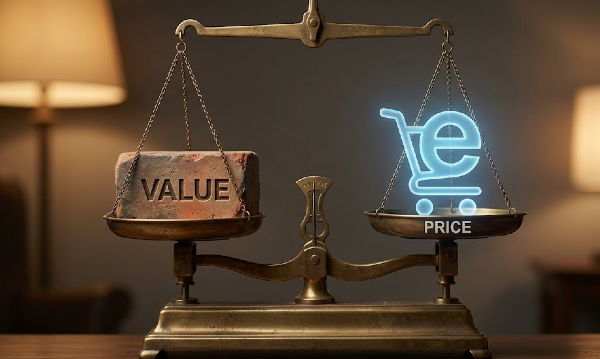
Consumers become more value conscious.
Price comparisons become more frequent.
Private-label products gain popularity.
Loyalty programs become increasingly important.
Many shoppers actively search for bargains and delay purchases until discounts become available.
This environment often favors companies with strong value propositions and efficient operations.
Retailers that can deliver low prices without severely damaging profitability may gain market share during difficult periods.
One interesting industry trend is that consumers often increase online price comparisons during economic uncertainty, making transparency and competitive pricing more important than ever.
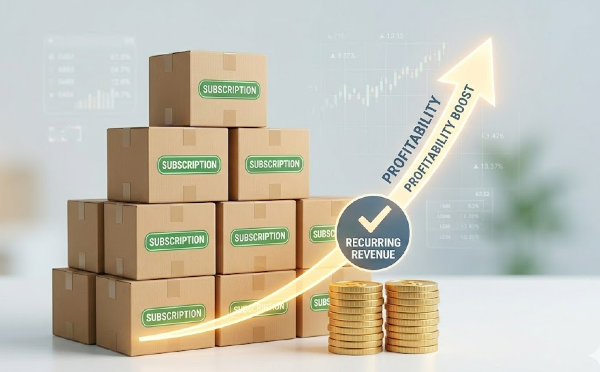
Some internet retailers have built subscription ecosystems that generate recurring revenue.
Examples include Amazon Prime and Walmart+.
These programs can help create stability during economic slowdowns.
Subscribers often remain engaged because they perceive value in delivery benefits, entertainment offerings, and member discounts.
Recurring revenue streams can also improve financial visibility.
Even if product purchases weaken temporarily, subscription income may provide a degree of resilience.
Companies with diversified business models generally have more tools available to navigate difficult environments.
This can be an important advantage during periods of economic uncertainty.
Logistics Costs Do Not Automatically Decline
Many investors assume costs fall when demand slows.
That is not always true.
Large logistics infrastructures often carry significant fixed costs.
Warehouses still require maintenance.
Delivery networks still operate.
Technology investments continue.
If sales volumes decline while expenses remain relatively stable, profit margins can compress.
This operating leverage works in both directions.
It can amplify profits during periods of strong growth.
It can also amplify challenges during weaker demand environments.
| Fixed Cost Area |
Impact During Slowdowns |
| Fulfillment Centers |
Margin pressure |
| Delivery Networks |
Lower utilization |
| Technology Systems |
Continued expenses |
| Customer Service Operations |
Ongoing costs |
| Marketing Commitments |
Reduced efficiency |
Scale remains valuable, but large infrastructures also require substantial investment.
Strong Balance Sheets Become More Important
Economic slowdowns often separate strong businesses from weaker ones.
Companies with healthy balance sheets typically have more flexibility.
They can continue investing in technology.
They can improve logistics networks.
They can pursue strategic acquisitions.
Businesses carrying heavy debt loads may face tougher decisions.
They may need to reduce spending, delay investments, or focus heavily on cost controls.
Financial strength often becomes a competitive advantage during difficult periods.
Some of today's largest companies expanded their market positions during previous downturns because they possessed the resources to invest while competitors struggled.
Economic weakness can sometimes create opportunities for industry leaders.
Emerging Markets Can Experience Different Cycles
Not every region slows simultaneously.
Economic conditions vary around the world.
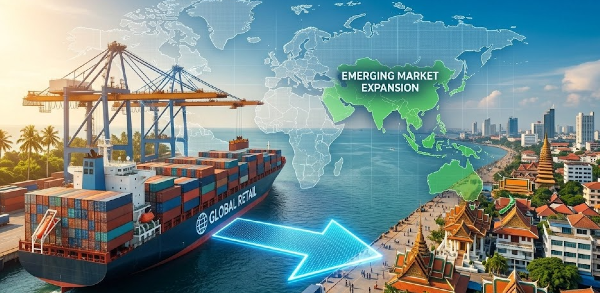
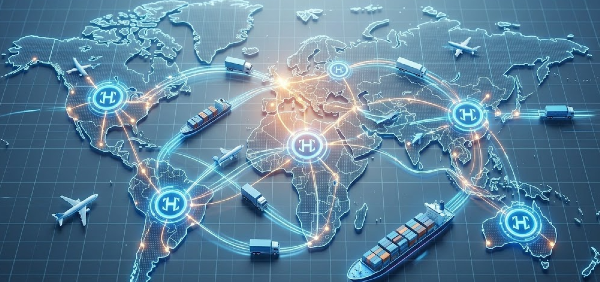
An online retailer with international operations may benefit from geographic diversification.
Weakness in one market can sometimes be offset by strength elsewhere.
Companies such as Amazon, Alibaba, MercadoLibre, and Sea Limited operate across multiple regions and customer bases.
This diversification may provide greater resilience than businesses concentrated in a single market.
Global exposure does not eliminate risk.
However, it can reduce dependence on the economic conditions of any one country.
Diversification remains one of the most valuable tools available to large international retailers.
The Best Companies Often Emerge Stronger
Economic slowdowns are challenging.
They can pressure revenue growth, compress margins, and change consumer behavior.
Yet they can also reveal which companies possess durable competitive advantages.
Strong brands often retain customer loyalty.
Efficient operators may gain market share.
Financially healthy businesses can continue investing while weaker competitors pull back.
A fascinating pattern in retail history is that several major e-commerce companies accelerated market share gains during difficult economic periods because consumers became more focused on convenience and value.
Economic slowdowns create stress, but they can also create opportunities.
For investors, the key is identifying companies that have the balance sheets, operational efficiency, and strategic flexibility to navigate uncertainty successfully.
Online retail will continue evolving through both good times and bad.
The companies that manage economic slowdowns effectively may ultimately become the industry's long-term winners.
🚀 Expand Your Edge: Elite Internet Retail & E-Commerce Intelligence
Ready to capitalize on the future of digital commerce? Our Internet Retail Investor Intelligence Hub is designed to help investors analyze the companies, technologies, and trends reshaping global shopping. From foundational industry research and stock selection to AI, logistics, valuation, and international growth, explore the curated silos below to uncover your next investment opportunity.
🌐 Industry Fundamentals & Market Leaders
📊 Financial Strength & Shareholder Returns
🤖 Technology, AI & Digital Transformation
🚚 Logistics, Fulfillment & Supply Chain Intelligence
🌍 Global Expansion & Market Opportunities
⚠️ Risk Management & Economic Trends
🔍 Competitive Analysis & Advanced Research









Last updated on July 1st 2026 by Noah Brody
🔑 Key Takeaways
📉 Economic slowdowns often reduce discretionary spending and pressure e-commerce growth
Consumers tend to prioritize necessities during uncertain economic periods. This can lead to slower sales growth for online retailers that depend heavily on discretionary purchases such as electronics, apparel, and home goods.
💰 Profit margins can come under pressure from weaker demand and higher promotional activity
Online retailers frequently use discounts and promotions to stimulate demand during economic downturns. While these strategies may support sales volumes, they can also reduce profitability.
🛒 Defensive e-commerce businesses often perform better during challenging economic periods
Companies that sell essential products, maintain strong balance sheets, and generate healthy cash flow may prove more resilient than retailers focused primarily on discretionary categories.
🌎 Economic slowdowns can create opportunities for well-positioned internet retail stocks
Market disruptions often allow financially strong companies to gain market share, improve operational efficiency, and emerge from downturns with stronger competitive positions.
How Economic Slowdowns Affect Online Retail Companies
When Consumers Tighten Their Wallets, E-Commerce Feels It
Online shopping has changed how people buy almost everything.
Consumers can order groceries, electronics, clothing, furniture, and household items with a few taps on a smartphone. Convenience has made e-commerce a permanent part of modern life.
However, even the most innovative internet retailer cannot escape one basic reality.
People need money to spend.
Economic slowdowns often create uncertainty. Consumers worry about jobs, inflation, interest rates, and personal finances. When those concerns rise, spending habits change.
For investors, understanding how economic slowdowns affect online retail companies is essential because even fast-growing businesses can experience turbulence when consumer confidence weakens.
The internet changed shopping forever, but it did not eliminate the economic cycle.
Why Consumer Spending Slows During Economic Downturns
Economic slowdowns tend to make households more cautious.
Consumers often postpone major purchases and focus more heavily on essential expenses.
A family considering a new television may wait another year. A consumer planning to buy expensive clothing might instead look for discounts. Furniture upgrades may move lower on the priority list.
These decisions can quickly affect online retailers.
E-commerce companies that depend heavily on discretionary purchases often experience slower sales growth during difficult economic periods.
At the same time, retailers selling essential products may hold up better because consumers still need groceries, personal care items, and household necessities.
The distinction between discretionary and essential spending becomes extremely important during economic downturns.
Not All E-Commerce Companies Suffer Equally
The phrase "online retail" covers a wide range of businesses.
Some companies specialize in necessities.
Others focus primarily on discretionary products.
This difference can significantly affect performance during economic slowdowns.
Amazon, for example, sells both discretionary and essential goods. The company's broad product selection provides some diversification.
Meanwhile, specialty retailers focused on luxury goods, premium electronics, or high-end apparel may experience greater pressure.
Consumers often reduce spending on nonessential categories first.
Companies with diversified product offerings and multiple revenue streams generally have greater flexibility during challenging economic periods.
Discretionary Categories Often Feel the Most Pain
Certain product categories tend to be more economically sensitive than others.
Electronics, home furnishings, sporting goods, and luxury products frequently experience weaker demand when consumer confidence declines.
People may still want these products.
They simply become more willing to wait.
This creates challenges for retailers that depend heavily on these categories.
Inventory may build.
Promotions may increase.
Profit margins can come under pressure.
Understanding product mix can help investors evaluate which internet retailers may prove more resilient during economic slowdowns.
Promotions Often Increase During Weak Economic Conditions
Online retailers do not simply accept weaker demand.
They fight for every customer.
One common response is increased promotional activity.
Discounts, coupons, and free shipping offers become more aggressive.
These strategies can support sales volumes.
Unfortunately, they can also reduce profitability.
A company may continue generating revenue growth while seeing margins shrink because of higher promotional expenses.
This creates difficult trade-offs.
Management teams must balance short-term sales performance against long-term profitability.
Investors should pay close attention to whether companies can maintain pricing discipline during challenging environments.
Customer Behavior Changes in Unexpected Ways
Economic slowdowns do more than reduce spending.
They also alter buying behavior.
Consumers become more value conscious.
Price comparisons become more frequent.
Private-label products gain popularity.
Loyalty programs become increasingly important.
Many shoppers actively search for bargains and delay purchases until discounts become available.
This environment often favors companies with strong value propositions and efficient operations.
Retailers that can deliver low prices without severely damaging profitability may gain market share during difficult periods.
One interesting industry trend is that consumers often increase online price comparisons during economic uncertainty, making transparency and competitive pricing more important than ever.
Subscription Programs Can Provide Stability
Some internet retailers have built subscription ecosystems that generate recurring revenue.
Examples include Amazon Prime and Walmart+.
These programs can help create stability during economic slowdowns.
Subscribers often remain engaged because they perceive value in delivery benefits, entertainment offerings, and member discounts.
Recurring revenue streams can also improve financial visibility.
Even if product purchases weaken temporarily, subscription income may provide a degree of resilience.
Companies with diversified business models generally have more tools available to navigate difficult environments.
This can be an important advantage during periods of economic uncertainty.
Logistics Costs Do Not Automatically Decline
Many investors assume costs fall when demand slows.
That is not always true.
Large logistics infrastructures often carry significant fixed costs.
Warehouses still require maintenance.
Delivery networks still operate.
Technology investments continue.
If sales volumes decline while expenses remain relatively stable, profit margins can compress.
This operating leverage works in both directions.
It can amplify profits during periods of strong growth.
It can also amplify challenges during weaker demand environments.
Scale remains valuable, but large infrastructures also require substantial investment.
Strong Balance Sheets Become More Important
Economic slowdowns often separate strong businesses from weaker ones.
Companies with healthy balance sheets typically have more flexibility.
They can continue investing in technology.
They can improve logistics networks.
They can pursue strategic acquisitions.
Businesses carrying heavy debt loads may face tougher decisions.
They may need to reduce spending, delay investments, or focus heavily on cost controls.
Financial strength often becomes a competitive advantage during difficult periods.
Some of today's largest companies expanded their market positions during previous downturns because they possessed the resources to invest while competitors struggled.
Economic weakness can sometimes create opportunities for industry leaders.
Emerging Markets Can Experience Different Cycles
Not every region slows simultaneously.
Economic conditions vary around the world.
An online retailer with international operations may benefit from geographic diversification.
Weakness in one market can sometimes be offset by strength elsewhere.
Companies such as Amazon, Alibaba, MercadoLibre, and Sea Limited operate across multiple regions and customer bases.
This diversification may provide greater resilience than businesses concentrated in a single market.
Global exposure does not eliminate risk.
However, it can reduce dependence on the economic conditions of any one country.
Diversification remains one of the most valuable tools available to large international retailers.
The Best Companies Often Emerge Stronger
Economic slowdowns are challenging.
They can pressure revenue growth, compress margins, and change consumer behavior.
Yet they can also reveal which companies possess durable competitive advantages.
Strong brands often retain customer loyalty.
Efficient operators may gain market share.
Financially healthy businesses can continue investing while weaker competitors pull back.
A fascinating pattern in retail history is that several major e-commerce companies accelerated market share gains during difficult economic periods because consumers became more focused on convenience and value.
Economic slowdowns create stress, but they can also create opportunities.
For investors, the key is identifying companies that have the balance sheets, operational efficiency, and strategic flexibility to navigate uncertainty successfully.
Online retail will continue evolving through both good times and bad.
The companies that manage economic slowdowns effectively may ultimately become the industry's long-term winners.
🚀 Expand Your Edge: Elite Internet Retail & E-Commerce Intelligence
Ready to capitalize on the future of digital commerce? Our Internet Retail Investor Intelligence Hub is designed to help investors analyze the companies, technologies, and trends reshaping global shopping. From foundational industry research and stock selection to AI, logistics, valuation, and international growth, explore the curated silos below to uncover your next investment opportunity.
🌐 Industry Fundamentals & Market Leaders
📊 Financial Strength & Shareholder Returns
🤖 Technology, AI & Digital Transformation
🚚 Logistics, Fulfillment & Supply Chain Intelligence
🌍 Global Expansion & Market Opportunities
⚠️ Risk Management & Economic Trends
🔍 Competitive Analysis & Advanced Research