Last updated on July 1st 2026 by Noah Brody
🔑 Key Takeaways
🌎 International expansion has become one of the biggest growth drivers for leading e-commerce companies
Many online retailers have reached significant scale in their home markets and are now looking abroad for new customers. Expanding internationally can unlock larger addressable markets and create additional revenue streams.
🚀 Companies like Amazon, Alibaba, MercadoLibre, Sea Limited, and Shopify are benefiting from global e-commerce adoption
These businesses have built platforms, logistics networks, and digital ecosystems that allow them to serve customers across multiple countries and regions.
📦 Logistics, payments, and localization often determine international success
Winning in foreign markets requires more than translating a website. Successful companies adapt to local consumer behavior, payment preferences, regulations, and delivery expectations.
🏆 International growth can strengthen long-term stock performance
Companies with successful global expansion strategies often gain access to faster-growing markets, larger customer bases, and more diversified revenue streams.
Global E-Commerce Leaders With Strong International Growth
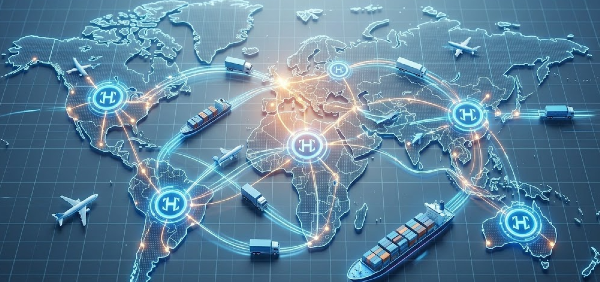
The World Is Becoming One Giant Marketplace
A customer in Brazil can buy products from China.
A shopper in Germany can purchase from a seller in the United States.
A small business in Vietnam can reach buyers across multiple continents.
That level of connectivity would have seemed remarkable just a few decades ago.
Today, it is a normal part of e-commerce.
The internet has dramatically reduced geographic barriers, allowing retailers to serve customers far beyond their home markets. As a result, many of the world's largest e-commerce companies are pursuing international growth as their next major opportunity.
For investors, this trend is important because global expansion often provides access to larger customer populations, faster-growing economies, and new revenue streams.
Companies that successfully scale internationally may find growth opportunities long after their domestic markets mature.
Why International Growth Matters
Every company eventually faces a challenge.
Growth in its home market begins to slow.
Customer acquisition becomes more expensive.
Competition intensifies.
At that point, expanding internationally becomes increasingly attractive.
New markets offer access to additional consumers, different spending patterns, and untapped opportunities.
The potential scale can be enormous.
Instead of serving one country, businesses can pursue customers across dozens of regions.
For investors, international expansion can help extend a company's growth runway.
A larger addressable market often supports stronger long-term revenue growth and greater business resilience.
The world's population exceeds eight billion people.
Most retailers currently serve only a fraction of that opportunity.
Amazon Built a Global Retail Empire
Amazon may be the most recognizable example of successful international expansion.
The company began as a U.S.-focused online bookstore.
Today, it operates e-commerce platforms across numerous countries and regions.
Its strategy combines logistics infrastructure, local marketplaces, and technology investments.
Amazon often spends years building fulfillment networks before achieving meaningful scale.
That patience can create advantages.
Strong logistics capabilities improve delivery speed and customer satisfaction, helping Amazon compete effectively against local rivals.
International expansion is not always easy.
Different regulations, consumer preferences, and competitive landscapes require careful adaptation.
Yet Amazon's global footprint demonstrates how international growth can transform a company over time.
Alibaba Uses Cross-Border Commerce as a Growth Engine
Alibaba's influence extends far beyond China.
The company operates several platforms that connect buyers and sellers across international markets.
Cross-border commerce has become a major growth driver.
Merchants can reach customers in regions they previously could not access.
Consumers gain exposure to broader product selections and competitive pricing.
Alibaba benefits by facilitating these transactions while expanding its ecosystem.
The company's logistics partnerships and digital infrastructure help support international trade flows.
As global e-commerce continues growing, cross-border commerce remains an important opportunity.
Few companies are better positioned to benefit from that trend.
MercadoLibre Dominates a Growing Region
Latin America has become one of the most exciting e-commerce growth stories in the world.
Internet adoption continues rising.
Digital payments are becoming more common.
Online shopping behavior is expanding rapidly.
MercadoLibre has built a strong position throughout the region.
Its platform combines e-commerce, logistics, digital payments, and financial services into a single ecosystem.
This integrated approach creates advantages.
Customers can shop, pay, and receive products within the same network.
The company also benefits from growing economic digitization across multiple countries.
For investors seeking international growth exposure, MercadoLibre remains one of the most closely watched names.
| Company |
Key International Markets |
| Amazon |
North America, Europe, Asia |
| Alibaba |
Asia, Europe, Global Trade |
| MercadoLibre |
Latin America |
| Sea Limited |
Southeast Asia |
| Shopify |
Global Merchant Base |
Each company pursues international growth differently, but all recognize its importance.
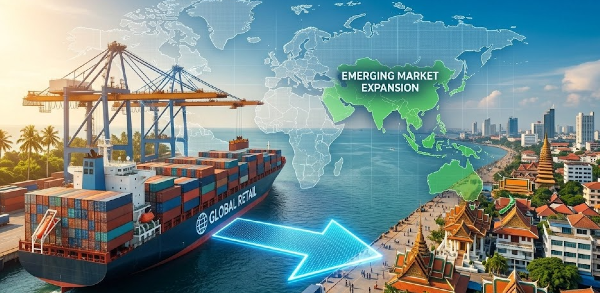
Sea Limited Is Riding Southeast Asia's Digital Boom
Southeast Asia has become one of the fastest-growing digital economies on the planet.
A young population, increasing smartphone adoption, and expanding internet access have fueled rapid e-commerce growth.
Sea Limited's Shopee platform has emerged as a major beneficiary.
The company focuses heavily on localization.
Different countries often have different payment preferences, shopping habits, and cultural expectations.
Shopee tailors its platform to meet those needs.
This localized approach has helped drive adoption across multiple markets.
As consumer spending continues rising throughout Southeast Asia, the company may benefit from favorable long-term trends.
Shopify Is Expanding Through Merchants
Unlike traditional online retailers, Shopify takes a different path to international growth.
The company provides tools that allow merchants to create and operate online stores.
As merchants expand globally, Shopify benefits.
This creates a highly scalable business model.
Rather than entering every market directly, Shopify empowers businesses worldwide to participate in e-commerce.
The platform supports multiple currencies, international shipping options, and localized experiences.
As entrepreneurship grows around the world, Shopify's ecosystem continues expanding alongside it.
Its international growth comes not from selling products itself but from helping others do so.
Localization Often Determines Winners and Losers
One of the biggest mistakes companies make is assuming success in one market guarantees success elsewhere.
Consumers behave differently around the world.
Payment methods vary.
Delivery expectations differ.
Marketing strategies that work in one country may fail in another.
Successful international retailers invest heavily in localization.
They adapt websites, customer service, product offerings, and payment systems to local preferences.
This requires time and resources.
However, companies that execute effectively often gain stronger customer trust and higher engagement.
Global scale matters.
Local relevance matters even more.
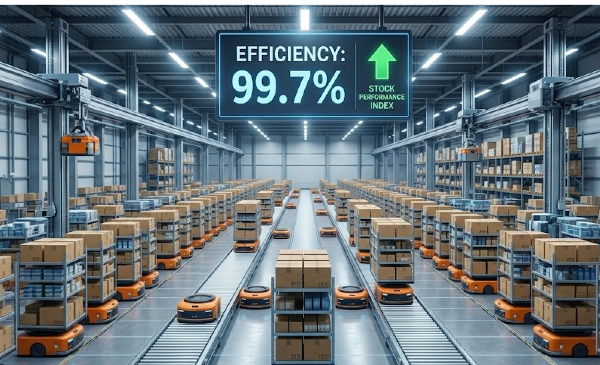
Logistics Networks Support Global Expansion
International growth is difficult without reliable logistics.
Customers expect products to arrive quickly and safely regardless of where they live.
Meeting those expectations requires significant infrastructure.
Warehouses, fulfillment centers, transportation partnerships, and delivery systems all play important roles, including efficient last-mile delivery.
Many leading e-commerce companies invest heavily in logistics because they recognize its strategic value.
Strong networks improve customer satisfaction while creating barriers for competitors.
| Logistics Advantage |
Business Impact |
| Faster Delivery |
Better customer experience |
| Lower Shipping Costs |
Higher margins |
| Local Warehouses |
Improved efficiency |
| Reliable Tracking |
Increased trust |
| Scalable Infrastructure |
Easier expansion |
In many cases, logistics becomes one of the most important competitive advantages.
Digital Payments Help Unlock New Markets
E-commerce cannot grow without payments.
Many international markets have different financial systems and consumer preferences.
Some regions rely heavily on credit cards.
Others favor digital wallets or alternative payment methods.
Successful retailers adapt accordingly.
Companies such as MercadoLibre, Alibaba, and Sea Limited have invested heavily in payment ecosystems because they understand their importance.
Payments reduce friction.
Lower friction often increases sales.
Integrated payment systems can also create additional revenue opportunities through financial services.
The combination of commerce and payments has become increasingly powerful.
Investors Love Large Growth Runways
One reason international expansion attracts investor attention is simple.
Growth opportunities become larger.
A company serving multiple regions has more ways to increase revenue than one focused exclusively on a single market.
Diversification also provides benefits.
Economic weakness in one region may be offset by strength elsewhere.
This can create more balanced growth profiles over time.
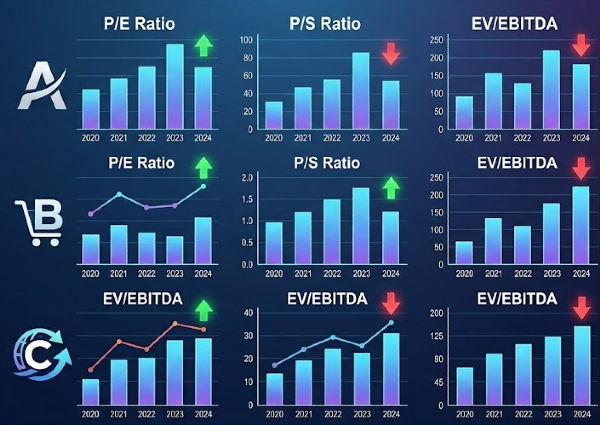
Investors often reward businesses that demonstrate an ability to expand successfully into new markets because it suggests management can replicate success on a broader scale. Investors evaluating these opportunities may also want to compare the sector's valuation metrics across leading global e-commerce companies.
One fascinating trend is that some e-commerce companies now generate the majority of their new customer growth from markets outside their original home countries.
The Next Chapter of E-Commerce Is Global
The first era of e-commerce focused on building digital marketplaces.
The next era is increasingly about connecting consumers and businesses across borders.
Companies such as Amazon, Alibaba, MercadoLibre, Sea Limited, and Shopify are investing heavily because they see enormous international opportunities ahead.
Their strategies differ.
Some focus on logistics.
Others emphasize payments.
Many build complete digital ecosystems.
Another interesting development is that smartphone adoption in several emerging markets is growing faster than traditional retail infrastructure, allowing e-commerce platforms to reach consumers before large physical store networks can be established.
For investors, international growth represents more than geographic expansion.
It represents access to larger customer bases, stronger growth runways, and new sources of competitive advantage.
As digital commerce continues spreading across the globe, the companies that master international expansion may become some of the biggest winners in the next phase of e-commerce evolution.
🚀 Expand Your Edge: Elite Internet Retail & E-Commerce Intelligence
Ready to capitalize on the future of digital commerce? Our Internet Retail Investor Intelligence Hub is designed to help investors analyze the companies, technologies, and trends reshaping global shopping. From foundational industry research and stock selection to AI, logistics, valuation, and international growth, explore the curated silos below to uncover your next investment opportunity.
🌐 Industry Fundamentals & Market Leaders
📊 Financial Strength & Shareholder Returns
🤖 Technology, AI & Digital Transformation
🚚 Logistics, Fulfillment & Supply Chain Intelligence
🌍 Global Expansion & Market Opportunities
⚠️ Risk Management & Economic Trends
🔍 Competitive Analysis & Advanced Research
















Last updated on July 1st 2026 by Noah Brody
🔑 Key Takeaways
🌎 International expansion has become one of the biggest growth drivers for leading e-commerce companies
Many online retailers have reached significant scale in their home markets and are now looking abroad for new customers. Expanding internationally can unlock larger addressable markets and create additional revenue streams.
🚀 Companies like Amazon, Alibaba, MercadoLibre, Sea Limited, and Shopify are benefiting from global e-commerce adoption
These businesses have built platforms, logistics networks, and digital ecosystems that allow them to serve customers across multiple countries and regions.
📦 Logistics, payments, and localization often determine international success
Winning in foreign markets requires more than translating a website. Successful companies adapt to local consumer behavior, payment preferences, regulations, and delivery expectations.
🏆 International growth can strengthen long-term stock performance
Companies with successful global expansion strategies often gain access to faster-growing markets, larger customer bases, and more diversified revenue streams.
Global E-Commerce Leaders With Strong International Growth
The World Is Becoming One Giant Marketplace
A customer in Brazil can buy products from China.
A shopper in Germany can purchase from a seller in the United States.
A small business in Vietnam can reach buyers across multiple continents.
That level of connectivity would have seemed remarkable just a few decades ago.
Today, it is a normal part of e-commerce.
The internet has dramatically reduced geographic barriers, allowing retailers to serve customers far beyond their home markets. As a result, many of the world's largest e-commerce companies are pursuing international growth as their next major opportunity.
For investors, this trend is important because global expansion often provides access to larger customer populations, faster-growing economies, and new revenue streams.
Companies that successfully scale internationally may find growth opportunities long after their domestic markets mature.
Why International Growth Matters
Every company eventually faces a challenge.
Growth in its home market begins to slow.
Customer acquisition becomes more expensive.
Competition intensifies.
At that point, expanding internationally becomes increasingly attractive.
New markets offer access to additional consumers, different spending patterns, and untapped opportunities.
The potential scale can be enormous.
Instead of serving one country, businesses can pursue customers across dozens of regions.
For investors, international expansion can help extend a company's growth runway.
A larger addressable market often supports stronger long-term revenue growth and greater business resilience.
The world's population exceeds eight billion people.
Most retailers currently serve only a fraction of that opportunity.
Amazon Built a Global Retail Empire
Amazon may be the most recognizable example of successful international expansion.
The company began as a U.S.-focused online bookstore.
Today, it operates e-commerce platforms across numerous countries and regions.
Its strategy combines logistics infrastructure, local marketplaces, and technology investments.
Amazon often spends years building fulfillment networks before achieving meaningful scale.
That patience can create advantages.
Strong logistics capabilities improve delivery speed and customer satisfaction, helping Amazon compete effectively against local rivals.
International expansion is not always easy.
Different regulations, consumer preferences, and competitive landscapes require careful adaptation.
Yet Amazon's global footprint demonstrates how international growth can transform a company over time.
Alibaba Uses Cross-Border Commerce as a Growth Engine
Alibaba's influence extends far beyond China.
The company operates several platforms that connect buyers and sellers across international markets.
Cross-border commerce has become a major growth driver.
Merchants can reach customers in regions they previously could not access.
Consumers gain exposure to broader product selections and competitive pricing.
Alibaba benefits by facilitating these transactions while expanding its ecosystem.
The company's logistics partnerships and digital infrastructure help support international trade flows.
As global e-commerce continues growing, cross-border commerce remains an important opportunity.
Few companies are better positioned to benefit from that trend.
MercadoLibre Dominates a Growing Region
Latin America has become one of the most exciting e-commerce growth stories in the world.
Internet adoption continues rising.
Digital payments are becoming more common.
Online shopping behavior is expanding rapidly.
MercadoLibre has built a strong position throughout the region.
Its platform combines e-commerce, logistics, digital payments, and financial services into a single ecosystem.
This integrated approach creates advantages.
Customers can shop, pay, and receive products within the same network.
The company also benefits from growing economic digitization across multiple countries.
For investors seeking international growth exposure, MercadoLibre remains one of the most closely watched names.
Each company pursues international growth differently, but all recognize its importance.
Sea Limited Is Riding Southeast Asia's Digital Boom
Southeast Asia has become one of the fastest-growing digital economies on the planet.
A young population, increasing smartphone adoption, and expanding internet access have fueled rapid e-commerce growth.
Sea Limited's Shopee platform has emerged as a major beneficiary.
The company focuses heavily on localization.
Different countries often have different payment preferences, shopping habits, and cultural expectations.
Shopee tailors its platform to meet those needs.
This localized approach has helped drive adoption across multiple markets.
As consumer spending continues rising throughout Southeast Asia, the company may benefit from favorable long-term trends.
Shopify Is Expanding Through Merchants
Unlike traditional online retailers, Shopify takes a different path to international growth.
The company provides tools that allow merchants to create and operate online stores.
As merchants expand globally, Shopify benefits.
This creates a highly scalable business model.
Rather than entering every market directly, Shopify empowers businesses worldwide to participate in e-commerce.
The platform supports multiple currencies, international shipping options, and localized experiences.
As entrepreneurship grows around the world, Shopify's ecosystem continues expanding alongside it.
Its international growth comes not from selling products itself but from helping others do so.
Localization Often Determines Winners and Losers
One of the biggest mistakes companies make is assuming success in one market guarantees success elsewhere.
Consumers behave differently around the world.
Payment methods vary.
Delivery expectations differ.
Marketing strategies that work in one country may fail in another.
Successful international retailers invest heavily in localization.
They adapt websites, customer service, product offerings, and payment systems to local preferences.
This requires time and resources.
However, companies that execute effectively often gain stronger customer trust and higher engagement.
Global scale matters.
Local relevance matters even more.
Logistics Networks Support Global Expansion
International growth is difficult without reliable logistics.
Customers expect products to arrive quickly and safely regardless of where they live.
Meeting those expectations requires significant infrastructure.
Warehouses, fulfillment centers, transportation partnerships, and delivery systems all play important roles, including efficient last-mile delivery.
Many leading e-commerce companies invest heavily in logistics because they recognize its strategic value.
Strong networks improve customer satisfaction while creating barriers for competitors.
In many cases, logistics becomes one of the most important competitive advantages.
Digital Payments Help Unlock New Markets
E-commerce cannot grow without payments.
Many international markets have different financial systems and consumer preferences.
Some regions rely heavily on credit cards.
Others favor digital wallets or alternative payment methods.
Successful retailers adapt accordingly.
Companies such as MercadoLibre, Alibaba, and Sea Limited have invested heavily in payment ecosystems because they understand their importance.
Payments reduce friction.
Lower friction often increases sales.
Integrated payment systems can also create additional revenue opportunities through financial services.
The combination of commerce and payments has become increasingly powerful.
Investors Love Large Growth Runways
One reason international expansion attracts investor attention is simple.
Growth opportunities become larger.
A company serving multiple regions has more ways to increase revenue than one focused exclusively on a single market.
Diversification also provides benefits.
Economic weakness in one region may be offset by strength elsewhere.
This can create more balanced growth profiles over time.
Investors often reward businesses that demonstrate an ability to expand successfully into new markets because it suggests management can replicate success on a broader scale. Investors evaluating these opportunities may also want to compare the sector's valuation metrics across leading global e-commerce companies.
One fascinating trend is that some e-commerce companies now generate the majority of their new customer growth from markets outside their original home countries.
The Next Chapter of E-Commerce Is Global
The first era of e-commerce focused on building digital marketplaces.
The next era is increasingly about connecting consumers and businesses across borders.
Companies such as Amazon, Alibaba, MercadoLibre, Sea Limited, and Shopify are investing heavily because they see enormous international opportunities ahead.
Their strategies differ.
Some focus on logistics.
Others emphasize payments.
Many build complete digital ecosystems.
Another interesting development is that smartphone adoption in several emerging markets is growing faster than traditional retail infrastructure, allowing e-commerce platforms to reach consumers before large physical store networks can be established.
For investors, international growth represents more than geographic expansion.
It represents access to larger customer bases, stronger growth runways, and new sources of competitive advantage.
As digital commerce continues spreading across the globe, the companies that master international expansion may become some of the biggest winners in the next phase of e-commerce evolution.
🚀 Expand Your Edge: Elite Internet Retail & E-Commerce Intelligence
Ready to capitalize on the future of digital commerce? Our Internet Retail Investor Intelligence Hub is designed to help investors analyze the companies, technologies, and trends reshaping global shopping. From foundational industry research and stock selection to AI, logistics, valuation, and international growth, explore the curated silos below to uncover your next investment opportunity.
🌐 Industry Fundamentals & Market Leaders
📊 Financial Strength & Shareholder Returns
🤖 Technology, AI & Digital Transformation
🚚 Logistics, Fulfillment & Supply Chain Intelligence
🌍 Global Expansion & Market Opportunities
⚠️ Risk Management & Economic Trends
🔍 Competitive Analysis & Advanced Research