🔑 Key Takeaways
🚗 Recurring revenue in auto parts is driven by natural vehicle maintenance cycles
Aftermarket companies generate repeat revenue because vehicles require constant upkeep. Parts like brakes, batteries, filters, and wiper blades wear out on predictable schedules, creating steady demand over time.
🏪 Store networks and repair shop relationships create consistent repeat purchasing behavior
Large retailers and distributors such as AutoZone, O’Reilly Automotive, Advance Auto Parts, and Genuine Parts Company benefit from strong customer retention. Proximity, fast availability, and repair shop integration encourage repeat purchases.
📦 Fleet customers and commercial accounts function like hidden subscription revenue streams
Fleet operators and repair shops place frequent, scheduled orders that resemble subscription-style revenue. These accounts provide stable and predictable cash flow.
📈 Private-label products and digital ordering systems strengthen long-term revenue stability
Private-label auto parts improve margins and increase loyalty, while digital ordering and automated reordering systems boost purchase frequency and reduce customer switching.
Aftermarket Auto Parts Companies with Strong Recurring Revenue
Most auto parts companies are not driven by one-time sales. Instead, they benefit from repeat demand created by ongoing vehicle maintenance.
The key advantage in this industry is not just product sales, but how deeply a company is embedded into the repair cycle.
Why the Industry Naturally Produces Recurring Revenue
Vehicles require constant maintenance and replacement of worn components.
Common repeat categories include:
- Oil filters
- Brake pads
- Batteries
- Wiper blades
Each of these parts follows a predictable replacement cycle, creating ongoing demand over the life of a vehicle.
Older vehicles generate even more maintenance demand, increasing long-term revenue potential for aftermarket companies.
Retail Networks and Customer Retention
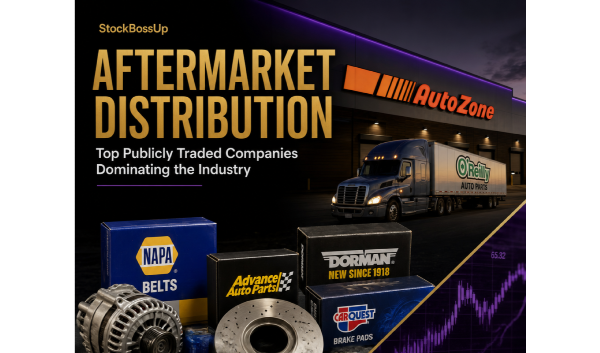
Companies such as AutoZone, O’Reilly Automotive, and Advance Auto Parts rely heavily on store density and convenience.
Key drivers of repeat purchases:
- Nearby store locations
- Same-day availability
- Reliable inventory
- Familiar customer experience
Once customers trust a location, they tend to return consistently for future needs.
Role of Repair Shops and Commercial Buyers
Repair shops are one of the most stable sources of demand because they purchase parts continuously.
Customer segments:
- DIY consumers: irregular purchases
- Repair shops: frequent purchases
- Fleet operators: scheduled purchases
- Commercial accounts: long-term supply relationships
Genuine Parts Company (NAPA Auto Parts) is heavily exposed to this segment.
Fleet demand is especially predictable due to scheduled maintenance cycles.
High-Turnover Parts Drive Repeat Sales
Some parts generate more recurring revenue due to short lifecycles:
- Oil filters: frequent replacement
- Brake pads: multi-year cycle
- Batteries: several-year cycle
- Wiper blades: annual replacement
Companies like AutoZone, O’Reilly Automotive, and Advance Auto Parts benefit heavily from these categories.
Commercial Accounts as “Hidden Subscriptions”
Commercial customers behave like subscription users without formal contracts.
They require constant replenishment to operate efficiently.
Revenue channels include:
- DIY retail (low predictability)
- Repair shops (high predictability)
- Fleet accounts (very high predictability)
- Industrial buyers (contract-based stability)
Once integrated into a shop’s workflow, switching suppliers becomes difficult.
Distribution Networks and Lock-In Effects
Strong logistics networks improve customer retention.
Key advantages:
- Same-day or next-day delivery
- Regional warehouse coverage
- Efficient routing systems
- Multi-location service capability
Genuine Parts Company and other major distributors rely on these systems to maintain consistent demand.
Digital Ordering and Automation
Digital systems increase purchase frequency by reducing friction.
Benefits include:
- Faster ordering
- Inventory tracking
- Integrated shop systems
- Automated reordering suggestions
AutoZone and O’Reilly Automotive have heavily invested in these capabilities.
Private-Label Product Advantages
Private-label products increase repeat purchasing and margin control.
Advantages:
- Higher customer loyalty
- Stronger repeat purchase rates
- Better pricing control
- Reduced reliance on national brands
Retailers benefit from customers repurchasing within their ecosystem.
Economic Cycles and Demand Stability
Aftermarket companies often perform well during downturns.
Cycle effects:
- Expansion: stable demand
- Inflation: increased maintenance
- Recession: higher repair activity
- Recovery: normalized demand
Consumers repair existing vehicles instead of buying new ones.
Fleet Operators and Predictable Revenue
Fleet customers provide highly stable revenue streams.
Key traits:
- High usage intensity
- Scheduled maintenance
- Bulk purchasing
- Long-term service agreements
These customers prioritize uptime, making demand consistent.
Conclusion
Recurring revenue in the aftermarket auto parts industry is driven by repetition, not subscriptions.
Companies like AutoZone, O’Reilly Automotive, Advance Auto Parts, and Genuine Parts Company succeed by embedding themselves into the vehicle maintenance cycle.
They are not just selling parts—they are part of the ongoing system that keeps vehicles running.














🔑 Key Takeaways
🚗 Recurring revenue in auto parts is driven by natural vehicle maintenance cycles
Aftermarket companies generate repeat revenue because vehicles require constant upkeep. Parts like brakes, batteries, filters, and wiper blades wear out on predictable schedules, creating steady demand over time.
🏪 Store networks and repair shop relationships create consistent repeat purchasing behavior
Large retailers and distributors such as AutoZone, O’Reilly Automotive, Advance Auto Parts, and Genuine Parts Company benefit from strong customer retention. Proximity, fast availability, and repair shop integration encourage repeat purchases.
📦 Fleet customers and commercial accounts function like hidden subscription revenue streams
Fleet operators and repair shops place frequent, scheduled orders that resemble subscription-style revenue. These accounts provide stable and predictable cash flow.
📈 Private-label products and digital ordering systems strengthen long-term revenue stability
Private-label auto parts improve margins and increase loyalty, while digital ordering and automated reordering systems boost purchase frequency and reduce customer switching.
Aftermarket Auto Parts Companies with Strong Recurring Revenue
Most auto parts companies are not driven by one-time sales. Instead, they benefit from repeat demand created by ongoing vehicle maintenance.
The key advantage in this industry is not just product sales, but how deeply a company is embedded into the repair cycle.
Why the Industry Naturally Produces Recurring Revenue
Vehicles require constant maintenance and replacement of worn components.
Common repeat categories include:
Each of these parts follows a predictable replacement cycle, creating ongoing demand over the life of a vehicle.
Older vehicles generate even more maintenance demand, increasing long-term revenue potential for aftermarket companies.
Retail Networks and Customer Retention
Companies such as AutoZone, O’Reilly Automotive, and Advance Auto Parts rely heavily on store density and convenience.
Key drivers of repeat purchases:
Once customers trust a location, they tend to return consistently for future needs.
Role of Repair Shops and Commercial Buyers
Repair shops are one of the most stable sources of demand because they purchase parts continuously.
Customer segments:
Genuine Parts Company (NAPA Auto Parts) is heavily exposed to this segment.
Fleet demand is especially predictable due to scheduled maintenance cycles.
High-Turnover Parts Drive Repeat Sales
Some parts generate more recurring revenue due to short lifecycles:
Companies like AutoZone, O’Reilly Automotive, and Advance Auto Parts benefit heavily from these categories.
Commercial Accounts as “Hidden Subscriptions”
Commercial customers behave like subscription users without formal contracts.
They require constant replenishment to operate efficiently.
Revenue channels include:
Once integrated into a shop’s workflow, switching suppliers becomes difficult.
Distribution Networks and Lock-In Effects
Strong logistics networks improve customer retention.
Key advantages:
Genuine Parts Company and other major distributors rely on these systems to maintain consistent demand.
Digital Ordering and Automation
Digital systems increase purchase frequency by reducing friction.
Benefits include:
AutoZone and O’Reilly Automotive have heavily invested in these capabilities.
Private-Label Product Advantages
Private-label products increase repeat purchasing and margin control.
Advantages:
Retailers benefit from customers repurchasing within their ecosystem.
Economic Cycles and Demand Stability
Aftermarket companies often perform well during downturns.
Cycle effects:
Consumers repair existing vehicles instead of buying new ones.
Fleet Operators and Predictable Revenue
Fleet customers provide highly stable revenue streams.
Key traits:
These customers prioritize uptime, making demand consistent.
Conclusion
Recurring revenue in the aftermarket auto parts industry is driven by repetition, not subscriptions.
Companies like AutoZone, O’Reilly Automotive, Advance Auto Parts, and Genuine Parts Company succeed by embedding themselves into the vehicle maintenance cycle.
They are not just selling parts—they are part of the ongoing system that keeps vehicles running.