Key Takeaways
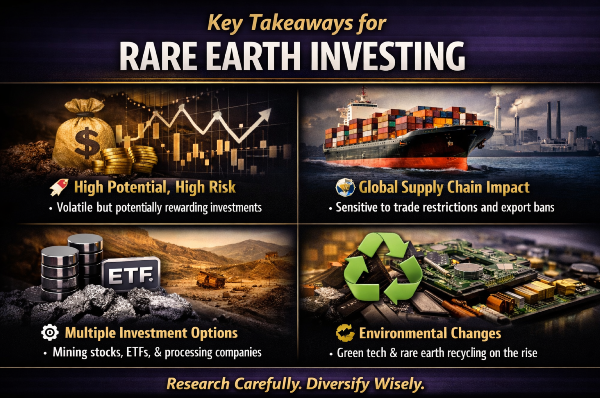
💰 Rare Earth Stocks Offer High Potential but High Risk
Rare earth stocks are tied to global technology and clean‑energy growth. They can deliver strong returns when demand for electric vehicles and wind turbines rises. However, their prices fluctuate sharply due to limited supply sources and geopolitical tensions. Investors should treat them as a volatile but potentially rewarding part of a diversified portfolio.
🌍 Global Supply Chains Drive Market Performance
The rare earth market depends on production from a few countries, making it sensitive to trade restrictions and export bans. When one nation limits supply, prices can surge worldwide. Understanding how global supply chains work helps investors anticipate market movements and identify opportunities in emerging producers.
⚙️ Multiple Ways to Invest in Rare Earths
Investors can choose between mining companies, processing firms, or exchange‑traded funds (ETFs) that focus on critical minerals. Each option offers different risk levels and exposure. Mining stocks may provide higher growth potential, while ETFs offer broader diversification. Researching company fundamentals and industry trends is essential before investing.
♻️ Environmental and Technological Shifts Shape the Future
Cleaner extraction methods and recycling technologies are becoming more important. As governments tighten environmental rules, companies with sustainable practices may gain an edge. Recycling rare earths from old electronics could become a major source of supply, creating new investment opportunities in the coming decade.
Are Rare Earth Stocks a Good Investment?
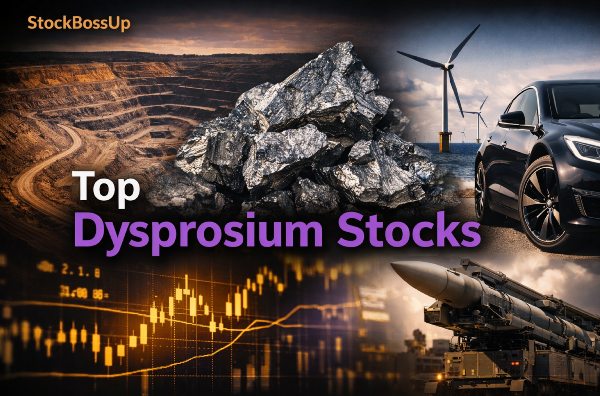
The value of rare earth stocks comes from their role in modern technology and clean energy, but they also carry higher‑than‑average risk. These companies sit at the center of supply chains for magnets, batteries, defense systems, and electronics. That gives them long‑term importance, yet their prices can swing sharply because production is concentrated in only a few countries.
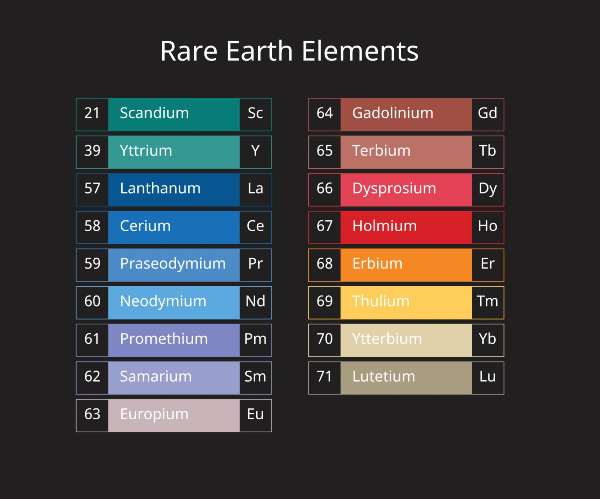
Rare earth elements (REEs) include materials like neodymium, dysprosium, and terbium. These elements help power electric vehicles, wind turbines, smartphones, and medical devices. Demand has grown as more industries shift toward electrification. Many governments now treat rare earths as strategic resources, which adds political pressure and sometimes boosts investor interest.
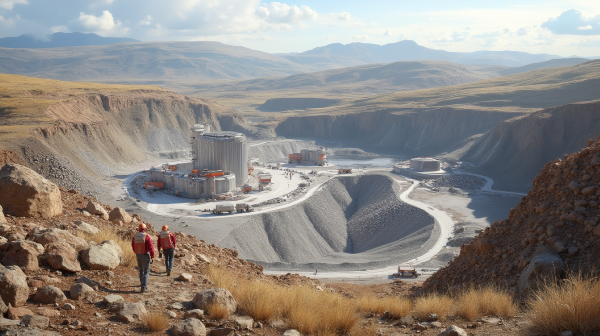
Rare earth stocks often move based on global supply disruptions. A single policy change in a major producing country can shift prices overnight. This makes the sector appealing to investors who want exposure to critical minerals but challenging for those who prefer stable returns. Companies in this space also face high production costs and long development timelines.
Rare Earths not actually rare. They are as common in the Earth’s crust as copper, but they are rarely found in concentrations that are easy to mine. Another lesser‑known fact is that rare earth magnets can remain magnetized for hundreds of years without losing strength, which is why they are used in long‑life motors and turbines.
Governments in the United States, Australia, Canada, and the European Union have launched programs to expand domestic rare earth production. These efforts aim to reduce dependence on foreign suppliers. As these projects grow, new companies may enter the market, creating more investment opportunities but also more competition.
Market Forces That Shape Rare Earth Stocks
Prices for rare earth stocks depend heavily on global supply and demand. When electric vehicle production rises, demand for rare earth magnets increases. When wind turbine installations grow, demand rises again. These cycles can create strong price movements in the companies that mine or process these materials.
Rare earth mining is complex. The elements often appear together in the same ore, so companies must separate them through chemical processing. This process is expensive and requires strict environmental controls. Investors often watch how well a company manages these costs because it affects long‑term profitability.
Political decisions also shape the market. Some countries limit exports of rare earths to protect their industries. These restrictions can cause global shortages and raise prices. Investors who follow geopolitical news often react quickly to these changes.
Below is a simple snapshot of factors that influence rare earth stock performance:
| Market Factor |
Impact on Rare Earth Stocks |
| Global EV production |
Higher demand for magnets |
| Wind turbine growth |
Increased need for heavy rare earths |
| Export restrictions |
Supply shortages and price spikes |
| New mining projects |
More competition and supply |
Environmental rules also play a major role. Rare earth processing can create waste that must be handled carefully. Companies with cleaner technologies may gain an advantage as regulations tighten.
How to Invest in Rare Earth Stocks
Investing in rare earth stocks starts with understanding the different types of companies in the sector. Some companies mine the raw materials. Others process the minerals into usable forms. A few specialize in magnet production. Each type carries different risks and potential rewards.
The first step is deciding whether you want direct exposure to mining companies or broader exposure through funds. Mining companies can offer higher growth potential but also higher volatility. Funds that include rare earth companies may offer more stability because they spread risk across multiple holdings.
Investors often research company reports, production forecasts, and government policies before buying shares. Many also track global demand for electric vehicles and renewable energy. These industries often signal future demand for rare earth materials.
Here is a simple comparison of common ways to invest:
| Investment Type |
What It Offers |
| Individual mining stocks |
Higher risk, higher potential reward |
| Processing or magnet companies |
Exposure to advanced materials |
| Commodity‑focused funds |
Broader diversification |
| Critical‑minerals ETFs |
Exposure to multiple rare earth companies |
Some investors also look at companies involved in recycling rare earths. Recycling is still a small part of the market, but it may grow as demand increases. This could create new opportunities in the future.
As with any investment, it is important to consider your risk tolerance and financial goals. Rare earth stocks can be part of a diversified portfolio, but they should not be the only focus. Because these stocks can be volatile, many investors choose to limit their exposure.
Risks to Consider Before Investing
The biggest risk in rare earth investing is price volatility. Prices for rare earth elements can rise or fall quickly based on global events. This makes the sector unpredictable. Investors who prefer steady returns may find this challenging.
Another risk is the long development time for new mining projects. It can take years for a company to move from exploration to production. During this time, the company may not generate revenue. Investors must be patient and willing to accept uncertainty.
Environmental regulations can also affect profitability. Rare earth processing requires chemicals that must be handled safely. Companies that fail to meet environmental standards may face fines or shutdowns. This can impact stock performance.
Below is a quick overview of common risks:
| Risk Category |
Description |
| Price swings |
Driven by global supply and demand |
| Political changes |
Export bans or trade disputes |
| Environmental rules |
Higher compliance costs |
| Long project timelines |
Delayed revenue |
Competition is another factor. As more countries invest in rare earth production, the market may become crowded. This could lower prices and reduce profits for existing companies.
Because of these risks, investors often combine rare earth stocks with more stable investments. This helps balance potential gains with long‑term stability. I am not a financial advisor, so it is wise to speak with a qualified professional before making investment decisions.
Final Thoughts on Rare Earth Investing
Rare earth stocks offer exposure to industries that are shaping the future. They support electric vehicles, renewable energy, and advanced electronics. This gives them long‑term importance in the global economy. However, they also come with higher‑than‑average risk.
Investors who understand the market forces, risks, and investment options can make more informed decisions. Research, patience, and diversification are key. Rare earth stocks can play a role in a balanced portfolio, but they should be approached with care.
If you want to explore related topics, you can dive deeper into critical minerals, clean energy demand, or global supply chains.
🔎 Read More: Deep‑Dive Into the Materials & Rare Earth Investing Universe
A strong materials portfolio starts with strong research. Explore authoritative guides, sector breakdowns, sustainability insights, and rare earth market intelligence.
Materials Sector Foundations
Metals & Industrial Materials
Aluminum Investing Hub
Rare Earths & Critical Minerals
Commodities vs. Materials — Core Concepts


















Key Takeaways
💰 Rare Earth Stocks Offer High Potential but High Risk
Rare earth stocks are tied to global technology and clean‑energy growth. They can deliver strong returns when demand for electric vehicles and wind turbines rises. However, their prices fluctuate sharply due to limited supply sources and geopolitical tensions. Investors should treat them as a volatile but potentially rewarding part of a diversified portfolio.
🌍 Global Supply Chains Drive Market Performance
The rare earth market depends on production from a few countries, making it sensitive to trade restrictions and export bans. When one nation limits supply, prices can surge worldwide. Understanding how global supply chains work helps investors anticipate market movements and identify opportunities in emerging producers.
⚙️ Multiple Ways to Invest in Rare Earths
Investors can choose between mining companies, processing firms, or exchange‑traded funds (ETFs) that focus on critical minerals. Each option offers different risk levels and exposure. Mining stocks may provide higher growth potential, while ETFs offer broader diversification. Researching company fundamentals and industry trends is essential before investing.
♻️ Environmental and Technological Shifts Shape the Future
Cleaner extraction methods and recycling technologies are becoming more important. As governments tighten environmental rules, companies with sustainable practices may gain an edge. Recycling rare earths from old electronics could become a major source of supply, creating new investment opportunities in the coming decade.
Are Rare Earth Stocks a Good Investment?
The value of rare earth stocks comes from their role in modern technology and clean energy, but they also carry higher‑than‑average risk. These companies sit at the center of supply chains for magnets, batteries, defense systems, and electronics. That gives them long‑term importance, yet their prices can swing sharply because production is concentrated in only a few countries.
Rare earth elements (REEs) include materials like neodymium, dysprosium, and terbium. These elements help power electric vehicles, wind turbines, smartphones, and medical devices. Demand has grown as more industries shift toward electrification. Many governments now treat rare earths as strategic resources, which adds political pressure and sometimes boosts investor interest.
Source: discoveryalert.com
Rare earth stocks often move based on global supply disruptions. A single policy change in a major producing country can shift prices overnight. This makes the sector appealing to investors who want exposure to critical minerals but challenging for those who prefer stable returns. Companies in this space also face high production costs and long development timelines.
Rare Earths not actually rare. They are as common in the Earth’s crust as copper, but they are rarely found in concentrations that are easy to mine. Another lesser‑known fact is that rare earth magnets can remain magnetized for hundreds of years without losing strength, which is why they are used in long‑life motors and turbines.
Governments in the United States, Australia, Canada, and the European Union have launched programs to expand domestic rare earth production. These efforts aim to reduce dependence on foreign suppliers. As these projects grow, new companies may enter the market, creating more investment opportunities but also more competition.
Market Forces That Shape Rare Earth Stocks
Prices for rare earth stocks depend heavily on global supply and demand. When electric vehicle production rises, demand for rare earth magnets increases. When wind turbine installations grow, demand rises again. These cycles can create strong price movements in the companies that mine or process these materials.
Rare earth mining is complex. The elements often appear together in the same ore, so companies must separate them through chemical processing. This process is expensive and requires strict environmental controls. Investors often watch how well a company manages these costs because it affects long‑term profitability.
Source: vecteezy.com
Political decisions also shape the market. Some countries limit exports of rare earths to protect their industries. These restrictions can cause global shortages and raise prices. Investors who follow geopolitical news often react quickly to these changes.
Below is a simple snapshot of factors that influence rare earth stock performance:
Environmental rules also play a major role. Rare earth processing can create waste that must be handled carefully. Companies with cleaner technologies may gain an advantage as regulations tighten.
How to Invest in Rare Earth Stocks
Investing in rare earth stocks starts with understanding the different types of companies in the sector. Some companies mine the raw materials. Others process the minerals into usable forms. A few specialize in magnet production. Each type carries different risks and potential rewards.
The first step is deciding whether you want direct exposure to mining companies or broader exposure through funds. Mining companies can offer higher growth potential but also higher volatility. Funds that include rare earth companies may offer more stability because they spread risk across multiple holdings.
Investors often research company reports, production forecasts, and government policies before buying shares. Many also track global demand for electric vehicles and renewable energy. These industries often signal future demand for rare earth materials.
Here is a simple comparison of common ways to invest:
Some investors also look at companies involved in recycling rare earths. Recycling is still a small part of the market, but it may grow as demand increases. This could create new opportunities in the future.
As with any investment, it is important to consider your risk tolerance and financial goals. Rare earth stocks can be part of a diversified portfolio, but they should not be the only focus. Because these stocks can be volatile, many investors choose to limit their exposure.
Risks to Consider Before Investing
The biggest risk in rare earth investing is price volatility. Prices for rare earth elements can rise or fall quickly based on global events. This makes the sector unpredictable. Investors who prefer steady returns may find this challenging.
Another risk is the long development time for new mining projects. It can take years for a company to move from exploration to production. During this time, the company may not generate revenue. Investors must be patient and willing to accept uncertainty.
Environmental regulations can also affect profitability. Rare earth processing requires chemicals that must be handled safely. Companies that fail to meet environmental standards may face fines or shutdowns. This can impact stock performance.
Below is a quick overview of common risks:
Competition is another factor. As more countries invest in rare earth production, the market may become crowded. This could lower prices and reduce profits for existing companies.
Because of these risks, investors often combine rare earth stocks with more stable investments. This helps balance potential gains with long‑term stability. I am not a financial advisor, so it is wise to speak with a qualified professional before making investment decisions.
Final Thoughts on Rare Earth Investing
Rare earth stocks offer exposure to industries that are shaping the future. They support electric vehicles, renewable energy, and advanced electronics. This gives them long‑term importance in the global economy. However, they also come with higher‑than‑average risk.
Investors who understand the market forces, risks, and investment options can make more informed decisions. Research, patience, and diversification are key. Rare earth stocks can play a role in a balanced portfolio, but they should be approached with care.
If you want to explore related topics, you can dive deeper into critical minerals, clean energy demand, or global supply chains.
🔎 Read More: Deep‑Dive Into the Materials & Rare Earth Investing Universe
A strong materials portfolio starts with strong research. Explore authoritative guides, sector breakdowns, sustainability insights, and rare earth market intelligence.
Materials Sector Foundations
Metals & Industrial Materials
Aluminum Investing Hub
Rare Earths & Critical Minerals
Commodities vs. Materials — Core Concepts