Key Takeaways
📦 AI is transforming packaging manufacturing with faster, more accurate, and more efficient production.
AI increases speed, reduces errors, and improves consistency across packaging lines. Machine learning and computer vision help factories detect issues early and adjust equipment in real time. These improvements lower costs and support safer, more reliable operations.
🧠 AI‑powered quality control catches defects that humans miss and strengthens compliance.
Computer vision systems scan materials at high speed and identify tiny defects, misprints, and label errors. Predictive models reveal root causes of quality issues, helping teams prevent recurring problems. This leads to stronger brand protection and less waste.
⚙️ AI reduces waste, cuts material costs, and supports sustainability goals.
AI analyzes production data to optimize material usage and reduce scrap. Predictive tools help companies plan inventory, test new materials, and design packaging that uses fewer resources. These improvements support both cost savings and environmental targets.
🤖 AI‑driven automation and predictive maintenance boost uptime and factory performance.
Robots, cobots, and smart conveyors increase throughput and reduce manual labor. Predictive maintenance systems monitor machine health and prevent breakdowns before they occur. These tools create more stable, efficient, and scalable packaging operations.
How AI Is Reshaping Packaging Manufacturing
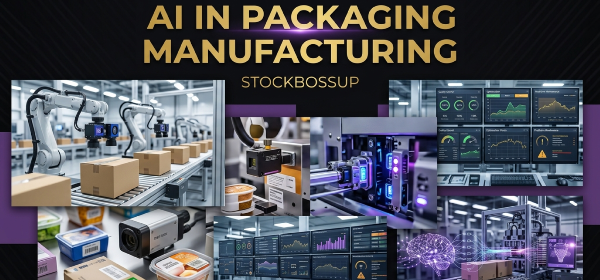
AI is reshaping packaging manufacturing by making production faster, more accurate, and more cost‑efficient. Companies across the sector use machine learning, computer vision, and automation to improve quality and reduce waste. These tools help factories run with fewer errors and more predictable output.
AI adoption is rising because packaging lines generate large amounts of data. Sensors, cameras, and connected machines collect information that AI can analyze in real time. This allows manufacturers to adjust equipment before problems grow. It also helps teams understand how small changes in speed, temperature, or material flow affect the final product.
AI also supports safer work environments. Automated systems can handle repetitive or hazardous tasks that once required manual labor. This reduces injury risk and helps workers focus on higher‑value activities. Many plants now use AI‑guided robots to stack pallets, inspect materials, and manage inventory.
AI’s impact extends beyond the factory floor. It influences supply chain planning, material sourcing, and customer demand forecasting. Packaging companies use predictive models to plan production schedules and reduce downtime. This leads to more stable operations and better on‑time delivery rates.
A lesser‑known fact is that some packaging plants now use AI to detect micro‑vibrations in equipment that humans cannot feel. These tiny signals help predict mechanical failures days or even weeks before they occur. This level of insight was impossible before modern sensors and machine learning.
Why AI Improves Quality Control
AI improves quality control by catching defects that human inspectors often miss. Computer vision systems scan packaging materials at high speed and identify issues such as tears, dents, misprints, or uneven seals. These systems work around the clock and maintain consistent accuracy.
Quality control is one of the most important uses of AI in packaging. Traditional inspection methods rely on manual checks, which can be slow and inconsistent. AI systems analyze thousands of images per minute and flag even the smallest irregularities. This reduces waste and protects brand reputation.
AI also helps companies understand why defects occur. Machine learning models study patterns in production data and highlight the root causes of quality problems. This allows teams to fix issues at the source rather than reacting after the fact. Over time, this leads to stronger processes and fewer product recalls.
Some companies use AI to verify label accuracy. This includes checking barcodes, expiration dates, and regulatory information. Mistakes in these areas can lead to fines or product returns. AI reduces these risks by ensuring every package meets compliance standards.
AI‑powered sensors can also detect changes in material thickness or color. These small variations may signal a problem with raw materials or machine calibration. Early detection helps prevent large batches of defective packaging from reaching customers.
Below is a natural data table showing common AI inspection methods and their typical use cases:
| AI Inspection Method |
Typical Use Case |
Benefit |
| Computer Vision |
Detecting visual defects |
High accuracy at high speed |
| Machine Learning Models |
Predicting defect patterns |
Reduces recurring issues |
| Sensor Analytics |
Monitoring material consistency |
Prevents waste and rework |
| OCR Systems |
Checking labels and dates |
Ensures compliance |
How AI Reduces Waste and Material Costs
AI reduces waste by optimizing how materials are used during production. Packaging lines often lose material due to trimming, misalignment, or machine errors. AI systems monitor these factors and adjust settings to reduce scrap. This leads to lower costs and more sustainable operations.
Material waste is a major challenge in packaging manufacturing. Even small inefficiencies can add up when producing millions of units. AI helps by analyzing data from cutting machines, printers, and forming equipment. It identifies patterns that cause waste and recommends adjustments.
AI also supports better material planning. Predictive models estimate how much material is needed for each production run. This prevents over‑ordering and reduces storage costs. It also helps companies avoid shortages that could delay shipments.
Some plants use AI to test alternative materials. Machine learning models simulate how different substrates behave under pressure, heat, or moisture. This helps companies choose materials that are strong, lightweight, and cost‑effective. It also speeds up research and development cycles.
A unique fact is that AI can now simulate airflow inside packaging to predict how products will shift during transport. This helps engineers design packaging that protects items while using less material. It also reduces the need for physical prototypes.
AI’s role in sustainability is growing. Many companies use AI to track carbon emissions and energy use across production lines. This helps them meet environmental goals and comply with regulations.
AI‑Driven Automation on the Factory Floor
AI‑driven automation increases speed and consistency in packaging plants. Robots guided by AI can handle tasks such as palletizing, sorting, and packing. These systems work with precision and reduce the need for manual labor in repetitive tasks.
Automation helps companies meet rising demand without expanding their workforce. AI‑powered robots can run multiple shifts and maintain consistent output. This is especially valuable during peak seasons or when labor shortages occur.
AI also improves machine coordination. Packaging lines often include many moving parts, such as conveyors, sealers, and printers. AI systems synchronize these machines to prevent bottlenecks. This leads to smoother operations and higher throughput.
Collaborative robots, or cobots, are becoming more common. These machines work alongside human employees and assist with tasks that require strength or precision. AI helps cobots understand their environment and adjust their movements safely.
Automation also supports better inventory management. AI systems track material usage and alert teams when supplies run low. This reduces downtime and prevents production delays. It also helps companies maintain accurate inventory records.
Below is a natural table showing common AI‑driven automation tools:
| Automation Tool |
Primary Function |
Impact |
| AI‑Guided Robots |
Packing and palletizing |
Faster throughput |
| Cobots |
Assisting human workers |
Improved safety |
| Smart Conveyors |
Material movement |
Fewer bottlenecks |
| Predictive Maintenance Systems |
Equipment monitoring |
Less downtime |
Predictive Maintenance and Equipment Health
Predictive maintenance uses AI to monitor equipment health and prevent breakdowns. Packaging machines operate at high speed and require precise calibration. AI systems analyze vibration, temperature, and pressure data to detect early signs of wear.
This approach reduces unplanned downtime. Traditional maintenance schedules rely on fixed intervals, which may not reflect actual machine conditions. AI adjusts maintenance timing based on real‑time data. This keeps machines running longer and reduces repair costs.
Predictive maintenance also improves safety. Faulty equipment can cause accidents or damage materials. AI alerts teams before these risks escalate. This helps maintain a stable and safe work environment.
AI models learn from historical data. Over time, they become better at predicting failures. This leads to more accurate maintenance planning and fewer surprises on the production line. It also helps companies budget for repairs and replacements.
Some packaging plants use digital twins—virtual models of physical machines. AI runs simulations on these digital twins to test how equipment will respond to different conditions. This helps engineers optimize performance without interrupting production.
Predictive maintenance is especially valuable for older equipment. AI can extend the life of machines that would otherwise require replacement. This reduces capital expenses and supports long‑term planning.
AI in Packaging Design and Customization
AI supports packaging design by generating concepts, testing materials, and predicting performance. Designers use AI tools to create packaging that is strong, lightweight, and visually appealing. These tools speed up the design process and reduce the need for physical prototypes.
AI also helps companies personalize packaging. Machine learning models analyze customer data to create targeted designs. This is common in industries such as food, cosmetics, and consumer goods. Personalized packaging can increase brand loyalty and improve customer experience.
AI simulations test how packaging performs under stress. These tests include drop impacts, compression, and temperature changes. AI predicts how materials will react and suggests improvements. This leads to safer and more reliable packaging.
AI also supports sustainability goals. It helps designers choose materials that reduce environmental impact. It can also suggest ways to reduce material usage without sacrificing strength. This helps companies meet regulatory requirements and appeal to eco‑conscious consumers.
Below is a natural table showing AI tools used in packaging design:
| AI Design Tool |
Use Case |
Benefit |
| Generative Design |
Creating new concepts |
Faster development |
| Material Simulation |
Testing durability |
Fewer prototypes |
| Personalization Engines |
Custom designs |
Stronger engagement |
| Sustainability Models |
Reducing material use |
Lower footprint |
The Future of AI in Packaging Manufacturing
AI will continue to expand across packaging manufacturing as companies seek more efficient and sustainable operations. Future systems will integrate data from every part of the supply chain. This will allow packaging plants to adjust production based on real‑time demand.
Robotics will become more advanced. AI will guide machines that can adapt to new tasks without reprogramming. This flexibility will help companies respond to changing product lines and customer needs.
AI will also improve traceability. Packaging companies will track materials from sourcing to delivery. This will help reduce waste, prevent counterfeiting, and support recycling programs. It will also help companies meet global sustainability standards.
Another trend is the rise of autonomous packaging lines. These systems will make decisions without human intervention. They will adjust speed, temperature, and pressure based on real‑time data. This will lead to higher efficiency and fewer errors.
AI will also support circular economy goals. It will help companies design packaging that is easier to recycle or reuse. It will also improve sorting systems at recycling facilities. This will reduce landfill waste and support environmental goals.
🔎 Read More: Explore the Packaging & Containers Investing Hub
Market Rankings & Investor Lists
Industry Segments & Material Leaders
Financial Performance & Fundamentals
Valuation, Capital Strategy & Competitive Edge
Innovation, Technology & Market Trends



Key Takeaways
📦 AI is transforming packaging manufacturing with faster, more accurate, and more efficient production.
AI increases speed, reduces errors, and improves consistency across packaging lines. Machine learning and computer vision help factories detect issues early and adjust equipment in real time. These improvements lower costs and support safer, more reliable operations.
🧠 AI‑powered quality control catches defects that humans miss and strengthens compliance.
Computer vision systems scan materials at high speed and identify tiny defects, misprints, and label errors. Predictive models reveal root causes of quality issues, helping teams prevent recurring problems. This leads to stronger brand protection and less waste.
⚙️ AI reduces waste, cuts material costs, and supports sustainability goals.
AI analyzes production data to optimize material usage and reduce scrap. Predictive tools help companies plan inventory, test new materials, and design packaging that uses fewer resources. These improvements support both cost savings and environmental targets.
🤖 AI‑driven automation and predictive maintenance boost uptime and factory performance.
Robots, cobots, and smart conveyors increase throughput and reduce manual labor. Predictive maintenance systems monitor machine health and prevent breakdowns before they occur. These tools create more stable, efficient, and scalable packaging operations.
How AI Is Reshaping Packaging Manufacturing
AI is reshaping packaging manufacturing by making production faster, more accurate, and more cost‑efficient. Companies across the sector use machine learning, computer vision, and automation to improve quality and reduce waste. These tools help factories run with fewer errors and more predictable output.
AI adoption is rising because packaging lines generate large amounts of data. Sensors, cameras, and connected machines collect information that AI can analyze in real time. This allows manufacturers to adjust equipment before problems grow. It also helps teams understand how small changes in speed, temperature, or material flow affect the final product.
AI also supports safer work environments. Automated systems can handle repetitive or hazardous tasks that once required manual labor. This reduces injury risk and helps workers focus on higher‑value activities. Many plants now use AI‑guided robots to stack pallets, inspect materials, and manage inventory.
AI’s impact extends beyond the factory floor. It influences supply chain planning, material sourcing, and customer demand forecasting. Packaging companies use predictive models to plan production schedules and reduce downtime. This leads to more stable operations and better on‑time delivery rates.
A lesser‑known fact is that some packaging plants now use AI to detect micro‑vibrations in equipment that humans cannot feel. These tiny signals help predict mechanical failures days or even weeks before they occur. This level of insight was impossible before modern sensors and machine learning.
Why AI Improves Quality Control
AI improves quality control by catching defects that human inspectors often miss. Computer vision systems scan packaging materials at high speed and identify issues such as tears, dents, misprints, or uneven seals. These systems work around the clock and maintain consistent accuracy.
Quality control is one of the most important uses of AI in packaging. Traditional inspection methods rely on manual checks, which can be slow and inconsistent. AI systems analyze thousands of images per minute and flag even the smallest irregularities. This reduces waste and protects brand reputation.
AI also helps companies understand why defects occur. Machine learning models study patterns in production data and highlight the root causes of quality problems. This allows teams to fix issues at the source rather than reacting after the fact. Over time, this leads to stronger processes and fewer product recalls.
Some companies use AI to verify label accuracy. This includes checking barcodes, expiration dates, and regulatory information. Mistakes in these areas can lead to fines or product returns. AI reduces these risks by ensuring every package meets compliance standards.
AI‑powered sensors can also detect changes in material thickness or color. These small variations may signal a problem with raw materials or machine calibration. Early detection helps prevent large batches of defective packaging from reaching customers.
Below is a natural data table showing common AI inspection methods and their typical use cases:
How AI Reduces Waste and Material Costs
AI reduces waste by optimizing how materials are used during production. Packaging lines often lose material due to trimming, misalignment, or machine errors. AI systems monitor these factors and adjust settings to reduce scrap. This leads to lower costs and more sustainable operations.
Material waste is a major challenge in packaging manufacturing. Even small inefficiencies can add up when producing millions of units. AI helps by analyzing data from cutting machines, printers, and forming equipment. It identifies patterns that cause waste and recommends adjustments.
AI also supports better material planning. Predictive models estimate how much material is needed for each production run. This prevents over‑ordering and reduces storage costs. It also helps companies avoid shortages that could delay shipments.
Some plants use AI to test alternative materials. Machine learning models simulate how different substrates behave under pressure, heat, or moisture. This helps companies choose materials that are strong, lightweight, and cost‑effective. It also speeds up research and development cycles.
A unique fact is that AI can now simulate airflow inside packaging to predict how products will shift during transport. This helps engineers design packaging that protects items while using less material. It also reduces the need for physical prototypes.
AI’s role in sustainability is growing. Many companies use AI to track carbon emissions and energy use across production lines. This helps them meet environmental goals and comply with regulations.
AI‑Driven Automation on the Factory Floor
AI‑driven automation increases speed and consistency in packaging plants. Robots guided by AI can handle tasks such as palletizing, sorting, and packing. These systems work with precision and reduce the need for manual labor in repetitive tasks.
Automation helps companies meet rising demand without expanding their workforce. AI‑powered robots can run multiple shifts and maintain consistent output. This is especially valuable during peak seasons or when labor shortages occur.
AI also improves machine coordination. Packaging lines often include many moving parts, such as conveyors, sealers, and printers. AI systems synchronize these machines to prevent bottlenecks. This leads to smoother operations and higher throughput.
Collaborative robots, or cobots, are becoming more common. These machines work alongside human employees and assist with tasks that require strength or precision. AI helps cobots understand their environment and adjust their movements safely.
Automation also supports better inventory management. AI systems track material usage and alert teams when supplies run low. This reduces downtime and prevents production delays. It also helps companies maintain accurate inventory records.
Below is a natural table showing common AI‑driven automation tools:
Predictive Maintenance and Equipment Health
Predictive maintenance uses AI to monitor equipment health and prevent breakdowns. Packaging machines operate at high speed and require precise calibration. AI systems analyze vibration, temperature, and pressure data to detect early signs of wear.
This approach reduces unplanned downtime. Traditional maintenance schedules rely on fixed intervals, which may not reflect actual machine conditions. AI adjusts maintenance timing based on real‑time data. This keeps machines running longer and reduces repair costs.
Predictive maintenance also improves safety. Faulty equipment can cause accidents or damage materials. AI alerts teams before these risks escalate. This helps maintain a stable and safe work environment.
AI models learn from historical data. Over time, they become better at predicting failures. This leads to more accurate maintenance planning and fewer surprises on the production line. It also helps companies budget for repairs and replacements.
Some packaging plants use digital twins—virtual models of physical machines. AI runs simulations on these digital twins to test how equipment will respond to different conditions. This helps engineers optimize performance without interrupting production.
Predictive maintenance is especially valuable for older equipment. AI can extend the life of machines that would otherwise require replacement. This reduces capital expenses and supports long‑term planning.
AI in Packaging Design and Customization
AI supports packaging design by generating concepts, testing materials, and predicting performance. Designers use AI tools to create packaging that is strong, lightweight, and visually appealing. These tools speed up the design process and reduce the need for physical prototypes.
AI also helps companies personalize packaging. Machine learning models analyze customer data to create targeted designs. This is common in industries such as food, cosmetics, and consumer goods. Personalized packaging can increase brand loyalty and improve customer experience.
AI simulations test how packaging performs under stress. These tests include drop impacts, compression, and temperature changes. AI predicts how materials will react and suggests improvements. This leads to safer and more reliable packaging.
AI also supports sustainability goals. It helps designers choose materials that reduce environmental impact. It can also suggest ways to reduce material usage without sacrificing strength. This helps companies meet regulatory requirements and appeal to eco‑conscious consumers.
Below is a natural table showing AI tools used in packaging design:
The Future of AI in Packaging Manufacturing
AI will continue to expand across packaging manufacturing as companies seek more efficient and sustainable operations. Future systems will integrate data from every part of the supply chain. This will allow packaging plants to adjust production based on real‑time demand.
Robotics will become more advanced. AI will guide machines that can adapt to new tasks without reprogramming. This flexibility will help companies respond to changing product lines and customer needs.
AI will also improve traceability. Packaging companies will track materials from sourcing to delivery. This will help reduce waste, prevent counterfeiting, and support recycling programs. It will also help companies meet global sustainability standards.
Another trend is the rise of autonomous packaging lines. These systems will make decisions without human intervention. They will adjust speed, temperature, and pressure based on real‑time data. This will lead to higher efficiency and fewer errors.
AI will also support circular economy goals. It will help companies design packaging that is easier to recycle or reuse. It will also improve sorting systems at recycling facilities. This will reduce landfill waste and support environmental goals.
🔎 Read More: Explore the Packaging & Containers Investing Hub
Market Rankings & Investor Lists
Industry Segments & Material Leaders
Financial Performance & Fundamentals
Valuation, Capital Strategy & Competitive Edge
Innovation, Technology & Market Trends