🔑 Key Takeaways
🛠️ Hydraulic braking is still the global backbone, but electronic systems are taking control of new vehicle platforms
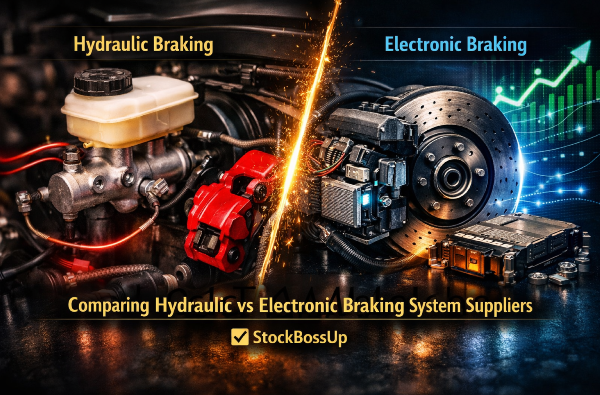
Hydraulic braking systems remain dominant in existing vehicle fleets due to reliability and cost efficiency. However, electronic braking systems are rapidly expanding in EVs, hybrids, and advanced driver assistance platforms, reshaping supplier competition.
⚡ Electronic braking shifts value from mechanical parts to software, sensors, and control units
Electronic braking systems rely on brake-by-wire, ECUs, and sensor fusion. This increases demand for semiconductor suppliers and software-integrated Tier 1 companies like Bosch, Continental, and ZF Friedrichshafen.
🚗 Hydraulic systems still win on simplicity, cost, and global serviceability
Hydraulic braking is easier to repair, cheaper to produce, and widely supported across global repair networks. This keeps demand stable, especially in non-EV markets and older vehicle fleets.
📈 The transition phase is creating a hybrid ecosystem where both systems coexist and compete
Most modern vehicles now use blended systems that combine hydraulic redundancy with electronic control layers. This hybrid phase is driving dual demand across both legacy and next-generation suppliers.
Two Braking Worlds Are Running in Parallel
Braking technology is currently split into two very different systems that are still sharing the road.
On one side is hydraulic braking, the long-established mechanical system that has powered vehicles for decades. On the other is electronic braking, a newer architecture built around sensors, software, and electrical control.
Both systems are not just competing. They are overlapping, blending, and gradually shifting the balance of supplier power.
The interesting part is that neither system has fully replaced the other yet. Instead, the industry is stuck in a transition phase where both are essential.
Why Hydraulic Braking Still Dominates the Global Fleet
Hydraulic braking systems use fluid pressure to transfer force from the brake pedal to the brake calipers. This simple mechanical principle has proven reliable across millions of vehicles.
That simplicity is exactly why hydraulic systems remain dominant in global fleets.
They are cheap to produce, easy to service, and widely understood by mechanics around the world. This makes them especially valuable in regions where repair infrastructure is more traditional.
| Advantage |
Hydraulic Braking Impact |
| Cost efficiency |
Low production cost per unit |
| Serviceability |
Easy global repair support |
| Reliability |
Proven long-term durability |
| Compatibility |
Works across all ICE platforms |
A subtle but important detail is that hydraulic systems often remain in use even in newer vehicles, acting as a fallback or redundancy layer even when electronic systems are present.
Why Electronic Braking Is Growing Faster in New Platforms
Electronic braking systems replace or assist traditional hydraulic functions with software-controlled actuators and electric signals.
Instead of relying purely on fluid pressure, braking decisions are managed through electronic control units and sensor inputs.
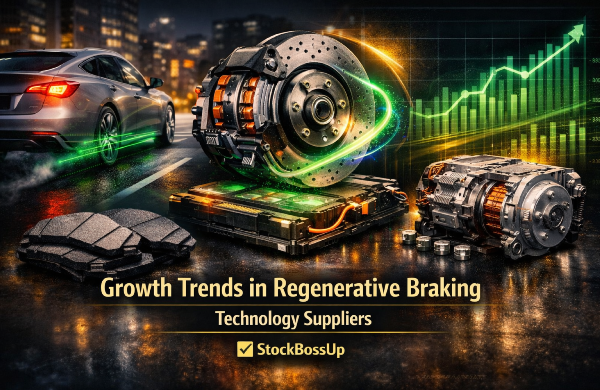
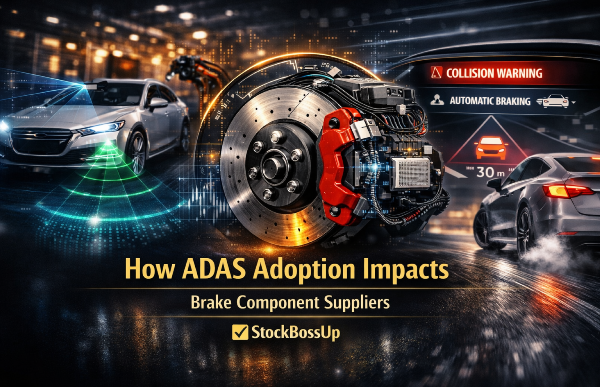
This enables tighter integration with ADAS systems, regenerative braking, and stability control.
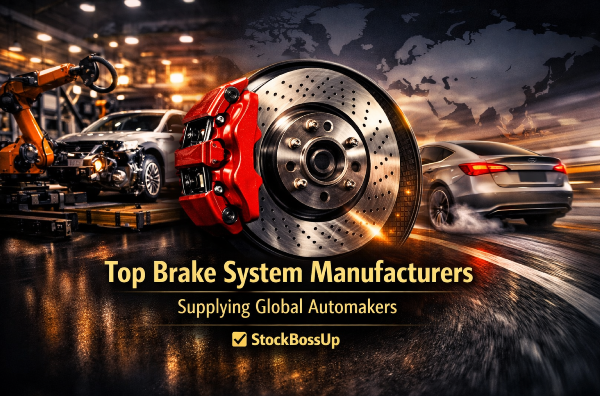
Companies like Bosch, Continental, ZF Friedrichshafen, and Denso are heavily invested in this shift, building systems that connect braking directly to vehicle intelligence platforms.
| Supplier |
Electronic Braking Role |
Core Strength |
| Bosch |
Brake-by-wire + control systems |
Full system integration |
| Continental |
ADAS-linked braking systems |
Sensor + software coordination |
| ZF Friedrichshafen |
Chassis control platforms |
Vehicle dynamics integration |
| Denso |
OEM electronic systems |
Hybrid + EV braking support |
This shift increases supplier value per vehicle but also raises system complexity significantly.
Why Software Is Replacing Mechanical Logic in Braking Systems
Traditional hydraulic braking is purely mechanical in decision-making. The driver presses the pedal, and pressure is transmitted directly.
Electronic braking systems introduce software into that chain.
Now braking force can be adjusted based on speed, traction, road conditions, and even predictive data from navigation systems.
This creates a fundamentally different type of braking logic.
| System Layer |
Hydraulic Braking |
Electronic Braking |
| Control type |
Mechanical |
Software-driven |
| Response logic |
Direct |
Adaptive |
| Integration level |
Low |
High |
| ADAS compatibility |
Limited |
Full integration |
A less obvious detail is that electronic braking systems can adjust braking force multiple times within a single stop event without driver input, optimizing stability and energy efficiency.
Why Hydraulic Systems Still Have Strong Market Protection
Despite the rise of electronic systems, hydraulic braking is not disappearing anytime soon.
One major reason is global vehicle age distribution. A large portion of vehicles on the road today were built for hydraulic systems and will remain in service for many years.
Another reason is cost sensitivity. Hydraulic systems are significantly cheaper to manufacture and maintain, especially in mass-market vehicles.
| Market Segment |
Preferred System |
Reason |
| Economy vehicles |
Hydraulic |
Cost efficiency |
| Mid-range vehicles |
Hybrid systems |
Balanced performance |
| Luxury / EV platforms |
Electronic |
Advanced integration |
| Commercial fleets |
Hydraulic-heavy |
Service simplicity |
A second important detail is that hydraulic systems are often retained as backup systems even in vehicles that primarily use electronic braking, adding redundancy for safety compliance.
Why the Transition Is Creating a Hybrid Architecture Phase
Most modern vehicles do not use purely hydraulic or purely electronic braking systems. Instead, they use hybrid architectures.
In these systems, electronic controls manage braking logic while hydraulic systems provide physical force as a backup layer.
This creates a transitional phase where both technologies are necessary for different reasons.
Suppliers are now designing systems that can operate across both architectures simultaneously.
This dual-layer design increases engineering complexity but also expands revenue opportunities for suppliers who can support both systems.
Why Electronic Braking Raises Supplier Value per Vehicle
Electronic braking systems contain more components per vehicle than hydraulic systems.
They require sensors, control modules, actuators, wiring harnesses, and software layers.
This increases supplier content per vehicle significantly.
| Component Category |
Hydraulic Systems |
Electronic Systems |
| Mechanical parts |
High |
Medium |
| Electronics |
Low |
High |
| Software content |
None |
High |
| Sensor integration |
Minimal |
Extensive |
A key insight is that electronic braking systems do not just replace hydraulic systems. They expand the total number of subsystems required per vehicle.
Where the Industry Is Headed Next
The braking industry is moving toward deeper electronic integration, but hydraulic systems will remain in place for redundancy and cost control.
Over time, braking systems are expected to become fully integrated into vehicle control architectures that combine ADAS, regenerative braking, and stability systems into a single platform.
In that future, braking will no longer be a standalone system. It will be a coordinated function inside a larger vehicle intelligence network.
For now, both hydraulic and electronic suppliers remain essential, but the balance of value is steadily shifting toward software-defined braking systems.
















🔑 Key Takeaways
🛠️ Hydraulic braking is still the global backbone, but electronic systems are taking control of new vehicle platforms
Hydraulic braking systems remain dominant in existing vehicle fleets due to reliability and cost efficiency. However, electronic braking systems are rapidly expanding in EVs, hybrids, and advanced driver assistance platforms, reshaping supplier competition.
⚡ Electronic braking shifts value from mechanical parts to software, sensors, and control units
Electronic braking systems rely on brake-by-wire, ECUs, and sensor fusion. This increases demand for semiconductor suppliers and software-integrated Tier 1 companies like Bosch, Continental, and ZF Friedrichshafen.
🚗 Hydraulic systems still win on simplicity, cost, and global serviceability
Hydraulic braking is easier to repair, cheaper to produce, and widely supported across global repair networks. This keeps demand stable, especially in non-EV markets and older vehicle fleets.
📈 The transition phase is creating a hybrid ecosystem where both systems coexist and compete
Most modern vehicles now use blended systems that combine hydraulic redundancy with electronic control layers. This hybrid phase is driving dual demand across both legacy and next-generation suppliers.
Two Braking Worlds Are Running in Parallel
Braking technology is currently split into two very different systems that are still sharing the road.
On one side is hydraulic braking, the long-established mechanical system that has powered vehicles for decades. On the other is electronic braking, a newer architecture built around sensors, software, and electrical control.
Both systems are not just competing. They are overlapping, blending, and gradually shifting the balance of supplier power.
The interesting part is that neither system has fully replaced the other yet. Instead, the industry is stuck in a transition phase where both are essential.
Why Hydraulic Braking Still Dominates the Global Fleet
Hydraulic braking systems use fluid pressure to transfer force from the brake pedal to the brake calipers. This simple mechanical principle has proven reliable across millions of vehicles.
That simplicity is exactly why hydraulic systems remain dominant in global fleets.
They are cheap to produce, easy to service, and widely understood by mechanics around the world. This makes them especially valuable in regions where repair infrastructure is more traditional.
A subtle but important detail is that hydraulic systems often remain in use even in newer vehicles, acting as a fallback or redundancy layer even when electronic systems are present.
Why Electronic Braking Is Growing Faster in New Platforms
Electronic braking systems replace or assist traditional hydraulic functions with software-controlled actuators and electric signals.
Instead of relying purely on fluid pressure, braking decisions are managed through electronic control units and sensor inputs.
This enables tighter integration with ADAS systems, regenerative braking, and stability control.
Companies like Bosch, Continental, ZF Friedrichshafen, and Denso are heavily invested in this shift, building systems that connect braking directly to vehicle intelligence platforms.
This shift increases supplier value per vehicle but also raises system complexity significantly.
Why Software Is Replacing Mechanical Logic in Braking Systems
Traditional hydraulic braking is purely mechanical in decision-making. The driver presses the pedal, and pressure is transmitted directly.
Electronic braking systems introduce software into that chain.
Now braking force can be adjusted based on speed, traction, road conditions, and even predictive data from navigation systems.
This creates a fundamentally different type of braking logic.
A less obvious detail is that electronic braking systems can adjust braking force multiple times within a single stop event without driver input, optimizing stability and energy efficiency.
Why Hydraulic Systems Still Have Strong Market Protection
Despite the rise of electronic systems, hydraulic braking is not disappearing anytime soon.
One major reason is global vehicle age distribution. A large portion of vehicles on the road today were built for hydraulic systems and will remain in service for many years.
Another reason is cost sensitivity. Hydraulic systems are significantly cheaper to manufacture and maintain, especially in mass-market vehicles.
A second important detail is that hydraulic systems are often retained as backup systems even in vehicles that primarily use electronic braking, adding redundancy for safety compliance.
Why the Transition Is Creating a Hybrid Architecture Phase
Most modern vehicles do not use purely hydraulic or purely electronic braking systems. Instead, they use hybrid architectures.
In these systems, electronic controls manage braking logic while hydraulic systems provide physical force as a backup layer.
This creates a transitional phase where both technologies are necessary for different reasons.
Suppliers are now designing systems that can operate across both architectures simultaneously.
This dual-layer design increases engineering complexity but also expands revenue opportunities for suppliers who can support both systems.
Why Electronic Braking Raises Supplier Value per Vehicle
Electronic braking systems contain more components per vehicle than hydraulic systems.
They require sensors, control modules, actuators, wiring harnesses, and software layers.
This increases supplier content per vehicle significantly.
A key insight is that electronic braking systems do not just replace hydraulic systems. They expand the total number of subsystems required per vehicle.
Where the Industry Is Headed Next
The braking industry is moving toward deeper electronic integration, but hydraulic systems will remain in place for redundancy and cost control.
Over time, braking systems are expected to become fully integrated into vehicle control architectures that combine ADAS, regenerative braking, and stability systems into a single platform.
In that future, braking will no longer be a standalone system. It will be a coordinated function inside a larger vehicle intelligence network.
For now, both hydraulic and electronic suppliers remain essential, but the balance of value is steadily shifting toward software-defined braking systems.