Last updated on July 28th 2026 by Noah Brody
🚢 Cruise lines offer higher growth potential but come with greater financial risk
Cruise companies benefit from expanding global travel demand, younger demographics embracing cruising, and strong post-pandemic pricing power. However, their capital-intensive business models, large fleets, and elevated debt levels create greater sensitivity to economic downturns and rising interest rates.
🏨 Hotel stocks benefit from stronger business models and more predictable cash flows
Major hotel companies such as Marriott, Hilton, Hyatt, and InterContinental Hotels Group have shifted toward asset-light franchise models that generate recurring fee revenue without requiring significant capital investment. This structure provides stronger free cash flow generation, better balance sheets, and greater financial flexibility.
📈 Cruise stocks have a larger global growth runway while hotels offer stability
Cruise companies may have more room to expand as international markets adopt cruise vacations, particularly across Asia and emerging economies. Hotel companies, however, benefit from broader geographic diversification and exposure to multiple travel segments.
⚖️ The best leisure portfolios may combine both cruise and hotel stocks
Hotel stocks provide stability, income potential, and defensive characteristics, while cruise stocks offer higher upside if demand growth and debt reduction continue successfully. Investors should weigh their risk tolerance and investment horizon when deciding between these two hospitality categories.
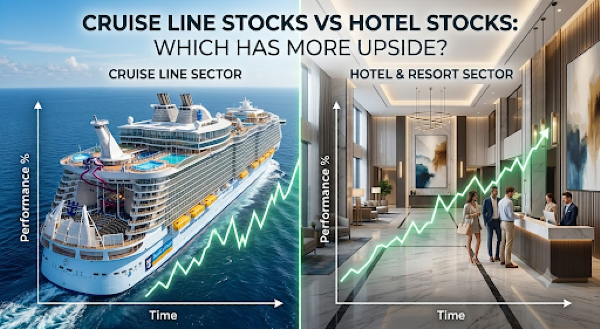
Cruise Line Stocks vs Hotel Stocks: Which Has More Upside?
Why Are Cruise Line Stocks and Hotel Stocks Popular Leisure Investments?
When investors consider the hospitality segment of the leisure sector, two categories frequently come up for comparison: cruise line stocks and hotel stocks. Both serve travelers seeking accommodation and experiences away from home, but their business models, risk profiles, financial characteristics, and growth prospects differ substantially. Understanding these differences is crucial to making informed allocation decisions between these two popular leisure investment categories. Investors who are new to the sector may also benefit from first reading the Leisure Industry Overview.
Why Are Cruise Lines Considered Capital-Intensive Investments?
Cruise lines operate among the most capital-intensive business models in the entire leisure sector. A modern cruise ship costs between one and two billion dollars to build, requires enormous ongoing maintenance, and must employ thousands of crew members. The top three players, Carnival Corporation, Royal Caribbean Group, and Norwegian Cruise Line, collectively control the vast majority of the global cruise market. This oligopolistic structure is both a strength and a risk: it limits competition but also means that capacity additions by any one player affect industry-wide pricing dynamics.
How Has the Cruise Industry Recovery Created Growth Opportunities?
The cruise industry's recovery from the pandemic has been remarkable. After a complete shutdown of operations in 2020, the industry has not only recovered but set new records for booking volumes, advance deposits, and per-passenger revenue. Cruise companies raised fares significantly post-pandemic, and consumers have responded enthusiastically, reflecting both pent-up demand and the growing appeal of cruising to younger demographics who find the all-inclusive value proposition compelling. Royal Caribbean in particular has benefited from its investments in innovative ship designs and private island destinations.
Why Do Hotel Companies Use an Asset-Light Business Model?
Hotel companies, by contrast, present a more fragmented and diverse investment landscape. The largest operators, including Marriott, Hilton, Hyatt, and InterContinental Hotels Group, have transitioned to asset-light models where they earn fees for managing and franchising properties rather than owning the real estate. This transformation has dramatically improved the financial profile of hotel companies, reducing capital requirements, improving return on equity, and creating more predictable recurring revenue streams. This business structure is a textbook example of an asset-light model.
Why Does the Asset-Light Hotel Model Create Financial Advantages?
The asset-light hotel model generates superior free cash flow margins compared to cruise lines because hotel franchisors essentially earn royalties on the revenue generated by independent hotel owners. They do not bear the capital cost of building or maintaining hotel rooms. In contrast, cruise lines must own and operate their entire fleet, making them perpetually capital-intensive and exposed to the significant fixed costs of maintaining oceangoing vessels.
How Does Debt Impact Cruise and Hotel Stocks?
From a debt perspective, the pandemic devastated cruise line balance sheets. To survive two years of zero revenue, cruise companies borrowed tens of billions of dollars, leaving them with debt burdens that will take years to fully resolve. Hotel companies, particularly the asset-light franchisors, entered the pandemic with leaner balance sheets and emerged in better financial condition. This debt legacy gives hotel stocks a meaningful structural advantage in terms of financial flexibility and shareholder return capacity. Investors evaluating either group should understand how interest rates impact leisure companies, since borrowing costs directly affect highly leveraged businesses.
Why Could Cruise Lines Have More Long-Term Growth Potential?
Growth potential, however, favors cruise lines in certain respects. The cruise industry's global penetration rate remains very low, particularly outside of North America and Europe. As Asian middle-class consumers embrace cruise vacations, and as cruise companies invest in destinations and ship designs that appeal to first-time cruisers, the runway for volume growth is substantial. The total addressable market for cruising is growing faster than the hotel market in many regions, supported by continued expansion of the global economy.
Why Are Hotel Stocks More Diversified Than Cruise Stocks?
Hotel stocks offer superior geographic and segment diversification. A global hotel franchisor with brands spanning budget, mid-scale, upper upscale, and luxury segments across more than 100 countries is far more insulated from any single market disruption than a cruise line operating a fleet of ships in a handful of itinerary regions. This diversification makes hotel stocks more resilient during regional geopolitical disruptions, weather events, or localized economic downturns.
Why Are Hotel Stocks Often Preferred by Income Investors?
For income-oriented investors, hotel stocks have historically been more reliable dividend payers, as their lower debt and asset-light models generate more consistent free cash flow. Cruise lines suspended dividends during the pandemic and have been slow to reinstate them as they focus on debt reduction. Investors comparing income and capital appreciation strategies may also want to read Growth vs Dividend Leisure Stocks: Which Is Better?.
Should Investors Choose Cruise Stocks or Hotel Stocks?
Ultimately, the choice between cruise line stocks and hotel stocks depends on investor risk tolerance and time horizon. Hotel stocks, particularly asset-light franchisors, offer superior financial quality, lower risk, and reliable income. Cruise stocks offer higher return potential if the industry's debt normalization and demand growth play out as expected, but with correspondingly higher risk. A thoughtful investor might hold both, recognizing their complementary risk and return characteristics within a diversified leisure portfolio.
🚀 Expand Your Edge: Elite Leisure Industry Investment Intelligence
The leisure industry spans travel, entertainment, hospitality, gaming, sports, recreation, and experiential businesses that benefit from rising consumer spending and long-term demographic trends. Our Leisure Industry Investor Intelligence Hub brings together comprehensive research covering industry fundamentals, market-leading companies, macroeconomic drivers, financial analysis, emerging technologies, and future growth opportunities. Explore the curated resources below to build a deeper understanding of one of the market's most dynamic sectors.
🌎 Industry Fundamentals & Market Leaders
🎯 Leisure Industry Sectors & Investment Opportunities
📊 Financial Analysis & Portfolio Strategy
🤖 Technology, AI & Industry Innovation
🌍 Economic Trends & Market Drivers
⚠️ Risk Management & Smart Investing




















Last updated on July 28th 2026 by Noah Brody
🚢 Cruise lines offer higher growth potential but come with greater financial risk
Cruise companies benefit from expanding global travel demand, younger demographics embracing cruising, and strong post-pandemic pricing power. However, their capital-intensive business models, large fleets, and elevated debt levels create greater sensitivity to economic downturns and rising interest rates.
🏨 Hotel stocks benefit from stronger business models and more predictable cash flows
Major hotel companies such as Marriott, Hilton, Hyatt, and InterContinental Hotels Group have shifted toward asset-light franchise models that generate recurring fee revenue without requiring significant capital investment. This structure provides stronger free cash flow generation, better balance sheets, and greater financial flexibility.
📈 Cruise stocks have a larger global growth runway while hotels offer stability
Cruise companies may have more room to expand as international markets adopt cruise vacations, particularly across Asia and emerging economies. Hotel companies, however, benefit from broader geographic diversification and exposure to multiple travel segments.
⚖️ The best leisure portfolios may combine both cruise and hotel stocks
Hotel stocks provide stability, income potential, and defensive characteristics, while cruise stocks offer higher upside if demand growth and debt reduction continue successfully. Investors should weigh their risk tolerance and investment horizon when deciding between these two hospitality categories.
Cruise Line Stocks vs Hotel Stocks: Which Has More Upside?
Why Are Cruise Line Stocks and Hotel Stocks Popular Leisure Investments?
When investors consider the hospitality segment of the leisure sector, two categories frequently come up for comparison: cruise line stocks and hotel stocks. Both serve travelers seeking accommodation and experiences away from home, but their business models, risk profiles, financial characteristics, and growth prospects differ substantially. Understanding these differences is crucial to making informed allocation decisions between these two popular leisure investment categories. Investors who are new to the sector may also benefit from first reading the Leisure Industry Overview.
Why Are Cruise Lines Considered Capital-Intensive Investments?
Cruise lines operate among the most capital-intensive business models in the entire leisure sector. A modern cruise ship costs between one and two billion dollars to build, requires enormous ongoing maintenance, and must employ thousands of crew members. The top three players, Carnival Corporation, Royal Caribbean Group, and Norwegian Cruise Line, collectively control the vast majority of the global cruise market. This oligopolistic structure is both a strength and a risk: it limits competition but also means that capacity additions by any one player affect industry-wide pricing dynamics.
How Has the Cruise Industry Recovery Created Growth Opportunities?
The cruise industry's recovery from the pandemic has been remarkable. After a complete shutdown of operations in 2020, the industry has not only recovered but set new records for booking volumes, advance deposits, and per-passenger revenue. Cruise companies raised fares significantly post-pandemic, and consumers have responded enthusiastically, reflecting both pent-up demand and the growing appeal of cruising to younger demographics who find the all-inclusive value proposition compelling. Royal Caribbean in particular has benefited from its investments in innovative ship designs and private island destinations.
Why Do Hotel Companies Use an Asset-Light Business Model?
Hotel companies, by contrast, present a more fragmented and diverse investment landscape. The largest operators, including Marriott, Hilton, Hyatt, and InterContinental Hotels Group, have transitioned to asset-light models where they earn fees for managing and franchising properties rather than owning the real estate. This transformation has dramatically improved the financial profile of hotel companies, reducing capital requirements, improving return on equity, and creating more predictable recurring revenue streams. This business structure is a textbook example of an asset-light model.
Why Does the Asset-Light Hotel Model Create Financial Advantages?
The asset-light hotel model generates superior free cash flow margins compared to cruise lines because hotel franchisors essentially earn royalties on the revenue generated by independent hotel owners. They do not bear the capital cost of building or maintaining hotel rooms. In contrast, cruise lines must own and operate their entire fleet, making them perpetually capital-intensive and exposed to the significant fixed costs of maintaining oceangoing vessels.
How Does Debt Impact Cruise and Hotel Stocks?
From a debt perspective, the pandemic devastated cruise line balance sheets. To survive two years of zero revenue, cruise companies borrowed tens of billions of dollars, leaving them with debt burdens that will take years to fully resolve. Hotel companies, particularly the asset-light franchisors, entered the pandemic with leaner balance sheets and emerged in better financial condition. This debt legacy gives hotel stocks a meaningful structural advantage in terms of financial flexibility and shareholder return capacity. Investors evaluating either group should understand how interest rates impact leisure companies, since borrowing costs directly affect highly leveraged businesses.
Why Could Cruise Lines Have More Long-Term Growth Potential?
Growth potential, however, favors cruise lines in certain respects. The cruise industry's global penetration rate remains very low, particularly outside of North America and Europe. As Asian middle-class consumers embrace cruise vacations, and as cruise companies invest in destinations and ship designs that appeal to first-time cruisers, the runway for volume growth is substantial. The total addressable market for cruising is growing faster than the hotel market in many regions, supported by continued expansion of the global economy.
Why Are Hotel Stocks More Diversified Than Cruise Stocks?
Hotel stocks offer superior geographic and segment diversification. A global hotel franchisor with brands spanning budget, mid-scale, upper upscale, and luxury segments across more than 100 countries is far more insulated from any single market disruption than a cruise line operating a fleet of ships in a handful of itinerary regions. This diversification makes hotel stocks more resilient during regional geopolitical disruptions, weather events, or localized economic downturns.
Why Are Hotel Stocks Often Preferred by Income Investors?
For income-oriented investors, hotel stocks have historically been more reliable dividend payers, as their lower debt and asset-light models generate more consistent free cash flow. Cruise lines suspended dividends during the pandemic and have been slow to reinstate them as they focus on debt reduction. Investors comparing income and capital appreciation strategies may also want to read Growth vs Dividend Leisure Stocks: Which Is Better?.
Should Investors Choose Cruise Stocks or Hotel Stocks?
Ultimately, the choice between cruise line stocks and hotel stocks depends on investor risk tolerance and time horizon. Hotel stocks, particularly asset-light franchisors, offer superior financial quality, lower risk, and reliable income. Cruise stocks offer higher return potential if the industry's debt normalization and demand growth play out as expected, but with correspondingly higher risk. A thoughtful investor might hold both, recognizing their complementary risk and return characteristics within a diversified leisure portfolio.
🚀 Expand Your Edge: Elite Leisure Industry Investment Intelligence
The leisure industry spans travel, entertainment, hospitality, gaming, sports, recreation, and experiential businesses that benefit from rising consumer spending and long-term demographic trends. Our Leisure Industry Investor Intelligence Hub brings together comprehensive research covering industry fundamentals, market-leading companies, macroeconomic drivers, financial analysis, emerging technologies, and future growth opportunities. Explore the curated resources below to build a deeper understanding of one of the market's most dynamic sectors.
🌎 Industry Fundamentals & Market Leaders
🎯 Leisure Industry Sectors & Investment Opportunities
📊 Financial Analysis & Portfolio Strategy
🤖 Technology, AI & Industry Innovation
🌍 Economic Trends & Market Drivers
⚠️ Risk Management & Smart Investing