Last updated on July 28th 2026 by Noah Brody
Key Takeaways
🤖 Artificial intelligence is improving margins by tightening inventory and reducing waste
AI-driven forecasting helps specialty retailers avoid overstocking and improves cash conversion across categories.
📊 Customer personalization is increasing sales per shopper
Retailers use AI to tailor recommendations, promotions, and loyalty offers that lift basket size and repeat purchases.
⚙️ Operational efficiency gains are widening the gap between leading and lagging retailers
Companies with advanced AI systems are improving labor planning, logistics, and pricing faster than competitors.
📈 AI adoption is turning specialty retail into a data-driven compounding industry
Long-term winners are shifting from store-based models to analytics-driven ecosystems that support sustained earnings growth.
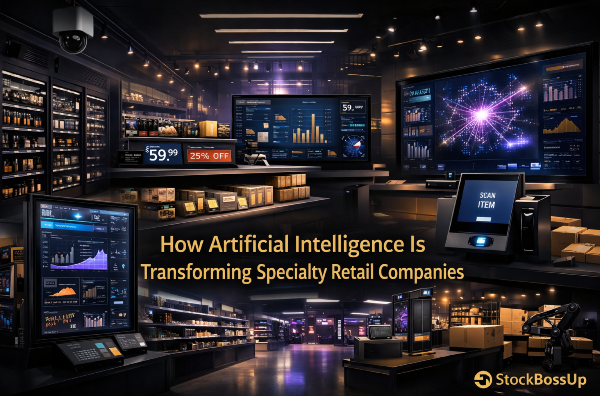
How Artificial Intelligence Is Transforming Specialty Retail Companies
Why AI matters so much in specialty retail right now
Artificial intelligence matters in specialty retail because it directly improves how companies manage inventory, customers, and pricing. These are the three core drivers of profitability in retail, and AI is reshaping all of them at once.
Specialty retail companies operate in focused categories like auto parts, beauty, home improvement, electronics, and rural goods. Each category depends heavily on demand forecasting and inventory precision. Small improvements in those areas can significantly change profit margins.
AI is also changing how retailers compete. Instead of relying only on store location or brand recognition, companies now compete on data quality and execution speed. That shift is widening the gap between leaders and laggards.
Smarter inventory systems are reducing waste and improving cash flow
One of the most important transformations from AI is in inventory management. Retailers now use machine learning models to predict demand more accurately across thousands of SKUs.
This matters because specialty retailers often carry large product assortments. Even small forecasting errors can lead to overstocking or stockouts, both of which hurt profitability.
Companies like AutoZone benefit from AI-driven inventory systems that ensure the right parts are available at the right stores. That improves turnover and reduces tied-up capital.
Home improvement retailers like Home Depot also use AI to optimize supply chain flows across distribution centers and stores. This reduces waste and improves cash flow stability.
A less obvious benefit is markdown reduction. Better forecasting means fewer clearance sales, which protects gross margins over time.
Personalization is increasing customer spending and loyalty
AI is also transforming how specialty retailers interact with customers. Personalization systems analyze purchase history, browsing behavior, and loyalty data to recommend products more effectively.
This leads to higher basket sizes because customers are shown more relevant products at the right time. It also improves conversion rates both online and in-store.
Beauty retailers like Ulta Beauty use AI to personalize promotions and loyalty offers. This strengthens repeat purchasing behavior and increases lifetime customer value.
Electronics retailers like Best Buy also use personalization to suggest accessories, warranties, and services that increase total transaction value.
One important shift is that personalization is moving beyond marketing. It now influences pricing, promotions, and even store layout decisions.
Pricing and margin optimization are becoming more dynamic
AI is changing pricing strategies across specialty retail by enabling more dynamic and responsive pricing models. Instead of static pricing, retailers can adjust prices based on demand signals, inventory levels, and competitor behavior.
This improves margin control, especially in categories with fast-moving inventory or seasonal demand. It also reduces the need for broad discounting events.
Retailers with strong pricing systems can protect margins even in competitive environments. That advantage compounds over time through higher operating income.
However, pricing optimization requires careful balance. Over-aggressive price changes can damage customer trust or loyalty, especially in repeat-purchase categories.
The most successful retailers use AI as a decision-support tool rather than a fully automated pricing system, combining algorithmic insights with human oversight.
Labor and operations are becoming more efficient
AI is also improving operational efficiency in stores and distribution networks. Retailers use predictive models to schedule labor more effectively based on expected traffic patterns.
This reduces labor costs while maintaining service quality. It also improves employee productivity by aligning staffing levels with demand.
In distribution centers, AI helps optimize routing, picking, and shipping processes. This improves delivery speed and reduces logistics costs.
Companies like Tractor Supply benefit from AI-driven supply chain improvements that reduce delays and improve product availability across stores.
A less visible impact is reduced operational friction. Better forecasting reduces emergency restocking and last-minute logistics costs, which improves overall efficiency.
Why AI is widening the gap between retailers
AI adoption is not evenly distributed across specialty retail. Larger companies with more data and resources are pulling ahead of smaller competitors.
Scale matters because AI systems improve with more data. Retailers with millions of transactions can train better models than smaller operators with limited datasets.
This creates a compounding advantage. Better data leads to better predictions, which leads to better margins, which generates more investment capacity for further AI development.
As a result, leading retailers are becoming more efficient faster than competitors. This is increasing market concentration in several specialty retail segments.
Over time, this may lead to a "winner-takes-most" structure in certain categories.
The long-term outlook: AI as a compounding engine for retail
Artificial intelligence is turning specialty retail into a more predictable and efficient industry. The biggest winners are those that successfully integrate AI across inventory, pricing, and customer experience.
The transformation is not just about cost savings. It is also about revenue growth through better customer engagement and higher conversion rates.
As AI systems improve, specialty retailers are likely to see more stable earnings growth and stronger cash flow generation. This supports long-term valuation strength for leading companies.
Companies that fail to adopt AI effectively risk falling behind in both efficiency and customer experience. That gap is likely to widen over time.
Overall, AI is reshaping specialty retail from a store-driven business into a data-driven compounding machine, where operational excellence becomes the main driver of long-term success.
🚀 Expand Your Edge: Elite Specialty Retail Stock Intelligence
Looking for the next standout retail investment? Our Specialty Retail Investor Intelligence Hub brings together comprehensive research covering industry fundamentals, market leaders, financial quality, valuation, digital transformation, consumer trends, and long-term growth opportunities. Whether you're identifying market-leading retailers or evaluating emerging investment themes, explore the curated resources below to strengthen your investment research.
🏬 Industry Fundamentals & Market Overview
📊 Financial Strength & Business Quality
💵 Dividends, Valuation & Investor Returns
🤖 Technology, AI & Omnichannel Retail
🌍 Consumer Trends & Growth Opportunities
⚠️ Risk Management & Economic Outlook
















Last updated on July 28th 2026 by Noah Brody
Key Takeaways
🤖 Artificial intelligence is improving margins by tightening inventory and reducing waste
AI-driven forecasting helps specialty retailers avoid overstocking and improves cash conversion across categories.📊 Customer personalization is increasing sales per shopper
Retailers use AI to tailor recommendations, promotions, and loyalty offers that lift basket size and repeat purchases.⚙️ Operational efficiency gains are widening the gap between leading and lagging retailers
Companies with advanced AI systems are improving labor planning, logistics, and pricing faster than competitors.📈 AI adoption is turning specialty retail into a data-driven compounding industry
Long-term winners are shifting from store-based models to analytics-driven ecosystems that support sustained earnings growth.How Artificial Intelligence Is Transforming Specialty Retail Companies
Why AI matters so much in specialty retail right now
Artificial intelligence matters in specialty retail because it directly improves how companies manage inventory, customers, and pricing. These are the three core drivers of profitability in retail, and AI is reshaping all of them at once.
Specialty retail companies operate in focused categories like auto parts, beauty, home improvement, electronics, and rural goods. Each category depends heavily on demand forecasting and inventory precision. Small improvements in those areas can significantly change profit margins.
AI is also changing how retailers compete. Instead of relying only on store location or brand recognition, companies now compete on data quality and execution speed. That shift is widening the gap between leaders and laggards.
Smarter inventory systems are reducing waste and improving cash flow
One of the most important transformations from AI is in inventory management. Retailers now use machine learning models to predict demand more accurately across thousands of SKUs.
This matters because specialty retailers often carry large product assortments. Even small forecasting errors can lead to overstocking or stockouts, both of which hurt profitability.
Companies like AutoZone benefit from AI-driven inventory systems that ensure the right parts are available at the right stores. That improves turnover and reduces tied-up capital.
Home improvement retailers like Home Depot also use AI to optimize supply chain flows across distribution centers and stores. This reduces waste and improves cash flow stability.
A less obvious benefit is markdown reduction. Better forecasting means fewer clearance sales, which protects gross margins over time.
Personalization is increasing customer spending and loyalty
AI is also transforming how specialty retailers interact with customers. Personalization systems analyze purchase history, browsing behavior, and loyalty data to recommend products more effectively.
This leads to higher basket sizes because customers are shown more relevant products at the right time. It also improves conversion rates both online and in-store.
Beauty retailers like Ulta Beauty use AI to personalize promotions and loyalty offers. This strengthens repeat purchasing behavior and increases lifetime customer value.
Electronics retailers like Best Buy also use personalization to suggest accessories, warranties, and services that increase total transaction value.
One important shift is that personalization is moving beyond marketing. It now influences pricing, promotions, and even store layout decisions.
Pricing and margin optimization are becoming more dynamic
AI is changing pricing strategies across specialty retail by enabling more dynamic and responsive pricing models. Instead of static pricing, retailers can adjust prices based on demand signals, inventory levels, and competitor behavior.
This improves margin control, especially in categories with fast-moving inventory or seasonal demand. It also reduces the need for broad discounting events.
Retailers with strong pricing systems can protect margins even in competitive environments. That advantage compounds over time through higher operating income.
However, pricing optimization requires careful balance. Over-aggressive price changes can damage customer trust or loyalty, especially in repeat-purchase categories.
The most successful retailers use AI as a decision-support tool rather than a fully automated pricing system, combining algorithmic insights with human oversight.
Labor and operations are becoming more efficient
AI is also improving operational efficiency in stores and distribution networks. Retailers use predictive models to schedule labor more effectively based on expected traffic patterns.
This reduces labor costs while maintaining service quality. It also improves employee productivity by aligning staffing levels with demand.
In distribution centers, AI helps optimize routing, picking, and shipping processes. This improves delivery speed and reduces logistics costs.
Companies like Tractor Supply benefit from AI-driven supply chain improvements that reduce delays and improve product availability across stores.
A less visible impact is reduced operational friction. Better forecasting reduces emergency restocking and last-minute logistics costs, which improves overall efficiency.
Why AI is widening the gap between retailers
AI adoption is not evenly distributed across specialty retail. Larger companies with more data and resources are pulling ahead of smaller competitors.
Scale matters because AI systems improve with more data. Retailers with millions of transactions can train better models than smaller operators with limited datasets.
This creates a compounding advantage. Better data leads to better predictions, which leads to better margins, which generates more investment capacity for further AI development.
As a result, leading retailers are becoming more efficient faster than competitors. This is increasing market concentration in several specialty retail segments.
Over time, this may lead to a "winner-takes-most" structure in certain categories.
The long-term outlook: AI as a compounding engine for retail
Artificial intelligence is turning specialty retail into a more predictable and efficient industry. The biggest winners are those that successfully integrate AI across inventory, pricing, and customer experience.
The transformation is not just about cost savings. It is also about revenue growth through better customer engagement and higher conversion rates.
As AI systems improve, specialty retailers are likely to see more stable earnings growth and stronger cash flow generation. This supports long-term valuation strength for leading companies.
Companies that fail to adopt AI effectively risk falling behind in both efficiency and customer experience. That gap is likely to widen over time.
Overall, AI is reshaping specialty retail from a store-driven business into a data-driven compounding machine, where operational excellence becomes the main driver of long-term success.
🚀 Expand Your Edge: Elite Specialty Retail Stock Intelligence
Looking for the next standout retail investment? Our Specialty Retail Investor Intelligence Hub brings together comprehensive research covering industry fundamentals, market leaders, financial quality, valuation, digital transformation, consumer trends, and long-term growth opportunities. Whether you're identifying market-leading retailers or evaluating emerging investment themes, explore the curated resources below to strengthen your investment research.
🏬 Industry Fundamentals & Market Overview
📊 Financial Strength & Business Quality
💵 Dividends, Valuation & Investor Returns
🤖 Technology, AI & Omnichannel Retail
🌍 Consumer Trends & Growth Opportunities
⚠️ Risk Management & Economic Outlook